Your search Bad Ischl im Salzkammergut gave 2085 results.

Veteran recalled to imperial service and sole named devotee of Mithras currently attested at Grumentum.
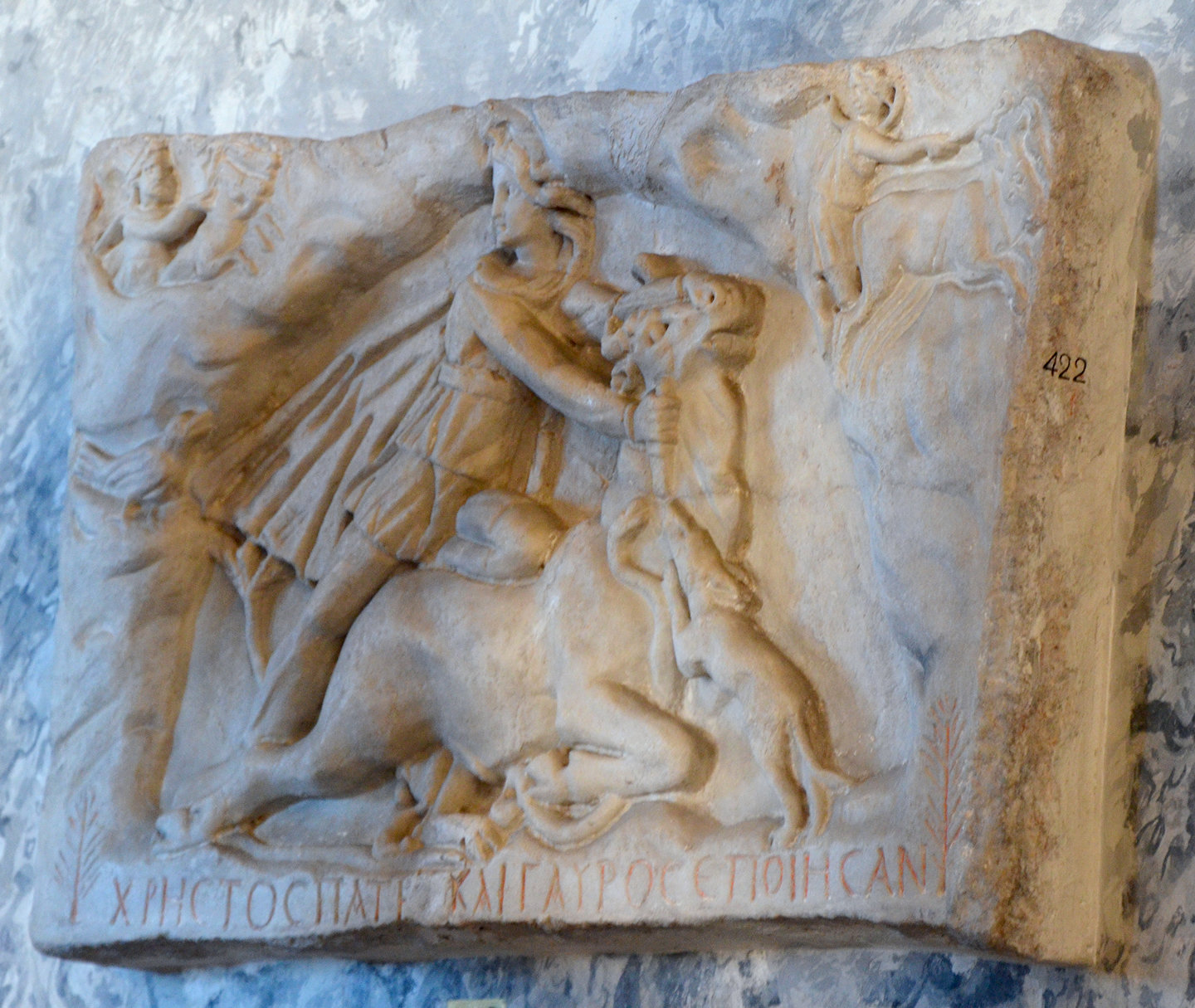
This relief of Mithras killing the bull, signed by a certain Χρῆστος, is on display in the Sala dei Animali of the Vatican Museum.

This altar from Grumentum in Lucania was dedicated to Sol Invictus Mithras by Titus Flavius Saturninus, an evocatus in imperial service.
Fragment of a sandstone relief from Nida-Heddernheim depicting the torchbearer Cautopates.
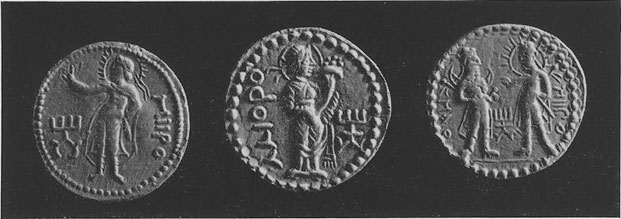
A gold coin depicting a bearded god with a crescent facing another god with a nimbus and a radiate crown, identified as Mithras by Vermaseren.

Black jasper gem from the Seyrig collection, depicting Mithras radiate slaying the bull, with the god grasping the muzzle with the left hand and driving a knife into the animal's neck with the right.
Inscription from Corstopitum (modern Corbridge) recording a dedication to Sol Invictus by a vexillation of Legio VI Victrix under the governorship of Sextus Calpurnius Agricola in AD 163.
A small marble fragment from Augusta Emerita (modern Mérida) bearing the fragmentary inscription (S)arapi(s), attesting to the veneration of Sarapis in proximity to the Mithraic sanctuary.
A fragmentary limestone tauroctony relief found on the south slope of the Castellhügel at Pola (modern Pula) during the demolition of a wall, now in the Lapidary Museum at Pula, preserving the bull's body, the dog, the serpent, the scorpion and a standing cross-legged torchbearer…
A brief inscribed fragment found in the ruins of the Temple of Isis at Aquileia, attesting to the veneration of Sol in proximity to the Isiac sanctuary.
Limestone tauroctony relief fragment of unknown provenance, preserving the upper part of Mithras as bull-slayer with the flying cloak on which the raven is perched.
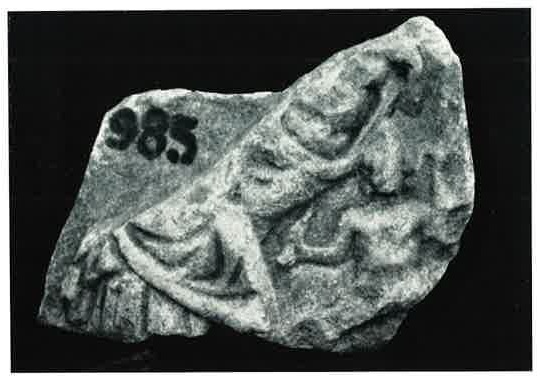
Limestone tauroctony relief fragment of unknown provenance, preserving the upper part of the right torchbearer of a bull-slaying scene.

The locality of Lengfeld formed part of the frontier hinterland connected with the Upper Germanic limes.
A scholarly note recording that the concentration of Mithraic finds at Interanum (modern Entrains-sur-Nohain) in Lugdunensis indicates the existence of one or more Mithraea there, with stone heads in the Delimoges collection possibly being Mithraic representations…
A fragment of a stone relief from Interanum (modern Entrains-sur-Nohain) in Lugdunensis, showing the arched end of Mithras's flying cloak and an ear emerging from the bull's tail, possibly belonging to CIMRM 946.
An inscription on the base CIMRM 940 from Interanum (modern Entrains-sur-Nohain) in Lugdunensis, recording a dedication to Augustus and to the unconquered god Mithras Sol, made by a dedicant named Castor.
A small stone base with a rectangular decorated box on its right side, found in the bed of the river Nohain during railway construction at Interanum (modern Entrains-sur-Nohain) in Lugdunensis, bearing on its top the feet of a statue and the inscription of CIMRM 941…
An inscription from Villa Vicentina, a locality near Aquileia in the Friuli, recording a dedication to Deus Invictus by L. Aebutius Eutychius, a freedman of Primus.
An inscription recording the completion and dedication of the Temple of Sol at Como by T. Flavius Postumius Titianus, corrector of Italy, by order of the emperors Diocletian and Maximian, with Axilius the Younger as curator of the city of the Comenses.
