Your search Bad Ischl im Salzkammergut gave 2084 results.
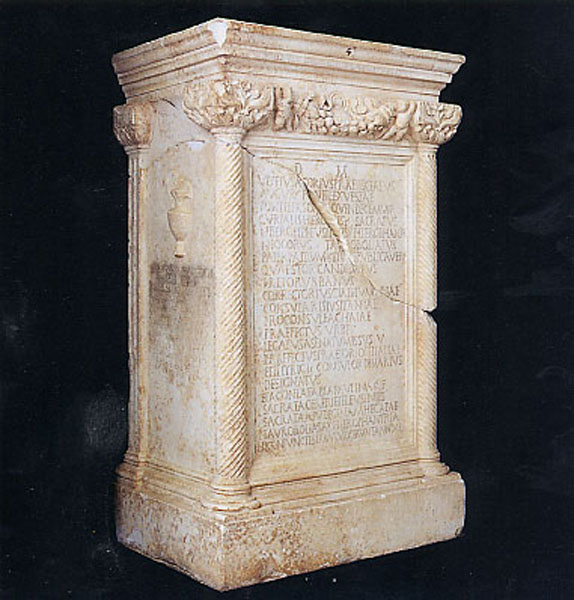
The marble altar mentions Vettius Agrorius Praetextatus as Pater Sacrorum and Patrum and his wife Aconia Fabia Paulina.

Damaged white marble tauroctony relief from Timočka Krajina, Moesia Superior, depicting the bull-slaying with corn-ear tail, dog, serpent, scorpion, and torchbearers.
Lost stone altar from the thermal baths at Baden, ancient Aquae Helveticae, dedicated to Deo invicto by Tiberius Cassius Sanctus and Tiberius Sancteius Valens following a vision.
Polychromatic marble statuette of a cross-legged figure in Eastern attire, probably a torchbearer, found near the theatre ruins at Timgad.
Inscription from Viminacium, Moesia Superior, recording that Caius Iulius Valerius, veteran of Legio VI Claudia, restored a Mithraic sanctuary destroyed by lightning at his own expense.
Small white marble relief from Kostolac, ancient Viminacium in Moesia Superior, depicting the sacred repast of Mithras and Sol: two reclining figures behind a three-legged table (tripod), in an arched niche.
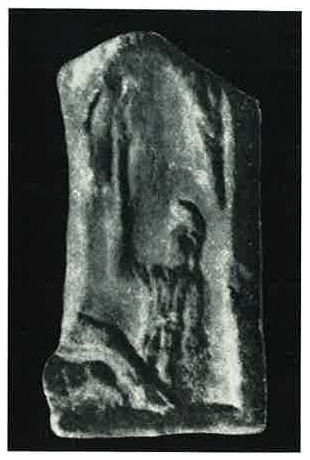
Right portion of a limestone Cautes relief from Kostolac, ancient Viminacium in Moesia Superior, depicting Cautes standing on an elevation in Oriental dress — not cross-legged — with a semicircle above him, probably Sol's nimbus.
Inscription from Viminacium, Moesia Superior, dedicated to Deo invicto Mithrae by a decurio and aedilis of the Colonia Viminacii ex voto.
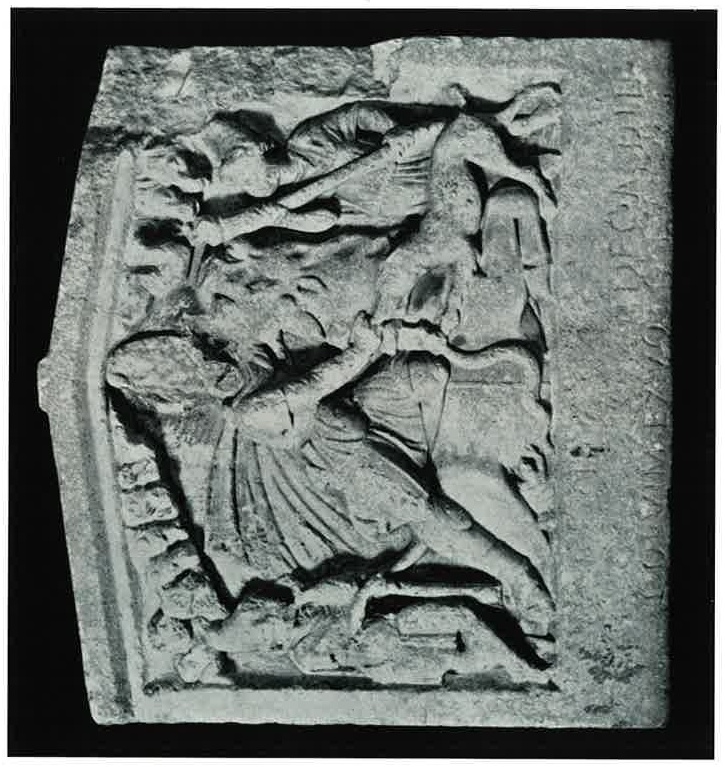
White marble tauroctony relief from Kostolac, ancient Viminacium in Moesia Superior, formerly walled into the Castle of George Branković at Smederevo, depicting the standard bull-slaying.
Small red sandstone statuette of a lying lion from Wiesbaden, ancient Aquae Mattiacae, with snout and hindquarters broken off
Sandstone relief from Wiesbaden, ancient Aquae Mattiacae, found in a subterranean room in 1858, depicting Cautopates in Oriental dress holding a downward torch
Sandstone votive altar with traces of red paint from Wiesbaden, ancient Aquae Mattiacae, erected during the reign of Macrinus with permission of Varonius Lupulus
Yellow sandstone votive altar from Wiesbaden, ancient Aquae Mattiacae, published by Ritterling and preserved in the Städtisches Museum
The site of Ay-Todor in Crimea revealed a Roman camp, a temple with votive offerings, and a Mithraeum.
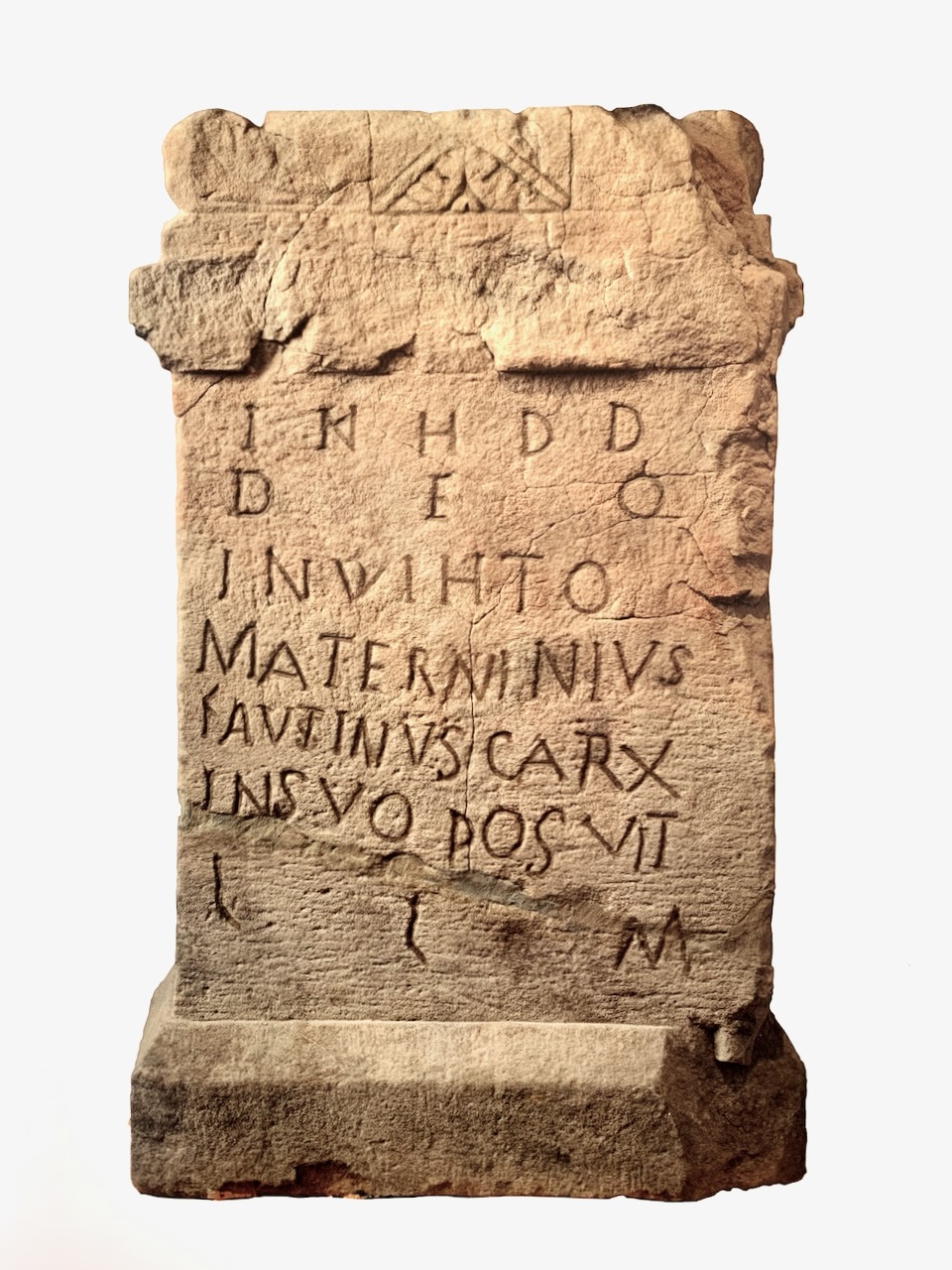
Corax Materninius Faustinus dedicated other monuments found in the same Mithraeum in Gimmeldingen.
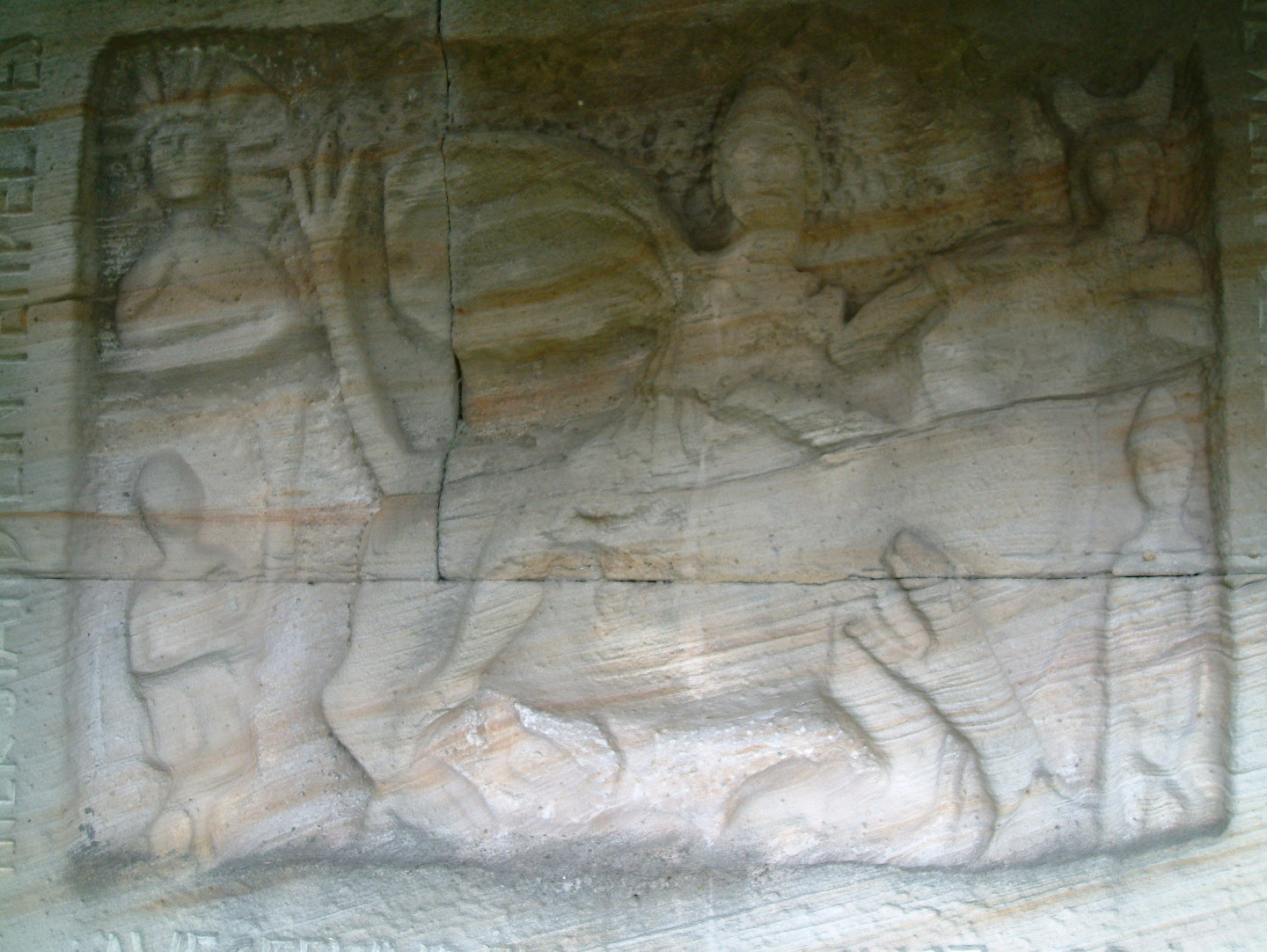
This relief of Mithras killing the bull found in Gimmeldingen, Germany, lacks the usual raven.
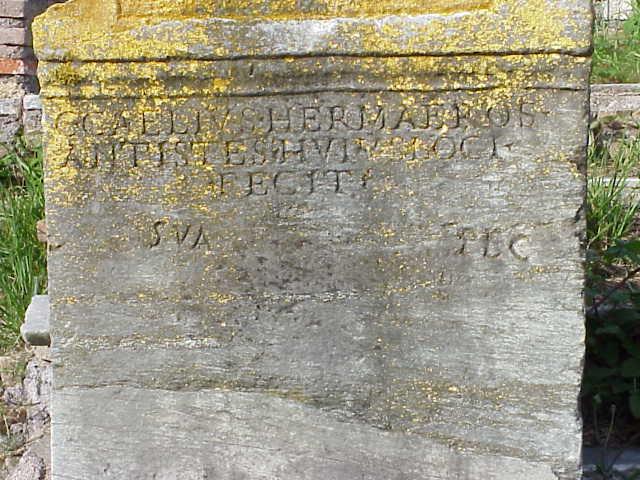
This is one of several marble inscriptions made by a certain Caelius Ermeros, who was the antistes of the Mithraeum of the Imperial Palace.
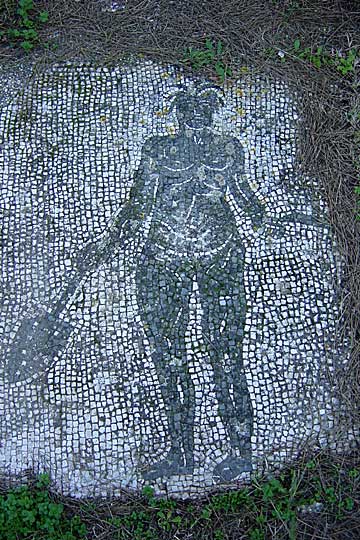
Several figures related to the Mysteries of Mithras are depicted on the mosaics of the Mithraeum of the Animals.

Este es un libro que pretende esbozar un panorama general de los documentos mitraicos repartidos a lo largo del Imperio romano.

Certains mythes de l'Antiquité sont probablement basés sur des récits de « mort imminente » exactement les mêmes que les nôtres. Ainsi, s'expliqueraient le Paradis, l'Enfer, l'âme, le Dieu unique, nos divers «états d'âme»..…
