Your search for Boulogne-sur-mer gave 407 results.

Boulogne-sur-Mer; Picard: Boulonne-su-Mér; Dutch: Bonen; Latin: Gesoriacum or Bononia, often called just Boulogne, is a coastal city in Northern France.
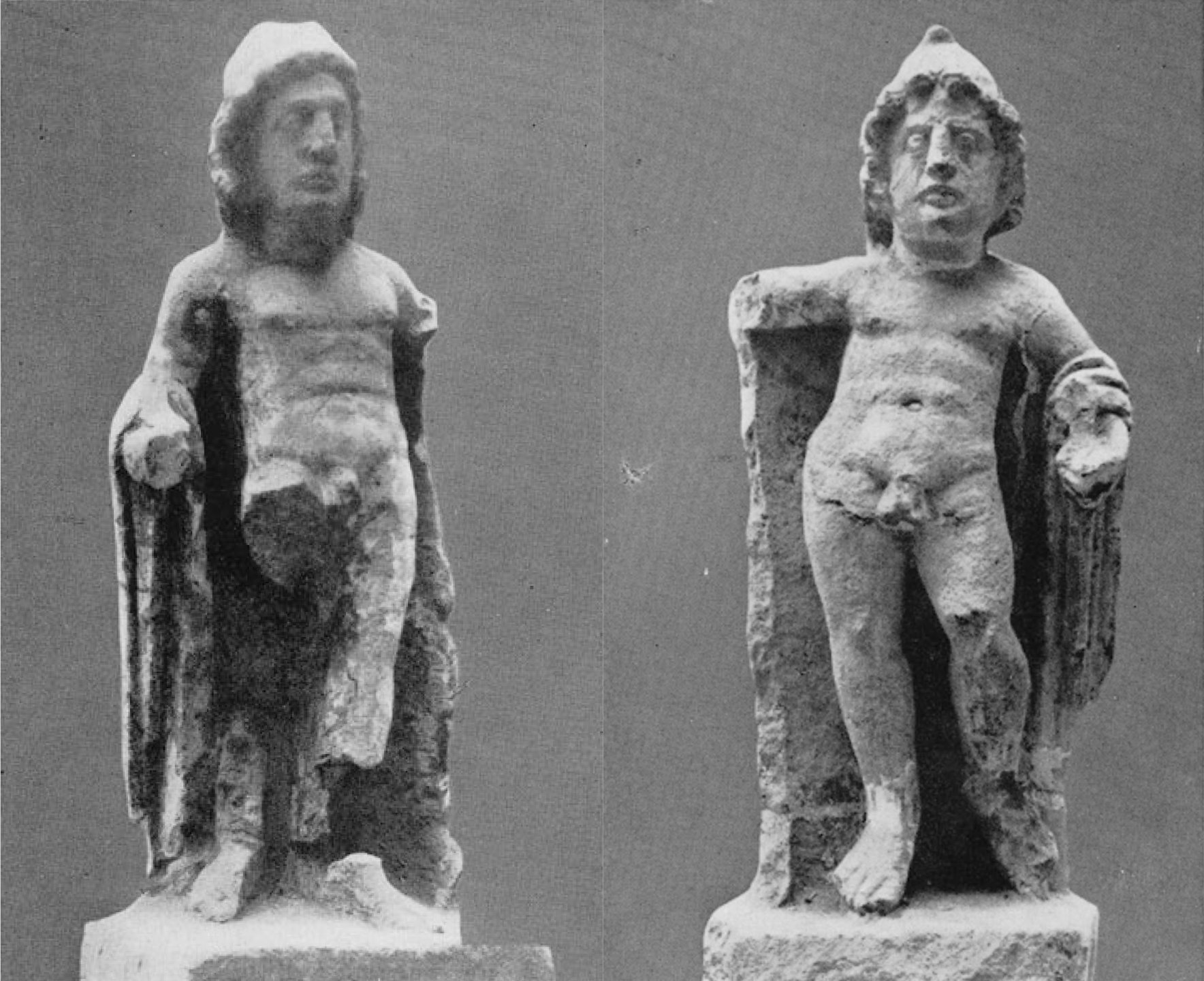
The two fellows of Mithras from Marquise, Boulogne-sur-Mer, are fully naked but for the cloak and the Phrygian cap.

This monument is too fragmentary to recod it definitely as a Mithras-monument.


A study of the religious landscape of the Carnuntum and Vindobona hinterland, with particular attention to Mithraic communities and their relationship with the provincial capital.
Fragmentary two-sided Mithraic relief depicting the rock-birth, Zodiac and other mythological scenes from Stockstadt.

One of the few Mithraists whose progression from Nymphus to Miles and eventually to Pater may be traced epigraphically at Dura Europos.

Recipient of a votive dedication invoking the healing protection of Deus Invictus in the Mithraic community of Emerita Augusta.
The pater Artemidorus seems to be an Augustan freedman of the Claudians, of Eastern origin.

A slave of a certain Flavius Baeticus, Quintio dedicated an altar to the health of a companion.

Member of the Mithraic congregation of Emerita Augusta who commissioned a monumental torchbearer statue under Accius Hedychrus.

Gaius dedicated an altar to the god Invictus in Emerita Augusta in the 2nd century.

Centurio frumentarius probably from Tarraco, who served in the Legio VII Gemina located in Emerita Agusta.

Gaius Accius Hedychrus was one of the most prominent Mithraists known from Roman Hispania and a central figure in the Mithraic community of Emerita Augusta during the mid-second century CE.
A small marble fragment from Augusta Emerita (modern Mérida) bearing the fragmentary inscription (S)arapi(s), attesting to the veneration of Sarapis in proximity to the Mithraic sanctuary.
A marble statuette found at Augusta Emerita (modern Mérida) in 1902, representing a seated deity whose head, arms and feet are lost, tentatively identified as Jupiter-Serapis.
Sculptural fragments from the Mithraeum at Augusta Emerita (modern Mérida), comprising a naked foot beside tree-trunk remnants and fragments of a marble seat or table decorated with an acanthus-leaf from which emerge the head and neck of a lion.
A marble statue from Augusta Emerita (modern Mérida), depicting a standing woman in a long chiton, now in the museum at Mérida, with head lost.
