Your search Bu Njem gave 1882 results.

The Romans controlled Poetovium until the 1st century BC. It became the base camp of the Legio XIII Gemina, where they built a castrum.
Novae was initially one of the few great Roman legionary fortresses along the empire’s border, forming part of the defences along the Danube in northern Bulgaria. It lies about 4 km east of the modern town of Svishtov.
Nicopolis ad Istrum or Nicopolis ad Iatrum was a Roman and Early Byzantine town. Its ruins are located at the village of Nikyup, 20 km north of Veliko Tarnovo in northern Bulgaria. The site was placed on the Tentative List for consideration as a Wo
Mediolanum, the ancient city where Milan now stands, was originally an Insubrian city, but afterwards became an important Roman city in northern Italy.
Marino has been inhabited by Latin tribes since the 1st millennium BC. During the Roman Republic it was a summer resort for Roman patricians who built luxurious villas in the area.
Lambaesis, Lambaisis or Lambaesa, is a Roman archaeological site in Algeria, 11 km southeast of Batna and 27 km west of Timgad, located next to the modern village of Tazoult.
Dura-Europos was a Hellenistic, Parthian and Roman frontier city built on the Euphrates River. It was founded around 300 BC by Seleucus I Nicator. The Romans took Dura-Europos in 165 AD.
Kalkar is a municipality in the district of Kleve, in North Rhine-Westphalia, Germany.
The area was populated by Iberians, but the origins of Baetulo date back to the 1st century BC, when the Romans founded the city on the Rosés hill. Baetulo was famous for its vineyards, which produced wine for export throughout the Empire.
The Romans took Arelate from the Ligurians in 123 BC and made it an important city by building a canal towards the Mediterranean. Present-day Arles has preserved many Roman buildings.
Aquincum was an ancient city, situated on the northeastern borders of the province of Pannonia within the Roman Empire.
Africa Proconsularis formed one of the principal urban and administrative centres of Roman North Africa where Mithraic cults circulated through prosperous civic networks.

Clarissimus knight and legate born in Poetovio that helped to disseminate the cult of Mithras in the African provinces.

A Mithraic initiate attested in Pannonia Superior during the late 2nd or early 3rd century CE.

Member of the Mithraic community of Les Bolards and dedicator of a statue of Cautes.
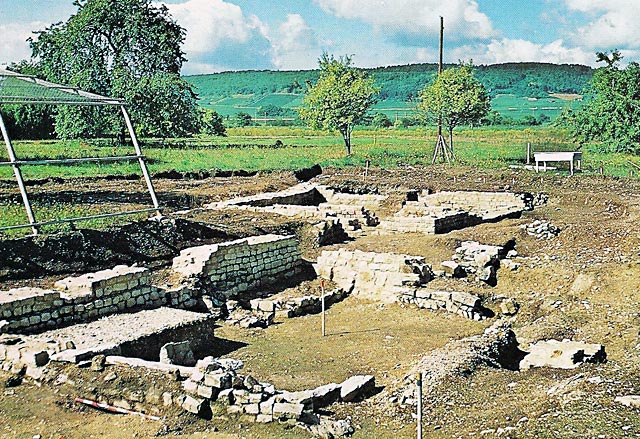
The Mithraeum des Bolards was integrated into a therapeutic cultural complex related to healing waters.

Garlic merchant, probably from Lusitania, who dedicated an altar to Cautes in Tarraconensis.
Etruria formed part of the cultural and religious heartland of central Italy closely connected to Rome and the Tyrrhenian world.
Picenum connected the Adriatic coast of central Italy to inland communication routes and the wider networks of the Roman Peninsula.
Lucania connected inland southern Italy to the Tyrrhenian and Ionian maritime worlds through regional communication networks.
