Your search Cabrera de Mar gave 1568 results.
Restoring the Mysteries: A Conversation with Peter Mark Adams on his new book ‘Ritual & Epiphany in the Mysteries of Mithras’.

White marble statue of Lion-head god of time, formerly in the Villa Albani, nowadays in the Musei Vaticani.
Thrasyllus was an Egyptian of Greek descent grammarian, astrologer and a friend of the Roman emperor Tiberius.

He and his brother, both of the Legio II Adiutrix, built a temple and erected several monuments in Budaors, Pannonia.

Decurion and member of the same college as Aemilius Chrysanthus.

Centurio frumentarius probably from Tarraco, who served in the Legio VII Gemina located in Emerita Agusta.

Pater who offered several monuments, including a temple, in Augusta Treverorum.

Frontinianus and Fronto built a Mithraeum in Budaors, probably on their own property.


A freedman of Septimius Severus, he was Pater and priest of the invincible Mithras, as mentioned in a marble inscription found in Rome.



Pro praetor legate during the reign of Maxime, he dedicated an altar to Mithras in Lambaesis.

Roman veteran stationed on the island of Andros, where he built a temple to Mithras.

Procurator of the emperor, Porcius Verus erected a relief of Mithras found in Ruše, Slovenia..
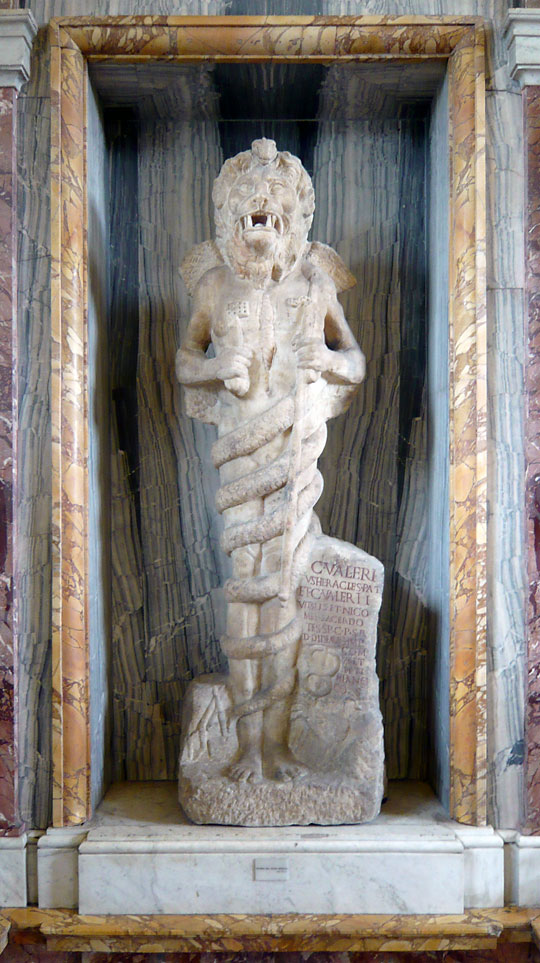
The marble Aion from the lost Mithraeum Fagan, Ostia, now presides the entrance to the Vatican Library.
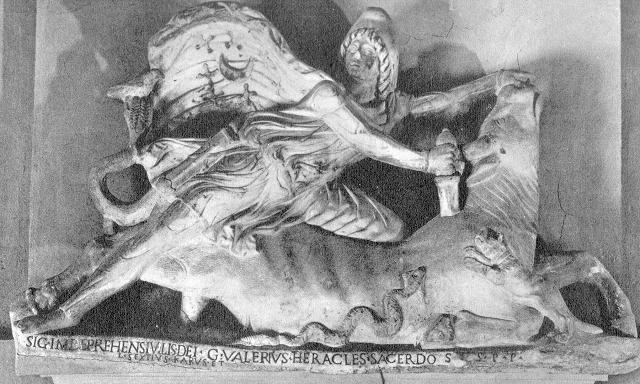
This sculpture of Mithras killing the bull was dedicated to the ’incomprehensible god’ by a certain priest called Gaius Valerius Heracles.
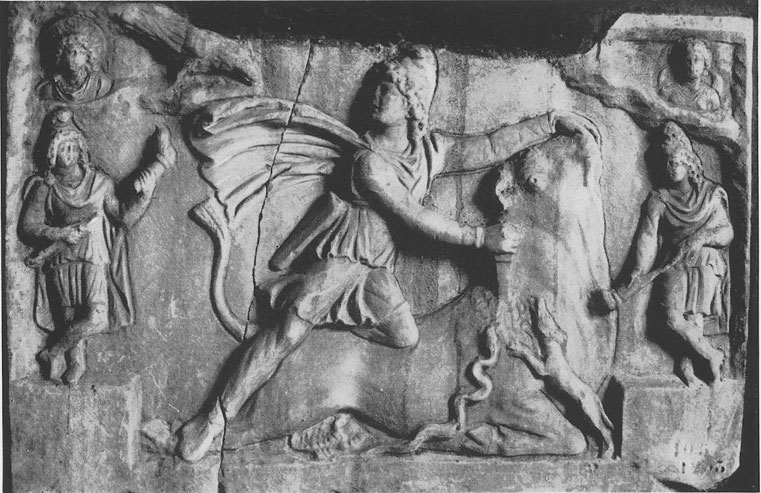
White marble relief depicting Mithras killing the bull, found broken in two parts in 1872 near Salita delle Tre Pile in Rome.
