Your search Cerro de San Albín gave 1005 results.

Saul cutting the oxen to pieces poses as Mithras Tauroctonos in this painting, which adorns the mantelpiece of Henry II’s bedroom at the Château d’Écouen near Paris.
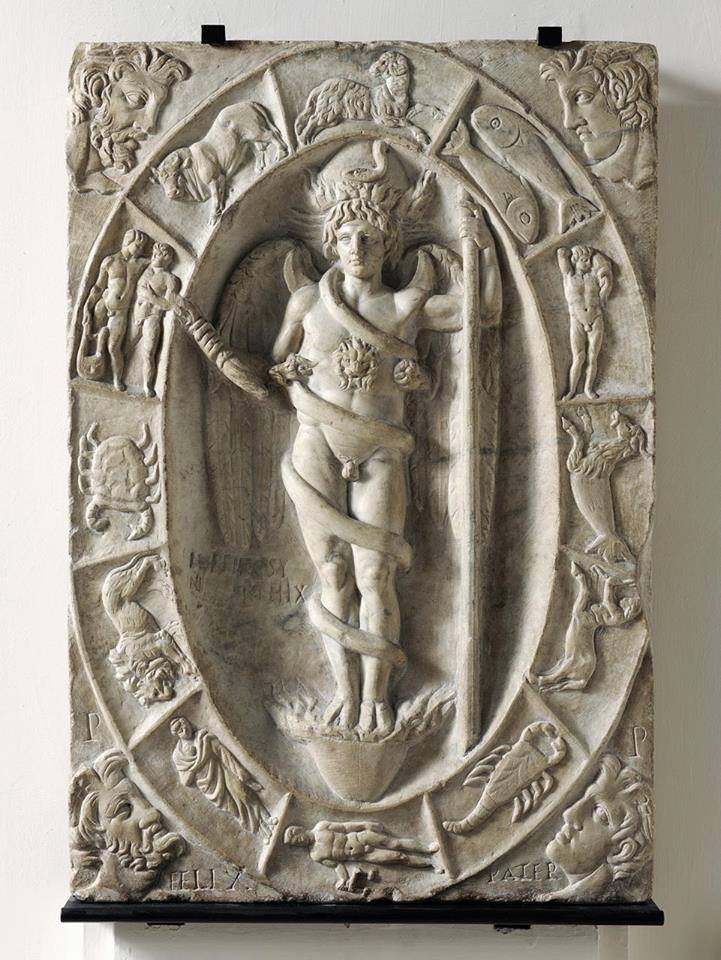
The Aion / Phanes relief, currently on display in the Gallerie Estensi, Moneda, is associated with two Eastern mysteric religions: Mithraism and Orphism.

Minto has claimed that the time god Aion was painted on the corner of the north wall of the Mitreo de Santa Capua Vetere.
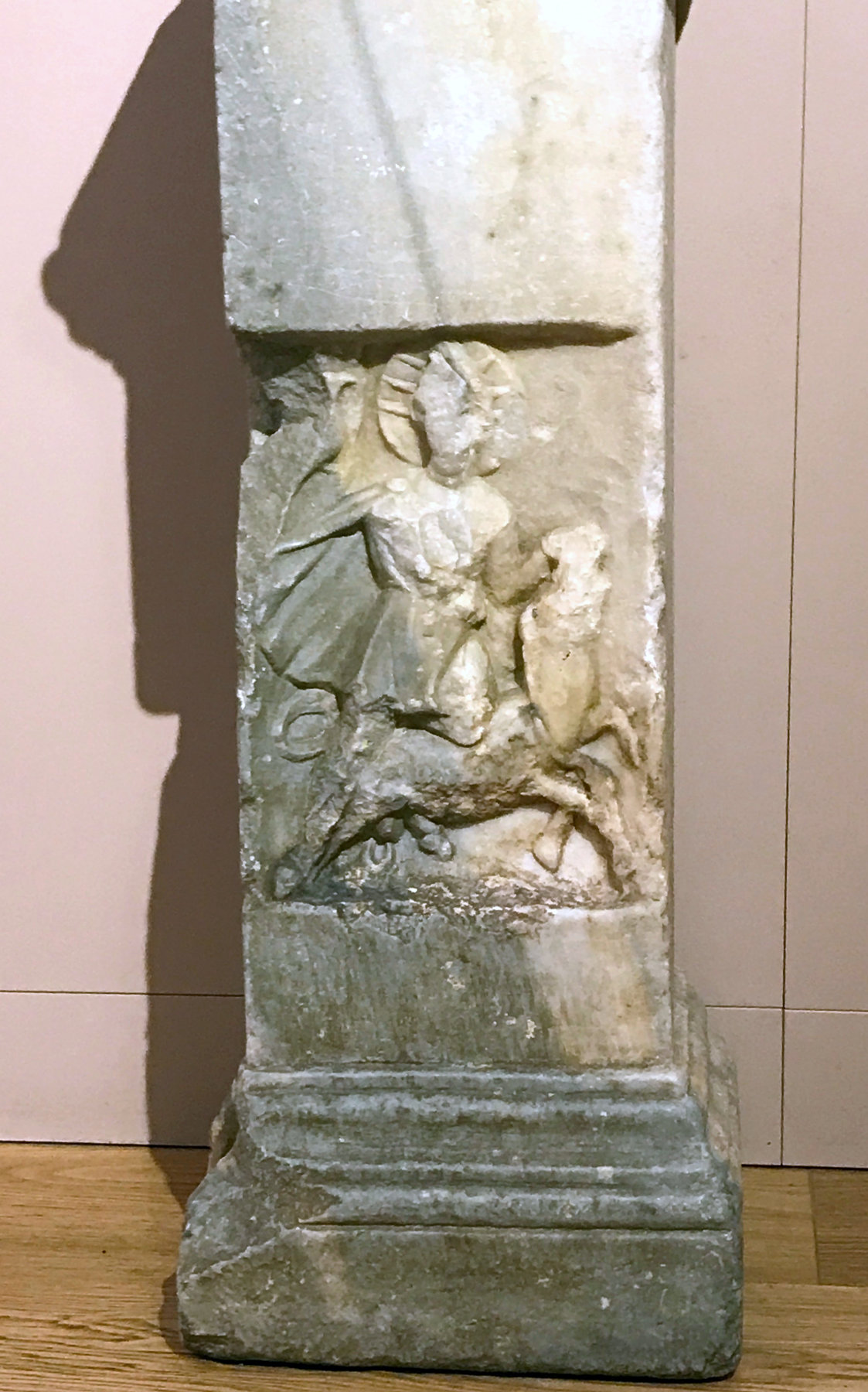
This low relief on an altar of Mithras killing the bull was found in a church in Pisignano, south of Ravenna.
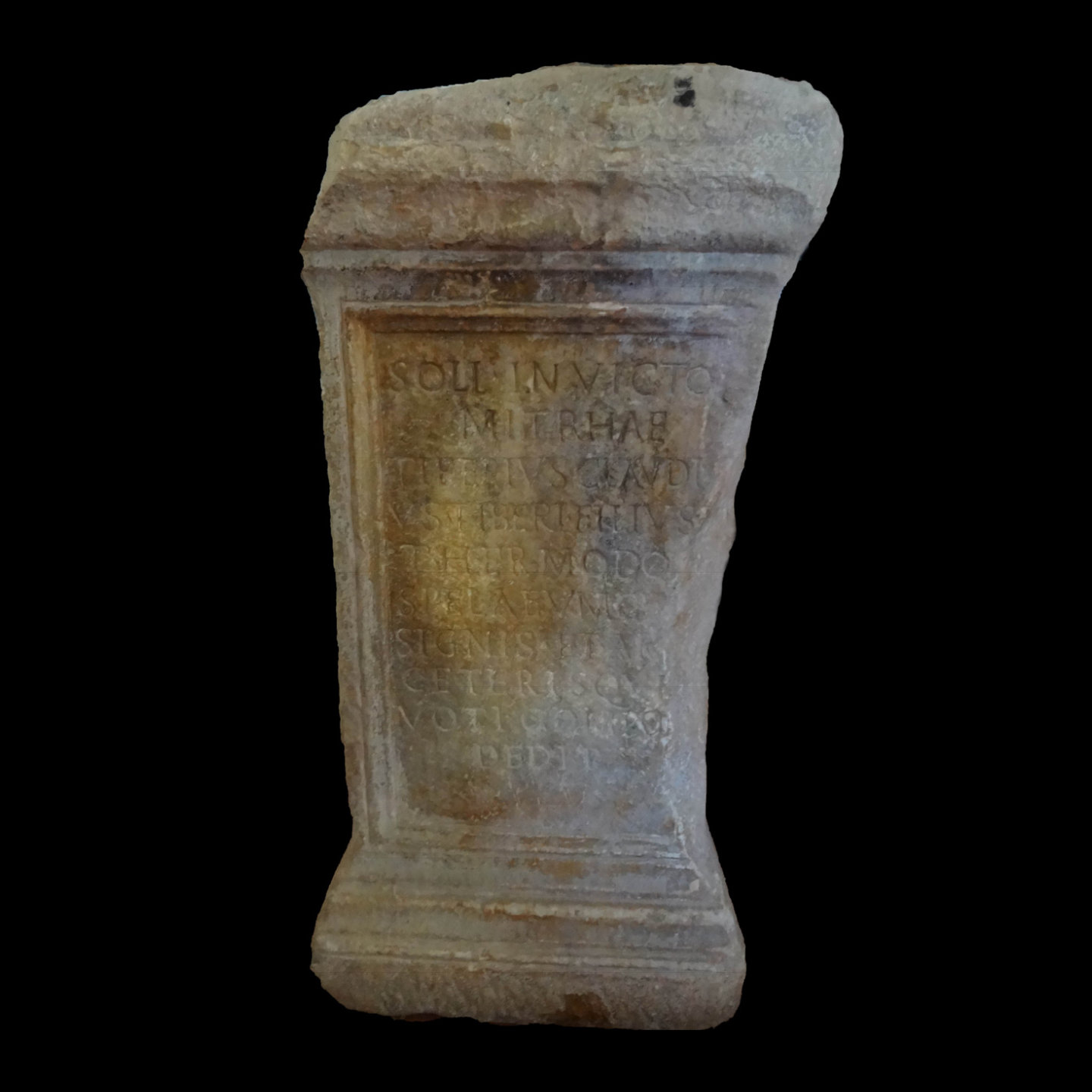
The donor of this Mithraic inscription from Bolsena, a certain Tiberius Claudius Thermoron, is known from two other monuments.
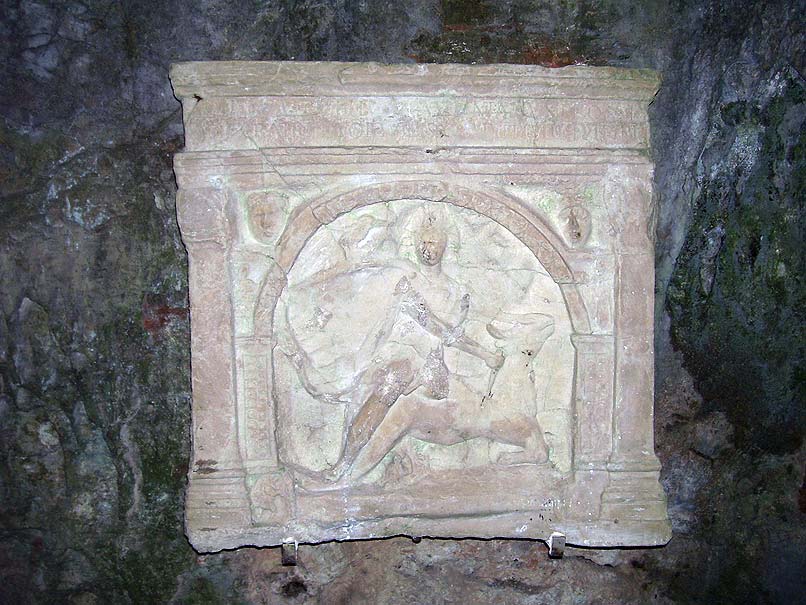
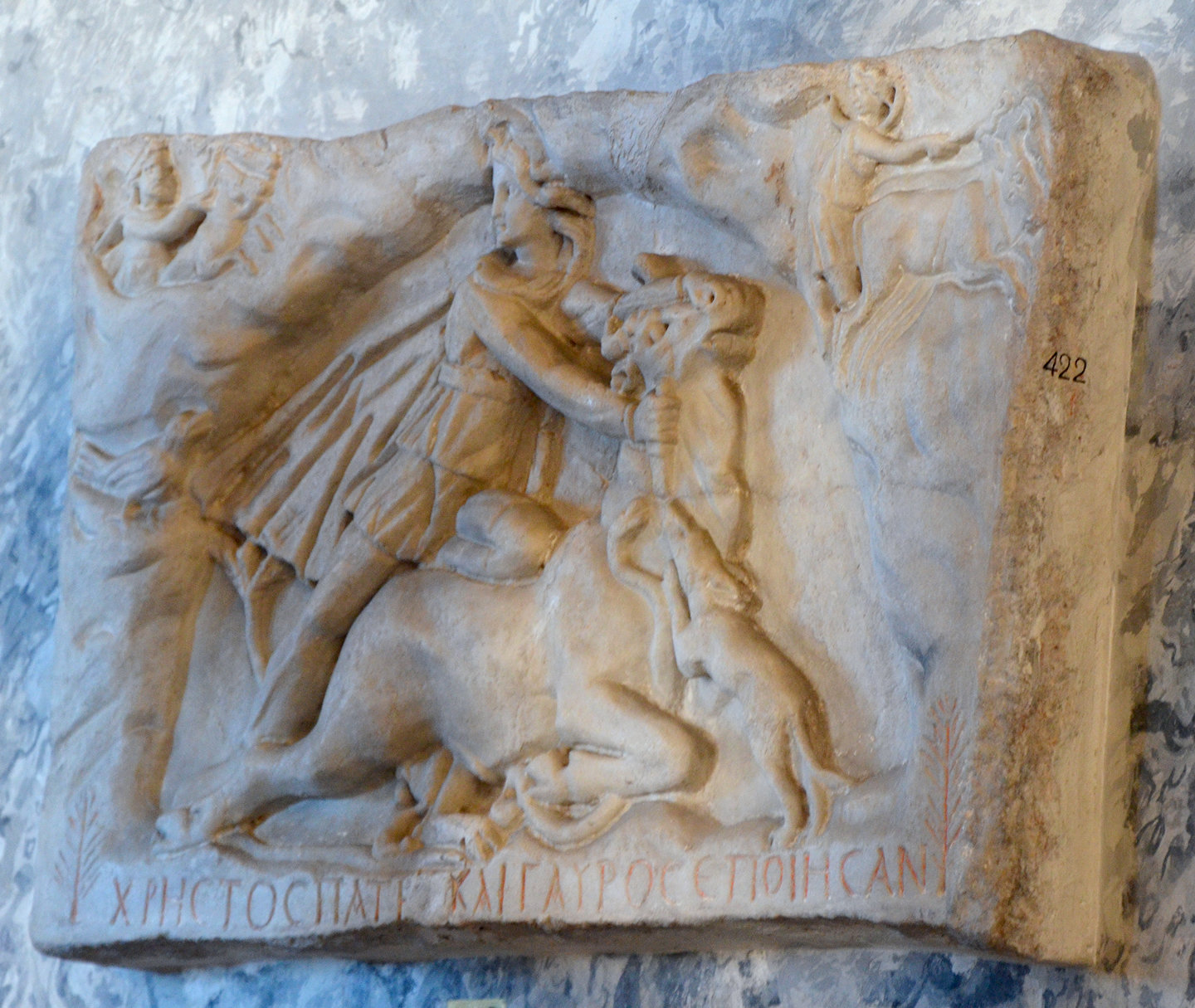
This relief of Mithras killing the bull, signed by a certain Χρῆστος, is on display in the Sala dei Animali of the Vatican Museum.
Gold ring amulet formerly in the Schlumberger Collection, published as Mithraic by Cumont and later identified as a healing charm against colic and diseases of the uterus.
A decorated altar from the Mithraeum at Vindobala (modern Rudchester), with the letters DEO crowned with vittae on the shaft, surrounded by palm-branches, a representation of Mithras' rock-birth on the capital, and on the front of the die a naked figure grasping a bull's horns…
A small marble fragment from Augusta Emerita (modern Mérida) bearing the fragmentary inscription (S)arapi(s), attesting to the veneration of Sarapis in proximity to the Mithraic sanctuary.
A brief inscribed fragment found in the ruins of the Temple of Isis at Aquileia, attesting to the veneration of Sol in proximity to the Isiac sanctuary.
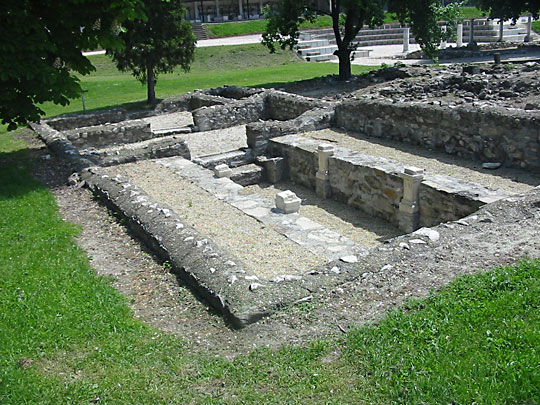
This temple of Mithras in Aquincum was located within the private house of the decurio Marcus Antonius Victorinus.
A dedication to the unconquered and propitious Sol Invictus Mithras, made by a priest named M. Pompeius on behalf of the divine house, the most sacred council, and the devout inhabitants of the colony of Elusatium (modern Eauze) in Aquitania.
A marble relief found on the small island of San Michele di Zampanigo near Torcello in the Venetian lagoon, now in the Museum of Torcello, showing a cross-legged figure in Eastern attire resting his head in his right hand and holding a downward-pointing torch (Cautopates), framed by poppies…
A square base found in 1868 near the Sardagna waterfall at San Niccolò beside the ancient Roman road in Trento (ancient Tridentum), in ground full of debris suggesting a nearby necropolis and possibly a Mithraeum.
An inscription found in the old monastery of San Giulia in Brescia (ancient Brixia), in the arch supporting the crypt of Santa Maria in Solario, recording a dedication to Deus Sol by the res publica.

Roman military settlement in Germania superior, generally identified with present-day Ober-Florstadt and known for its well-preserved Mithraic sanctuary.
Roman settlement on the southern shore of Lacus Verbanus (Lake Maggiore) in Transpadana, known for Mithraic inscriptions and a cave sanctuary traditionally identified as a Mithraeum.
A skeleton of a man aged approximately thirty to forty years, with arms tied behind his back and wrists bound with an iron chain, found lying on a fragment of the main relief at the back of the Mithraeum at Pons Saravi (modern Saarburg) in Belgica…
A collection of ritual vessels from the Mithraeum at Pons Saravi (modern Saarburg) in Belgica, including a stone vase, a plate with a lion's head in relief, a terra-sigillata plate with a hunting scene, and an urn filled with ash, bird bones, and rings…
