Your search Edgar Wind gave 78 results.

Reconstructed tauroctony relief from the Mithraeum at Mackwiller, assembled from multiple stone fragments and preserving Mithras's head, shoulders, dagger hand, flying cloak, and parts of the bull and torchbearers.
Two rectangular sandstone reliefs from Zasenhausen near Cannstatt, ancient Clarenna, each depicting a male bust with astral symbols on the forehead, arranged in opposing directions.
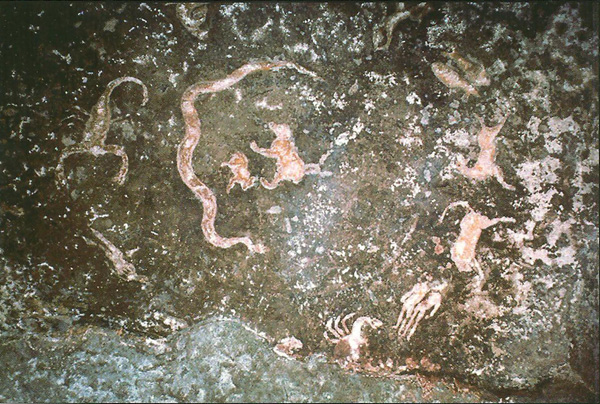
Rock-cut tauroctony relief at the Mithraeum near Schwarzerden, beginning at 0.70 metres from the floor, with clearly visible scorpion and serpent

The tauroctonic relief from Dragus includes a naked flying figure that Vermaseren has identified as Phosporus or Lucifer.
Small bronze figure from Rome, probably used as a handle for a patera or knife, depicting the lion-headed Aion with four large wings, entwined in three coils of a serpent, holding a torch in his right hand and a key in his left.
The Sacello delle Tre Navate near the Therms of the Sette Sapienti at Ostia, whose identification as a Mithraeum remains uncertain, with a decorated cult-niche but lacking typical Mithraic iconography.

Fragment of a silvered bronze plate from Mithraeum II at Stockstadt depicting Mithras grasping the bull for the kill
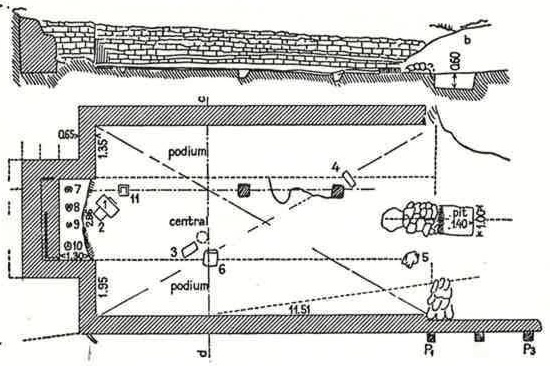
Second Mithraic sanctuary discovered at Stockstadt between 1909 and 1913, situated on a slope near the river Main, with finds at Aschaffenburg
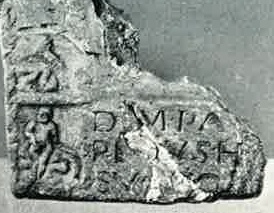
Double-sided white sandstone relief from Mithraeum I at Stockstadt, with Mithraic imagery on both faces

Fragment of a white sandstone tauroctony relief from Mainz, ancient Mogontiacum, found reused in the wall of a house in 1864
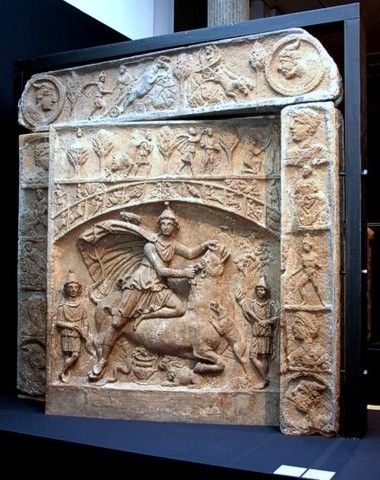
This relief is so well-known that it has been reproduced in nearly every handbook of archaeology and of history of religions.
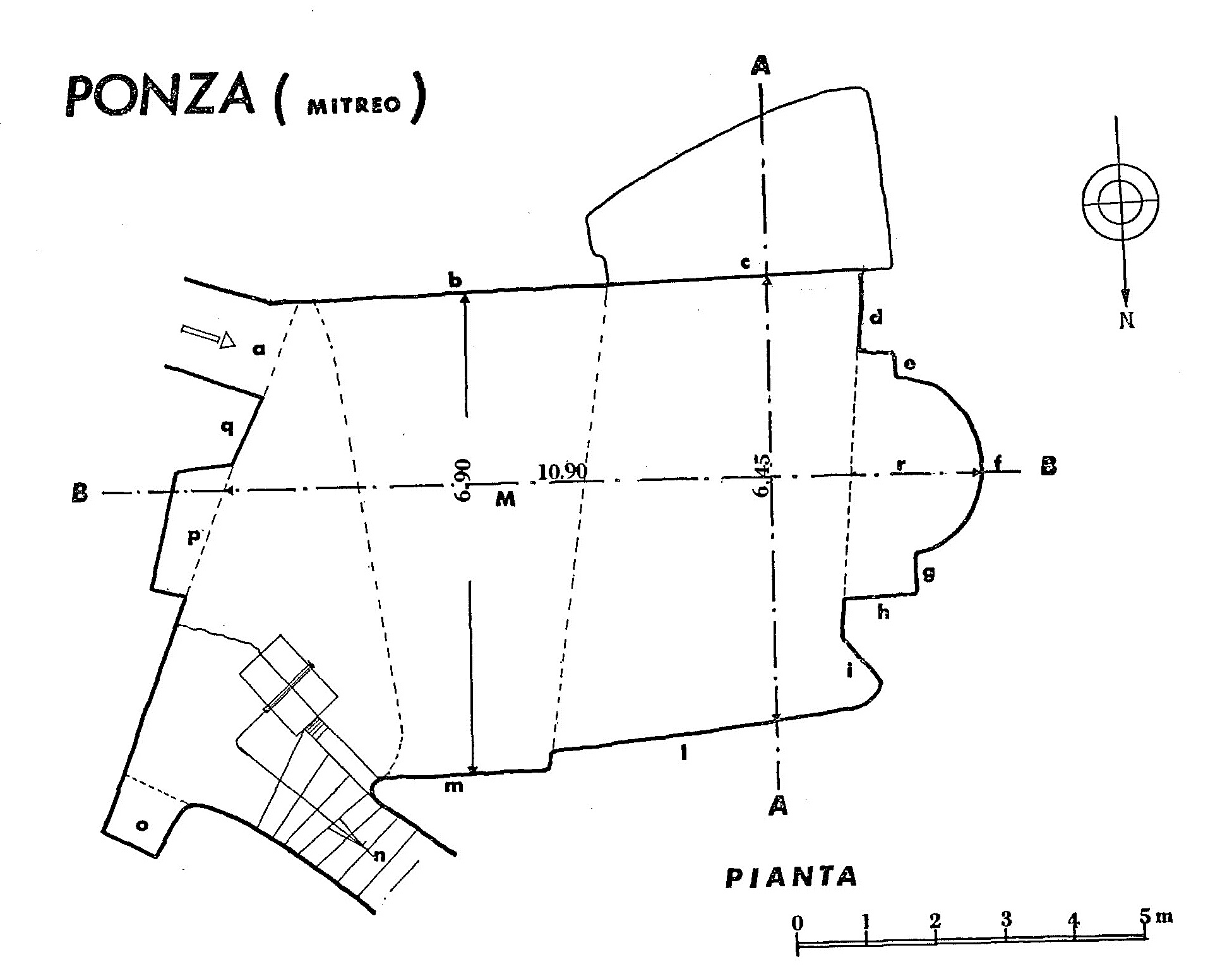
This Mithraic shrine on the island of Ponza is renowned for its exceptional stucco zodiac and astral symbolism linked to Roman Mithaism.
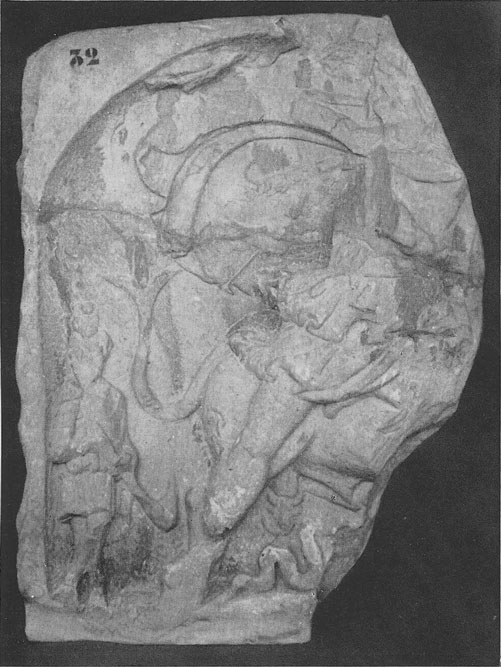
This fragmentary tauroctony relief from Timziouin near Saïda depicts Mithras slaying the bull within a cave-like frame, accompanied by the raven, serpent, scorpion, and Cautopates.
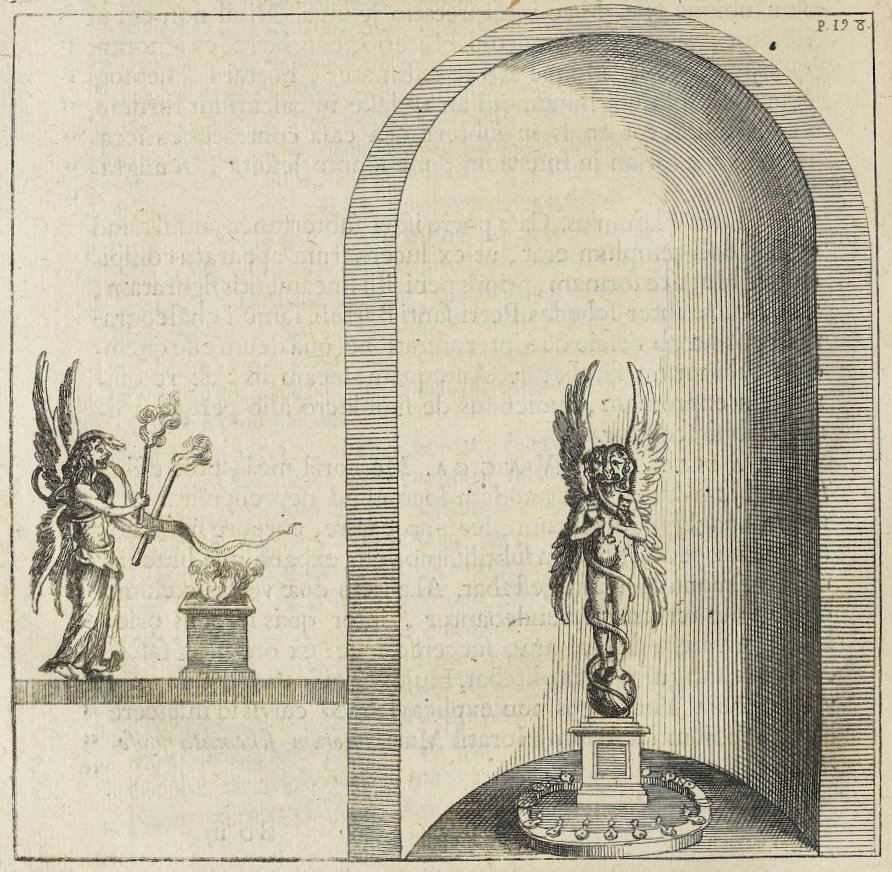
This monument has been identified from ’Memorie di varie antichità trovate in diversi luoghi della città di Roma’, a book by Flaminio Vacca of 1594.
Solis invicti Mithrae studiosus astrologiae who was at the same time ’caelo devotus et astris’.

The importance of the Mithraeum of Marino lies in its frescoes, the most significant of which is that of Mithras slaying the bull, surrounded by mythological scenes.
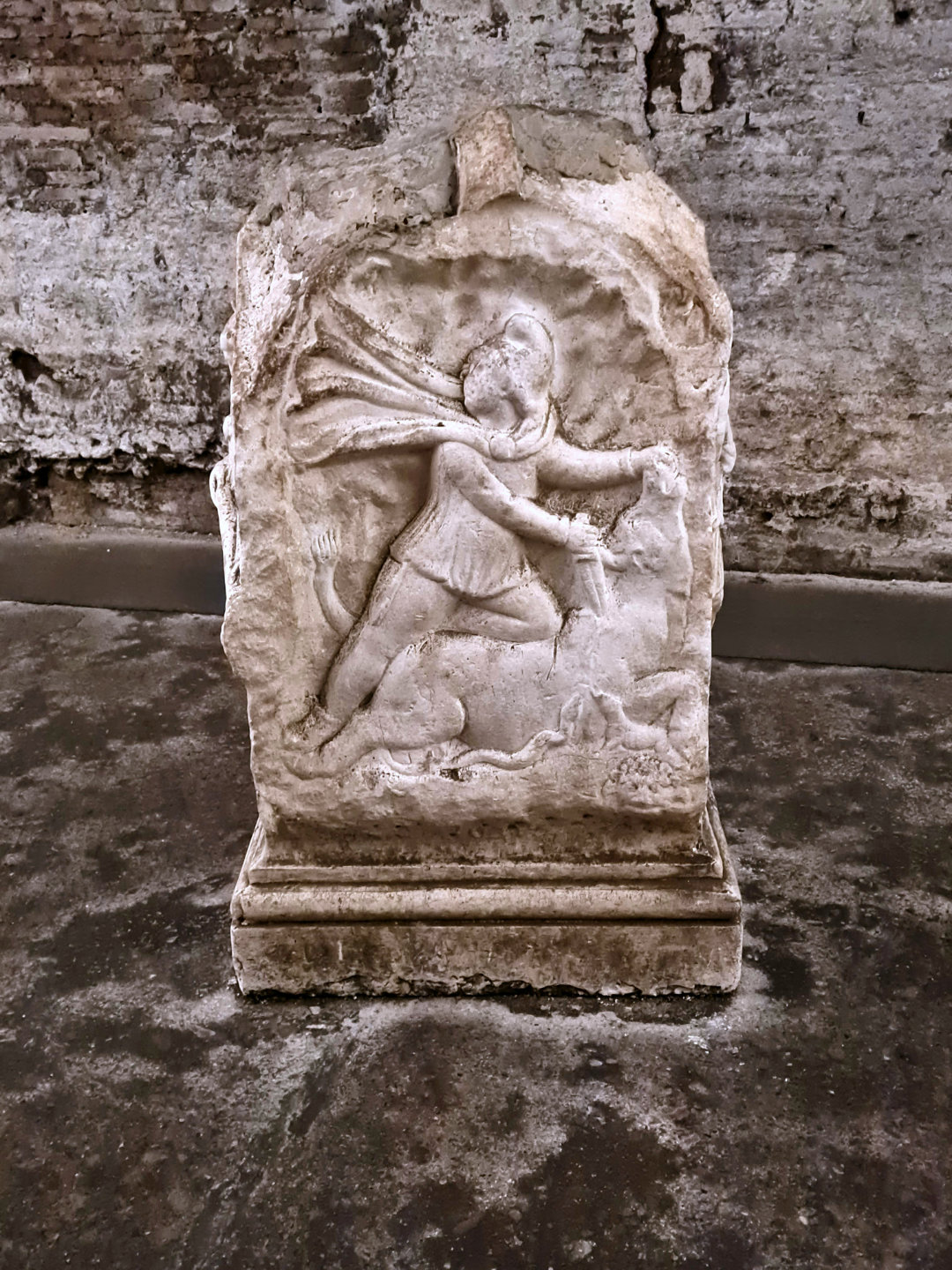
The altar of the Mithraeum of San Clemente bears the Tauroctony on the front, Cautes and Cautopates on the right and left sides and a serpent on the back.
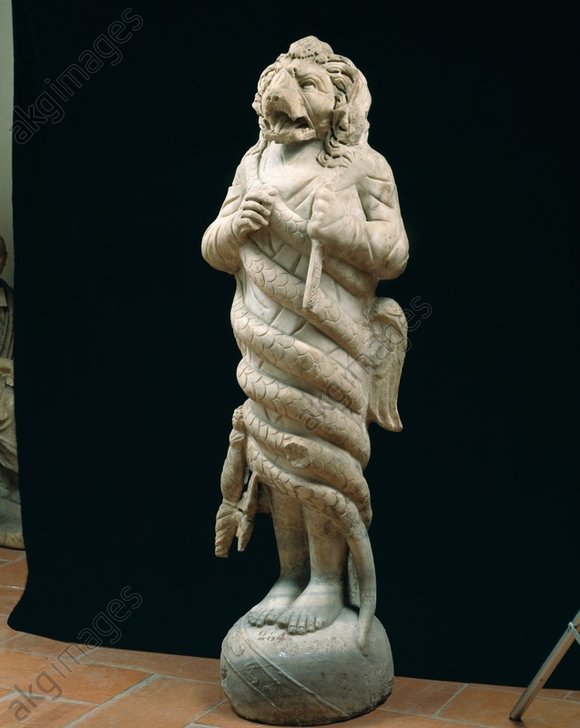
The sculpture of Aion from Florence, Italy, has the usual serpent, coiled six times on its body, whose head rests on that of the god of eternal time.
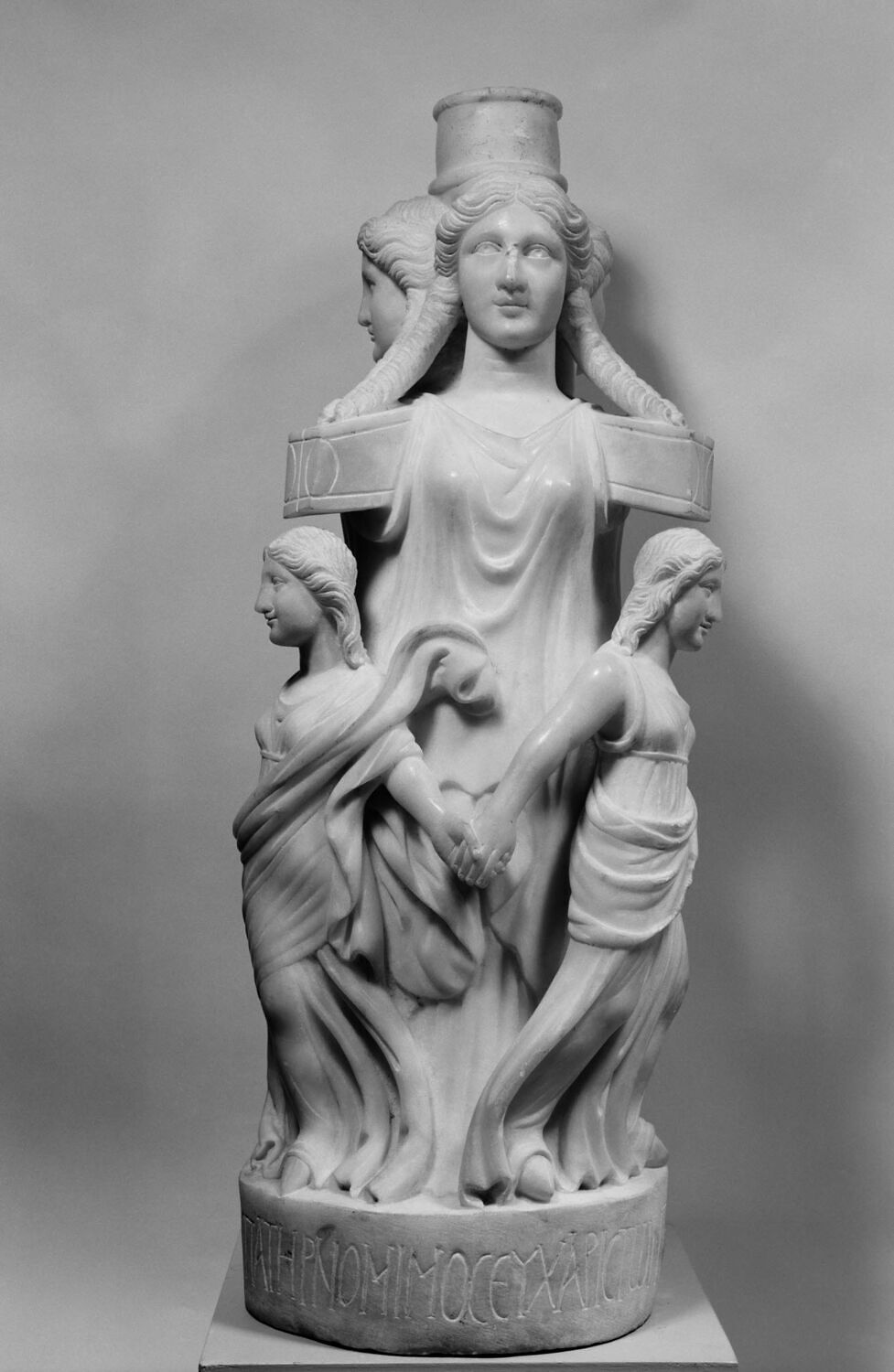
The Hekataion of Sidon, which depicts Hekate in her trimorphic form surrounded by three dancing girls, is the only example found to date in connection with the Mithraic cult.

Limestone altar from the Trier baths, carved on four sides with a lion and serpent, flanked by Sol and Luna, and likely linked to a Mithraic context involving Hekate.
