Your search Mühltal am Inn gave 1063 results.

Monumental inscription honouring the senator and Mithraic pater Kamenius together with his numerous priestly offices and initiatory roles.
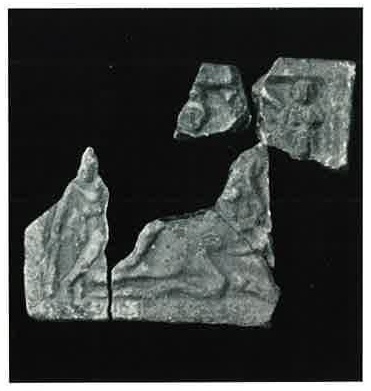
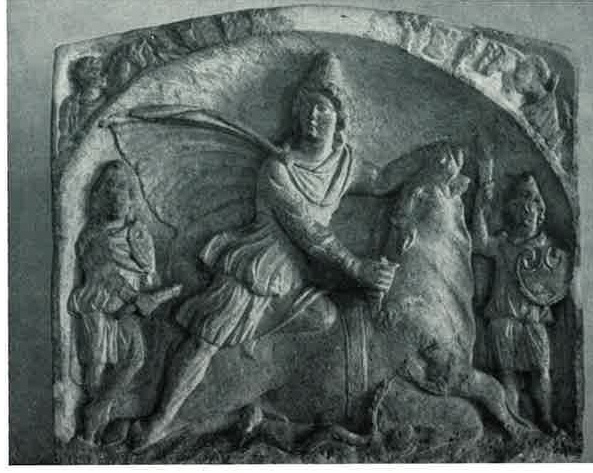
Five fragments of a whitish-yellow marble tauroctony from the Mithraeum at Sarmizegetusa, Dacia, with the central bull-slaying framed by a round border and the dagger of Mithras clearly visible.
Altar from Salona, Dalmatia, with a bust of Sol in radiate crown in the lower portion, dedicated to Deo invicto for the welfare and safety of Pamphilus, imperial dispensator, by his arkarius Fortunatus.
Two lamps — one bearing the stamp Fortis — and a bronze coin of Hadrian from the Mithraeum at Sárkeszi, Pannonia Inferior.
Minor finds from Mithraeum IV at Aquincum, Pannonia Inferior, comprising a stamped terra-sigillata bowl (CINNAMI), serpent-vase fragments, pine-apples, altars, balls, and lamps.
Limestone altar from Brigetio, Pannonia Superior, dedicated to Invicto deo Mithrae by Masuininius Amicus, Augustalis of the Municipium Brigetionis Antoniniani.
Marble altar rim from Mithraeum I at Carnuntum, Pannonia Superior, preserving only the beginning of the dedicant's name: Caius Fron-.
Fragment of a large marble cornice from Mithraeum III at Ptuj, ancient Poetovio, preserving only the beginning of the name Iulian- from the inscription below.
Fragmentary inscription from Mithraeum II at Ptuj, ancient Poetovio, preserving only the beginning of a name: Titus V-.
Marble inscription fragment from Mithraeum II at Ptuj, ancient Poetovio, preserving only the beginning of a name: Aulus Po-.
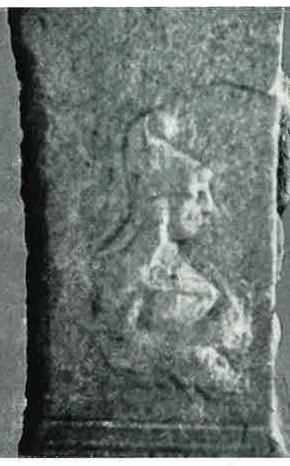
White marble altar from Mithraeum I at Ptuj, ancient Poetovio, decorated below the inscription with the dressed bust of Cautopates, a palm between two ram's heads above, and busts of Mithras on both lateral faces.
Small altar found at Töltschach in 1817, Noricum, decorated with the traces of two ram heads flanking foot-prints; the relief is no longer visible and only the inscription survives.
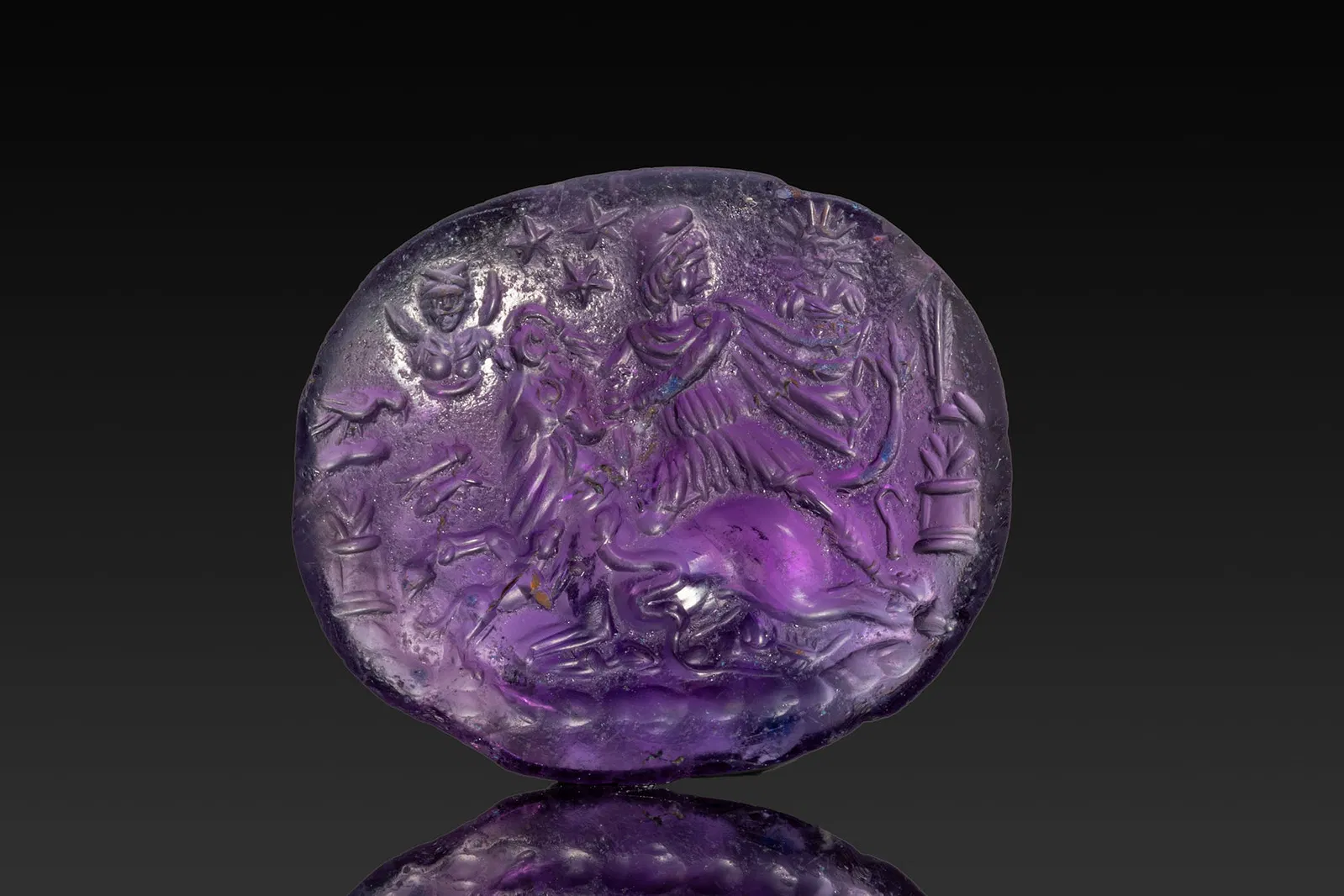
Amethyst intaglio engraved with Mithras slaying the bull, accompanied by Sol, Luna and other canonical Mithraic symbols.

Nida was an ancient Roman town in the area today occupied by the northwestern suburbs of Frankfurt am Main, Germany, specifically Frankfurt-Heddernheim, on the edge of the Wetterau region.
This inscription by a certain Numidius Decens was found in the Forum of Lambaesis, now Tazoult تازولت in Algeria.
Stockstadt am Main is a market municipality in the Aschaffenburg district in the Regierungsbezirk of Lower Franconia in Bavaria, Germany.
Bergamo is a city in the alpine Lombardy region of northern Italy, approximately 40 km northeast of Milan, and about 30 km from Switzerland, the alpine lakes Como and Iseo and 70 km from Garda and Maggiore.
Stabiae was an ancient city situated near the modern town of Castellammare di Stabia and approximately 4.5 km southwest of Pompeii.
