Your search Marcus Aurelius Antonius Augustus gave 307 results.

Marble altar from Mithraeum III at Ptuj, ancient Poetovio, dedicated to Deo invicto Mithrae by Aurelius Sabinus, signifer of Legio XIII Gemina.
Upper portion of a marble altar from Mithraeum II at Ptuj, ancient Poetovio, dedicated to Deo Soli invicto Mithrae for the welfare of Aurelius; the rest of the name is lost.
Inscription from Mithraeum II at Ptuj, ancient Poetovio, dedicated to Deo Soli invicto Mithrae jointly by Aurelius Valentinus and his son Aurelius Valens.
Fragmentary sandstone altar from Mainz, ancient Mogontiacum, dedicated to Deo invicto Mithrae by Marcus A., a duplicarius of an ala
Votive altar from Heddernheim, ancient Nida, dedicated to Deo invicto Mithrae by Marcus Tertius Senecio at his own expense
Large quartzite tauroctony relief with torchbearers, zodiacal imagery and traces of ancient red paint from the Friedberg Mithraeum.
Mithraic altar inscription set up by the centurion Marcus Iulius Martius in 189 CE.
These twin inscriptions found in the Mithraeum of Tazoult were dedicated by the legate Marcus Valerius Maximianus.

This dedicatory inscription by Aurelius Seleucus, found in Cilicia, aligns with Plutarch’s account of Cilician pirates performing foreign sacrifices and secret rites of Mithras.

A Mithraic initiate attested in Pannonia Superior during the late 2nd or early 3rd century CE.
This marble dedication from Puteoli was offered to Sol Invictus and the genius of the colony by Claudius Aurelius Rufinus together with his wife and son.
This small inscription from Termini Himeraeae in Sicily was dedicated to Sol Invictus as protector of the emperor Antoninus Augustus.

Late Roman dux associated with the restoration of the so-called Mithraeum IV of Poetovio.

Supervisor of the imperial couriers who offered an elaborate votive altar and ritual insignia to Mithras in Rome under Commodus.
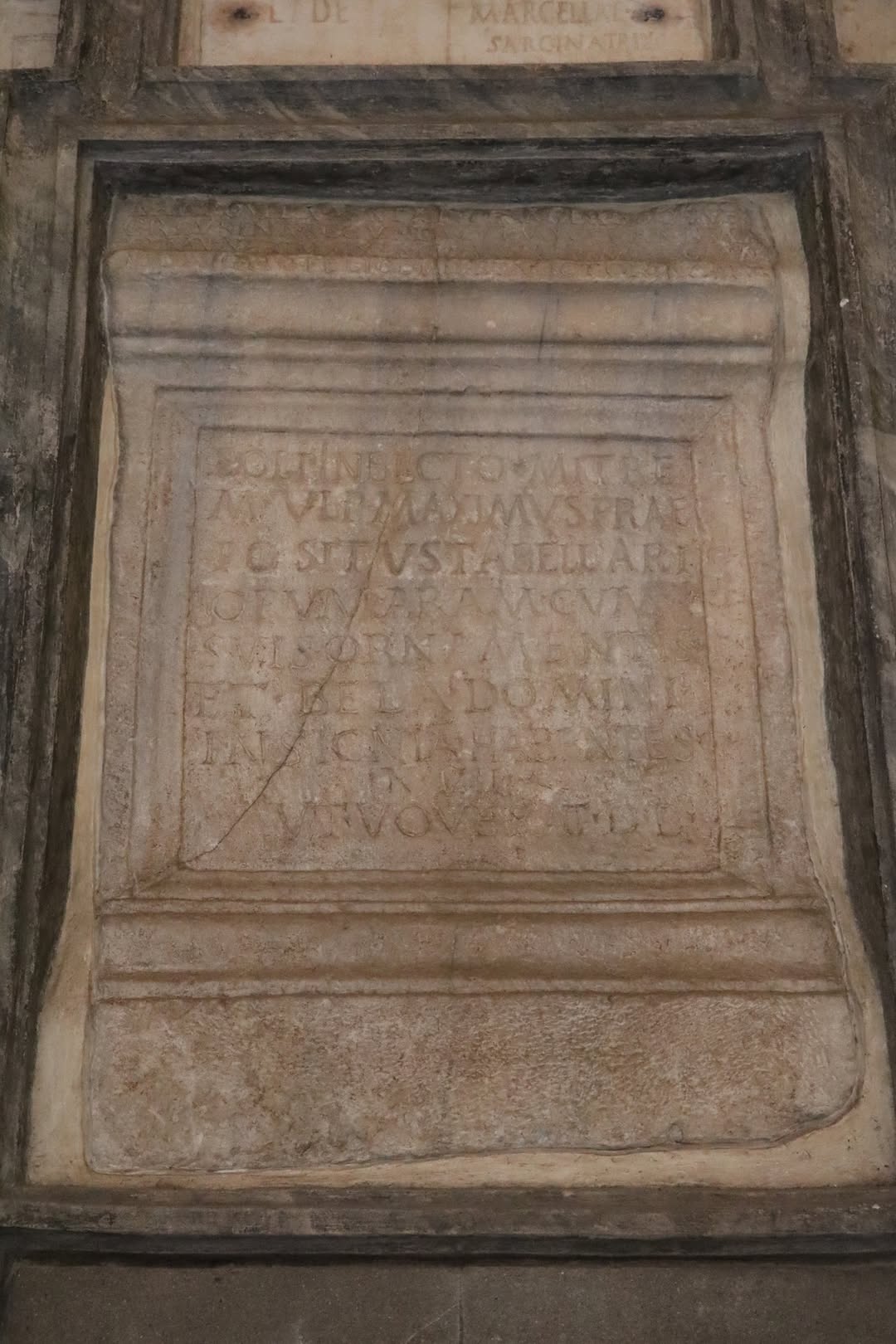
Marble altar dedicated to Sol Invictus Mithras, found in Rome (in aedibus Maffaeiorum), set up in 183 A.D. by M. Ulpius Maximus, praepositus tabellariorum, together with its ornaments and Mithraic insignia, in fulfilment of a vow.
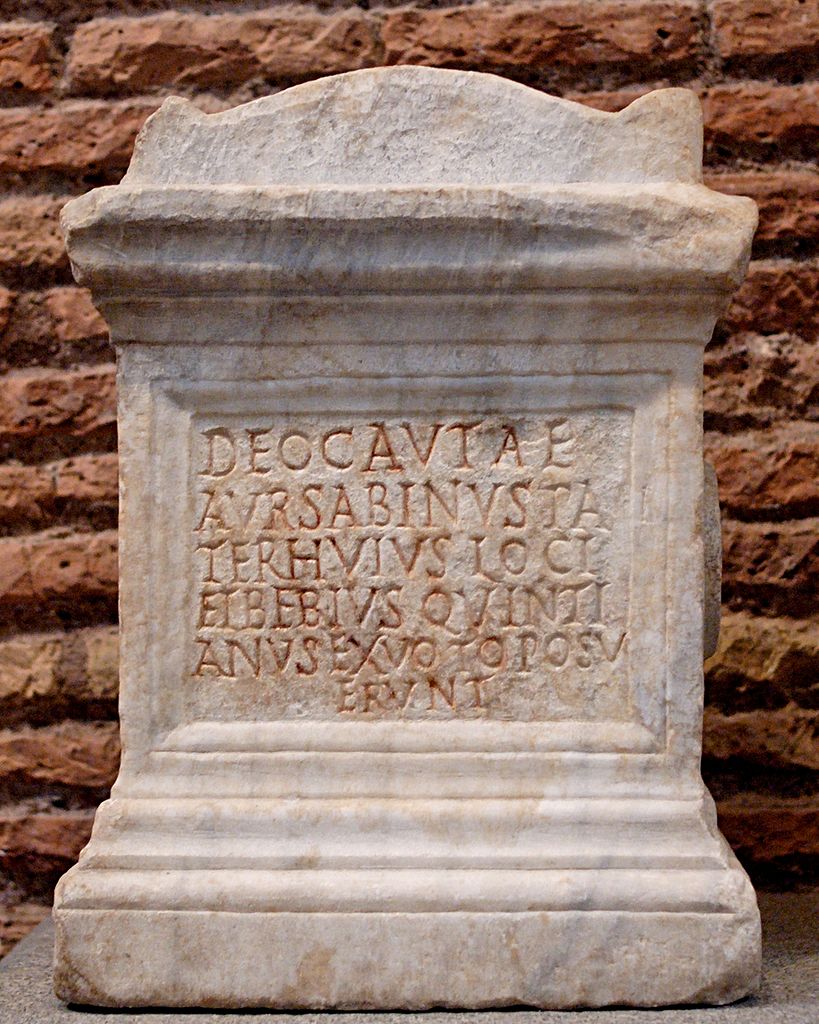
These two parallel altars to the diophores were dedicated by the Pater and a Leo from the Mithraeum of S. Stefano Rotondo.
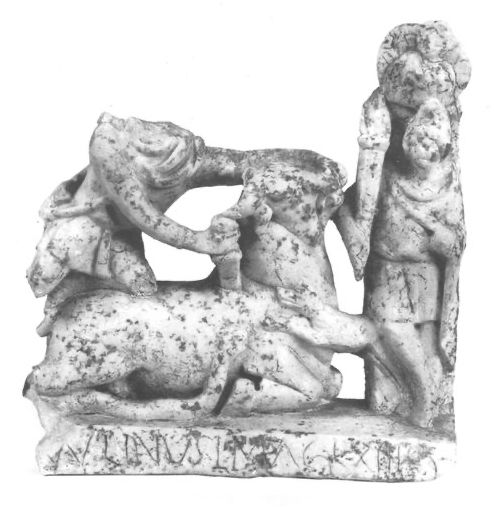
This relief of Mithras killing the bull was dedicated by the bearer of the imperial standard of Legio XIII Gemina, Marcus Ulpius Linus.
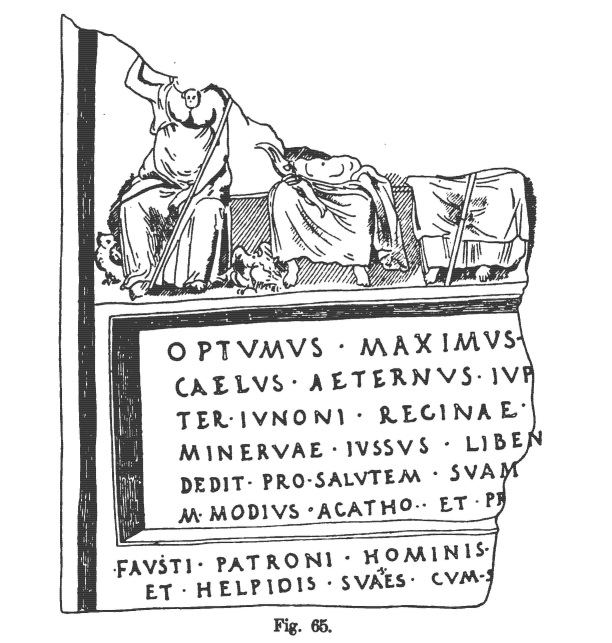
This marble relief bears an inscription by Marcus Modius Agatho, who dedicated several monuments to Mithras on the Caelian Hill in Rome.
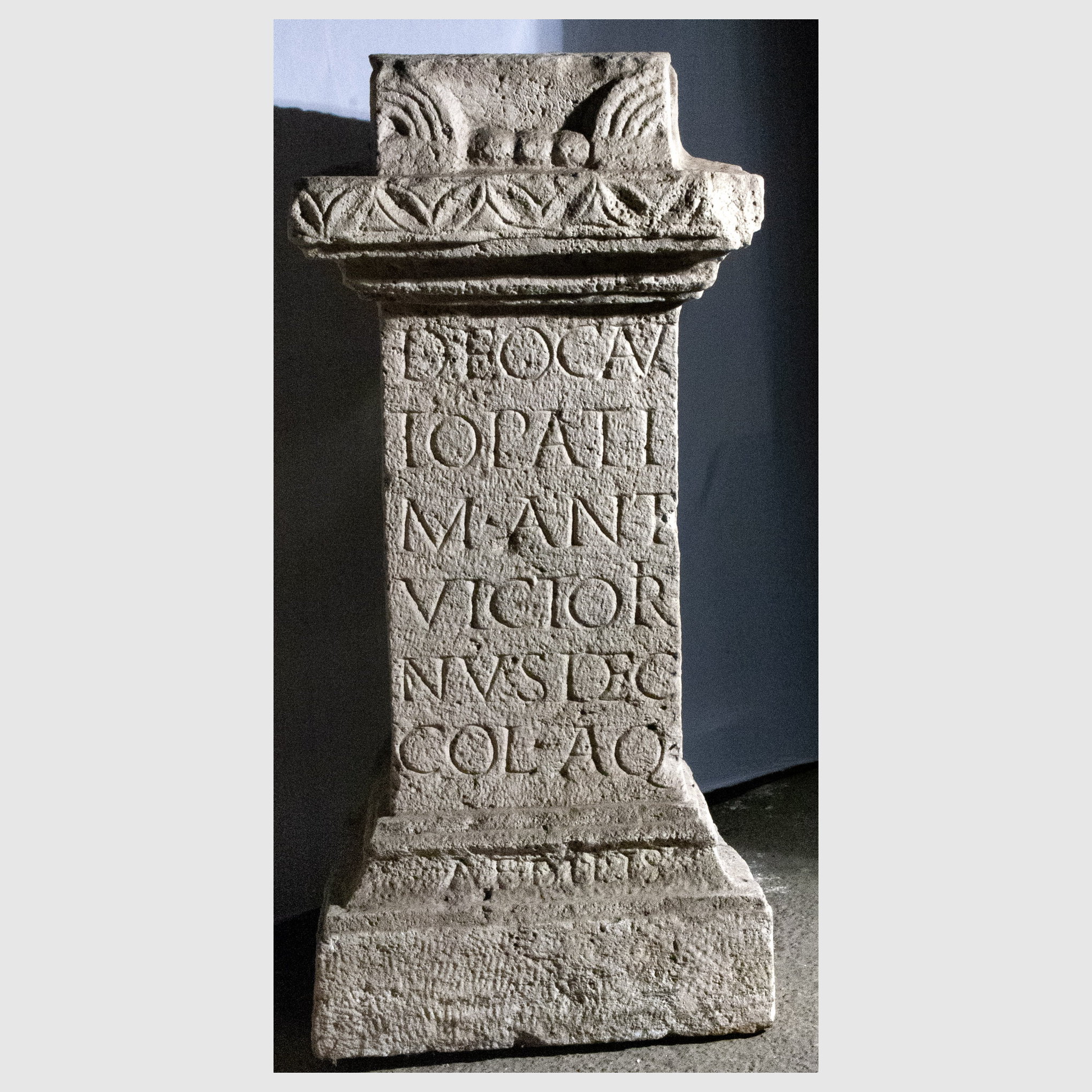
These two altars, erected by a certain Victorinus in the mithraeum he built in his house, bear inscriptions to Cautes and Cautopates.

This marble altar was found ’in the street called di Branco’, behind the palace of the Cardinal of Bologna, in Rome.
