Your search Martin Luther King gave 158 results.
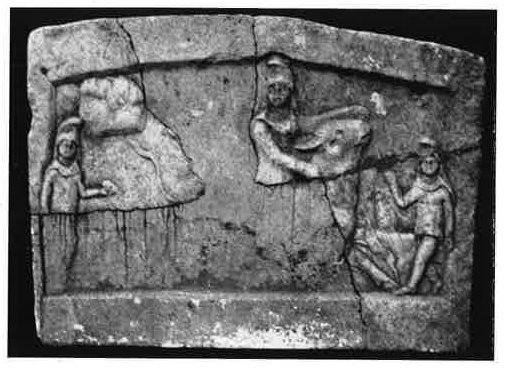
Three white marble tauroctony fragments from Constanța, ancient Tomis in Moesia Inferior, preserving the upper part of Mithras as bull-slayer with flanking divine busts.
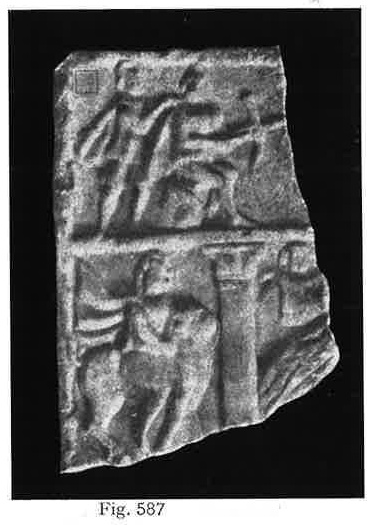
Left upper corner of a white marble tauroctony relief from the Roman camp at Drubeta, Dacia, found in 1896–99, preserving the grotto border and, outside it, Sol in his quadriga with cracking whip.

Tauroctony relief carved directly into the rock of the Mithraeum on the Colle S. Giorgio near Cavtat, ancient Epidaurum in Dalmatia; the composition includes Sol, Luna, Cautes, and Cautopates flanking the central scene.
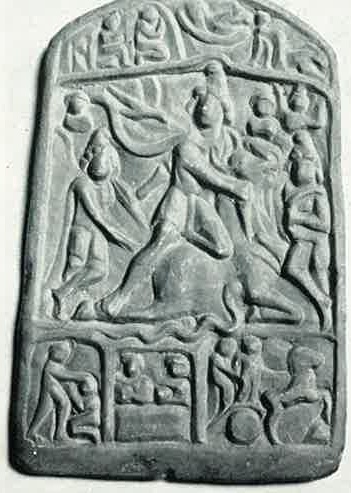
Limestone tauroctony relief found in a grotto at Nagy-Kovácsi, Pannonia Inferior, depicting the standard bull-slaying with flanking torchbearers and divine busts in the upper register.
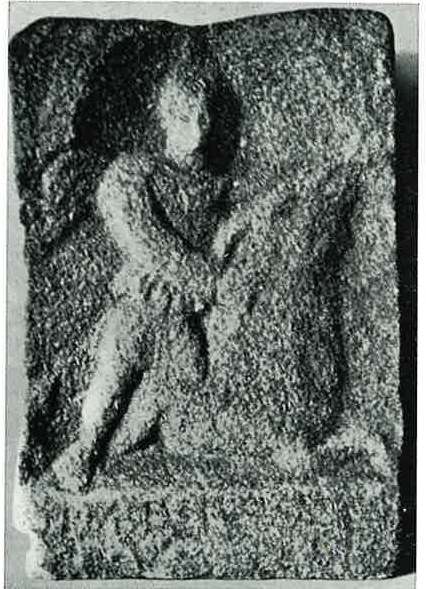
Marble tauroctony relief from the Mithraeum at Modrič, Pannonia Superior, with Cautopates and Cautes flanking the bull-slaying scene and a dedication inscribed in the lower border.
Column found at Sankt Peter in Holz, ancient Teurnia in Noricum, dedicated to Cautes by Lucius Albius Atticus and Caius Albius Avitus — probably father and son — making it a rare joint family dedication to a Mithraic torchbearer.
Marble altar found in flood gravel at Aguntum, Noricum, dedicated to Deo invicto Soli Mithrae collectively by the Aguntenses, making it one of the rare collective dedications to Mithras.
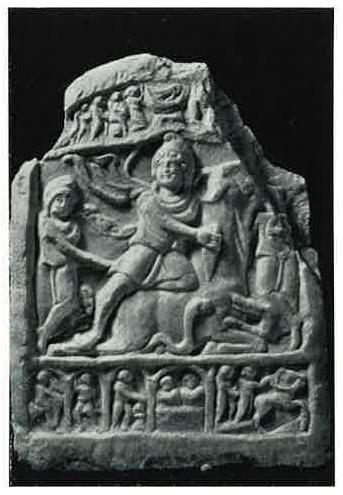
Small limestone tauroctony relief from Enns, ancient Lauriacum in Noricum, found about 100 metres east of the north-east corner of the castra, depicting Mithras killing the bull with dog and serpent and flanking torchbearers.

Three-fragment terracotta plate from the Mithraeum at Linz, ancient Lentia, with a seven-hole border and a graffito in the centre invoking Iupiter Optimus Maximus; found in the second room of the sanctuary.
Marble epistylium in three fragments from the Mithraeum at Moosham, Noricum, decorated with a central tree, a flying hind pursued by a dog and an Amazon, a walking lion, and a horseman; bearing an identical inscription on both lateral tabulae.
Lost stone inscription found reused in a pier of the parish church of St Martin at Günzburg, ancient Guntia in Raetia, dedicated to Deo invicto Mithrae by Publius Oppius Secundus following a vision.
Large limestone relief from Thun-Allmendingen depicting a bull walking to the left; the head is lost. At approximately 2.91 × 2.43 m one of the largest single-animal reliefs from a Mithraic context.
Pair of large stone lions from the Mithraeum at Königshoffen, each holding a boar's head beneath its forepaws and painted red on a white ground; they were set at the ends of the podia, flanking the sanctuary.
Stone head in a Phrygian cap found near Rothselberg in 1894, preserved in the Historisches Museum der Pfalz at Speyer, looking upwards
Evidence for a Mithraeum at Sentinum (modern Sassoferrato) in ancient Umbria, attested by a marble tauroctony group and three inscriptions, with a related mosaic found on the grounds of the Countess of Leuchtenberg and later given to King Louis of Bavaria…
A rectangular marble tauroctony relief found in Etruria, once in the Villa Martin at Settignano near Florence, showing Mithras slaying the bull with Cautes and Cautopates in Eastern attire cross-legged on either side and the busts of Sol and Luna in the upper corners;…
A Sol statue headless and lacking arms and feet, mentioned by Martelli as existing at Nersae alongside a fragmentary inscription, with no further details obtainable by Vermaseren or Cumont.
Two tauroctony statues formerly at the Villa del Grande near the Porta Maggiore in Rome, both lacking the upper part of Mithras and the bull's head.
Marble altar lacking its tympanum, found in the house of Franciscus Novellus near S. Marco in Rome, dedicated to Sol Invictus by T. Pomponius Repentinus, a nomenclator and keeper of public records, with two denarii distributed at the dedication; dated to 184 A.D…
Marble slab from the S. Prisca Mithraeum with a dedication to Sol Invictus Mithre thanking his divine will for repeatedly answering prayers and enjoining the fulfilment of vows.
