Your search Murviel-lès-Montpellier gave 267 results.

Ernest Renan suggested that without the rise of Christianity, we might all have embraced the cult of Mithras. Nevertheless, it has had a lasting influence on secret societies, religious movements and popular culture.
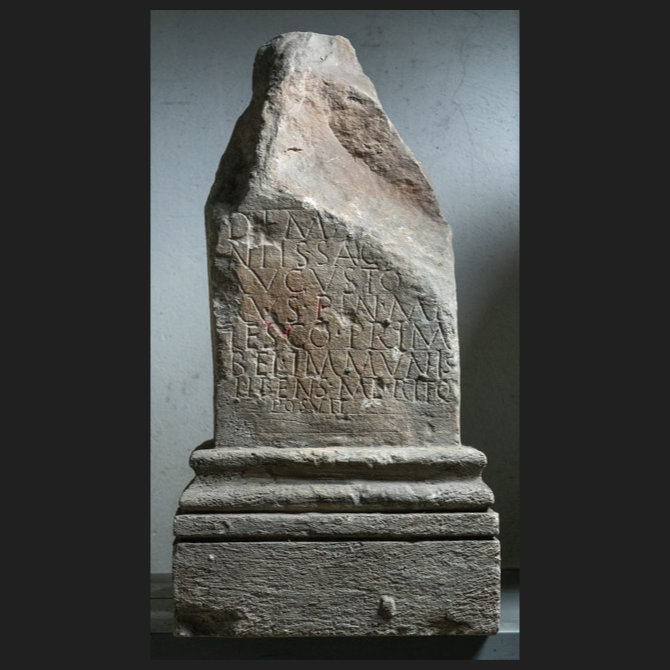
This altar, discovered in Grude, near Tihaljina, Bosnia and Herzegovina, bears an inscription by Pinnes, a soldier of the Cohors Prima Belgica.

In this 4th-century Roman altar, the senator Rufius Caeionius Sabinus defines himself as Pater of the sacred rites of the unconquered Mithras, having undergone the taurobolium.
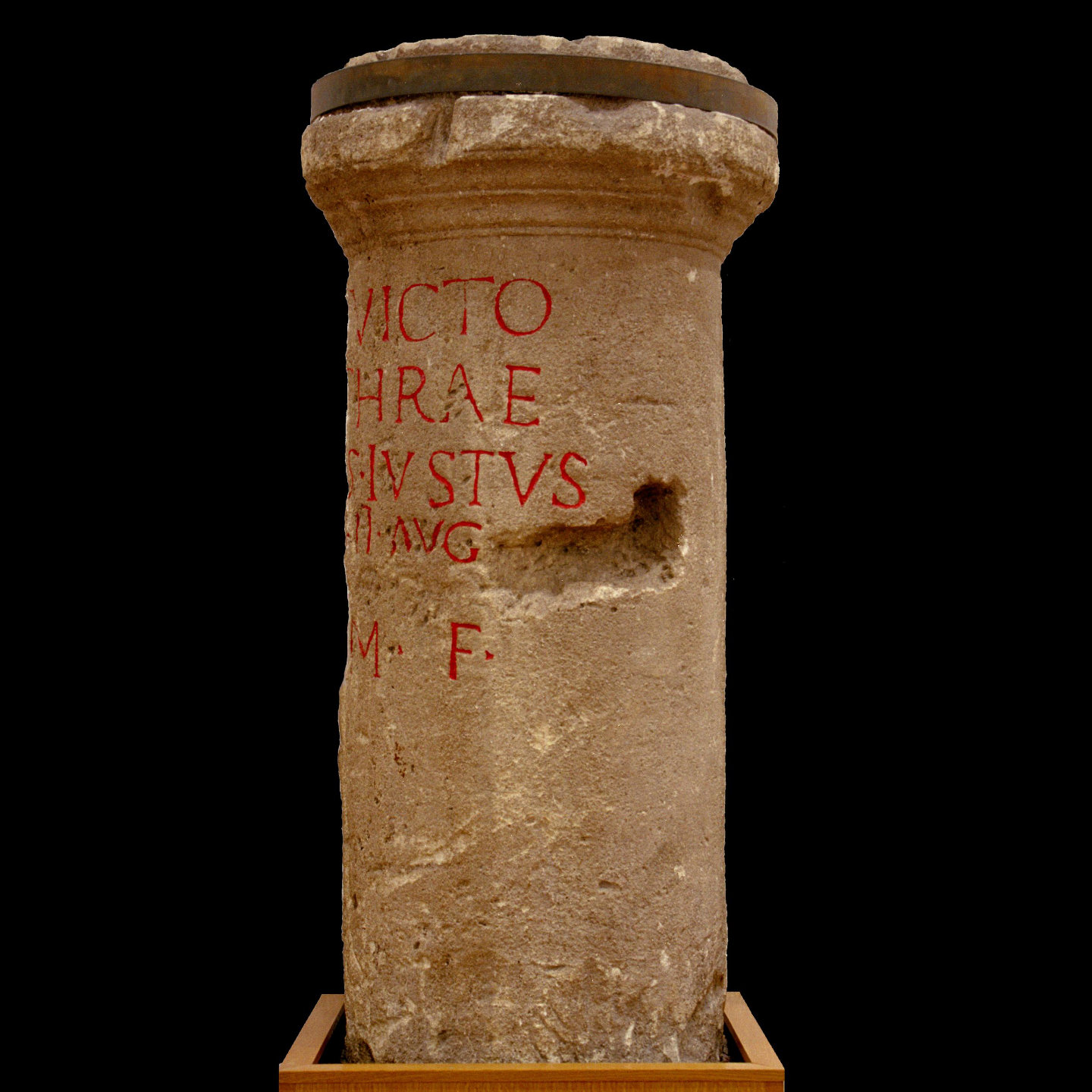
This oolite base, dedicated to the invincible Mithras, was found in the baths of the Villa de Caerleon, Walles.
This marble bust of Sol, found in the Mitreo di San Clemente, had five holes in the head where rays had been fixed.
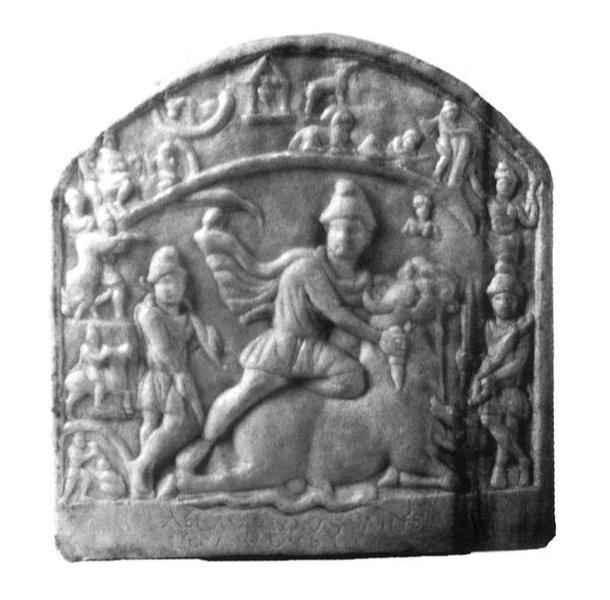
This small relief of Mithras killing the bull was found in 1859 in Turda, in the Cluj region of Romania.
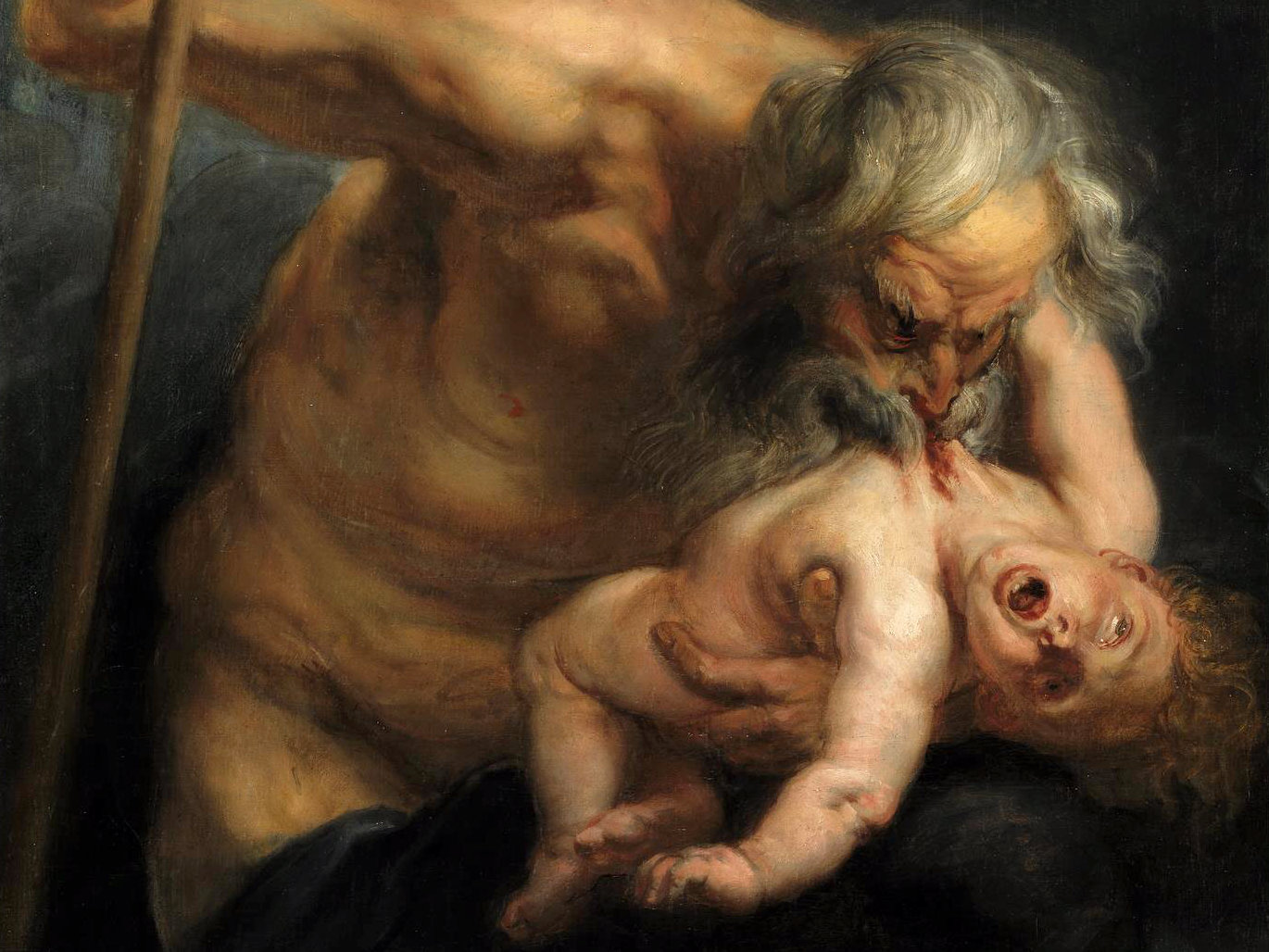
It is well known that Mithras was born from a rock. However, less has been written about the father of the solar god, and especially about how he conceived him.

A concise guide for curatores on how to prepare, structure, and publish articles on The New Mithraeum.
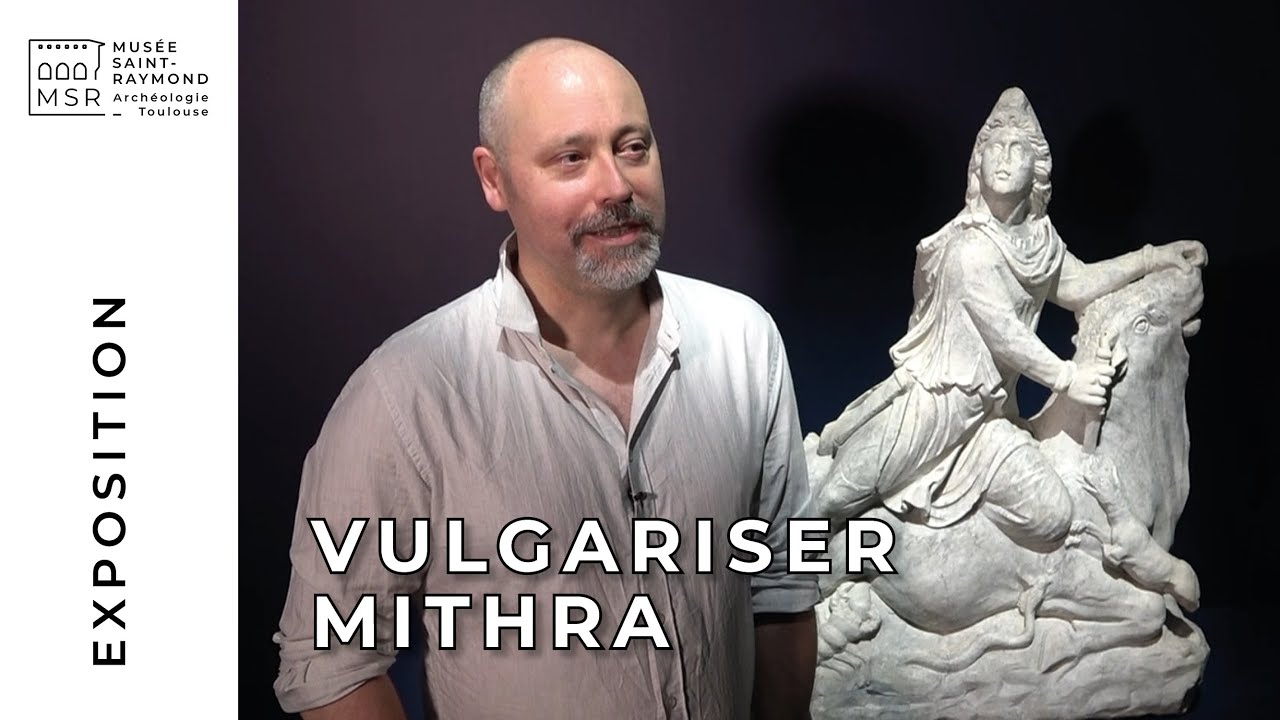
Jean-Christophe Piot a participé à la réalisation de l'exposition 'Le mystère Mithra' en réalisant des pastilles sonores sur certaines œuvres de l'exposition.
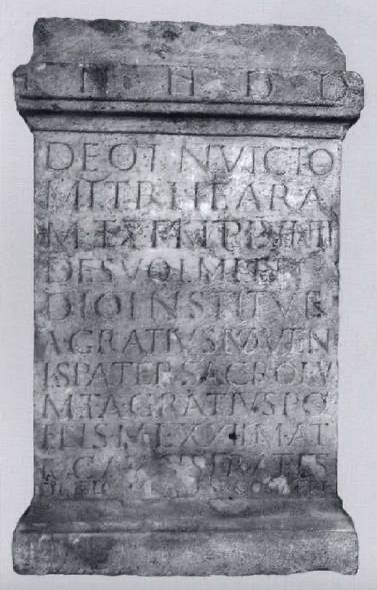
The monument was dedicated by two brothers, one of them being the Pater of his community.
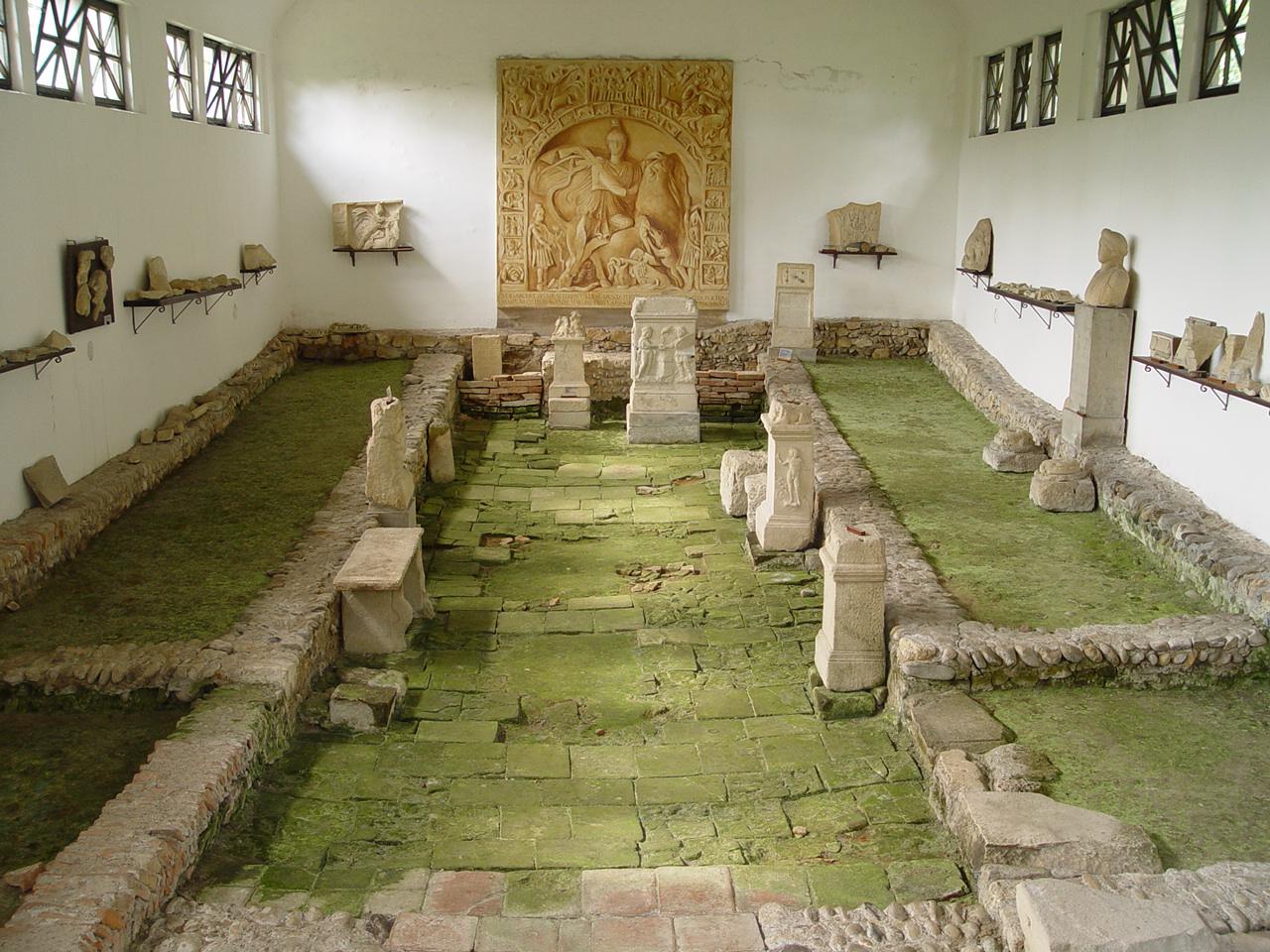
Mithraeum III in Ptuj was built in two periods: the original walls were made of pebbles, while the extension of a later period was made of brick.
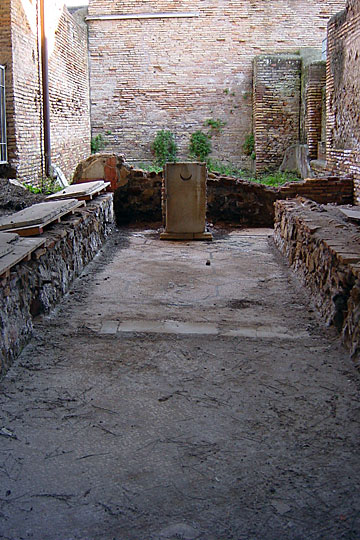
The Mithraeum of Lucretius Menander was installed in the early 3rd century in an alley to the east of a Hadrianic building named after the solar god temple.

Mithra et ses actualités - Journée d'études.
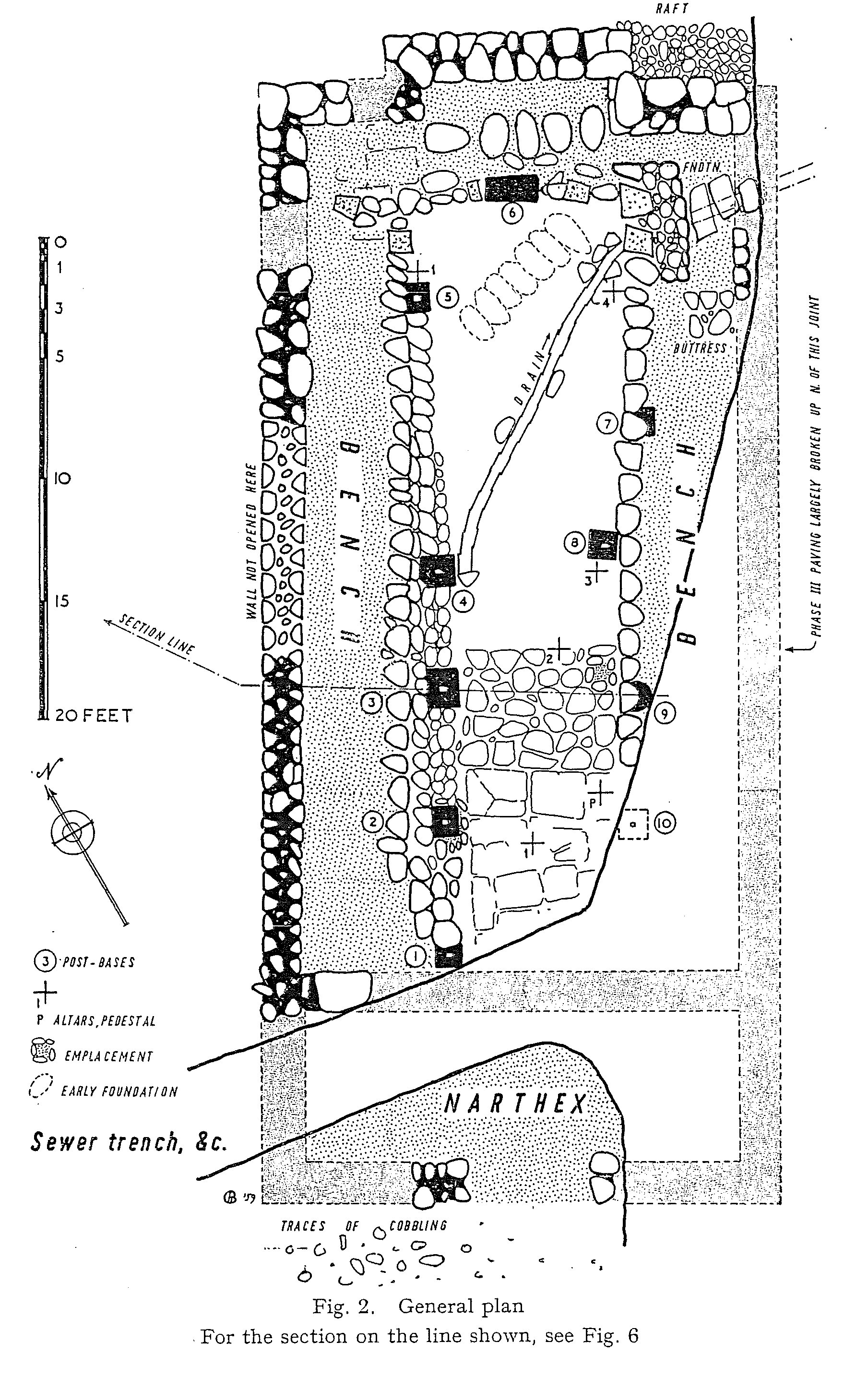
The Mithraeum of Caernarfon, in Walles, was built in three phases during the 3rd century, and destroyed at the end of the 4th.

Seminario de Investigación Cultos orientales e Iconografía Máster en Arqueología del Mediterráneo en la Antigüedad Clásica.
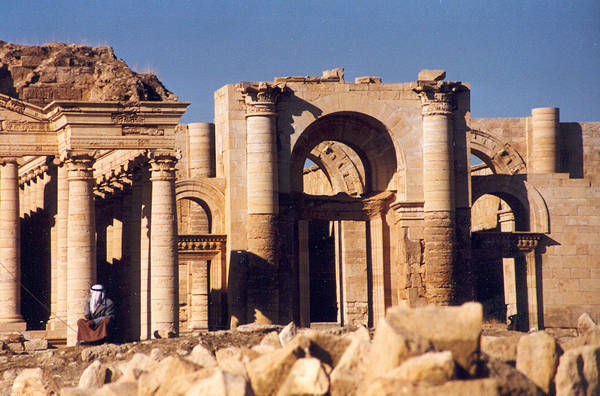
The city of Hatra was famed for its fusion of several civilization cults, which several temples devoted to gods from all Indo-European world.
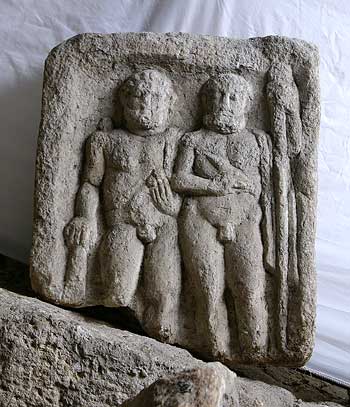
This marble relief was found in a Mithraeum in Ptuj.
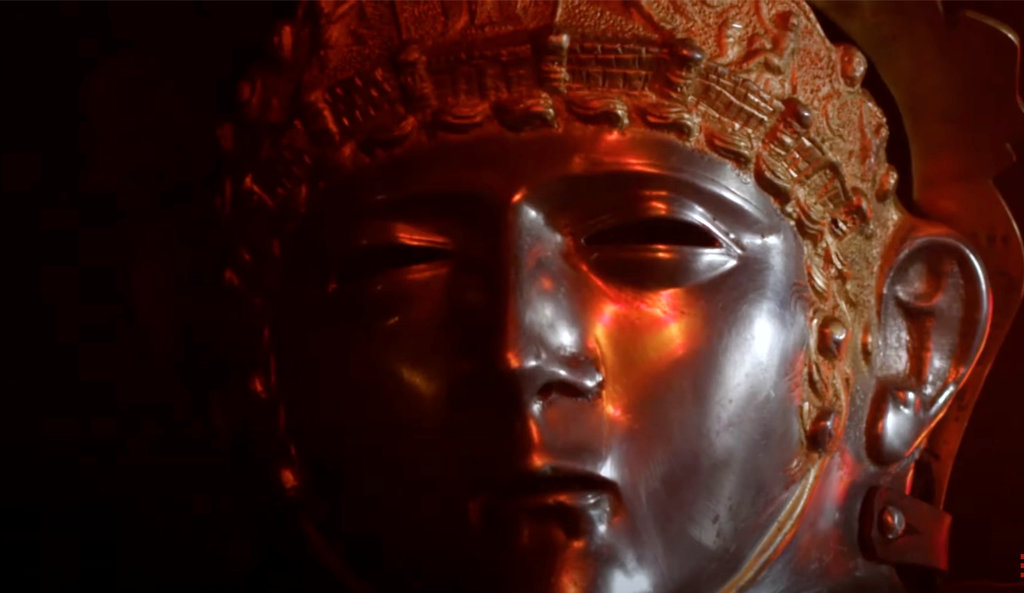
On Hadrian's Wall lies the ruin of a subterranean temple to a little-known god, at the centre of a secretive Roman cult.
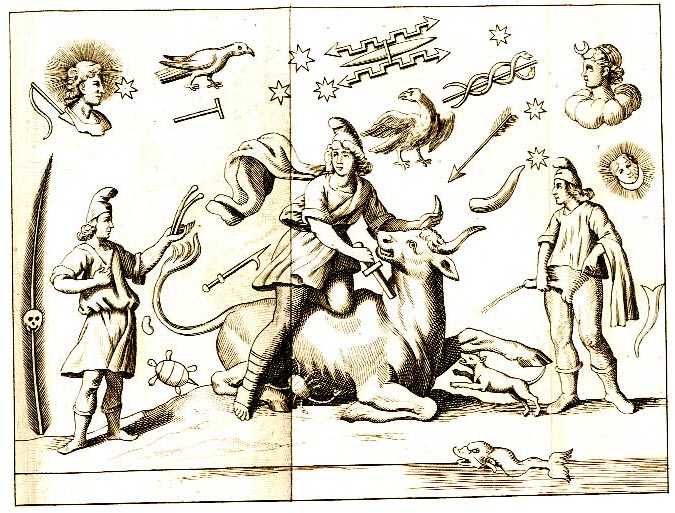
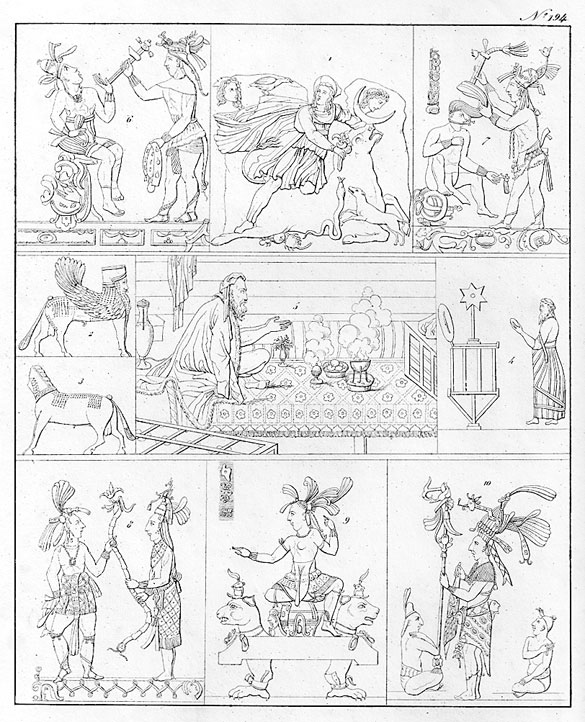
Engraving with cosmological and symbolic mithraic elements.