Your search Nicopolis ad Istrum gave 1508 results.
Lors de la construction de l’église Saint-Paul en 1911, un mithraeum a été mis au jour à Königshoffen, vicus gallo-romain situé aux abords du camp légionnaire de Strasbourg-Argentorate.
This is a reconstruction of the 2nd level initiation, the Nymphus or male bride.
The inscription reports the restoration of the coloured painting of the main relief of the Mithraeum by a veteran of the Legio VIII Augusta.
The relief of naked Roman soldier, wearing a mantle and a Phrygian cap, has been related to the Mithras' cult.
These two reliefs of Cautes and Cautopates where found in the south corner of one of the Mithraea of Friedberg, Hesse.
This silver amulet depicts Abraxas on one side and the first verses of the Book of Genesis in Hebrew on the other.
Chapter of In Search of Cyrus devoted to the origins of the Iranian god Mithra.
Presentation of the so-called Mithraeum of Burham by Mark Samuel at the Ordinary Meeting of Fellows of the Society of Antiquaries of London.
In 1938 this Mithraeum was found 3.45 mtrs under the Basilica of S. Lorenzo in Damaso, in a cellar near the Sacrament's Chapel.
This relief of Mithras slaying the bull was erected in Piazza del Campidoglio, moved to Villa Borghese and is now in the Louvre Museum.
This relief of Mithras killing the sacred bull was found in 1908 near Klisa, in the surroundings of Salona, the ancient capital of Roman Dalmatia.
Hello comrades! When the Discord server? If you want I offer myself for the creation and the administration.
The main cultic relief of Mithras slaying the bull of Fertorakos was carved into the rock face.
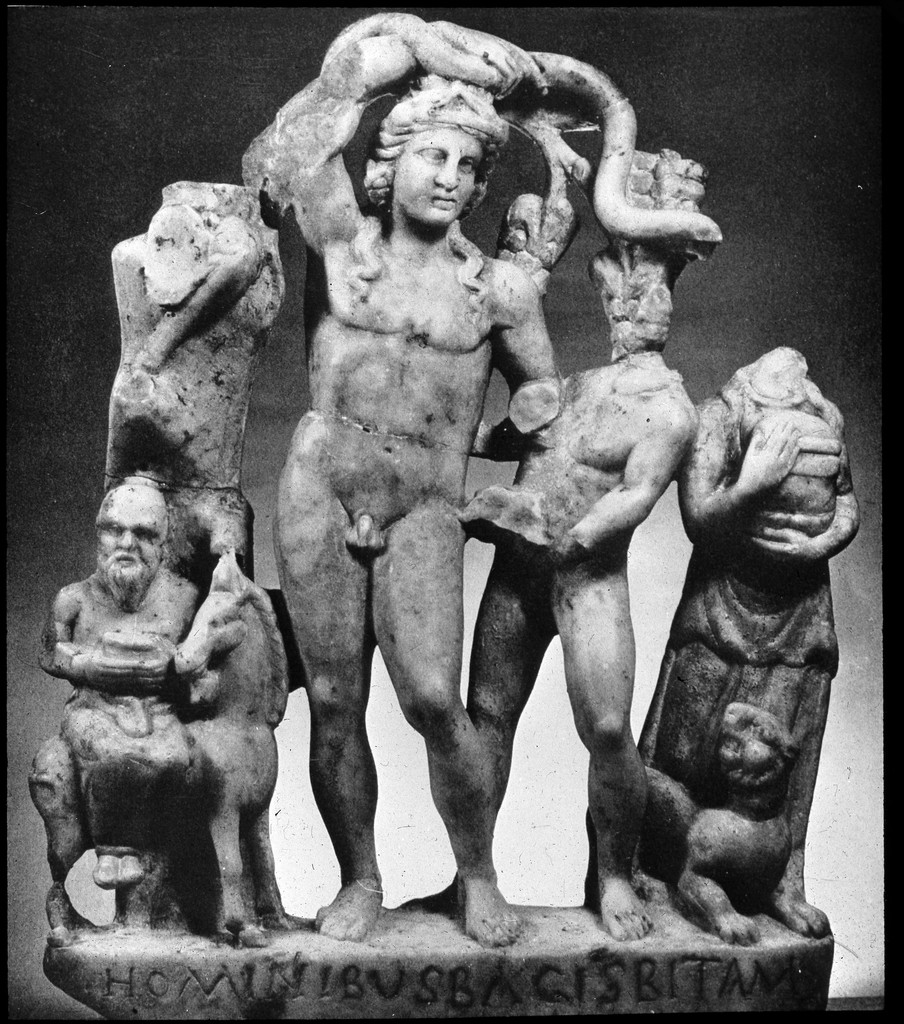
This inscription to Mithras Invencible was dedicated by a certain Apronianus in 172 is currently lost.

For those who don't already know, check out our friend @pattie.lawler's group on Facebook. There is lots of interesting information and it is always up to date with the latest discoveries and events. [ref:6462cf0dd4c7a]
The relief of Mithras killing the bull of Stefano Rotodon preserves part of his polycromy and depicts two unusual figures: Hesperus and an owl.
Cautes and Cautopates attend the birth of Mithras from the rock in the Petrogenia of the third Mithraeum of Ptuj.
