Your search Ostia Antica gave 185 results.
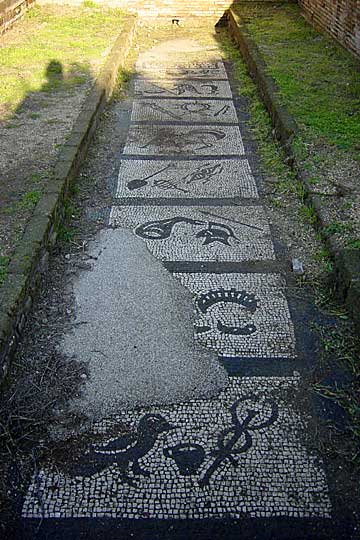
The Felicissimo Mithraeum has a floor mosaic depicting the seven mithraic grades.
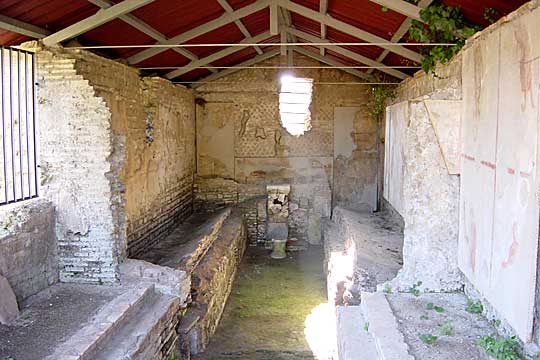
The House of the Mithraeum of the Painted Walls was built in the second half of the 2nd century BC (opus incertum) and modified during the Augustan period.
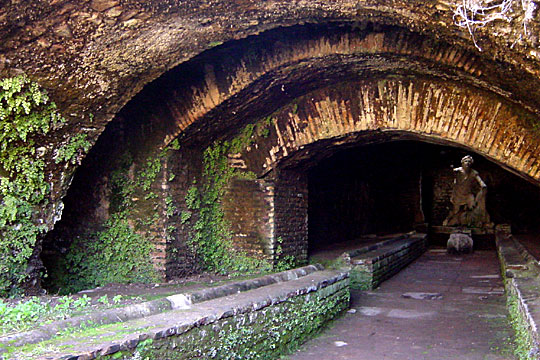
The Mithraeum of the terms of Mithras takes its name from being installed in the service area of the Baths of Mithras.
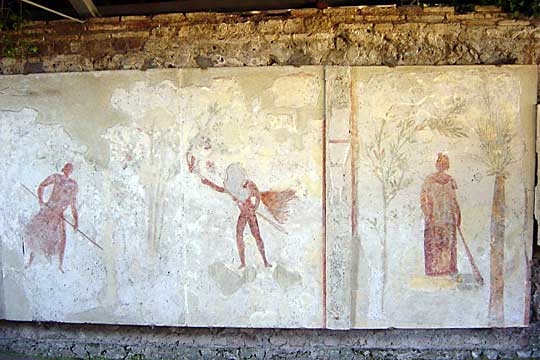
The frescoes depict several figures dressed in different garments associated with the Mithraic degrees.

A bearded Bacchus and another hermes as a woman, both crowned with vine tendrils, were walled into the base of a niche.
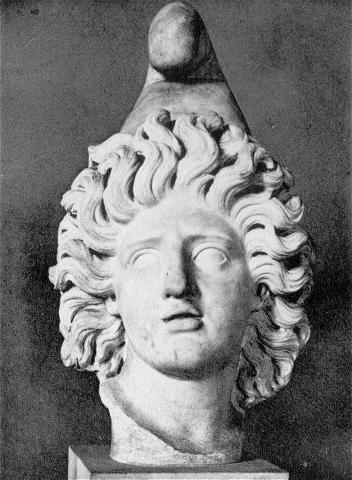
The head of Mithras had seven holes made for fastening rays.
Series of small bronze plaques depicting zodiac signs and planetary figures discovered in Ostia and possibly connected with the decoration of a Mithraic sanctuary.
Two marble heads from Ostia, including a youthful figure wearing a Phrygian cap and another identified as Mithras-Helios.
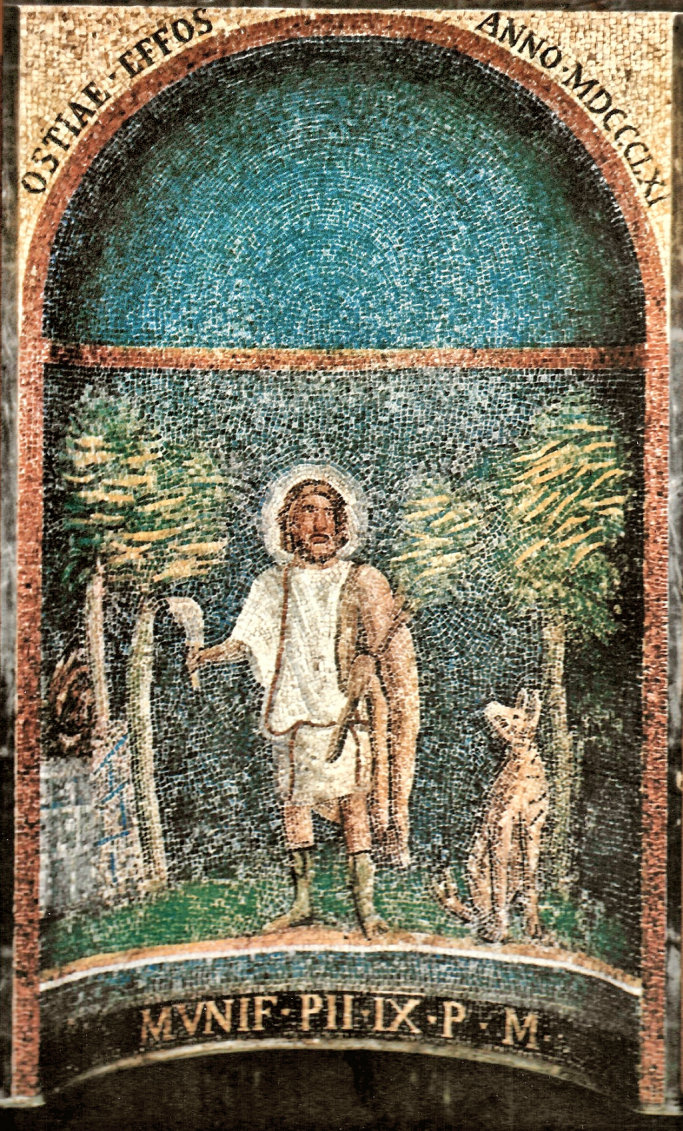
This unusual mosaic representation of the god Silvanus was found in the Mithreaum of the so-called Imperial Palace in Ostia.

This marble statuette from Ostia depicts Cautopates lowering his torch beside a tapering rock associated with Mithras’ birth from stone.
This marble of Cautes was found together with his partner Cautopates in Ostia in 1939.
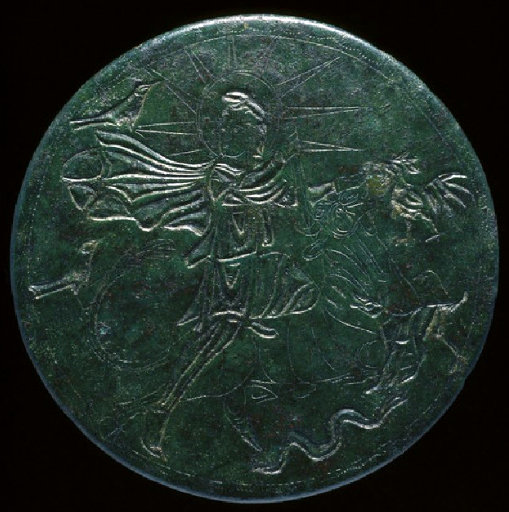
In the Mithraic bronze brooch found in Ostia, Cautes and Cautopates have been replaced by a nightingale and a cock.
This inscription, found in the Mitreo della Planta Pedis, among some other monuments in Ostia, suggests a link between Mithras and Silvanus.
Marble altar found near the entrance of the Mitreo delle Sette Porte at Ostia, dedicated by Sextus Fusinius Felix.
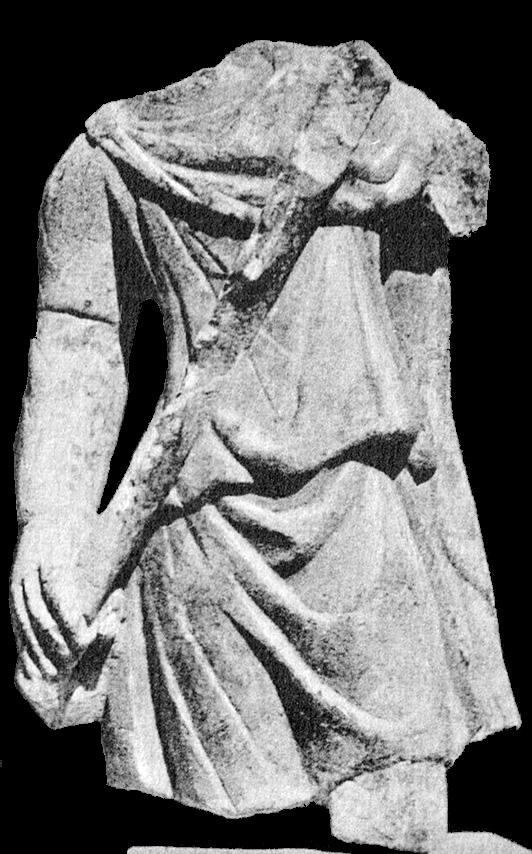
Marble statue of Cautes, found at Ostia. The head, one arm and the legs are missing. The figure wears a short tunic and raises the torch in the canonical upward gesture.
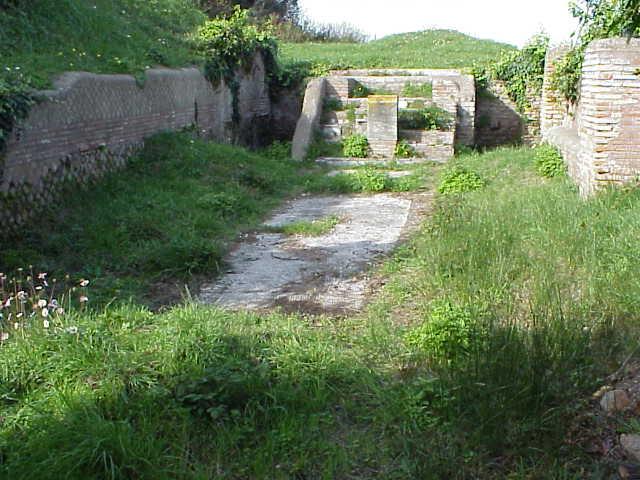
A mosaic of Silvanus, dated to the time of Commodus, was found in a niche in a nearby room of the Mithraeum in the Imperial Palace at Ostia.
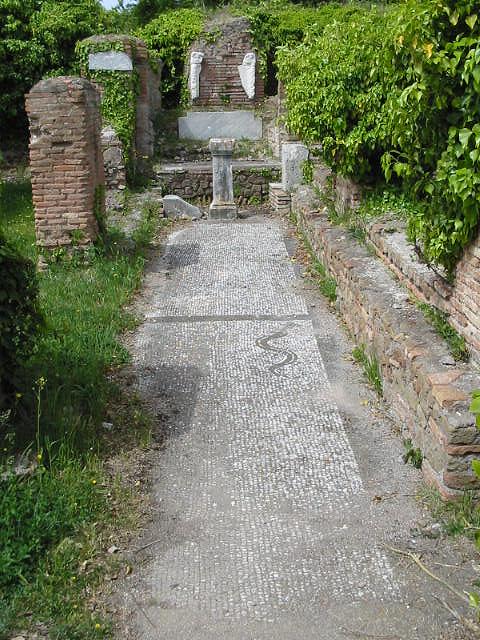
The floor of the central aisle of the Mithraeum of the Footprint in Ostia has a mosaic depicting a snake and a footprint.

A Mithraic pater at Ostia associated with the dedication of an image of Arimanius in the Casa di Diana mithraeum.

Syndexios in Ostia, his name Marsus suggests that he was a snake-charmer.

Pater Patrum of Ostia, he officiated at the Mitreo Aldobrandini where he is mentioned in a couple of inscriptions.
