Your search Ostia Antica gave 178 results.

Marble cap mentioned by Visconti, subsequently identified as certainly belonging to the finds of the Mitreo degli Animali rather than the Mitreo del Palazzo Imperiale, Ostia.
A small two-wick lamp and a larger twelve-wick lamp inscribed Serapiodori inny, from the Mitreo del Palazzo Imperiale at Ostia.
Marble lion's head fastened into a wall, its flat square back indicating it was set into masonry, from the Mitreo del Palazzo Imperiale at Ostia.
A few pieces of tuff worked as rocks, forming a cone representing the remnants of the rock-birth of Mithras, found around the altar in the Mitreo del Palazzo Imperiale at Ostia.
A group of small finds from an Ostia Mithraeum, including three tuff altars, two trapezophores, a column fragment, lamps, vases, and a marble Silen.
The inscription is carved into two pieces of marble cornice.
Relief featuring an enigmatic agricultural implement interpreted either as a scythe or an early type of plough.
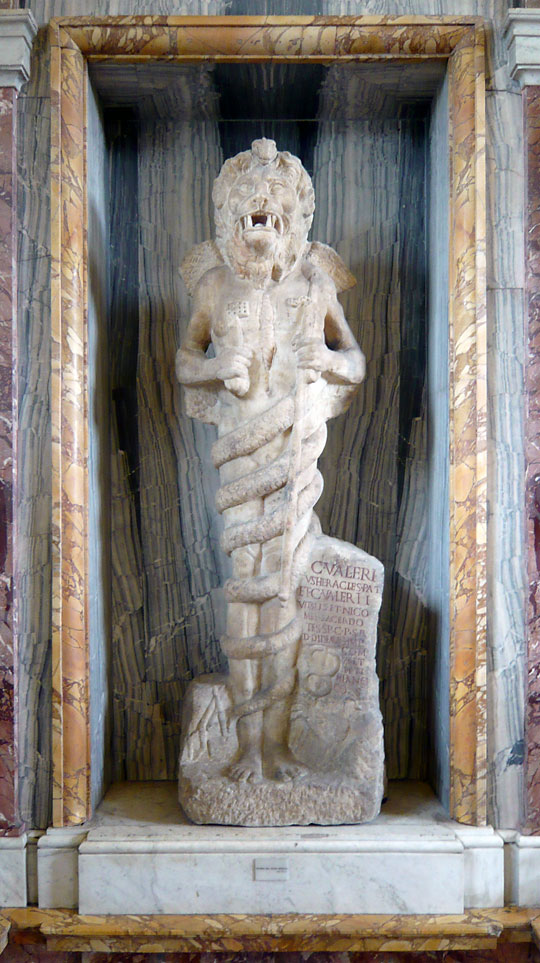
The marble Aion from the lost Mithraeum Fagan, Ostia, now presides the entrance to the Vatican Library.
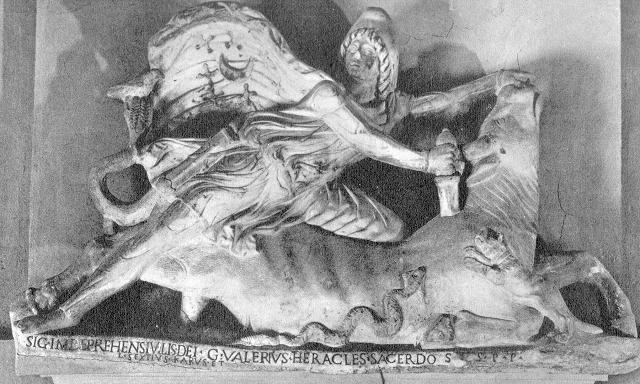
This sculpture of Mithras killing the bull was dedicated to the ’incomprehensible god’ by a certain priest called Gaius Valerius Heracles.
This inscription found in the Mithraeum Aldobrandini informs us of certain restorations carried out in the temple during a second phase of development.
This 3rd century marble relief of Silvanus is the only sculpture found in Mitreo Aldobrandini.
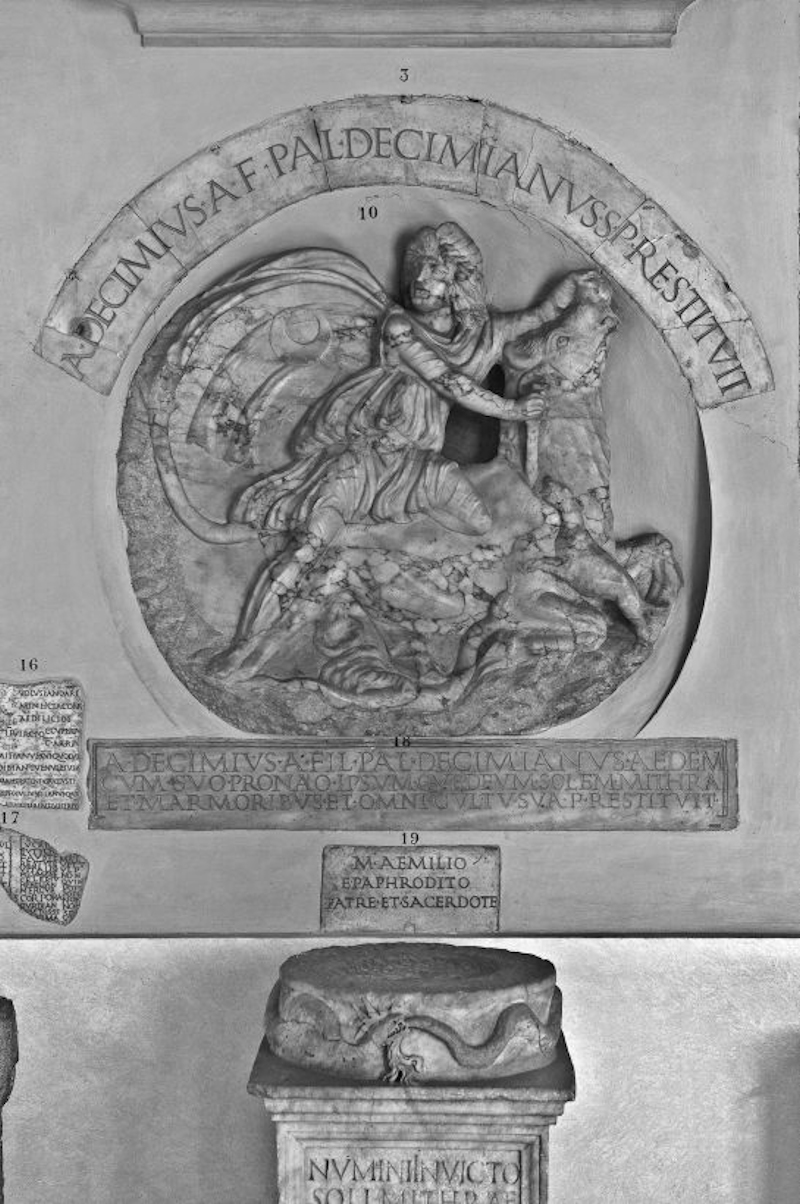
The relief of Mithras slaying the bull from the Mithraeum of the Seven Spheres was discovered in 1802 by Petirini by order of Pope Pius VII.
This inscription found in the Mithraeum of the Seven Spheres mentions the Pater Marco Aemiliio Epaphrodito known from other monuments in Ostia.
The altar includes a slab with an inscription for the salvation of two emperors.

The image of the god Arimanius to which this monument refers has not yet been found.
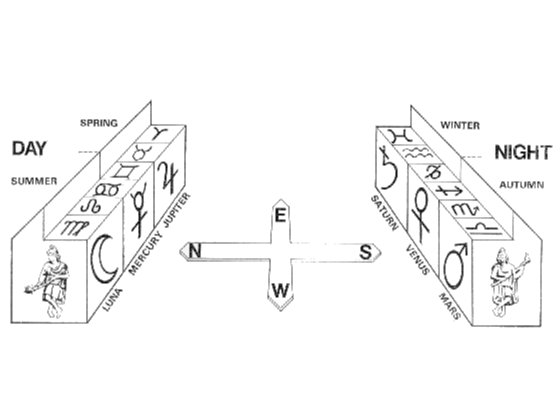
The rich mosaics of the Mithraeum of the Seven Spheres include the the signs of the Zodiac.
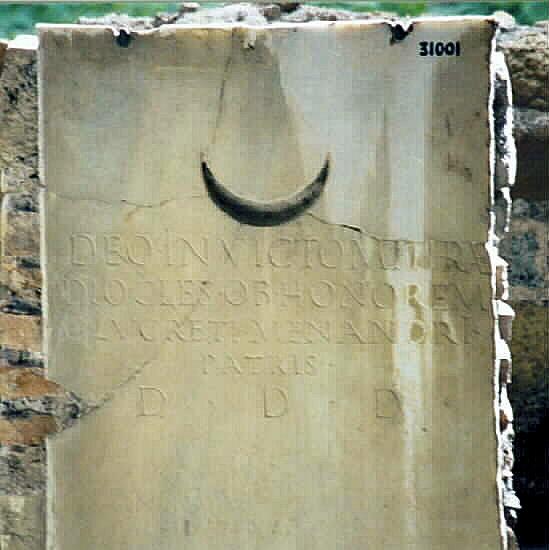
The brick altar of the Mithraeum Menander was covered with marble slabs bearing a crescent and an inscription.
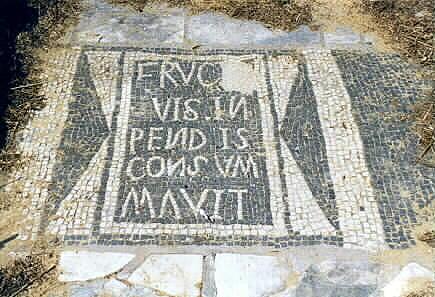
The mosaic bears an inscription indicating the name of the owner.
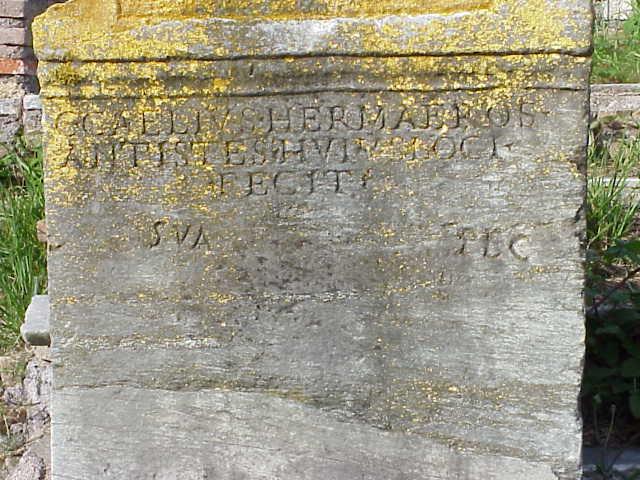
This is one of several marble inscriptions made by a certain Caelius Ermeros, who was the antistes of the Mithraeum of the Imperial Palace.
Fragmentary marble statue of a woman from the Mithraeum delle Sette Porte.
