Your search René de Obaldia gave 21 results.
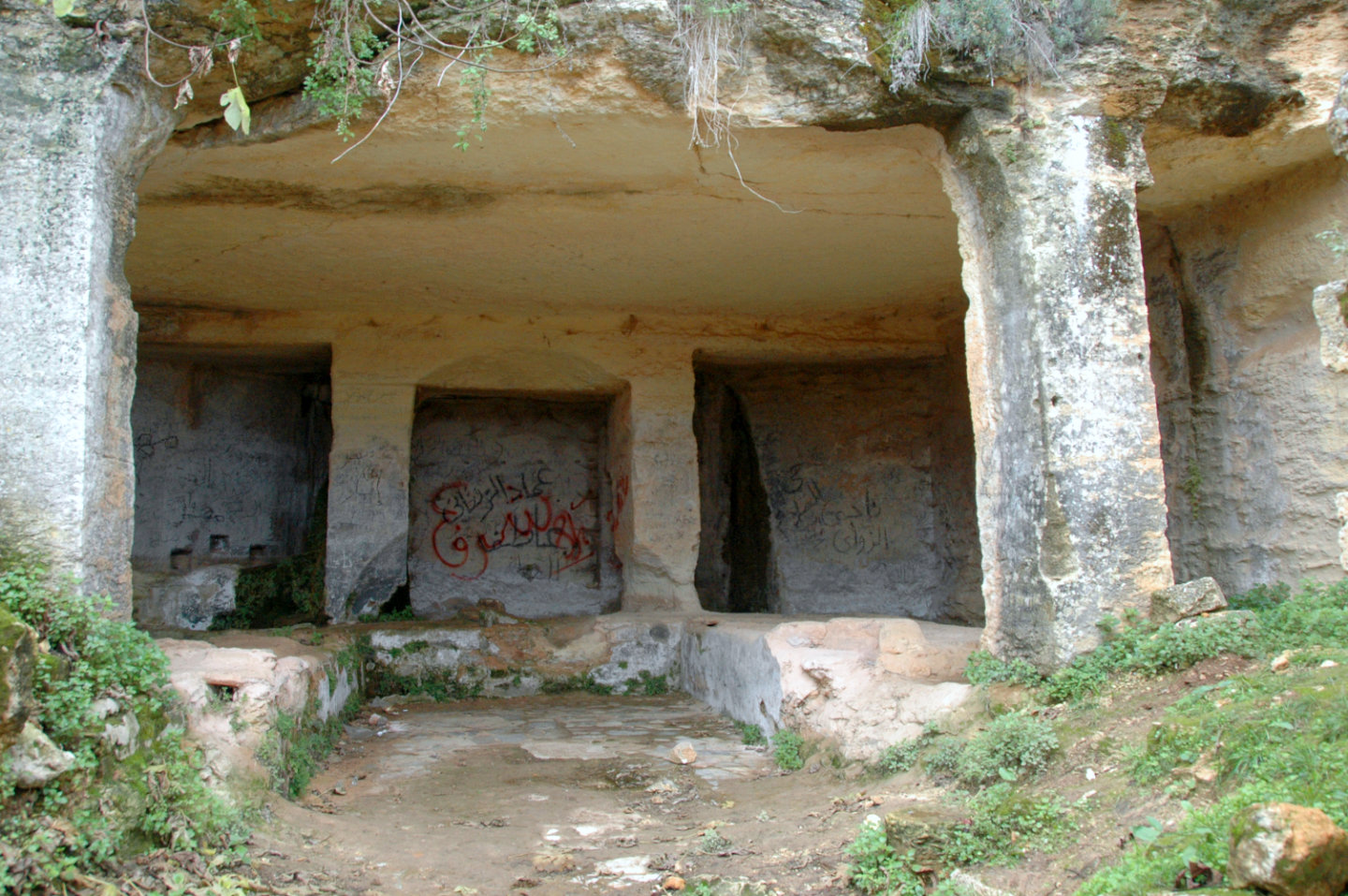
The Mithraeum of Cyrene is preserved among the remarkable ruins of the ancient capital of the Roman province of Cyrene.

Damaged statue of Mithras as bull-killer on a rectangular base, found in the piazza of the Fountain of Apollo at Cyrene.
Marble head with locks of hair and Phrygian cap, probably depicting Mithras as bull-killer, found under the threshold of the Iseum at Cyrene.


Le groupe caractéristique « lion, serpent, cratère » marque le rapport avec le culte mithriaque, car comme nous croyons l’avoir montré, ce groupe ne symbolise pas la lutte des éléments, terre, eau et feu, mais la participation des animaux-attributs au sacrifice, par Mithra…

Cyrene linked North Africa to the Greek East through long-standing urban traditions and eastern Mediterranean maritime exchange.
Crete and Cyrene connect Mithraic evidence to island, North African and eastern Mediterranean networks.

Cyrene or Kyrene, was an ancient Greek and later Roman city near present-day Shahhat, Libya.

Séminaire du 5 mai 2026 : The Lord of the Covenant: Mihr the judge and the celebration of Mihragān.
Yellow jasper fragment of unknown provenance, formerly in the Museo Borgiano, with a tauroctony on the obverse and a Mithraic figure on the reverse.

Petitor of the Mithraic congregation at Dura Europos, possibly associated with the decoration of the sanctuary.

Strategos of the Palmyrene archers at Dura Europos and dedicator of the earliest tauroctony relief.

Son of the Palmyrene archer commander Iarhiboles and dedicator of the 170–171 CE tauroctony relief from Dura-Europos.
Altar from Doștat, Dacia, dedicated to Invicto Soli deo genitori by Publius Aelius Artemidorus, sacerdos creatus a Palmyrenis — a priest appointed by Palmyrene worshippers.
This supposed Mithraic altar from Soulan in the Pyrenees was later identified as a modern forgery, including both the inscription and the alleged cave context in which it was said to have been discovered.

From the late first century CE, Mithras spread across the Roman Empire, leaving more than 130 sanctuaries and nearly 1,000 inscriptions. This volume offers a rigorous synthesis that renews our understanding of this enigmatic cult.

This magnificently illustrated publication renews the Mithraic dossier on the basis of concrete data, with caution and penetration. Marino's discovery is disconcerting and rekindles the controversy about the order in which bands should be read.


