
Biography
of Ethpheni
- Ethpheni, a free citizen, is attested as a member of a Mithraic community (syndexios) at the Mithraeum of Dura Europos.
- Also recorded as Strategos of Palmyrene archers.
- Attested in 168.
- Attested at Dura Europos, Syria-Coele, Syria in 169 (TNMM 179).
TNMP 73
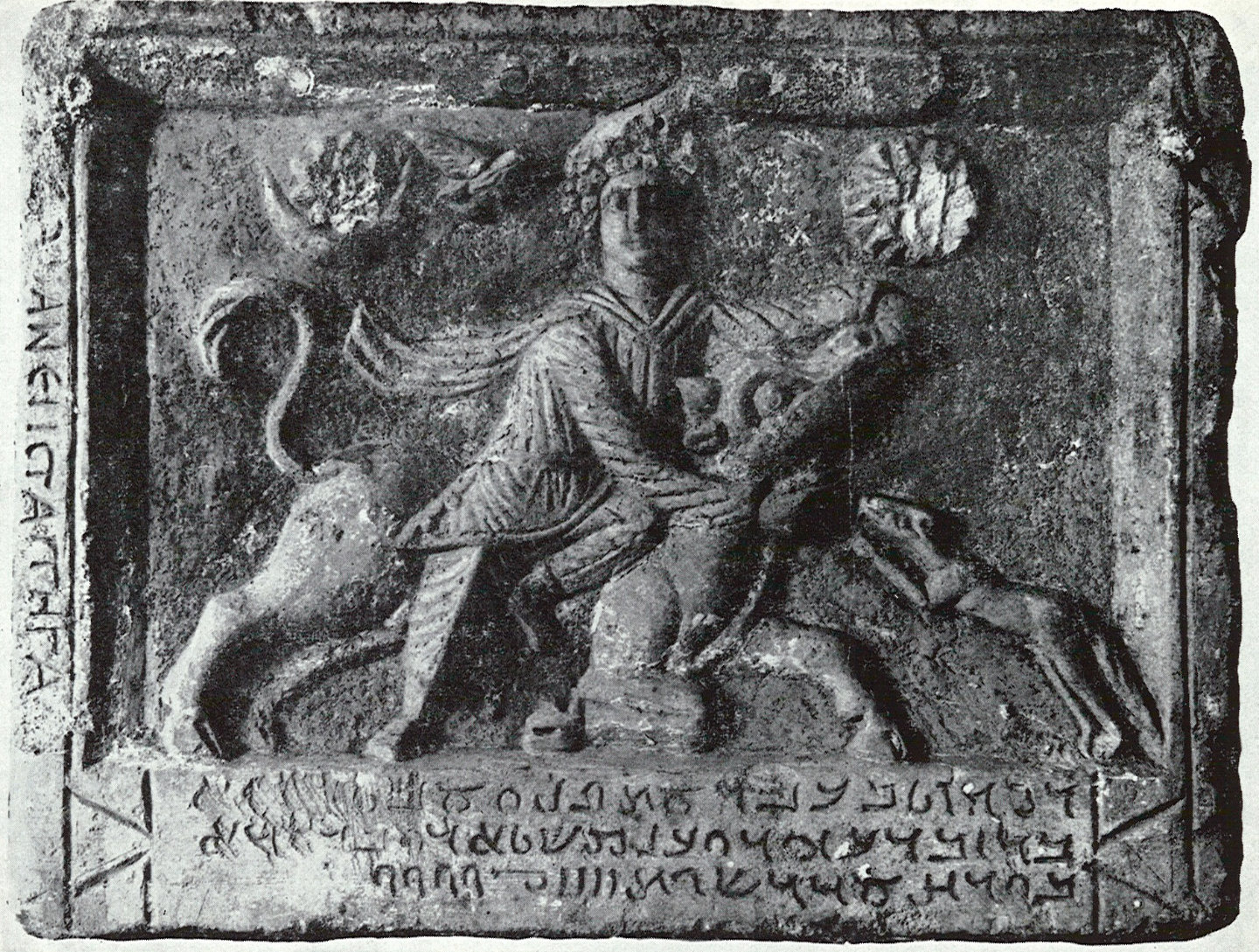
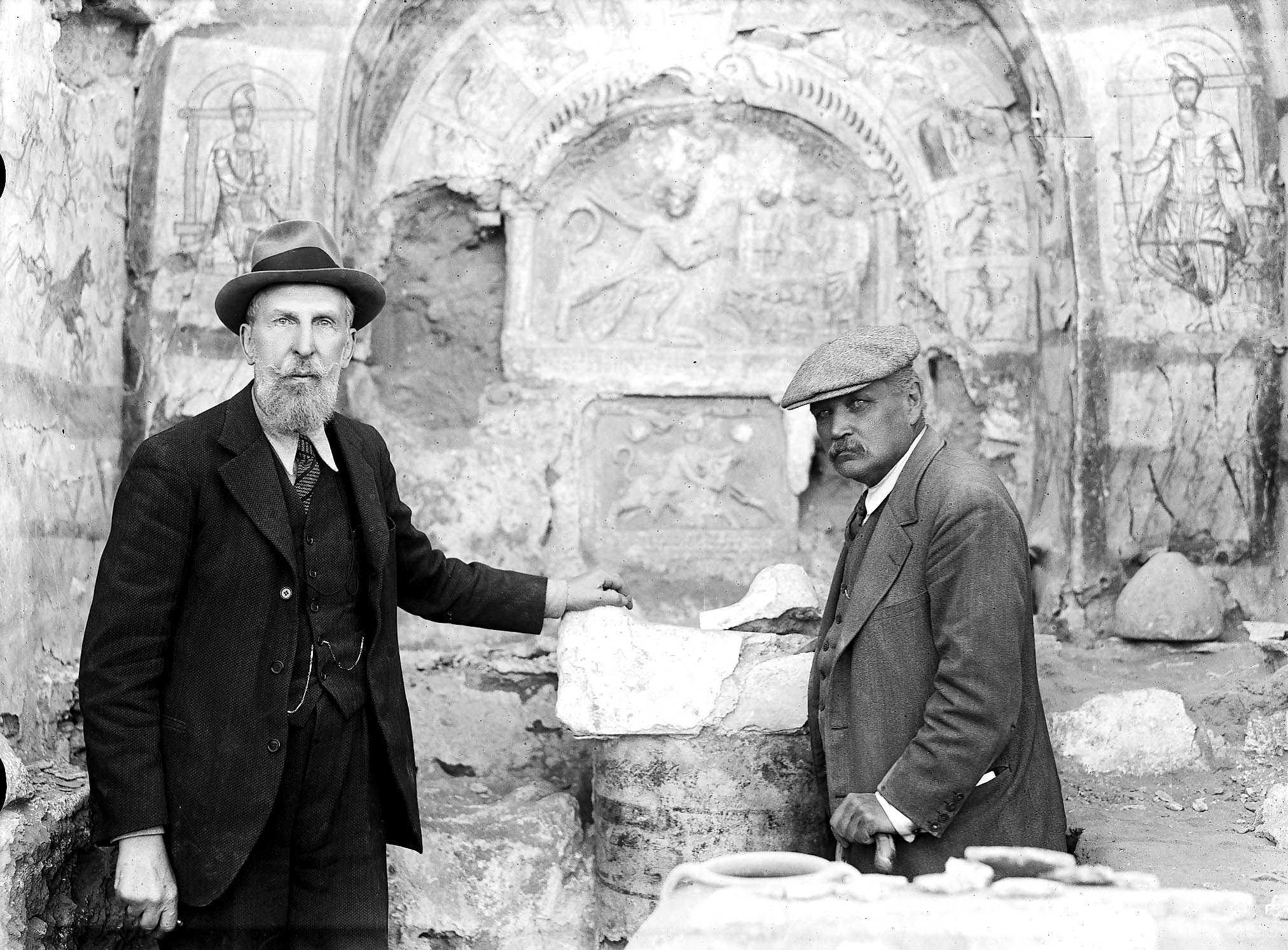
Ethpeni was a Palmyrene strategos commanding a unit of archers stationed at Dura Europos and is the earliest known individual associated with the Mithraic community of the city. He dedicated the smaller of the two tauroctony reliefs preserved from the Dura Mithraeum, an inscription generally dated to around 168 CE, which provides the principal evidence for both his identity and the existence of the earliest phase of the sanctuary (TNMM 179). The original Mithraeum appears to have been a modest rectangular structure furnished with benches and a cult relief, before later enlargements transformed it into one of the most elaborate Mithraic sanctuaries known from the Roman East (Cumont 1975; Downey 1975; Rostovtzeff et al. 1939).
The role of Ethpeni in the foundation of the sanctuary has attracted considerable scholarly attention. Earlier interpretations often regarded the Dura Mithraeum as evidence for the transmission of Mithraic worship from Palmyra, since both Ethpeni and his successor Zenobios bore Palmyrene names and commanded Palmyrene military units. More recent scholarship has been more cautious, noting the absence of unequivocal evidence for a Mithraic community at Palmyra itself and suggesting instead that officers such as Ethpeni may have encountered the cult through their service within the Roman military environment. Whatever its precise origins, the dedication demonstrates that Mithraic worship was already established among elements of the Palmyrene military community at Dura by the late second century CE (Will 1952; Gordon 2001; Dirven 1999).
The tauroctony dedicated by Ethpeni is also notable for several iconographic peculiarities, including the unusual reversal of the positions of Sol and Luna, a feature rarely encountered elsewhere in the Mithraic world. Together with the later relief dedicated by Zenobios, it forms one of the most important bodies of evidence for the early development of Mithraic iconography and ritual practice in Roman Syria (Chalupa 2010; Cumont 1975).
References
- Shrine to the God Mithras (Mithraeum).
- Frank Edward Brown, Michael Ivanovich Rostovtzeff & Charles Bradford Welles (eds.) (1939) The Excavations at Dura-Europos. Preliminary Report of the Seventh and Eighth Seasons of Work, 1933–1934 and 1934–1935.
- Franz-Valéry-Marie Cumont & Eric David Francis. ‘The Dura Mithraeum’. Mithraic Studies. Proceedings of the First International Congress of Mithraic Studies, Vol. 1, pp. 151–214.
- Lucinda Dirven (2025) ‘Dura-Europos: Past, Present, Future’. Dura-Europos: Past, Present, Future, pp 148-169.
- Lucinda Dirven (2025) ‘Dura-Europos: Past, Present, Future’. Dura-Europos: Past, Present, Future, pp 148-169, pp. 148–169.
- Michael J. Fuller (2015) The Shrine of the Holy God Mithras at Dura-Europos: A Study of Religious Interaction in Roman Syria..
Attestations
First Tauroctony relief of Dura Europos
TNMM 179
One of the reliefs of the Dura Europos tauroctonies includes several characters with their respective names.
In good memory. Made by Ethpeni the strategist, son of Zabdē’ā, commander of the archers who are in Dura. In the month of Adar in the year 480.
Mithraeum of Dura Europos
TNMM 34
The most emblematic of the Syrian Mithraea was discovered in 1933 by a team led by the Russian historian Mikhaïl Rostovtzeff.
