Your search Rohr im Kremstal gave 1037 results.
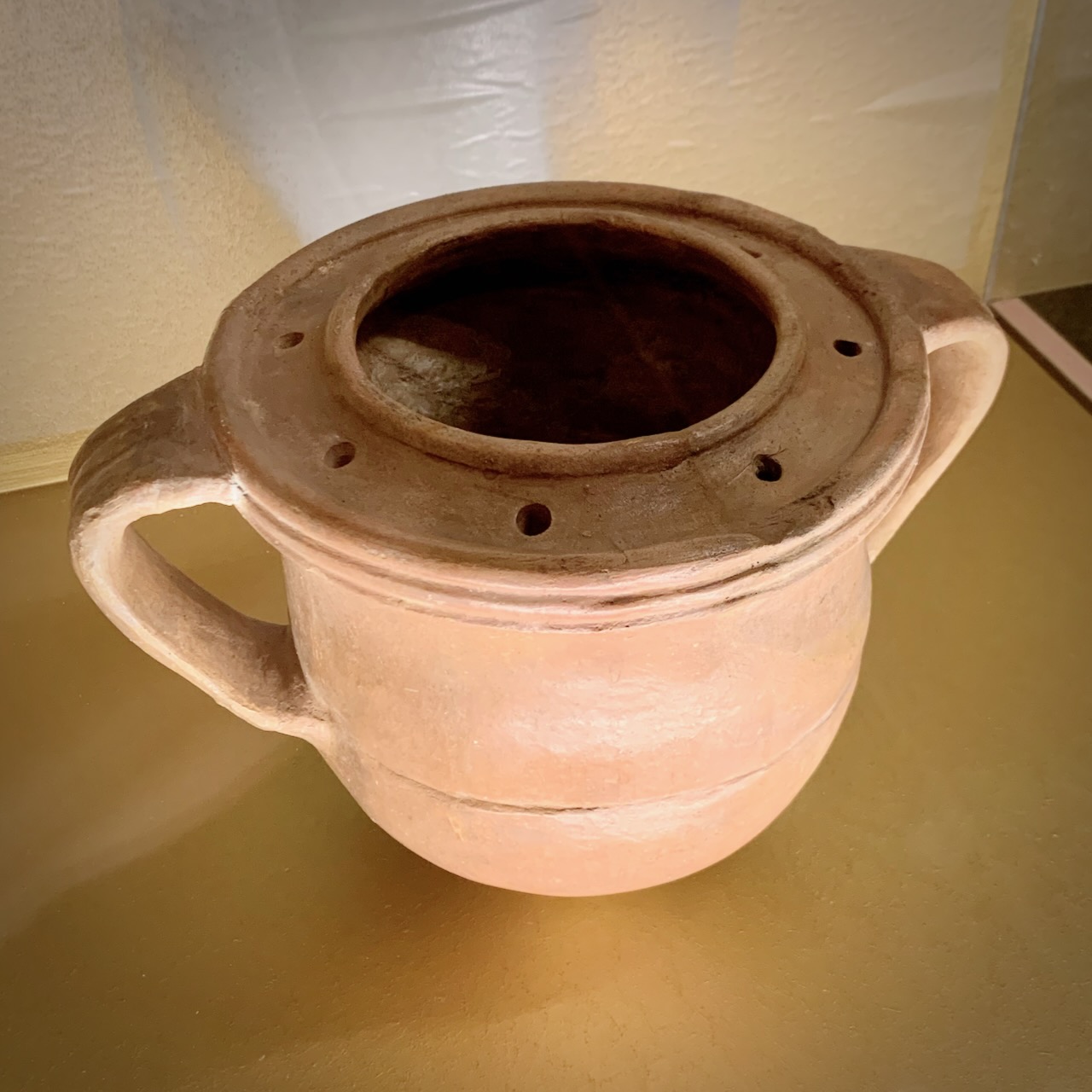
The vessel to burn incense from the Mithraeum of Dieburg is similar to those found in other Roman cities of Germany.
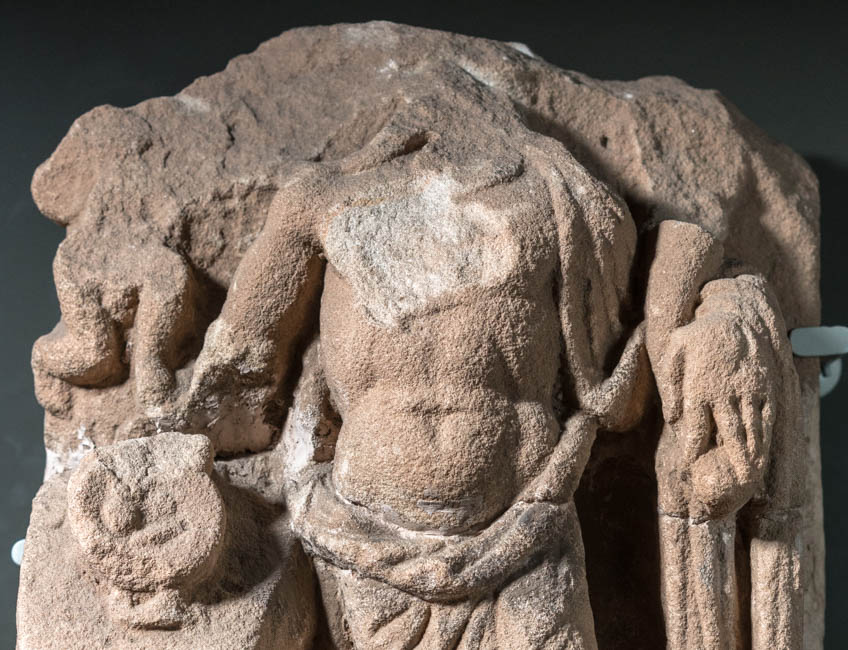
A standing half naked man makes offerings to an altar while holding a cornucopia in his other hand.
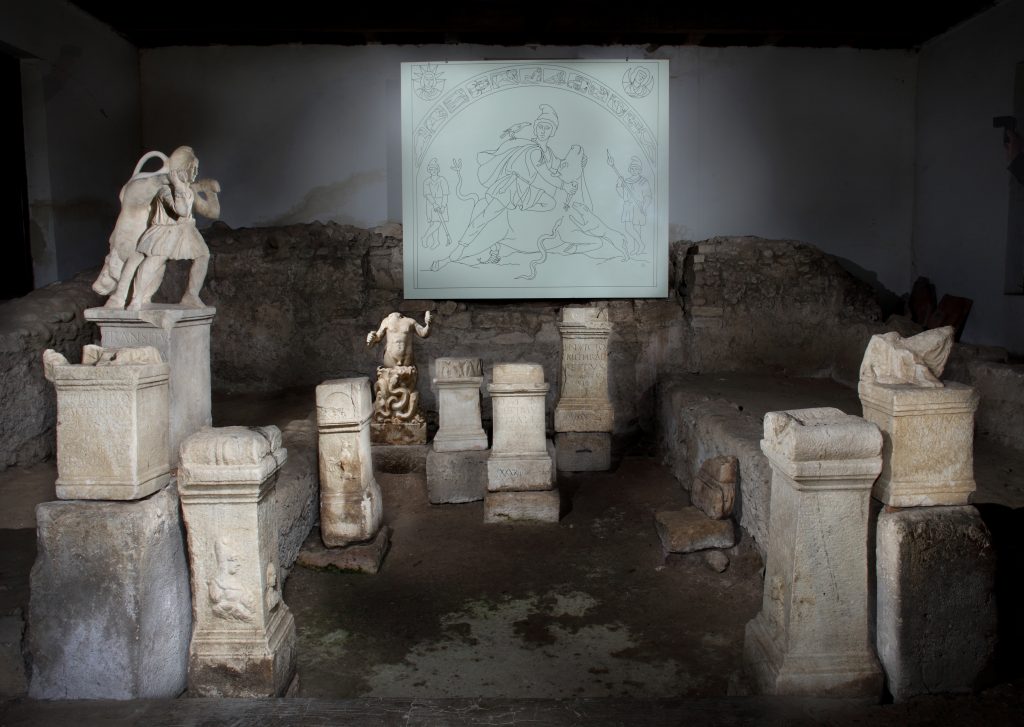
The Mithraeum I of Ptuj contains the foundation, altars, reliefs and cult imagery found in it.

Minto has claimed that the time god Aion was painted on the corner of the north wall of the Mitreo de Santa Capua Vetere.
The Mithraeum I of Cologne is situated amid a block of buildings. It was impossible to narrowly determine its construction and lay-out.
This inscription was dedicated to God Cautes by a certain Flavius Antistianus, Pater Patrorum in Rome.
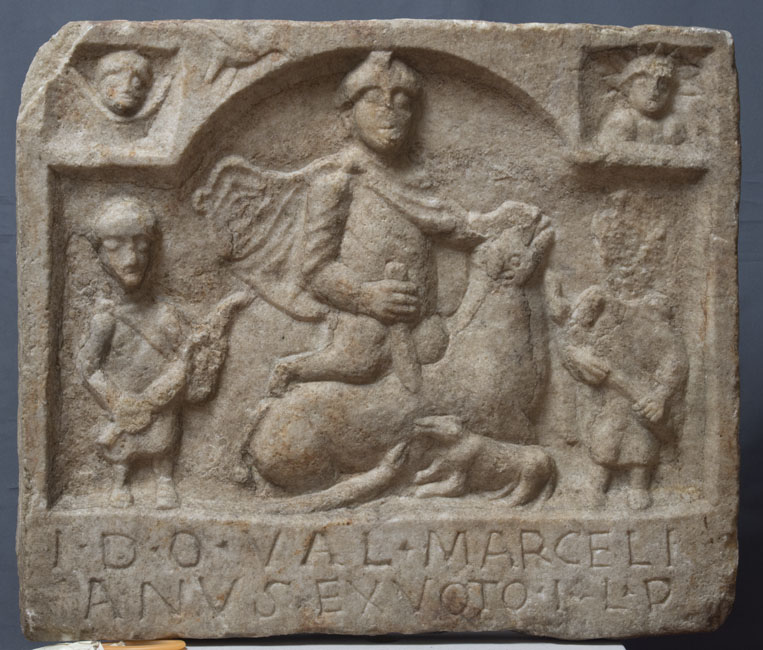
This primitive relief of Mithras as a bullkiller is signed by a certain Valerius Marcelianus.
This base was found in the 18th century and bears an inscription to the god Arimanius.
Three small limestone altars were found in the Jajce Mithraeum, one of which bears the inscription ’Invicto’.
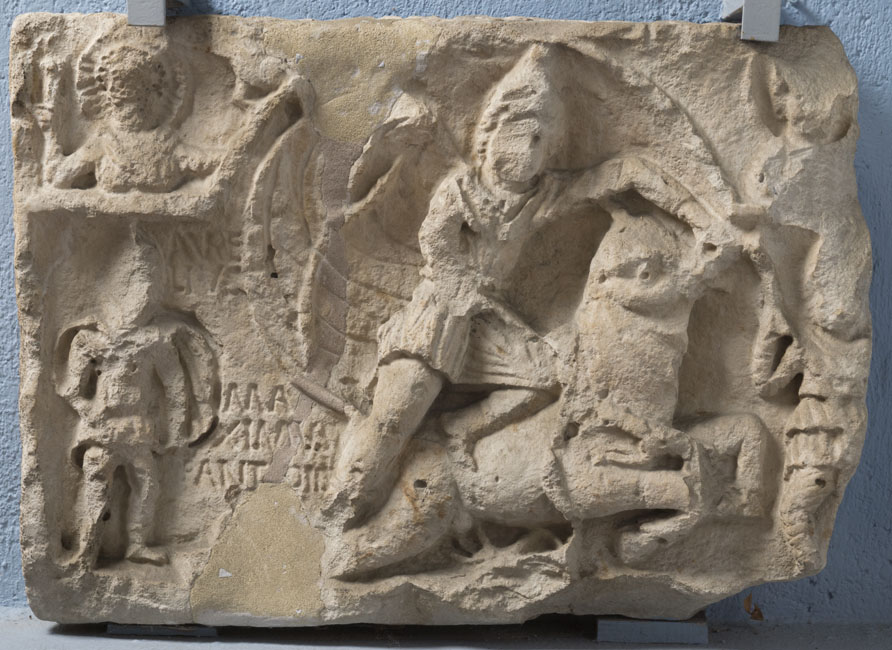
This relief of Mithras as a bullkiller was found in Golubić, Bosnia and Herzegovina, near a cementery.
This Aion is known for wearing a Kalathos on his lion’s head, linking him to the syncretic Sarapis.
In the cult niche of the Mitreo del Caseggiato di Diana there is a list of words that could indicate names and measurements.
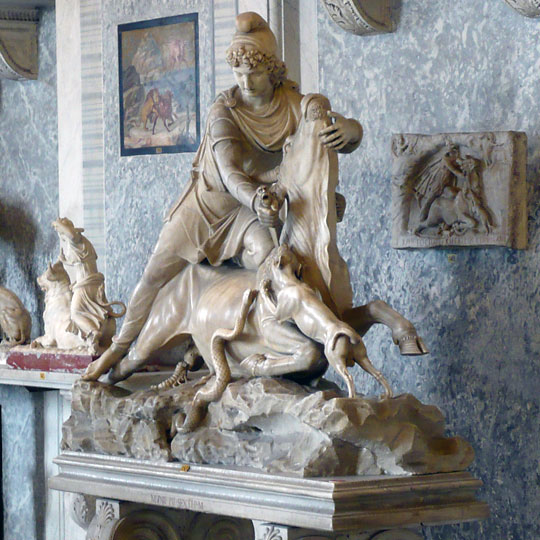
This Mithras killing the bull belonged to the sculptor V. Pancetti before being exhibited in the Vatican Museums under Pius VI.
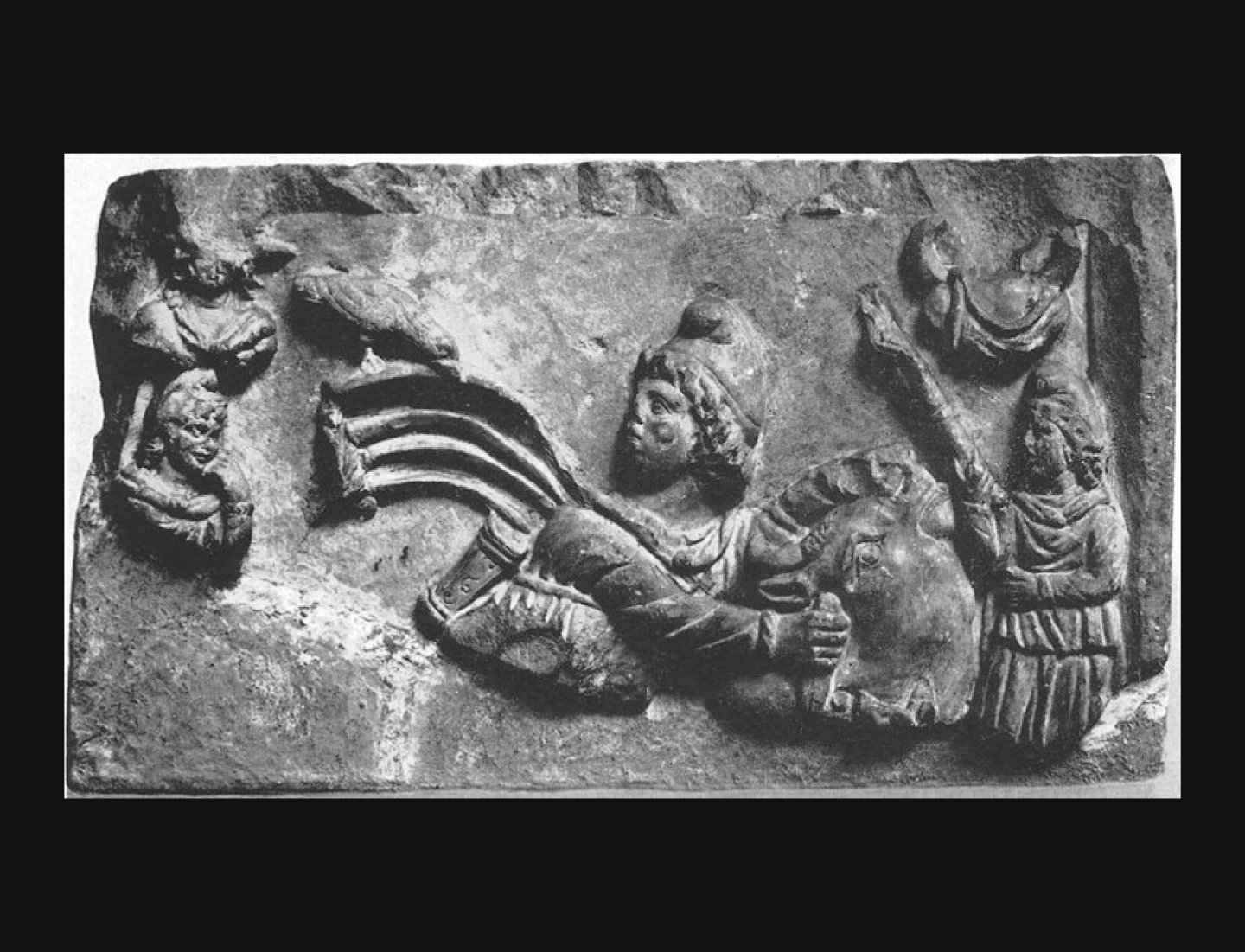
Franz Cumont bought this relief of Mithras as a bullkiller from a dealer who claimed to have found it in a vineyard near the church of Saint Pancrace, in Rome.
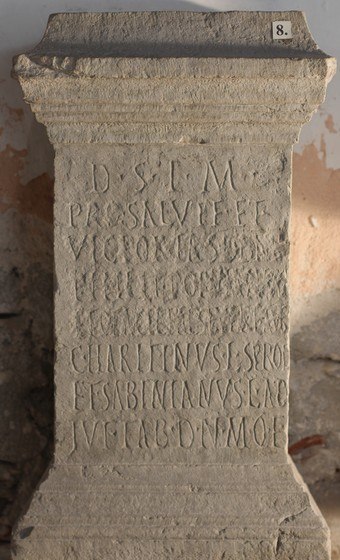
This stone altar found in Poreč was dedicated by two freedmen to the numen and majesty of the emperors Philip the Arab and Otacilia Severa.
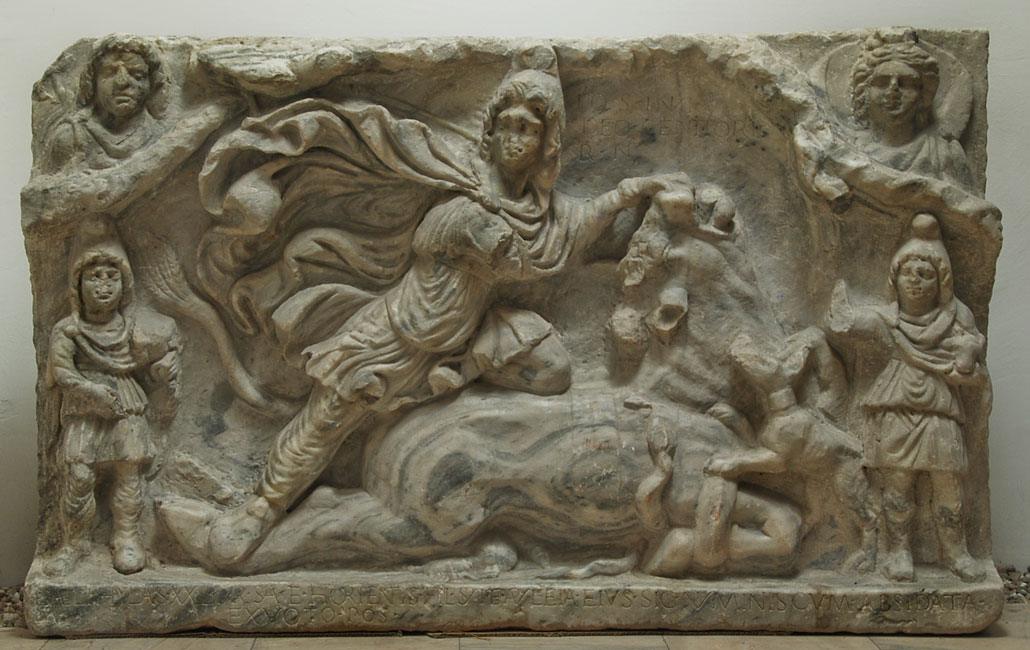
This monument bears an inscription by a certain Lucius Aelius Hylas, in which he associates Sol Invictus with Jupiter.
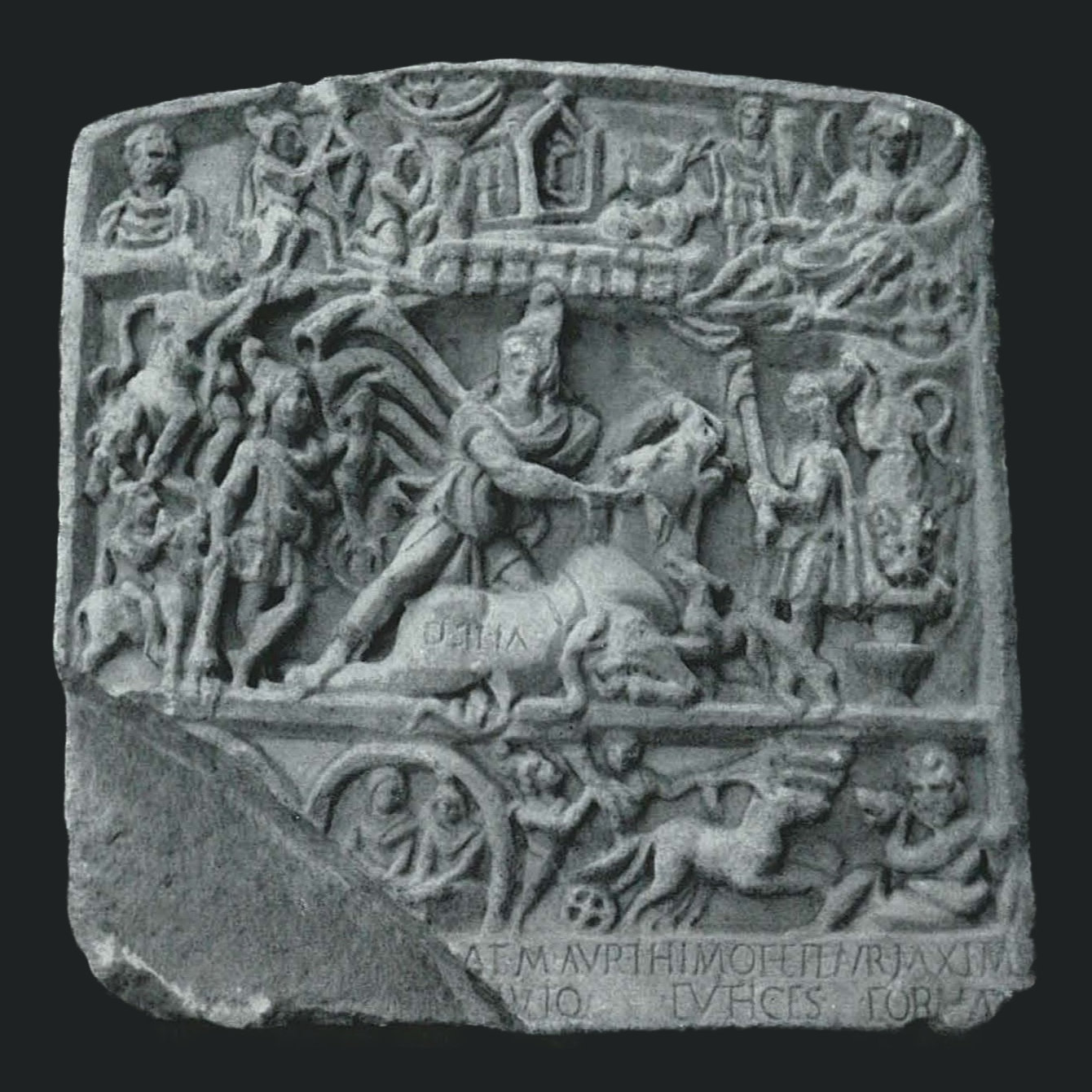
This marble relief of Mithras killing the bull was made by a freedman who dedicated it to his old masters.
In the altar that Titus Tettius Plotus dedicated to the invincible God, he called himself pater sacrorum.
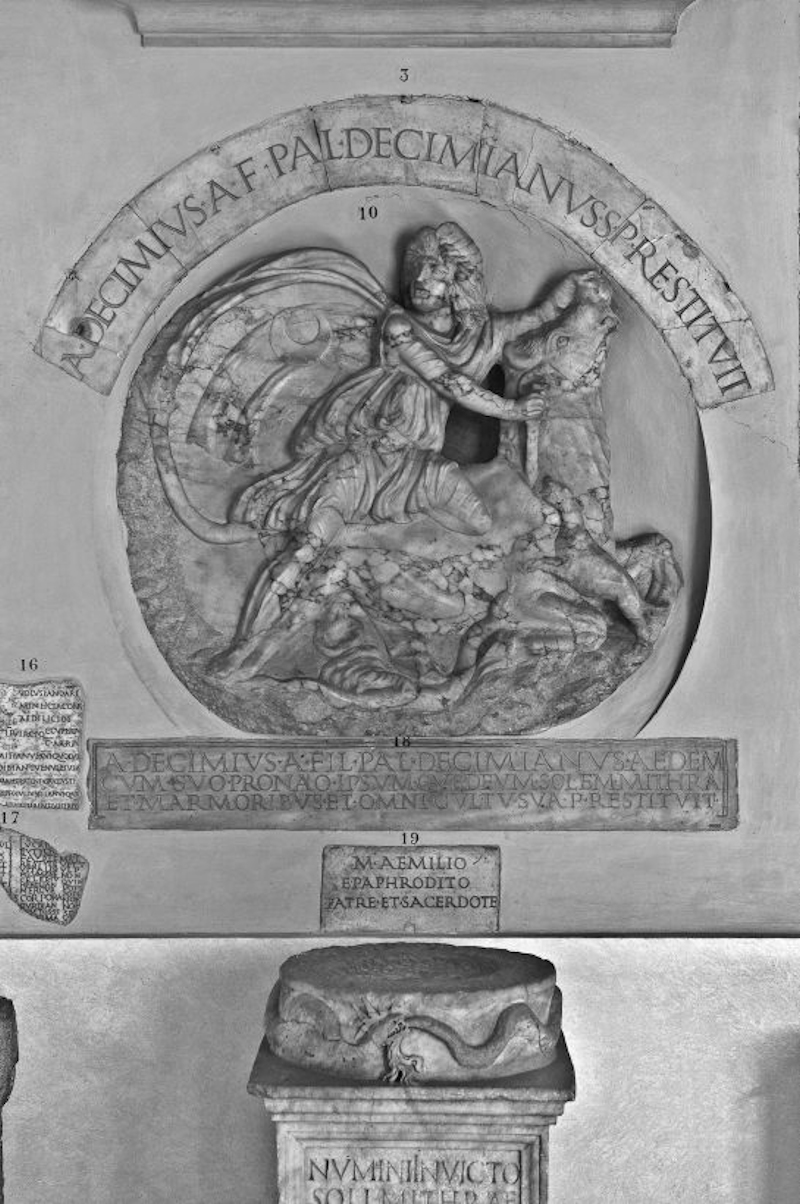
The relief of Mithras slaying the bull from the Mithraeum of the Seven Spheres was discovered in 1802 by Petirini by order of Pope Pius VII.
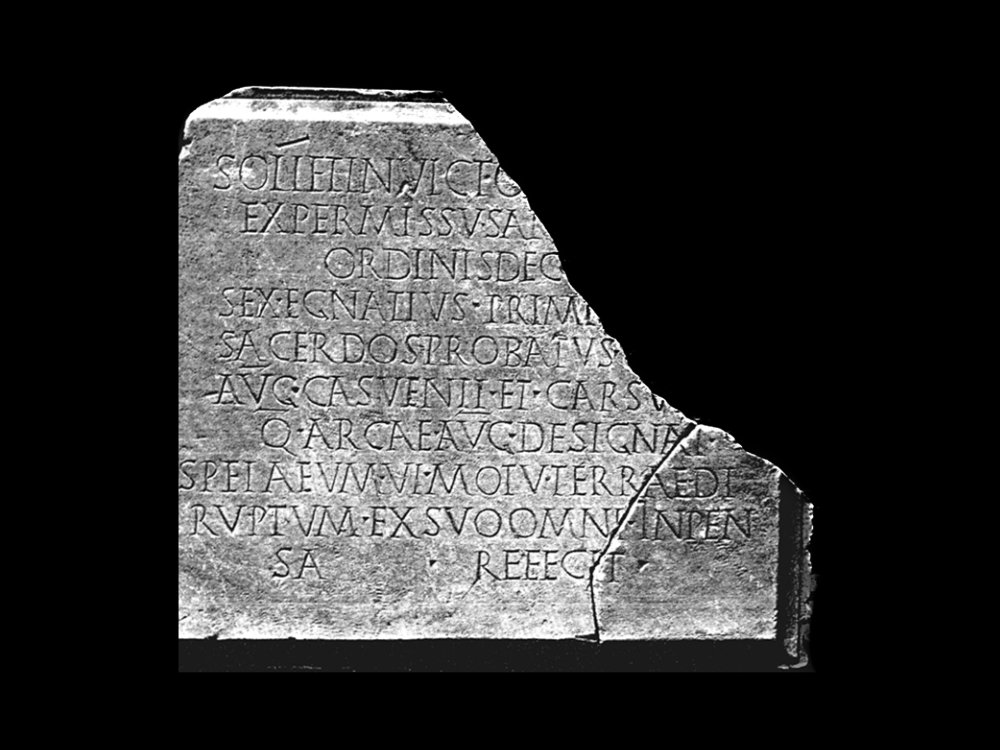
Marble plaque with inscription of a sacerdos probatus to Sol and the god Invictus Mithras.
