Your search San Valentino in Abruzzo Citeriore gave 587 results.

Large apsidal hall with podium discovered at Uruk-Warka, once interpreted as a possible Mithraic sanctuary.
Sassanian-period frescoes discovered at Susa whose possible Mithraic interpretation remains uncertain.
A probable Mithraic sanctuary near Santa Maria in Domnica on the Caelian Hill, known from a group of dispersed reliefs formerly owned by Ottaviano Zeno.

The Pontiae islands, including modern Ponza, formed part of the Roman maritime landscape of Latium and preserve one of the most remarkable Mithraic sanctuaries of Roman Italy, renowned for its rare stucco zodiac and astral symbolism.
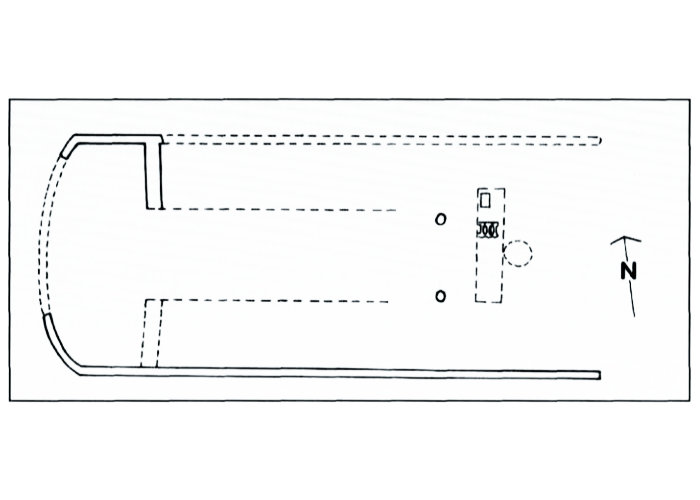
One of the largest known Mithraea in Pannonia, the sanctuary of Sárkeszi stood near the Roman road linking Herculia and Aquincum.
Septeuil has been known in Mithriacism since 1984, when a sanctuary dedicated to Mithras was discovered in the 4th century. It was located in a spring sanctuary (nymphaeum) of the 1st century.
Burgos is a city in the autonomous community of Castile and León in Spain.
Peltuinum was a Roman town of the Vestini on the Via Claudia Nova, founded in the mid-1st century BC. It developed into a regional centre with city walls, a sanctuary, a theatre and an amphitheatre, and was monumentalised in the early Imperial period
Capua is currently a city and comune in the province of Caserta, in the region of Campania, southern Italy, situated 25 km north of Naples, on the northeastern edge of the Campanian plain.
This lost Mithraic relief, formerly kept near the church of the Santissima Annunziata in Naples, was probably a large tauroctony associated with the area of Puteoli or Pausilypon.
A probable Mithraic sanctuary at Poetovio, identified by Vermaseren as the so-called Mithraeum IV on the basis of four associated inscriptions.
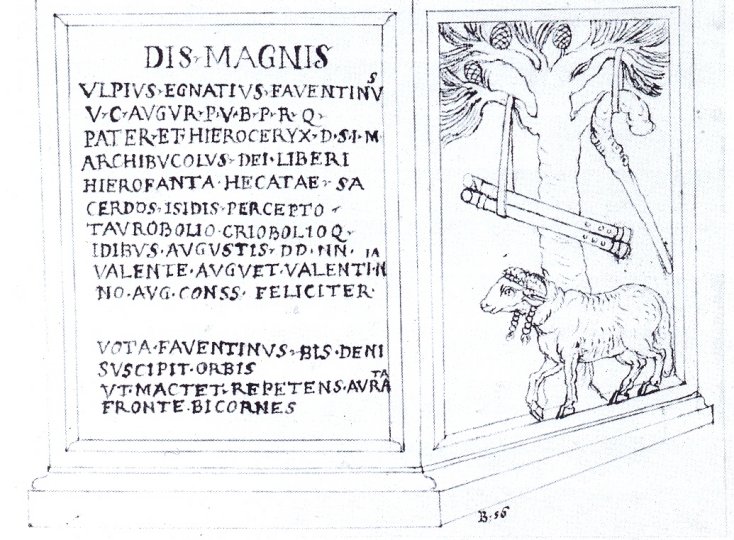
Both of them were discovered in 1609 in the foundations of the façade of the church of San Pietro, Rome.
Marble altar dedicated at the Vatican Phrygianum in Rome by the Mithraic pater Alfenius Ceionius Iulianus Kamenius in 374 CE.
This stele found at the foot of the Aventine bears an inscription of Kastos father and son, and mentions several syndexioi who shared the same temple.
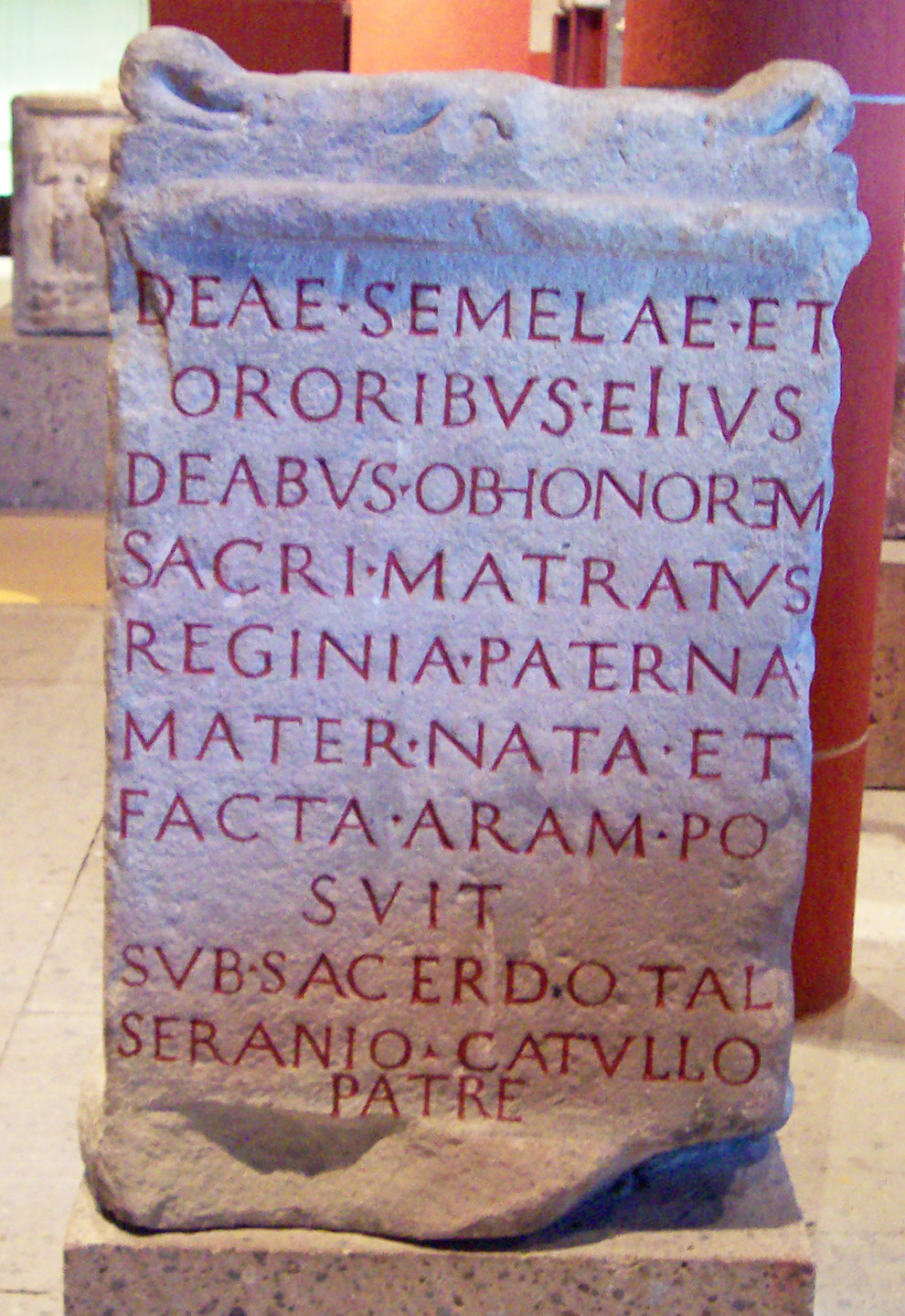
This sandstone altar found in Cologne bears an inscription to the goddess Semele and her sisters.
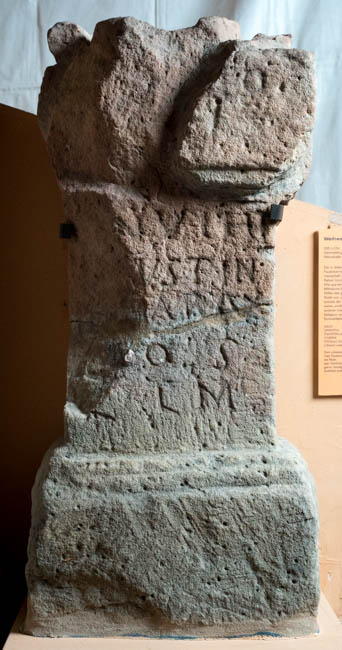
This sandstone altar was dedicated to the god Invictus by a certain Faustinus from Gimmeldingen.
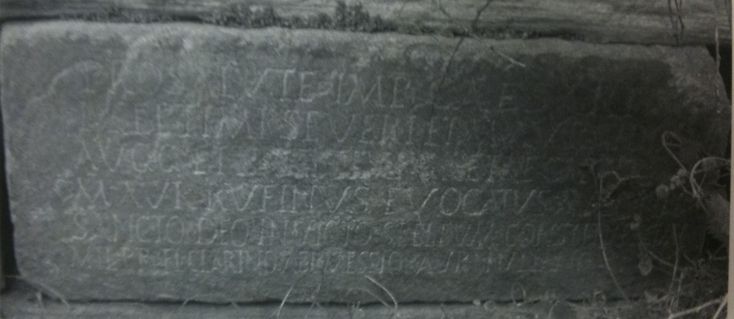
This inscription reveals the existence of a Mithraeum on the island of Andros, Greece, which has not yet been found.
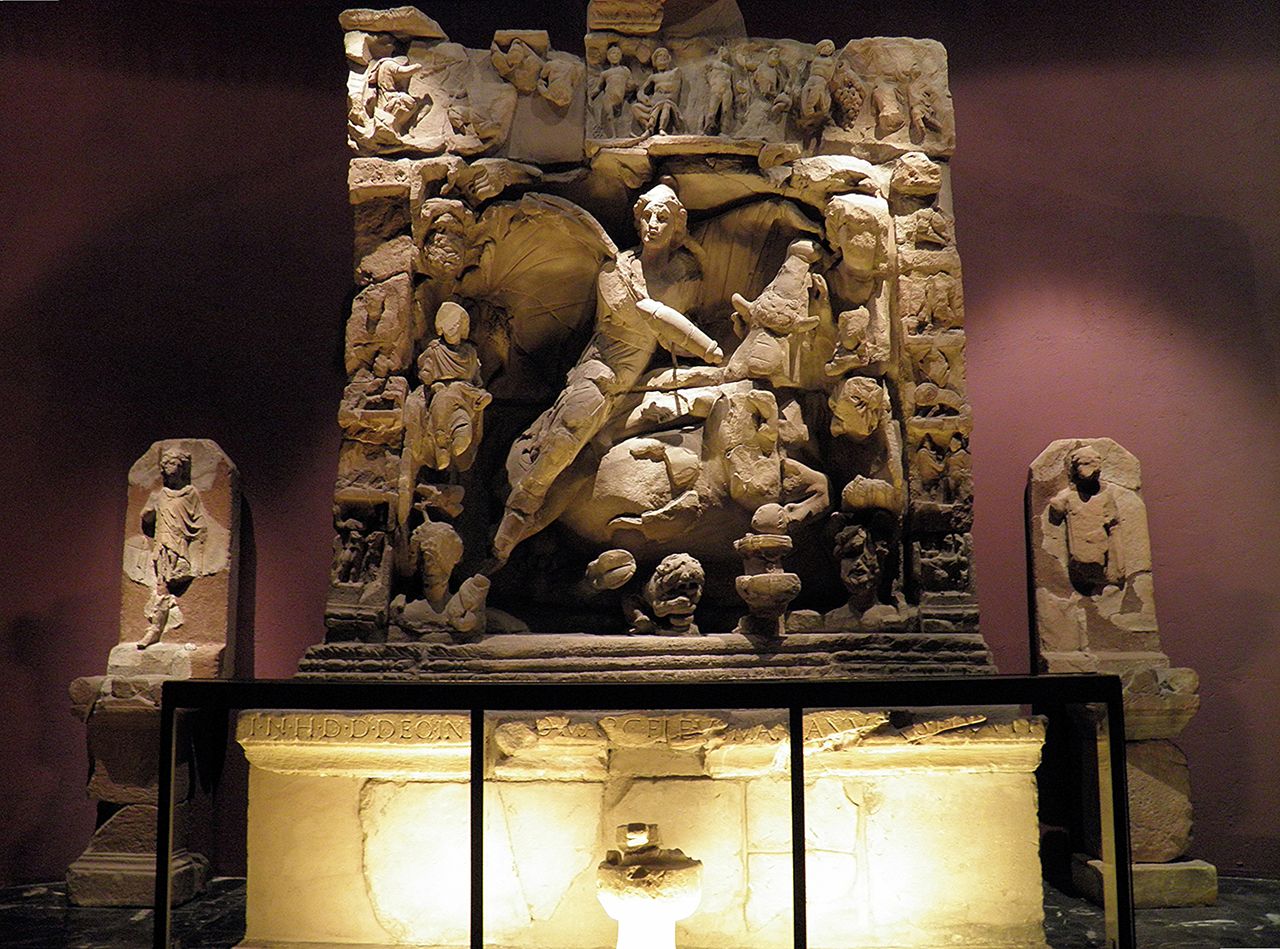
The base of these sandstone reliefs bears an inscription referring to a certain Marcellius Marianus.
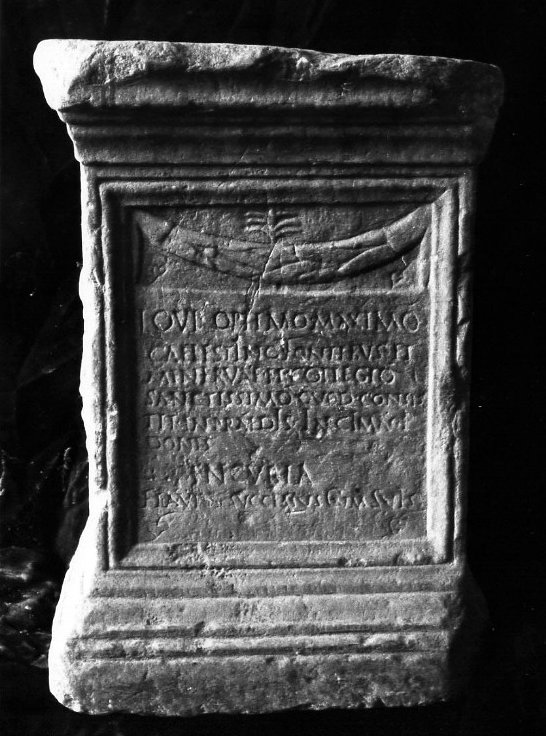
According to the inscription on it, this altar probably supported a statue of Jupiter.

This marble altar was found ’in the street called di Branco’, behind the palace of the Cardinal of Bologna, in Rome.
