Your search Sidi Ali Belkacem (سيدي علي بلقاسم) gave 1194 results.

Tauroctony relief formerly in the house of the Alterii near S. Marco in Rome, now of unknown whereabouts, described by Gruterus as showing Mithras pressing both knees onto the bull and grasping its horns with the knife in the shoulder, with scorpion, serpent, raven, Sol and Luna…
Partially legible altar from a cardinal's vineyard in Rome, bearing a fragmentary dedication to the Invictus God Mithras Sol.
Marble statue of Venus entirely naked in the act of leaving her bath, wringing her hair which streams over her shoulders, with a dolphin by her side, found in the small room of the Caracalla Mithraeum; the head is lost.
Mithraeum discovered towards the end of the 16th century in a vineyard of Horazio Muti opposite S. Vitale, between the Quirinal and Viminal hills, known from Vacca's report of a sealed room with many terracotta lamp-holders.
Marble altar found in the pontifical gardens on the Quirinal Hill, with a dedication to the Invictus N(abarze?) by Atticus pater, decorated with a urceus on the left and a patera on the right.
Fragment of a large marble tablet with large letters of poor 5th-century workmanship, found on the Monte Quirinale near the Via Nazionale, bearing poetic Mithraic references to the mystes of Ceres and the Invincible Mithras.
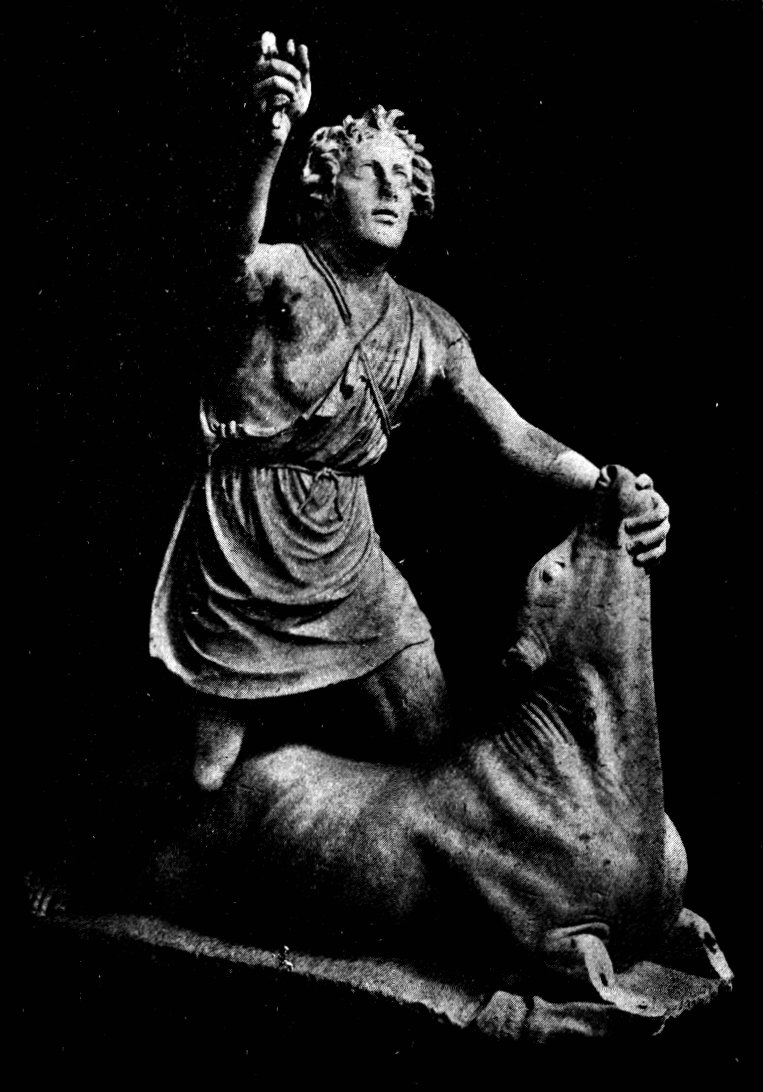
The person who commanded the sculpture may have been M. Umbilius Criton, documented in the Mitreo della Planta Pedis.
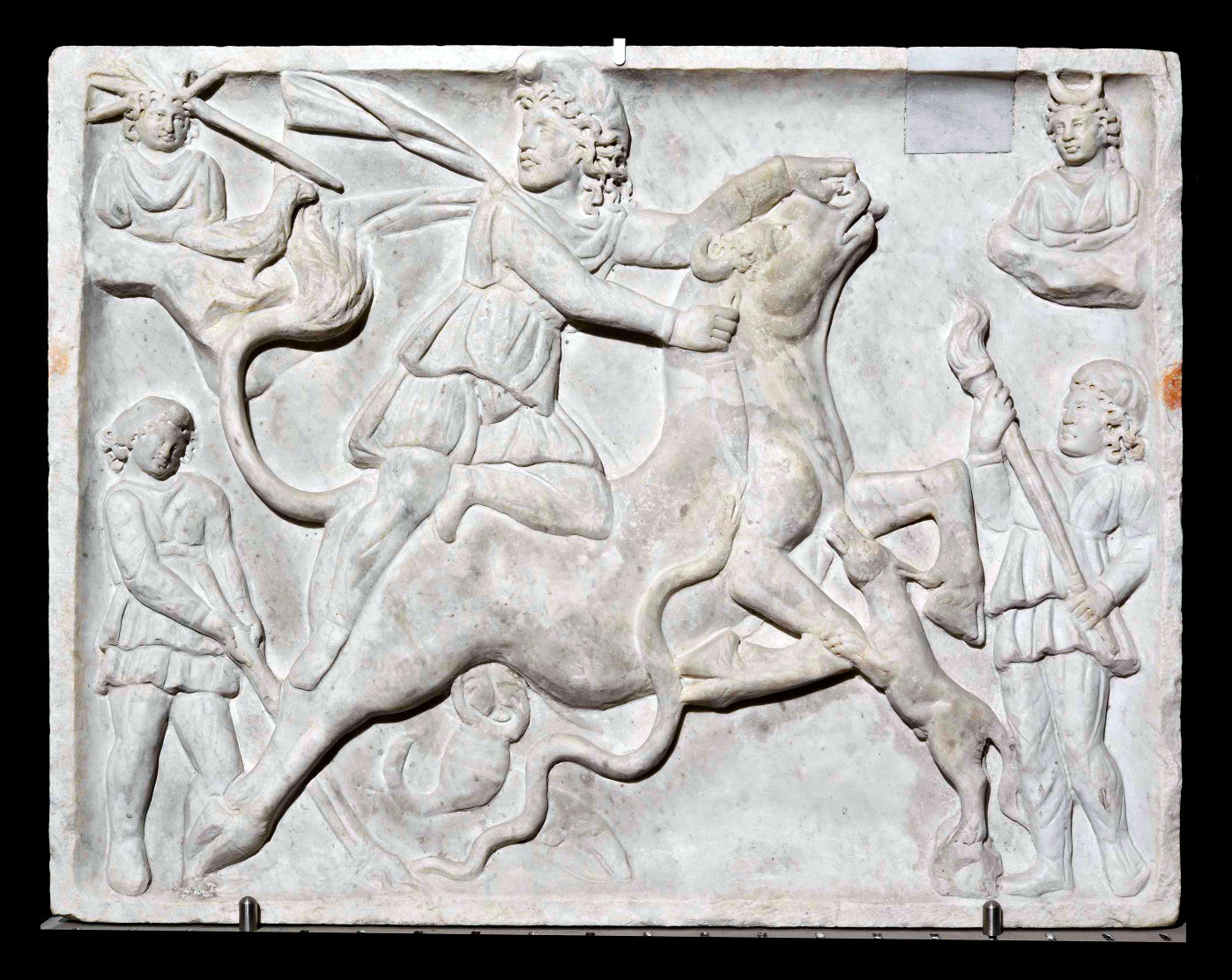
It is not certain that the marble relief of Mithras killing the bull was found on Capri, in the cave of Matromania, where a Mithraeum could have been established.
Gold lamina from Ciciliano showing a nude, serpent-entwined Aion-Kronos holding a key and surrounded by Greek voces magicae (2nd c. CE).
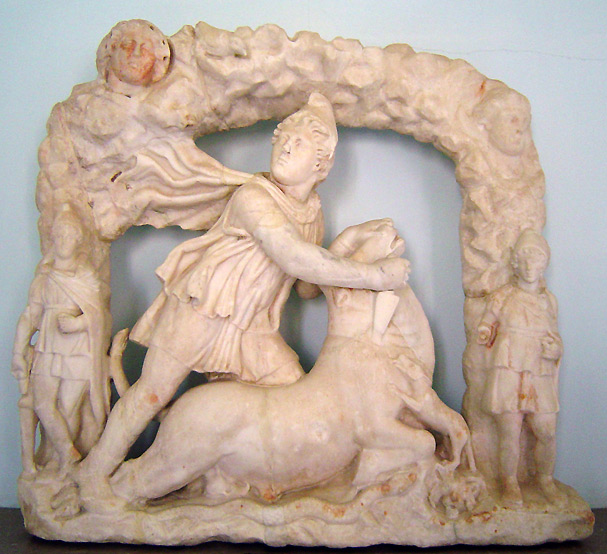
The assumed find-place of the Mithras Tauroctonus of Palermo is uncertain.
Marble cippus from the Quirinal residence of Ceionius Iulianus Kamenius preserving references to his Mithraic and other priestly functions.
Monumental inscription honouring the senator and Mithraic pater Kamenius together with his numerous priestly offices and initiatory roles.
Two marble heads from Ostia, including a youthful figure wearing a Phrygian cap and another identified as Mithras-Helios.
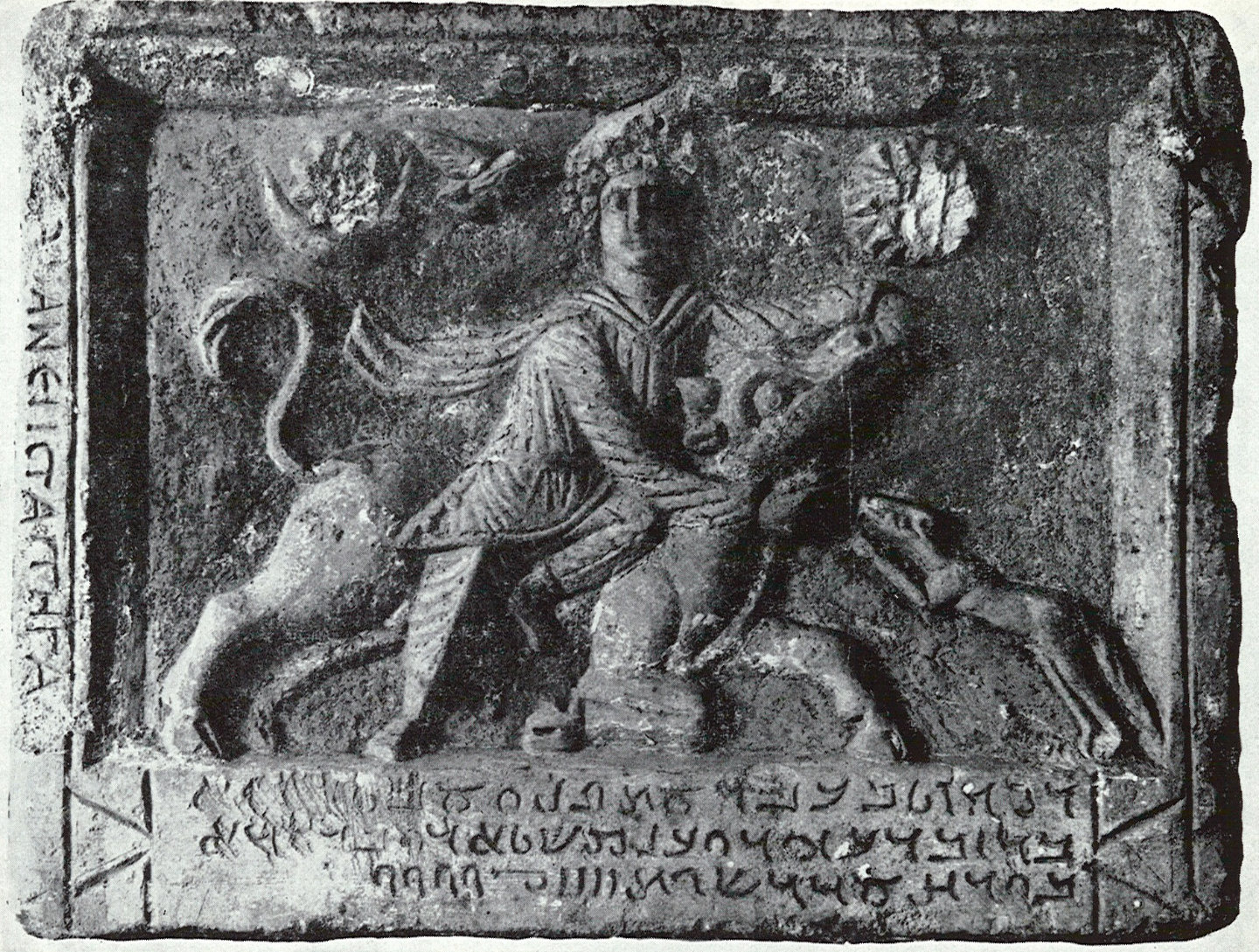
One of the reliefs of the Dura Europos tauroctonies includes several characters with their respective names.
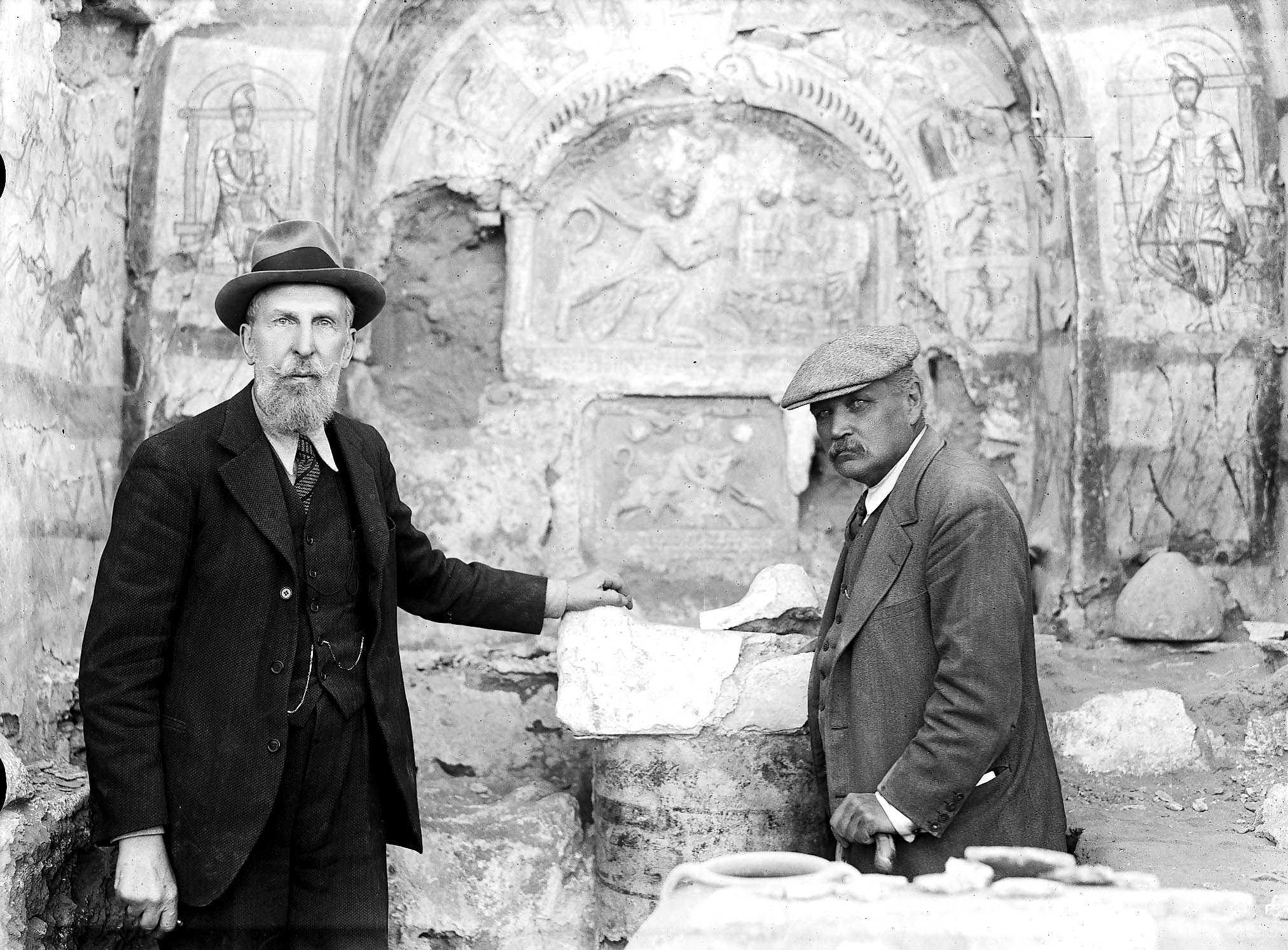
The most emblematic of the Syrian Mithraea was discovered in 1933 by a team led by the Russian historian Mikhaïl Rostovtzeff.
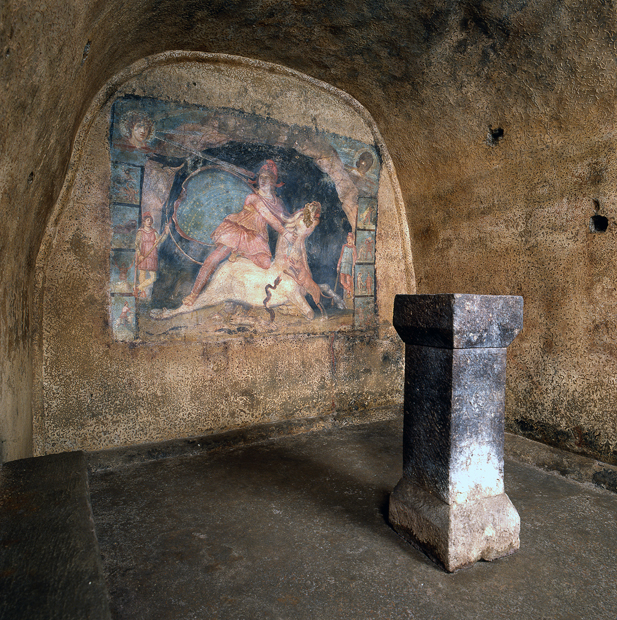
The Marino Mithraeum preserves one of the most elaborate painted cycles of Mithras’ myth, combining the tauroctony, planetary symbolism and scenes from the god’s sacred narrative.
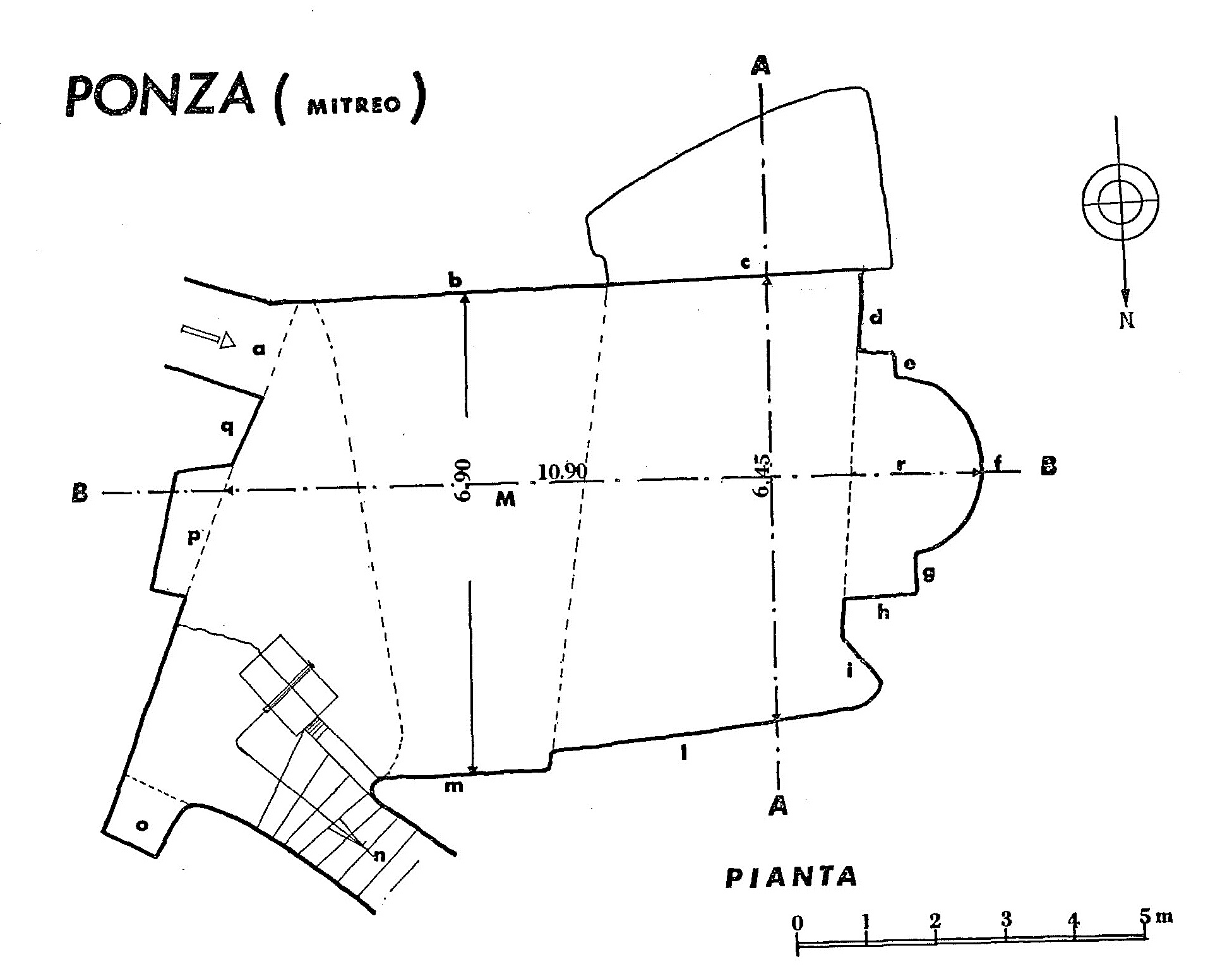
This Mithraic shrine on the island of Ponza is renowned for its exceptional stucco zodiac and astral symbolism linked to Roman Mithaism.
This stele found at the foot of the Aventine bears an inscription of Kastos father and son, and mentions several syndexioi who shared the same temple.
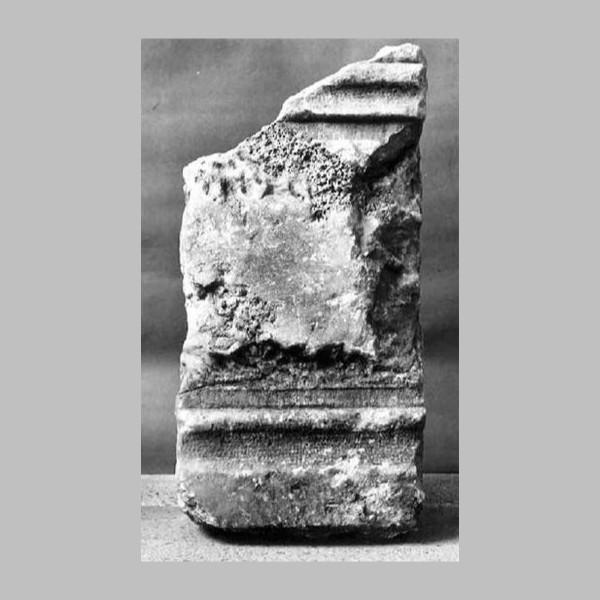
A certain Blastia or Blastianus made a dedication to Mithras and Silvanus on an altar in Emona, Italy.

This marble altar was found ’in the street called di Branco’, behind the palace of the Cardinal of Bologna, in Rome.
