Your search Tal hal Hariri / Es-Sâlihiyeh / As Salhiyah gave 3725 results.

In the cult niche of the Mitreo del Caseggiato di Diana there is a list of words that could indicate names and measurements.


A small bronze statuette reportedly found in Italy and now in the British Museum in London, depicting a cross-legged figure in Eastern attire (Cautopates) pointing a broken torch downwards with his right hand and holding a ram's head in his left.
An inscription from Brescia (ancient Brixia) recording an ex-voto dedication to Sol Deus Invictus by Sextus Dugius Valentio, a sevir augustalis of the city.
An altar found not far from the eastern entrance of the cult-room at Borcovicium (modern Housesteads), bearing a brief dedication to Deus Sol.
.jpg)
This limestone statue of Cautes is now exposed at Great North Museum of Newcastle.
Small altar preserved in the castle of Freudenberg at St. Thomas am Zeiselberg, Noricum, recording a dedication to Hermes invicto Mitrae — an unusual conflation of Hermes and the invincible Mithras.
Marble base formerly in the Villa Negroni and then the Museo Borgia at Velletri, with bas-reliefs on three sides showing Sol in a quadriga, initiates in Oriental dress and other Mithraic scenes; the collection is now dispersed among museums in Naples and Rome…
Small surviving fragment depicting Mithras as bull-slayer together with the torchbearer Cautes.
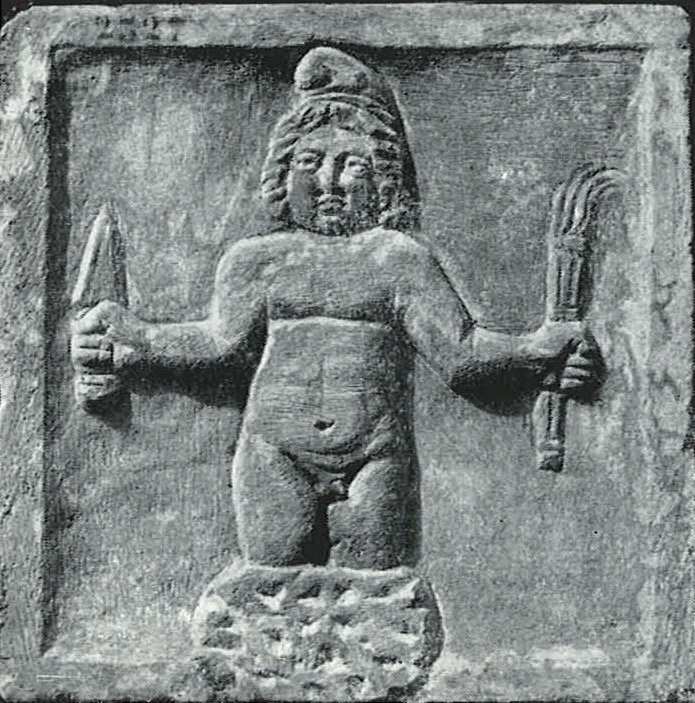
The relief of Mithras being born from the rock of the Esquiline shows the young god naked, as usual, with a torch and a dagger in his hands.
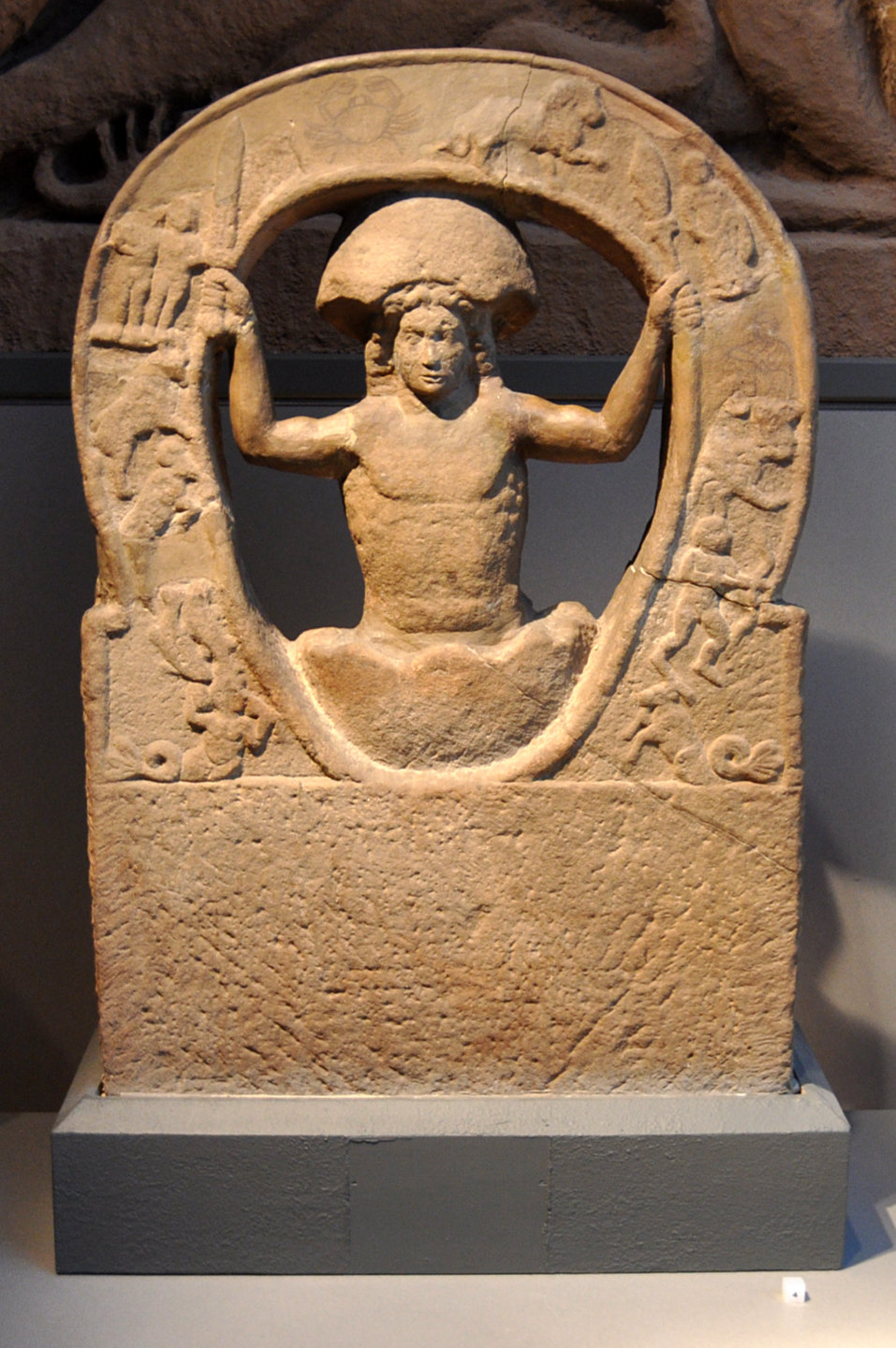
A naked Mithra emerges from the cosmic egg surrounded by the zodiac, as always carrying a torch and a dagger.
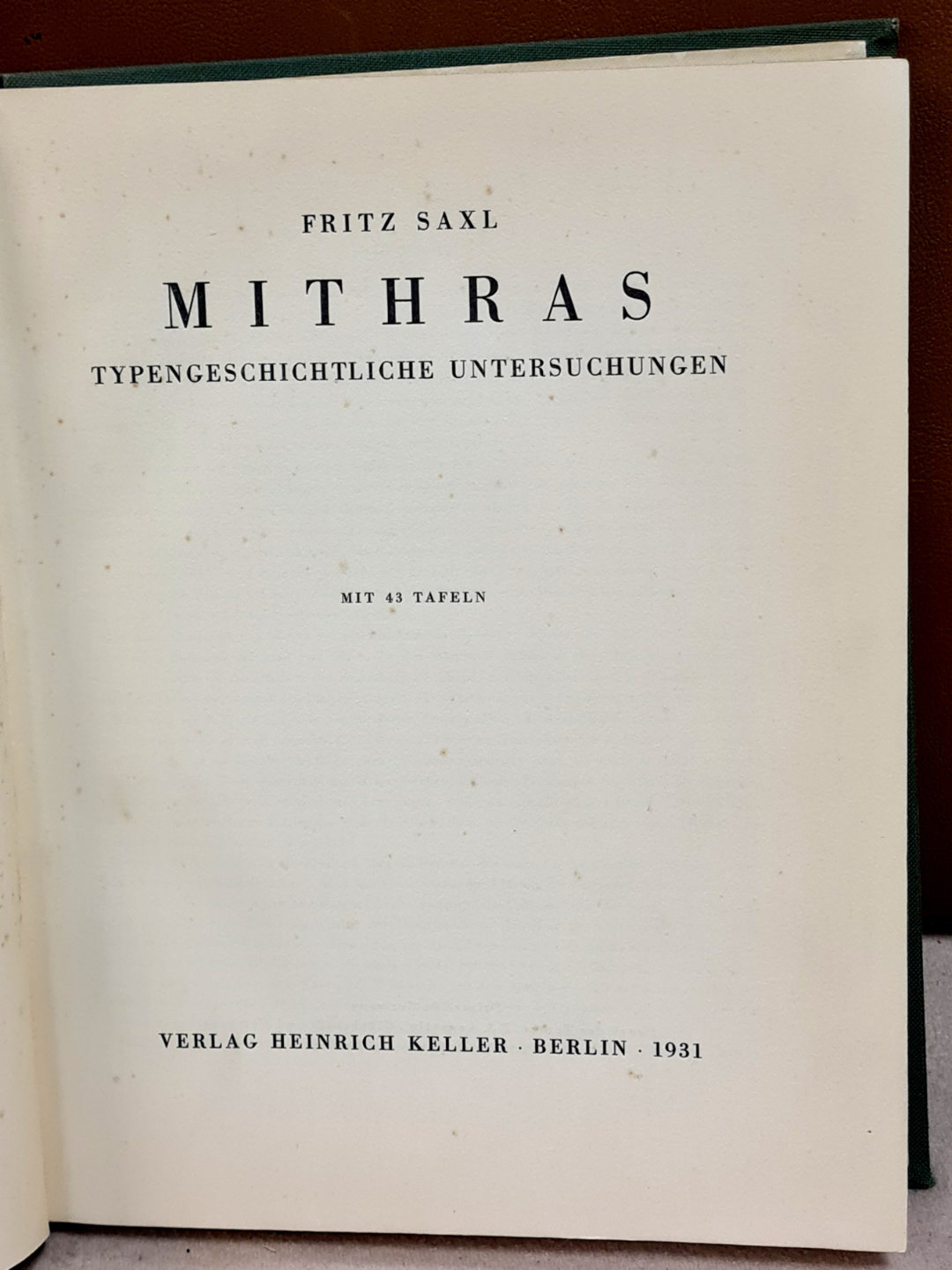
Fritz Saxl interprets Mithraism primarily through its images, proposing the cult as a visual cosmology structured around the descent, sacrifice and re-ascent of light, developed in close dialogue with Aby Warburg and Erwin Panofsky.

Collection of early passages on the cult of Mithras, curated and translated by A. S. Geden.

Born in the mists of history, Mithras, the deity of light, known for at least 3,500 years and still revered today, has appeared in different ages, religions and forms. This volume explores the sources of the god's history, with a focus on the Roman myths of Mithras…

Keiner der zahlreichen heidnischen Kulte und keine antike Religion hat das Christentum in einer Weise herausgefordert und geprägt, wie der römische Mysterienkult des Sonnen- und Erlösergottes Mithras.

The present volume reconstructs the history of the mithraea of Güglingen. In addition, rich finds provide insight into hitherto unknown areas of the liturgical practice of the cult of Mithras.

The starting point of this study of the initiation into the cult of Mithras are the 462 sites where traces of the cult have been found to date. They form the framework of the study.
