Your search Tal hal Hariri / Es-Sâlihiyeh / As Salhiyah gave 3730 results.
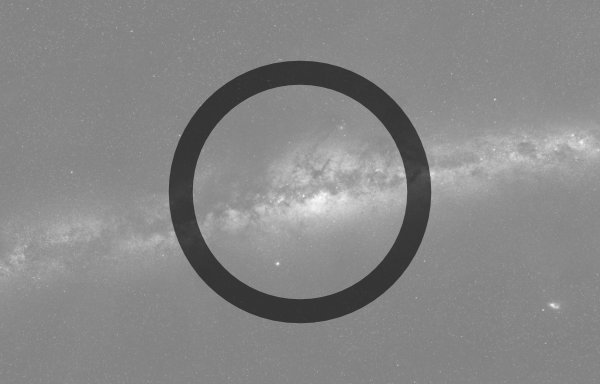
Ecbatana was an ancient city, which was first the capital of Media in western Iran, and later was an important city in Persian, Seleucid, and Parthian empires.
Around 300 BC, Burdigala was the settlement of a Celtic tribe, the Bituriges Vivisci. The Romans conquered the area in 60 BC and made Burdigala the capital of the Roman province of Aquitania during the reign of Emperor Vespasian.
Barcelona is a city on the coast of northeastern Spain. Founded as a Roman city, in the Middle Ages Barcelona became the capital of the County of Barcelona.
Tivoli is a town and comune in Lazio, central Italy, 30 kilometres north-east of Rome, at the falls of the Aniene river where it issues from the Sabine hills.
Tarquinia, formerly Corneto, is an old city in the province of Viterbo, Lazio, Central Italy, known chiefly for its ancient Etruscan tombs in the widespread necropoleis, or cemeteries, for which it was awarded UNESCO World Heritage status. In 1922, i
Spoleto is an ancient city in the Italian province of Perugia in east-central Umbria on a foothill of the Apennines.
Salona was an ancient city and the capital of the Roman province of Dalmatia. It was founded in the 3rd century BC and was mostly destroyed in the invasions of the Avars and Slavs in the 7th century AD.
Ituro, now Cabrera de Mar, was an important trading town and the capital of the Laietani, an Iberian people, until Roman times.
Emerita Augusta was founded in 25 BC by order of the Emperor Augustus to protect a pass and a bridge over the Guadiana River. The city became the capital of the province of Lusitania and one of the most important cities in the Roman Empire.
Vienna was the capital of the Allobroges, a Gallic people, until it was conquered by the Romans in 47 BC. It became a Roman provincial capital, conveniently located on the Rhône, then a major communication route.
Carnuntum was a Roman legionary fortress and headquarters of the Pannonian fleet from 50 AD. After the 1st century, it was capital of the Pannonia Superior province. It also became a large city of 50,000 inhabitants.
Capua is currently a city and comune in the province of Caserta, in the region of Campania, southern Italy, situated 25 km north of Naples, on the northeastern edge of the Campanian plain.
Aquileia, now a small municipality in north-eastern Italy, was one of the largest cities in the world in the 2nd century AD, with a population of 100,000.
Numidia occupied a frontier and military landscape where Mithraic cults circulated through urban settlements and imperial infrastructure.
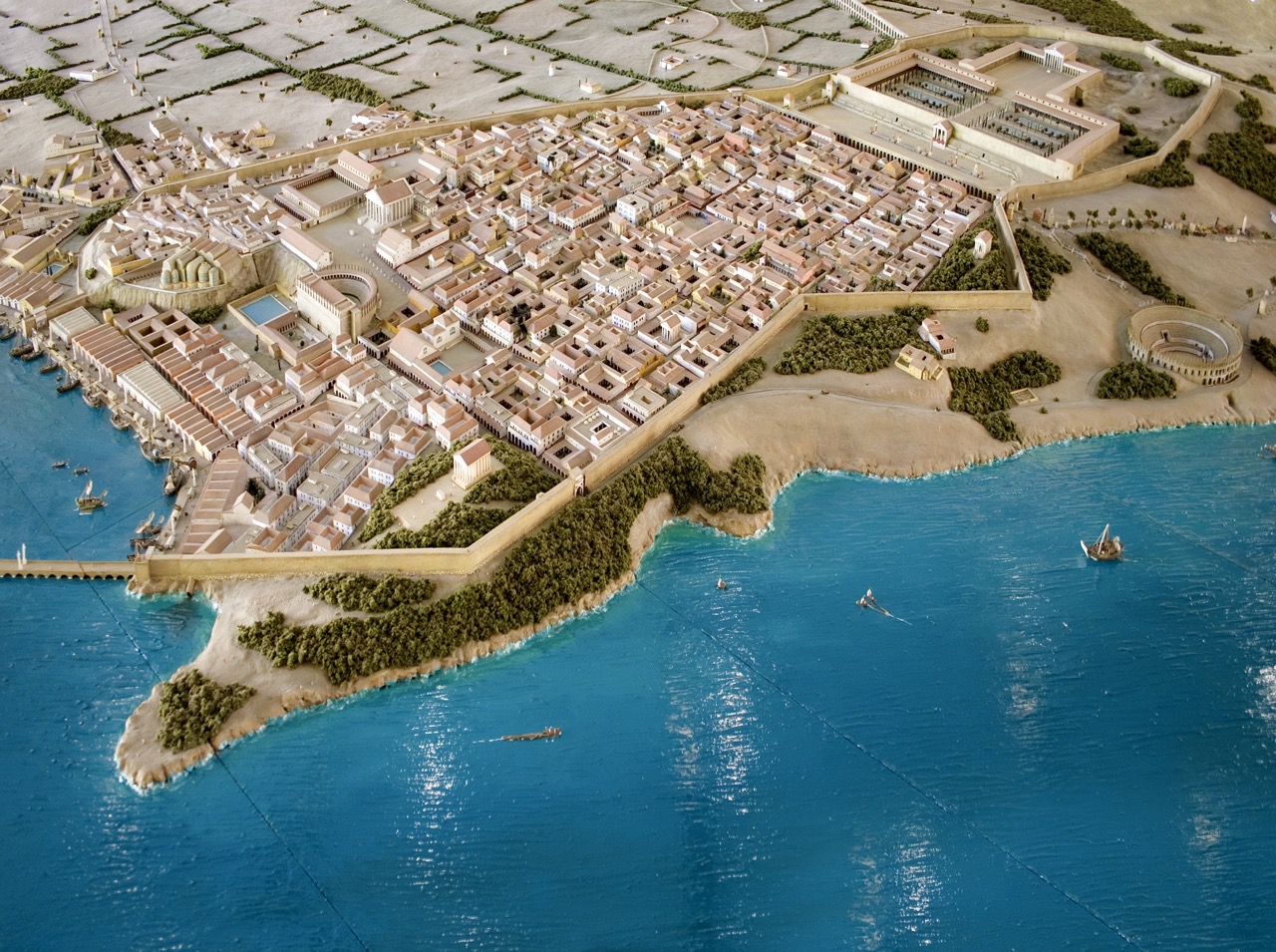
Across Tarraconensis, Mithraic evidence appears in diverse urban, military and Mediterranean environments of Roman Hispania.
Bactria occupied a distant eastern horizon associated with Iranian cultural traditions and the wider background of Mithraic interpretations.
Germania inferior preserves a strongly militarised body of Mithraic evidence from the lower Rhine frontier of the Roman empire.
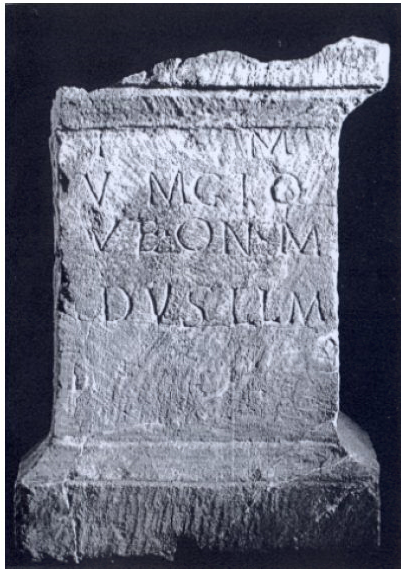
This fragmented monument bears an inscription of a certain veteran named Valerius Magio.
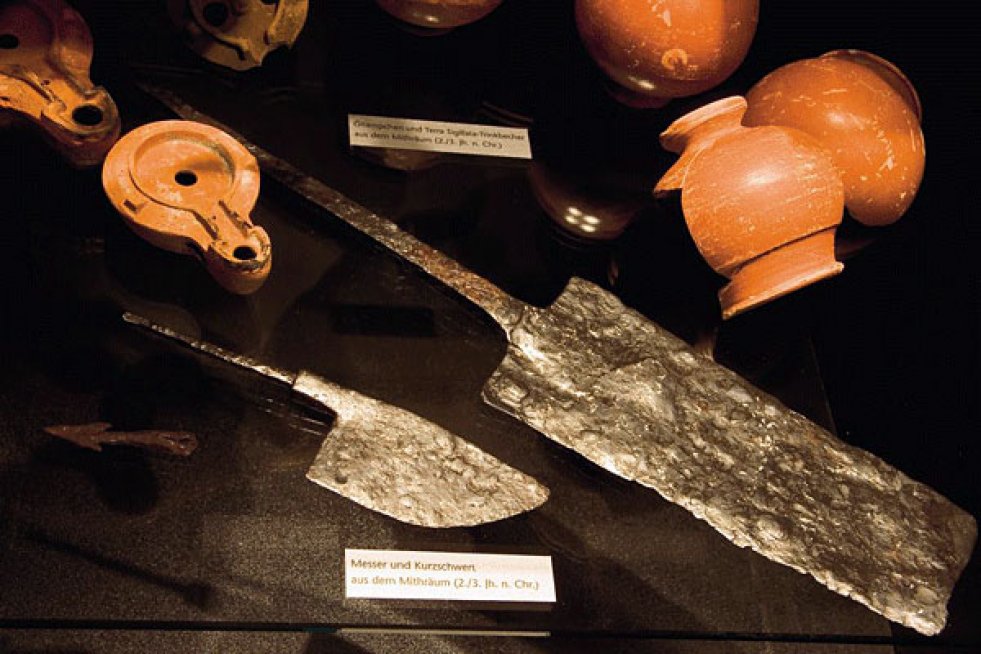
The Mithraeum of Kunzing was an underground building, oriented east-west. The entrance was probably on the east.
Histria connected the northern Adriatic to the Balkan and Danubian worlds through maritime and regional communication networks.
