Your search for Vienna gave 19 results.

Vienna was the capital of the Allobroges, a Gallic people, until it was conquered by the Romans in 47 BC. It became a Roman provincial capital, conveniently located on the Rhône, then a major communication route.
Windobona served as a major legionary and administrative centre on the middle Danube frontier.
The city of Vienna, modern Vienne, became one of the principal urban centres of Roman Gaul along the Rhône corridor.
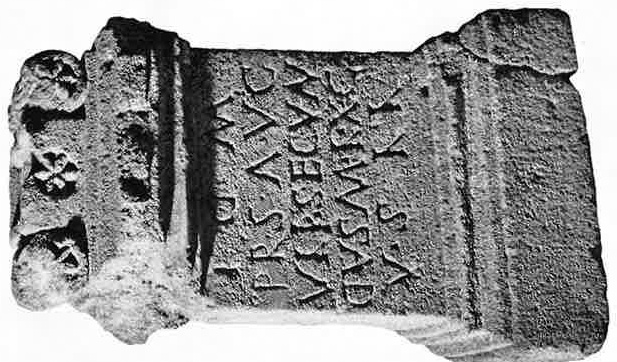
Limestone altar from Vienna, ancient Vindobona in Pannonia Superior, found in 1896 together with two terracotta lamps; the dedicant and full text are not known from the summary description.
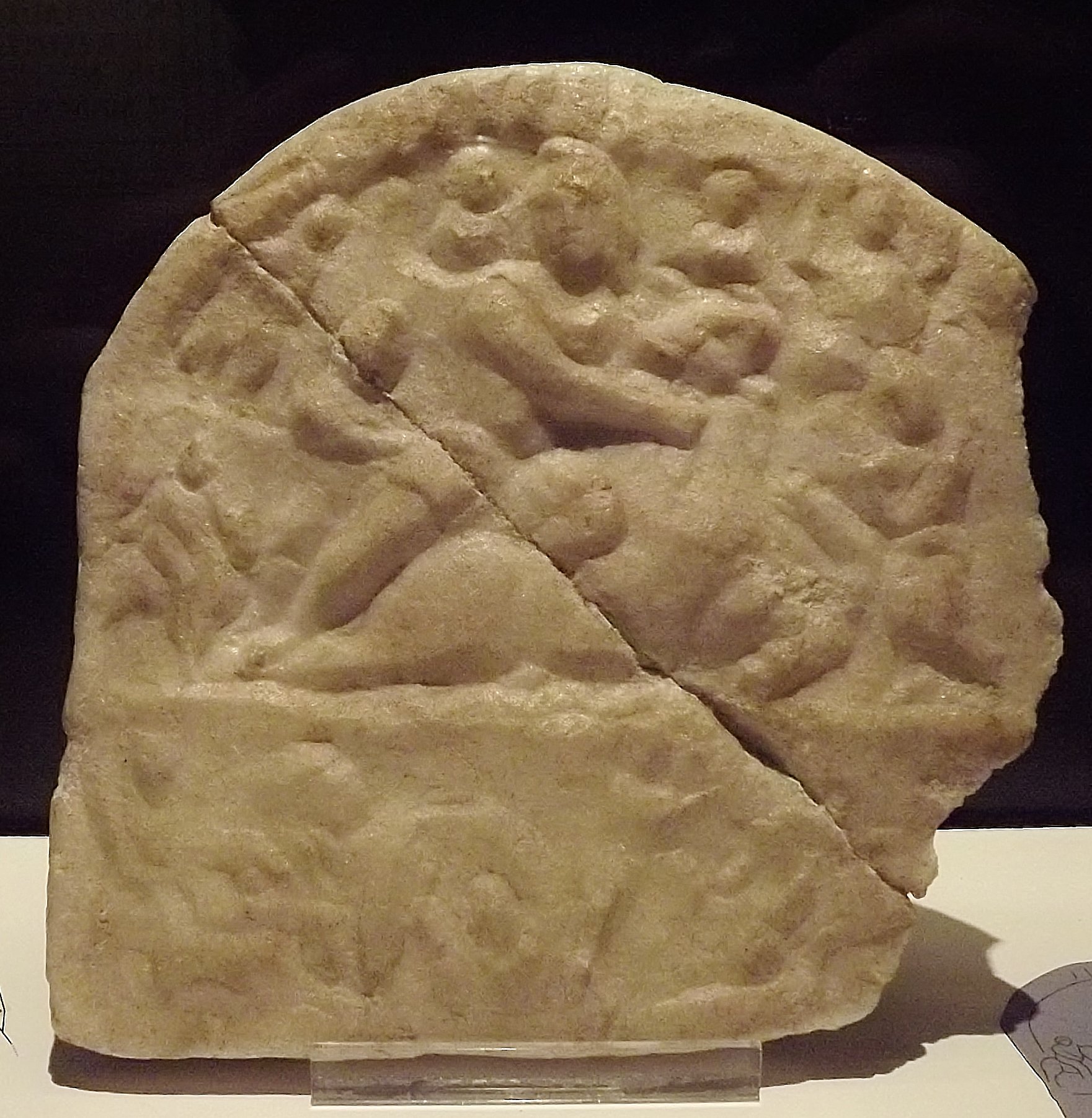
This small white marble relief of Mithras as a bullkiller was found in the Botanical Gardens of Vienna in 1950.
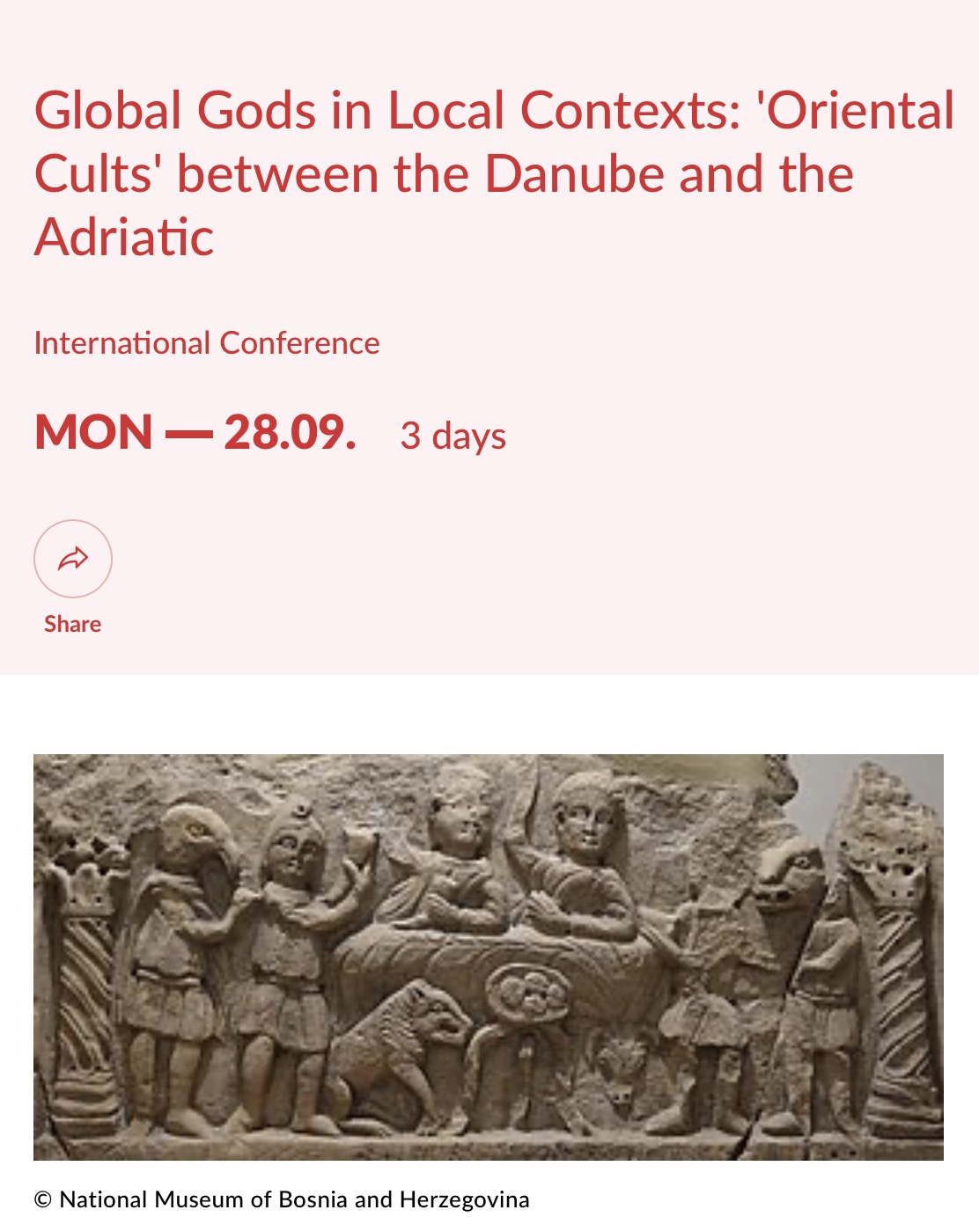
This conference is the latest in a series dedicated to the study of the so-called Oriental cults – religious traditions of Egyptian, Anatolian, Syrian, and Iranian origin – in the Danubian and Balkan provinces during the Roman imperial period (Skopje 2013; Zagreb/Ptuj 2022)…
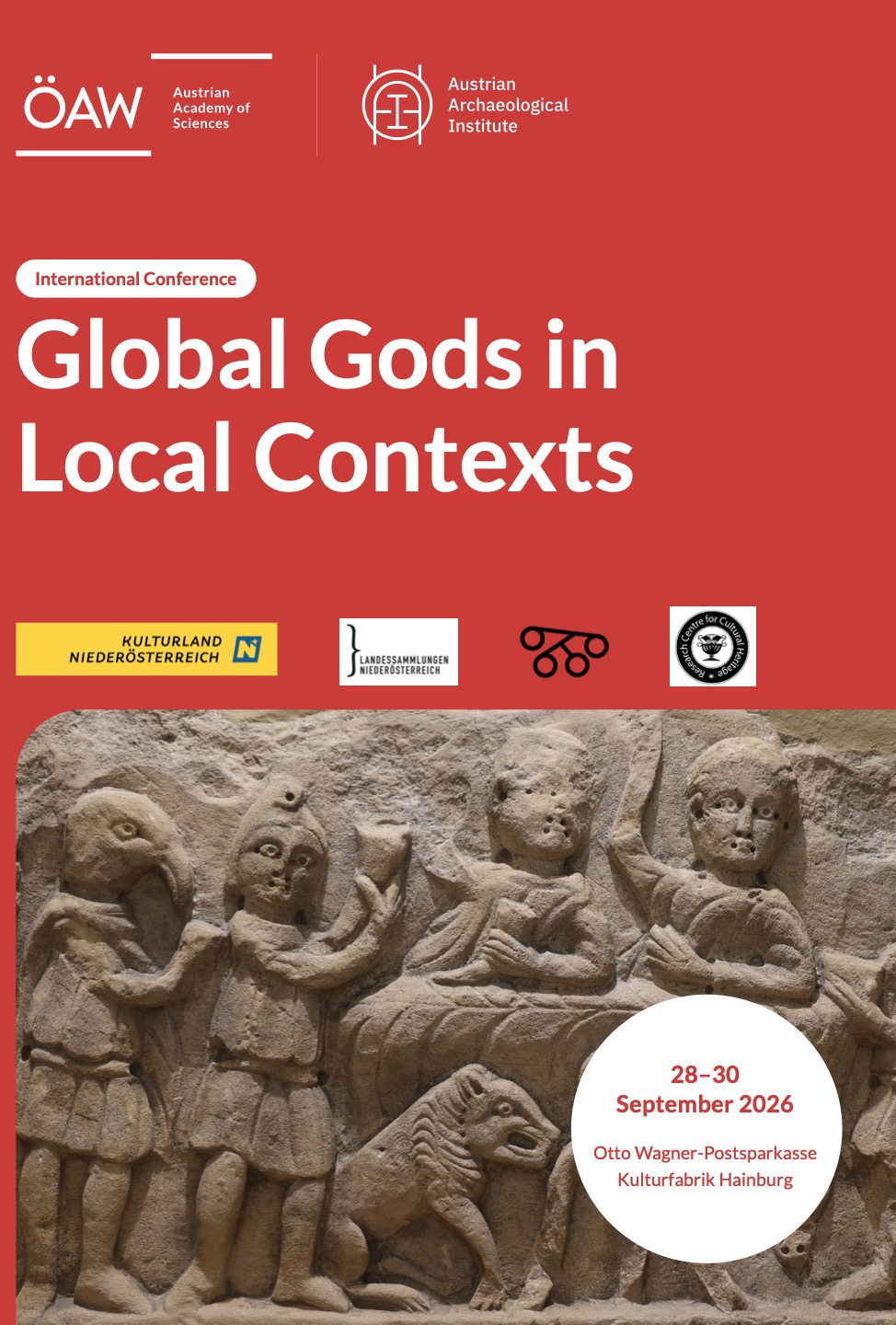
*Global Gods in Local Contexts* The international conference Global Gods in Local Contexts will take place in Vienna and Hainburg from 28 to 30 September 2026, bringing together archaeologists, historians and specialists in ancient religion to explore the transmission…


A vase or plate bearing a representation of Mithras, reported to be in the Archaeological Seminary of the University of Vienne (ancient Colonia Iulia Vienna Allobrogum) in Narbonensis, but unpublished at the time of Vermaseren's catalogue.
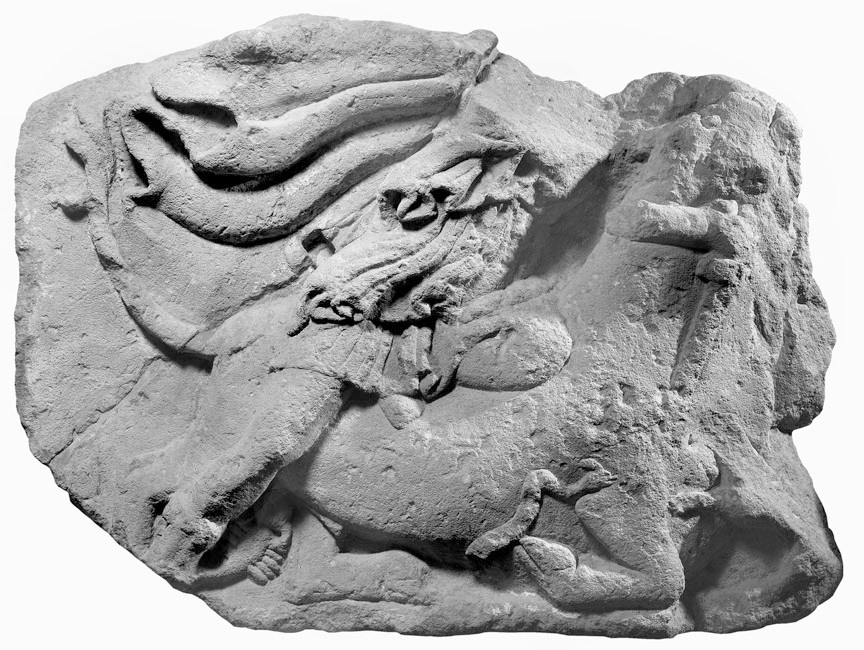
Sandstone relief of Mithras killing the bull, broken in two parts and partly restored, with dog, serpent and scorpion preserved; formerly in Vienna, now on loan to the Museum Carnuntinum.

The Mithraeum of Stix-Neusiedl was discovered in the summer of 1816. Although the structure of the sanctuary is unknown, several associated monuments are preserved today in Vienna.
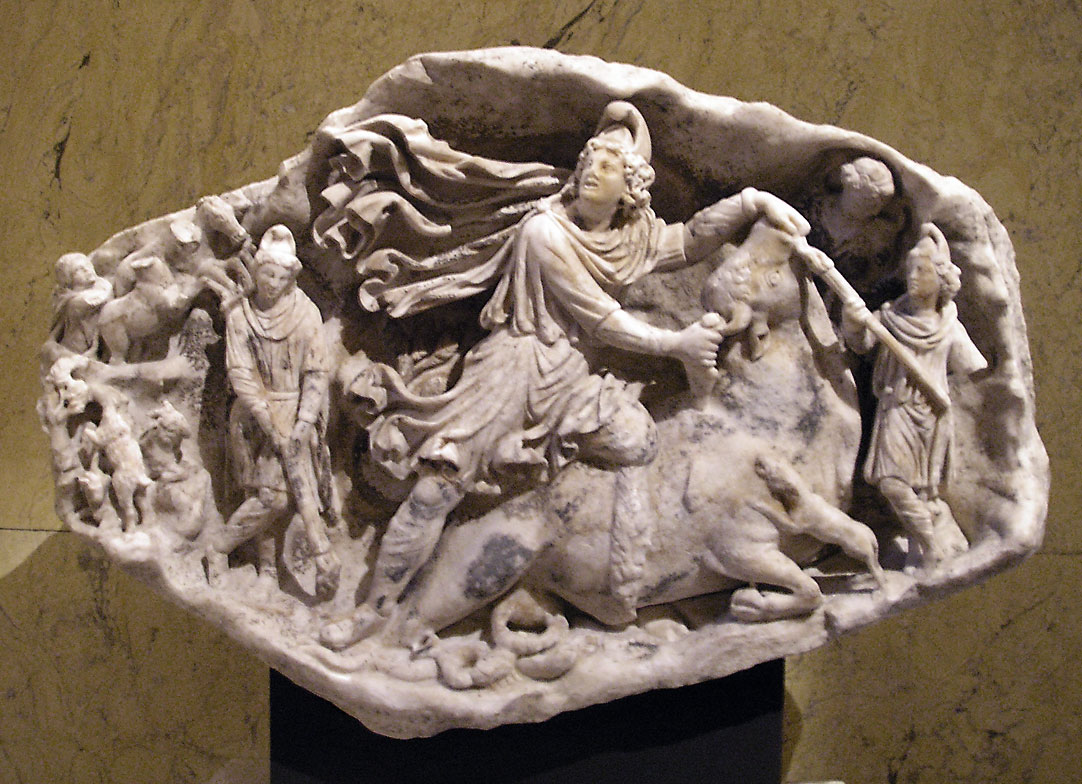
The relief of the Mithraic tauroctony of Aquiliea is currently on display in Vienna.
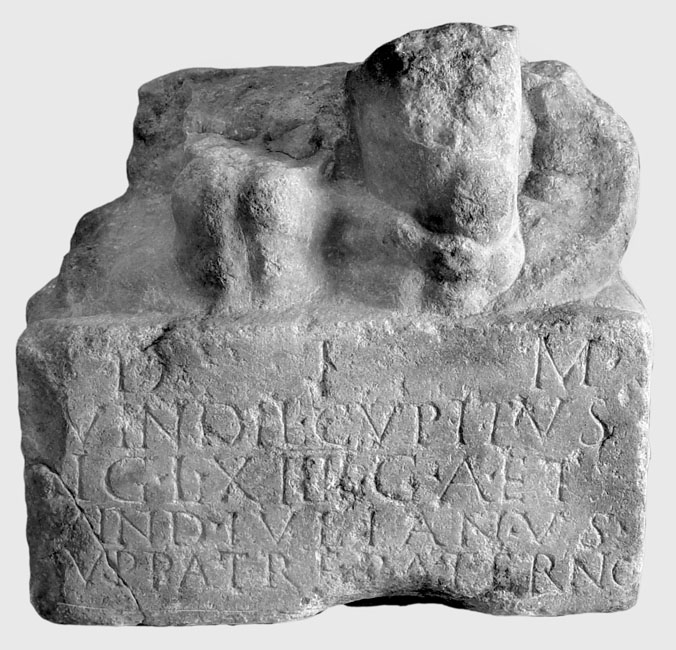
Only parts of the knees of Mithras, emerging from the rock, have been preserved from this monument of Petronell-Carnuntum, Austria.
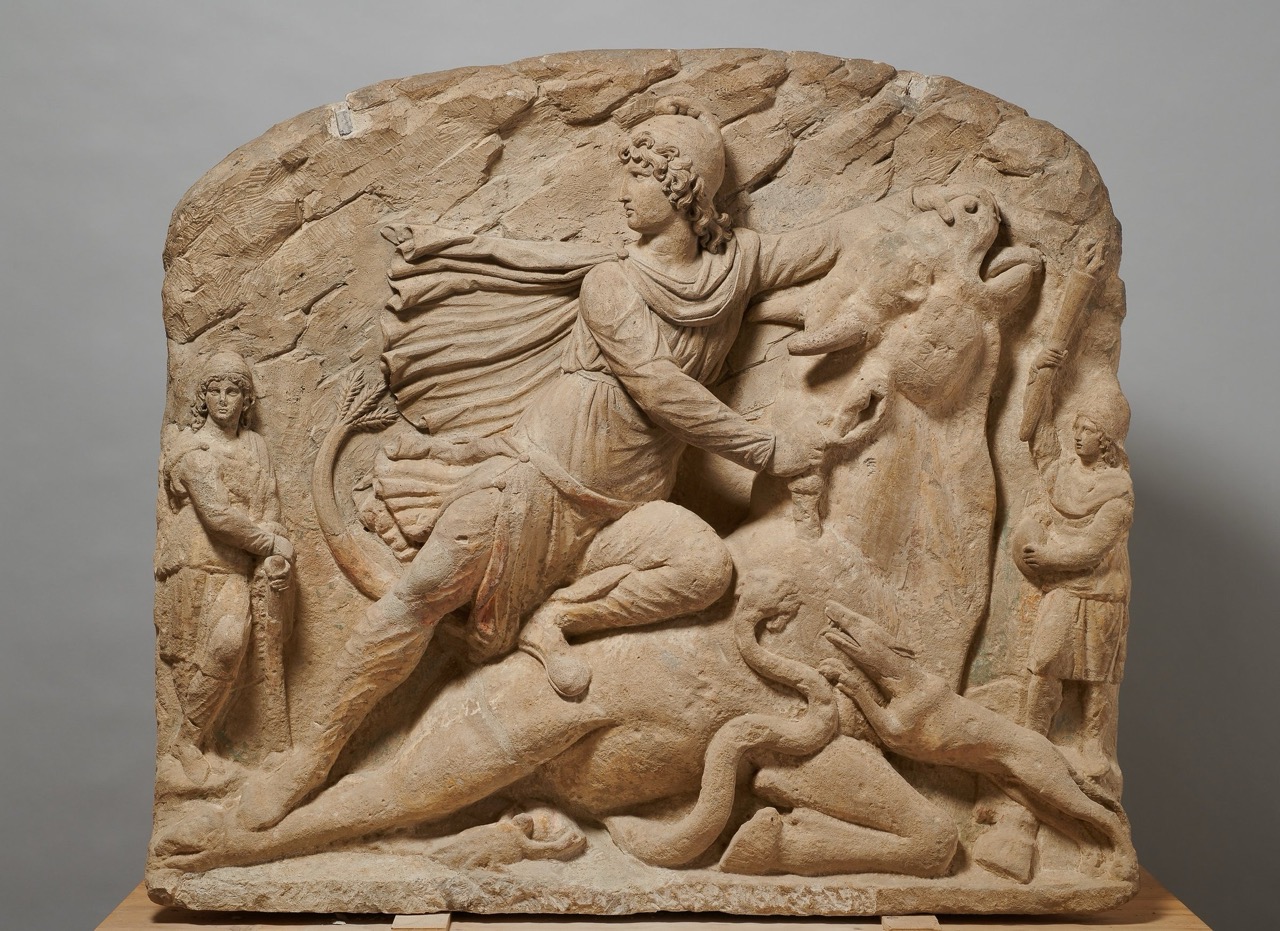
Limestone tauroctony relief from Carnuntum with traces of polychromy and a graffito on the bull’s neck. The inscribed base was carved separately.
Emperor Julian may have been initiated into the cult of the god Mithras at the Mithraeum of Vienne, France, according to Turcan.
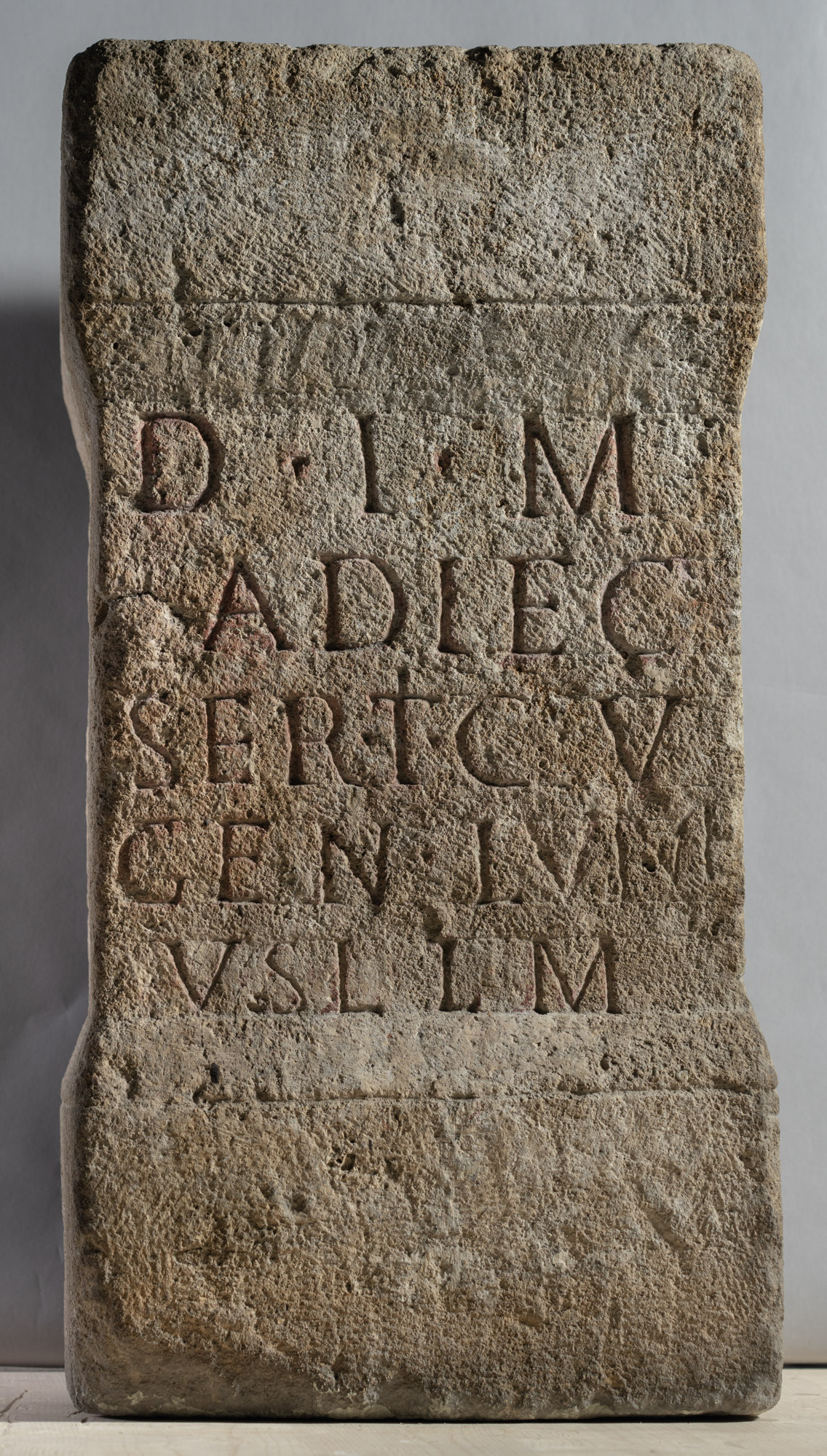
There is no consensus as to whether the altar of the slave Adiectus from Carnuntum is dedicated to a Mithras genitor of light.
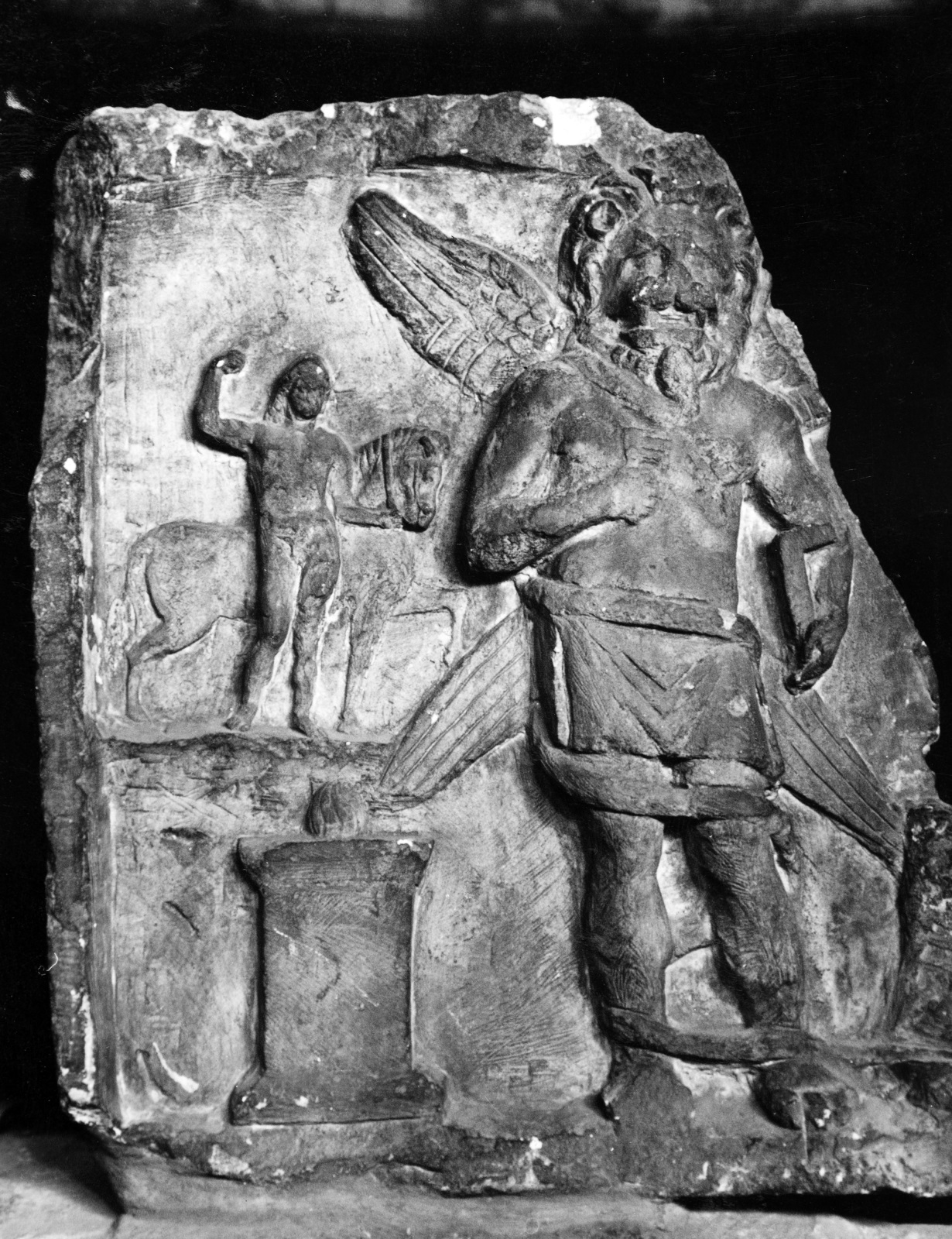
The relief of Aion from Vienne includes a naked youth in Phrygian cap holding the reins of a horse.
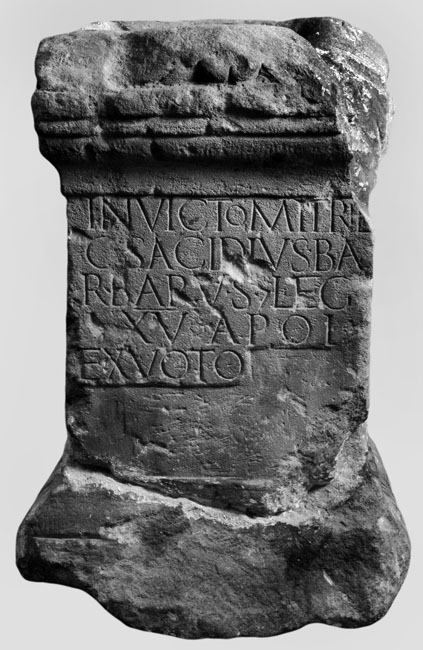
This altar bears the oldest known Latin inscription to the god Mithras, written Mitrhe.
