Your search Villa Albani gave 151 results.

Laurent Bricault has revolutionised Mithraic studies with the exhibition The Mystery of Mithras. Meet this professor in Toulouse for a fascinating look at the latest discoveries and what lies ahead.

Mithraeum I in Güglingen, Landkreis Heilbronn (Baden-Württemberg).

This limestone altar dedicated to Mithras by a certain Veturius Dubitatus was found in Dalj, Croatia, in 1910.
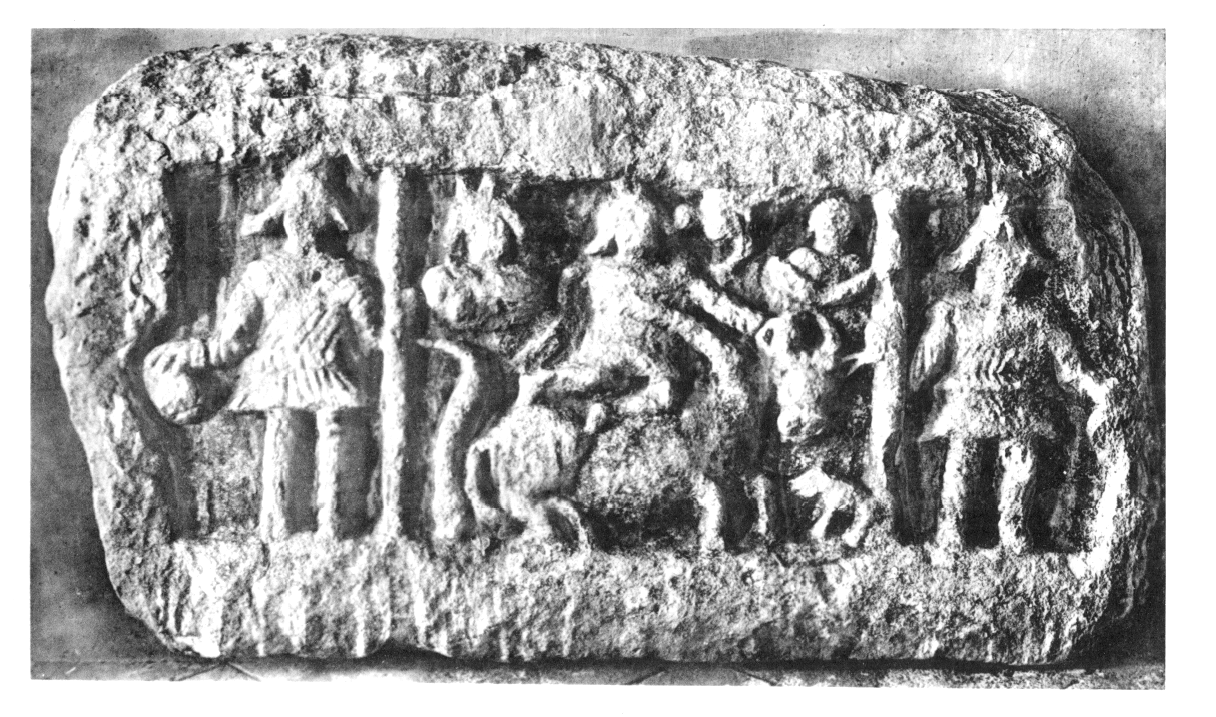
This relief of Mithras as bull slayer is surrounded by Cautes and Cautopates with their usual torch plus an oval object.
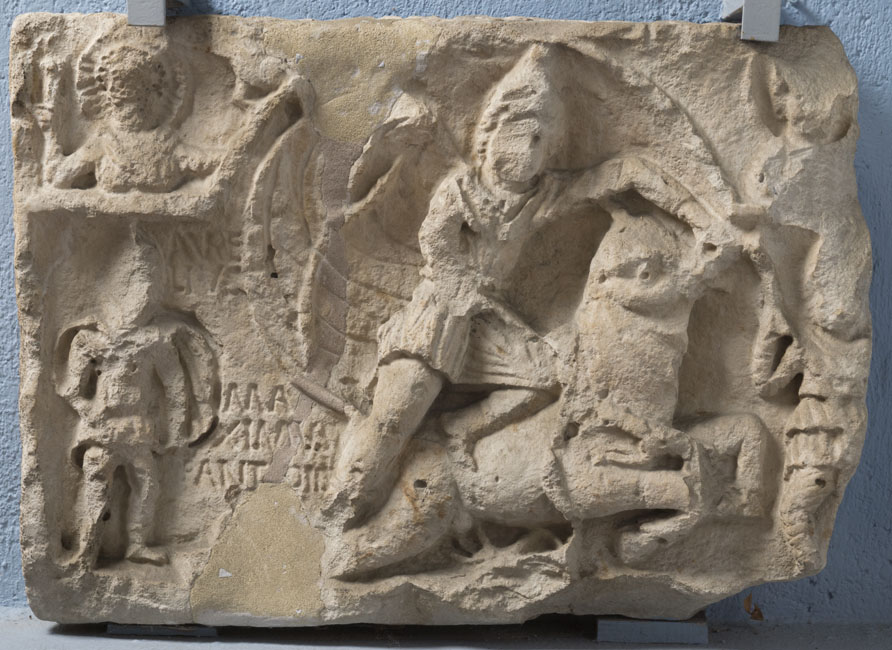
This relief of Mithras as a bullkiller was found in Golubić, Bosnia and Herzegovina, near a cementery.
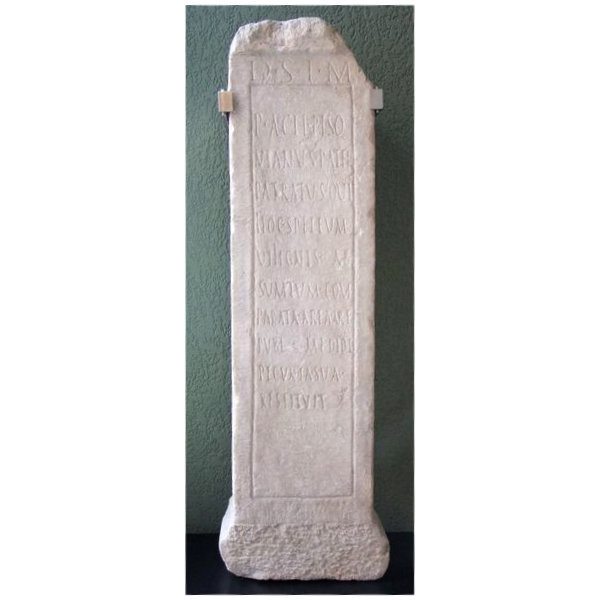
This high stele by a certain Acilius Pisonianus bears an inscription commemorating the restoration of a Mithraeum in Mediolanum, today's Milan.
In the altar that Titus Tettius Plotus dedicated to the invincible God, he called himself pater sacrorum.
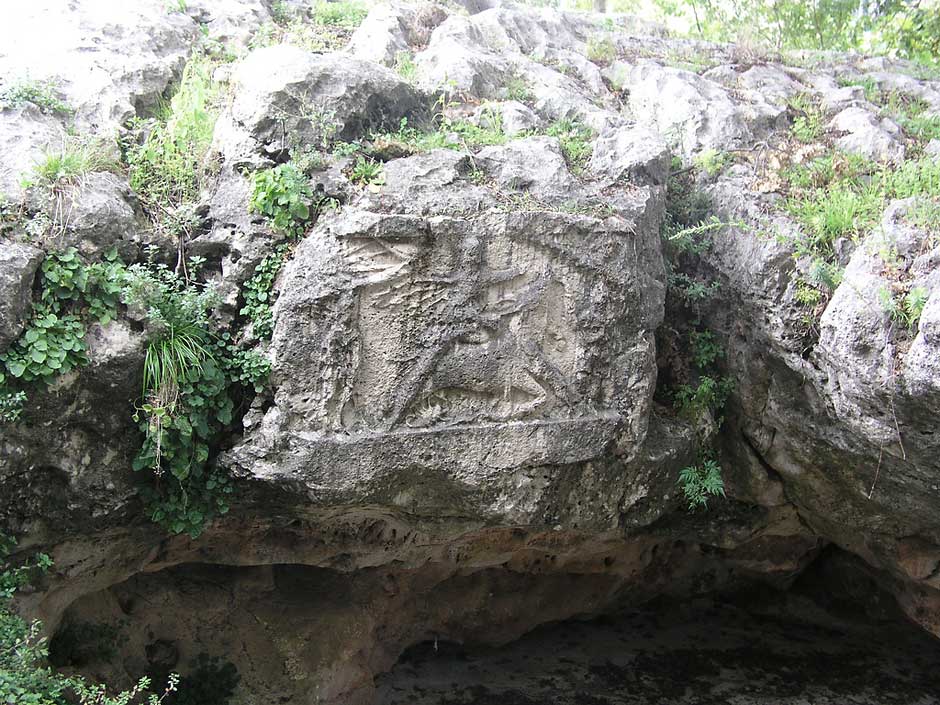
The Mithraeum of Mocici was situated in a grotto at one hour's walk fomr the ancient Epidaurum.
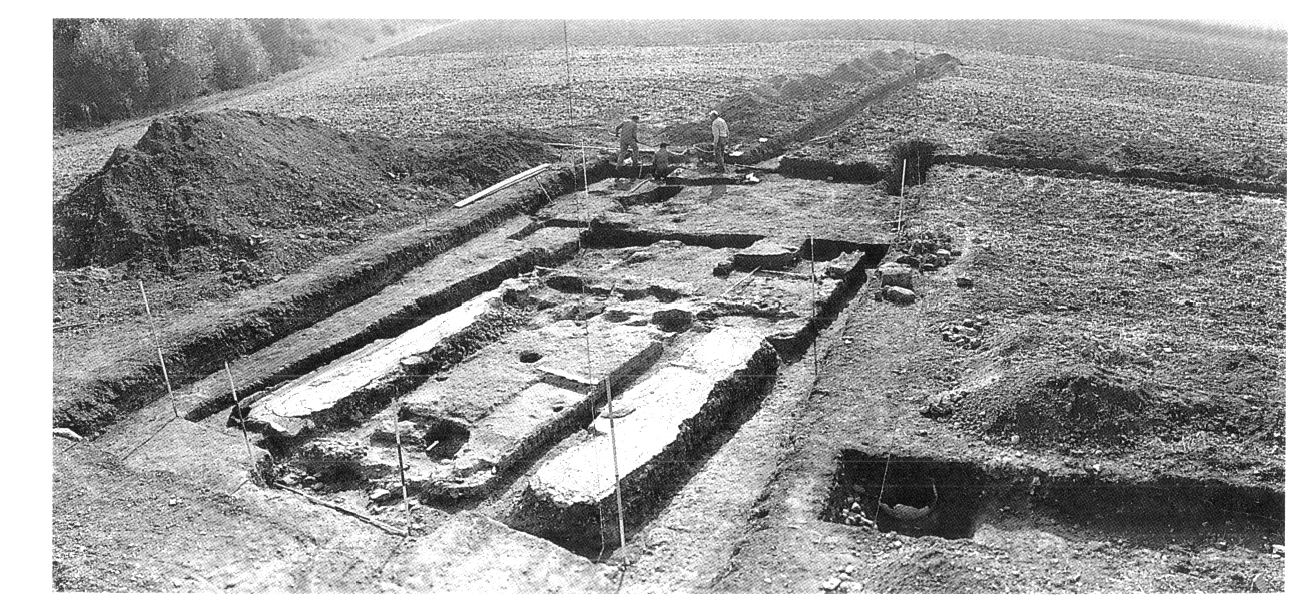
The Mithraeum of Biesheim-Kunheim is located near the ancient village of Altkirch, near the Rhin.
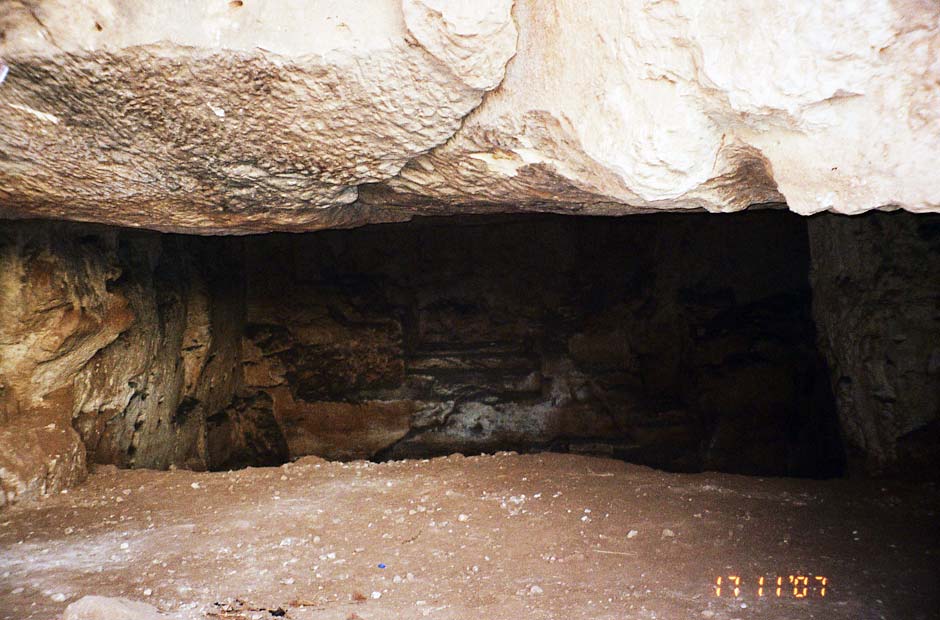
The Mithraea of Doliche, ancient Dülük, Turkey, are unique in that they represent two distinct shrines on the same site.

Excavations in 1979 on the remains of the church of Notre-Dame d'Avigonet in Mandelieu, Alpes-Maritimes, brought to light a small mithraeum.
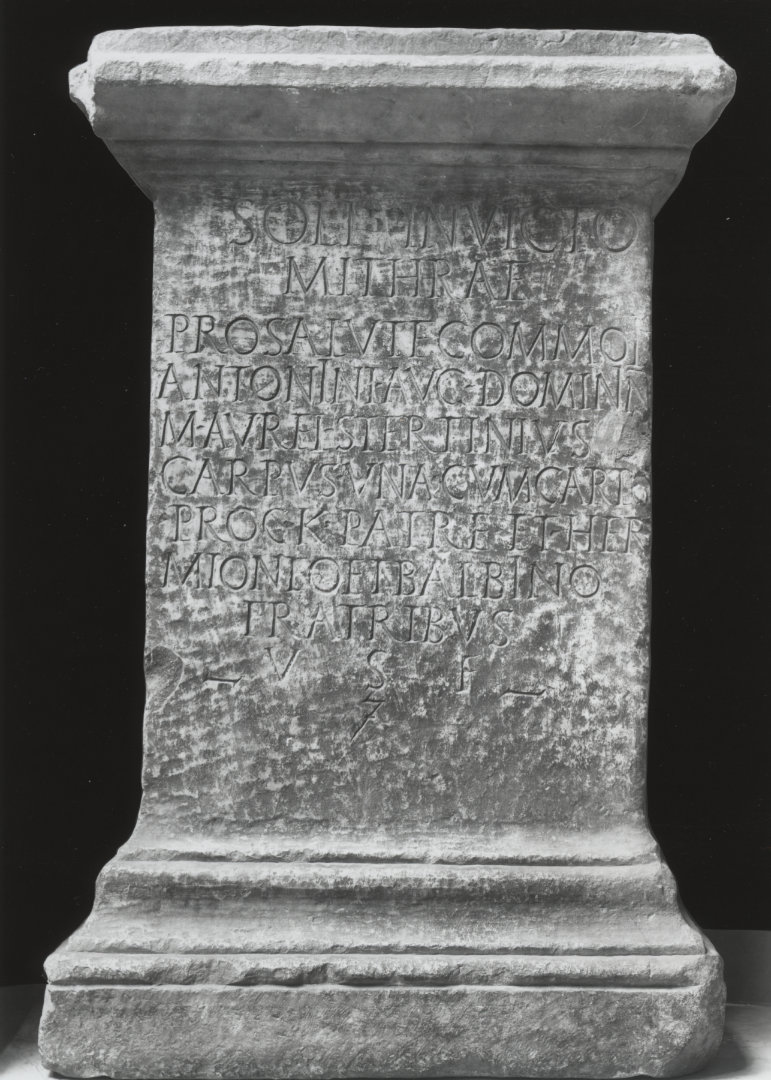
This altar bears an inscription to the health of the emperor Commodus by a certain Marcus Aurelius, his father and two other fellows.

On the occasion of the discovery of a Mithraeum in Cabra, Spain, we talk to Jaime Alvar, a leading figure in the field of Mithraism. With him, we examine the testimonies known to date and the peculiarities of the cult of Mithras in Hispania.
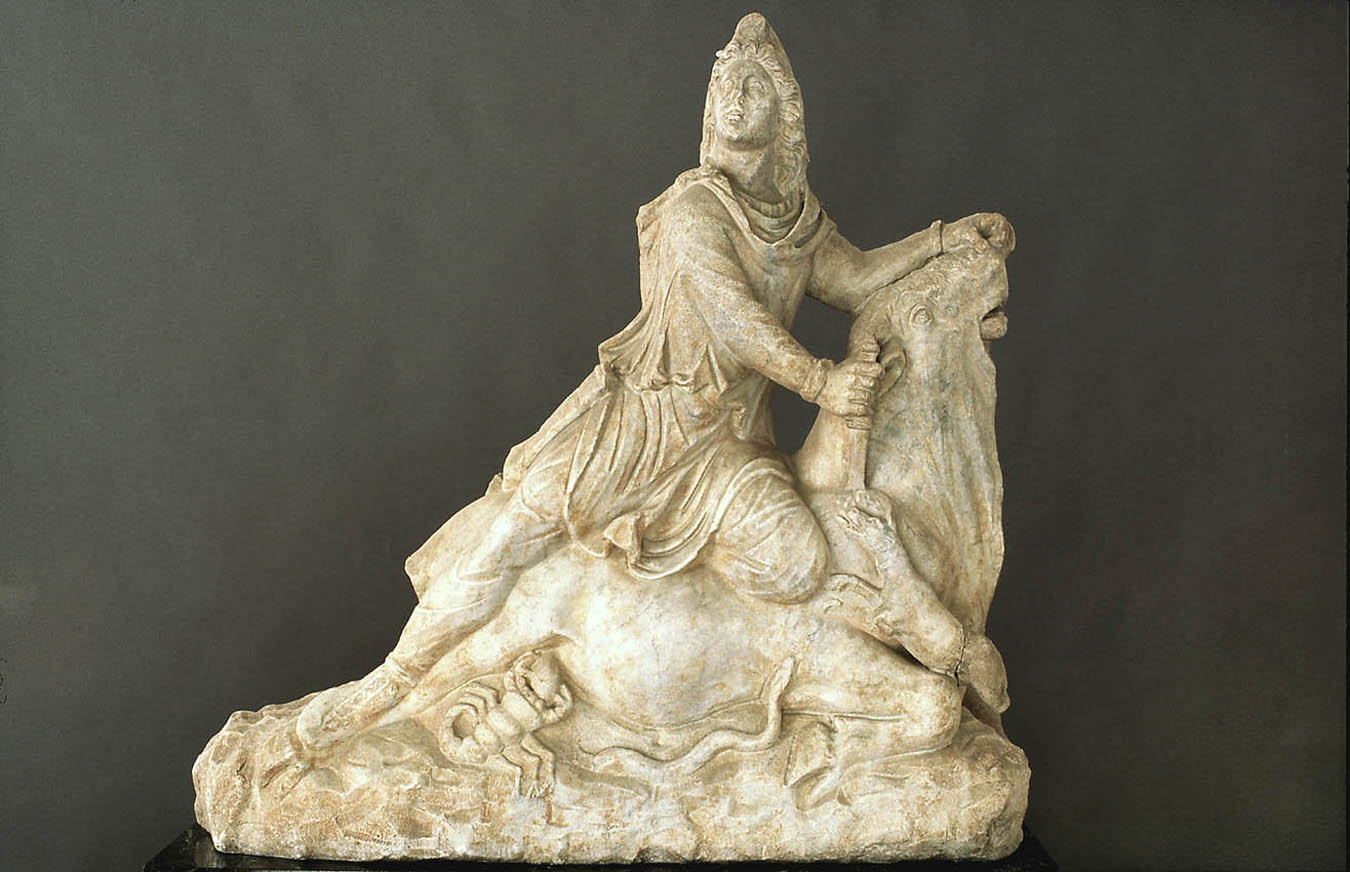
The Mithras of Cabra is the only full preserved Tauroctony sculpture found in Spain yet.

The Mithraeum of Spoleto was found in 1878 by the professor Fabio Gori on behalf of Marquis Filippo Marignoli, owner of the land.

This tabula marmorea was consecrated by a certain slave Vitorinus in Tibur, nowadays Tivoli, near Rome.
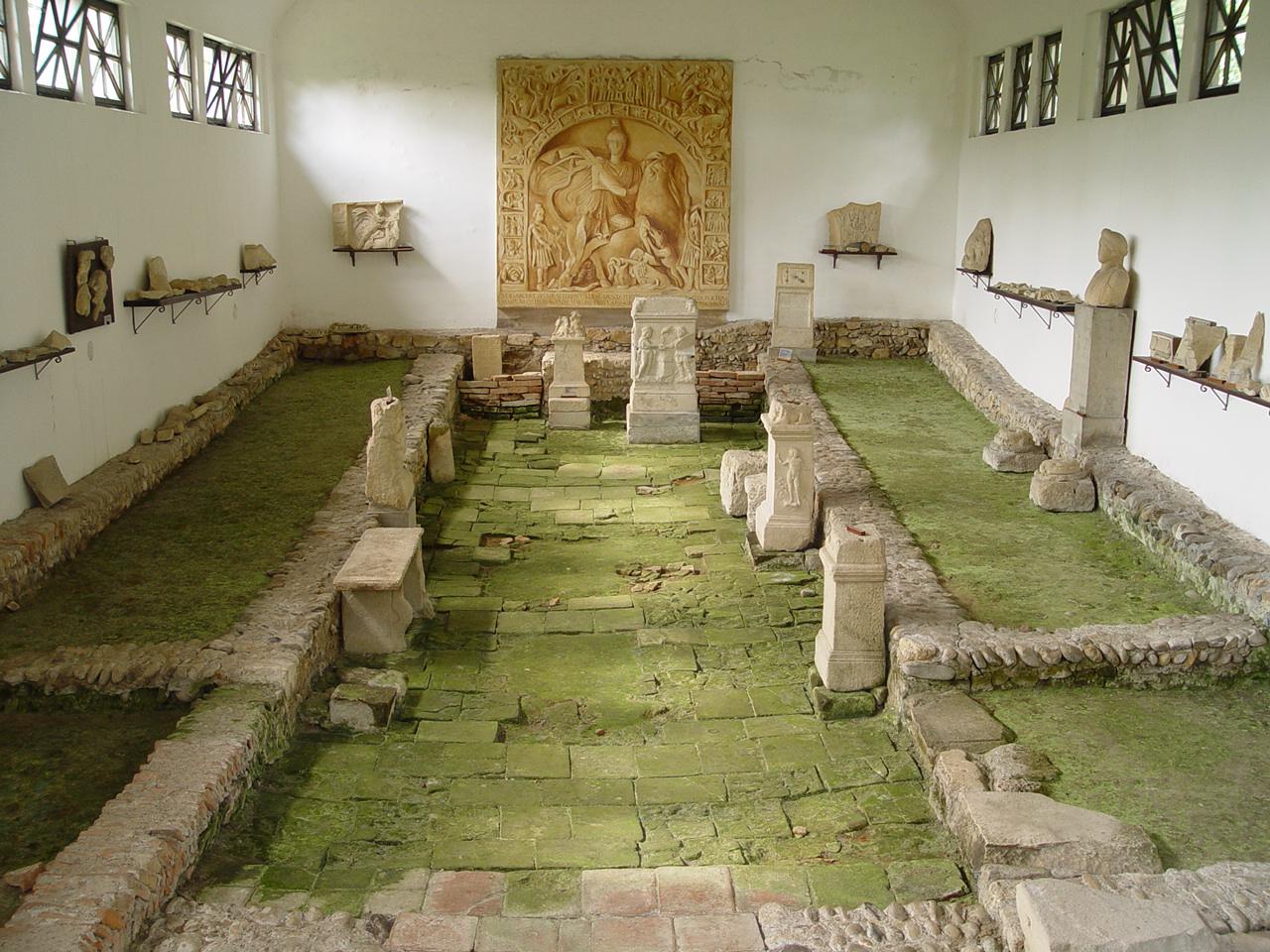
Mithraeum III in Ptuj was built in two periods: the original walls were made of pebbles, while the extension of a later period was made of brick.
During the excavations of 1804-1805, a series of monuments dedicated to Mithras and a temple were discovered at ancient Mons Seleucus.
The Mithraeum located in Piazza Dante in Rome was discovered in 1874 along with a series of monuments dedicated by a Pater named Primus.
