Your search Villa Vicentina gave 148 results.
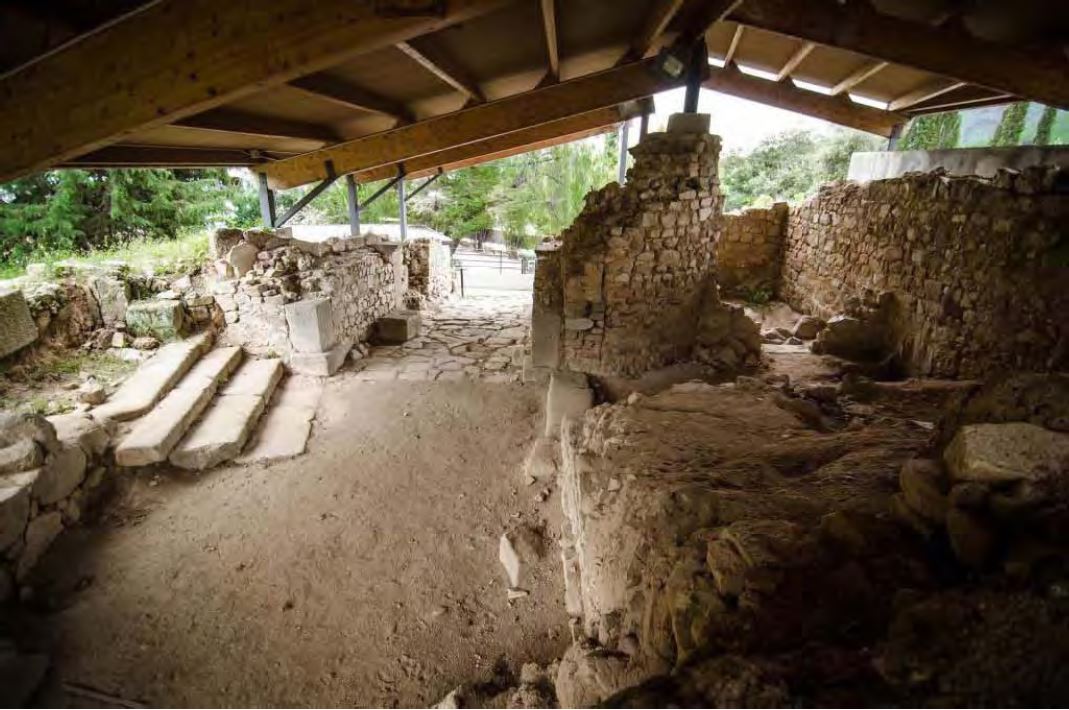
The Roman villa of Can Molodell had a sanctuary that has been related to the cult of Mithras.

At about a mile's distance from the village of Mit-Rahine near Memphis a Mithraeum has been discovered, which itself has not yet been described.

Presentation on the Dionysian-themed frescoes of the Villa of the Mysteries by Peter Mark Adams on the occasion of the presentation of his book.
This marble tablet found at Portus Ostiae mentions a pater, a lion donor and a series of male names, probably from a Mithraic community.

Small settlement on the lower Vit River in northern Bulgaria, within the territory of Roman Moesia Inferior.
Mithraic sanctuary excavated in a quarry at Kreta near Nikopol, Moesia Inferior, carved into the rock and including a small niche with a sandstone tauroctony relief, a base, and several altars.
Roman town founded on the site of the Celtiberian settlement of Arekorataz, beneath modern Muro de Ágreda in northern Hispania.
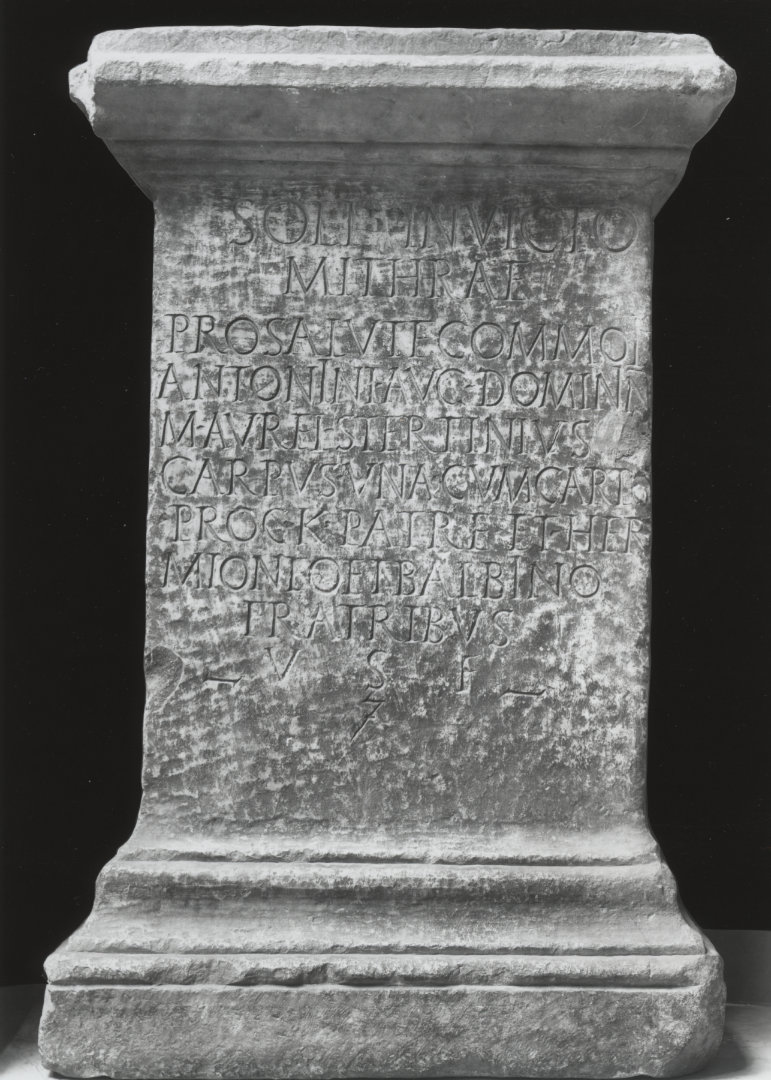
This altar bears an inscription to the health of the emperor Commodus by a certain Marcus Aurelius, his father and two other fellows.

A powerful and wealthy man, founder of a mithraeum in the city of Aquincum of which he was the mayor.
Aristocratic villa near Tarraco, capital of Hispania Tarraconensis, associated with Caius Valerius Avitus and a Mithraic sanctuary.
The Roman remains of Benifaió, or Benifayó in Spanish, are located on the outskirts of the city. Of particular interest is a rustic villa inhabited between the 1st and 4th centuries according to the numismatic and ceramic remains found.
Pausilypum, modern Posillipo, overlooked the Bay of Naples and became renowned for its elite villas and coastal setting.
A small four-sided white marble relief of uncertain Mithraic attribution, found at Italica (modern Santiponce, near Seville), depicting a bull walking to the right on the front, a fig-tree on the back, five ears of wheat on the right side, and damaged vine tendrils with grapes on the left…
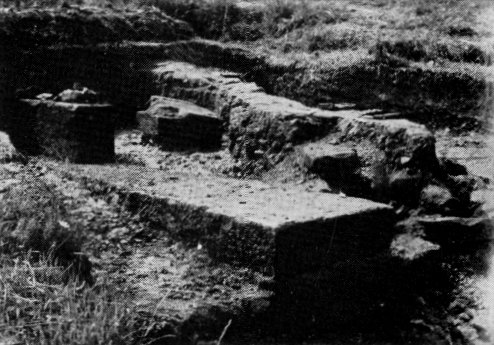
The Mackwiller Mithraeum was built in the middle of the 2nd century, during the reign of Antoninus the Pious, on the site of a spring already worshipped by the natives.
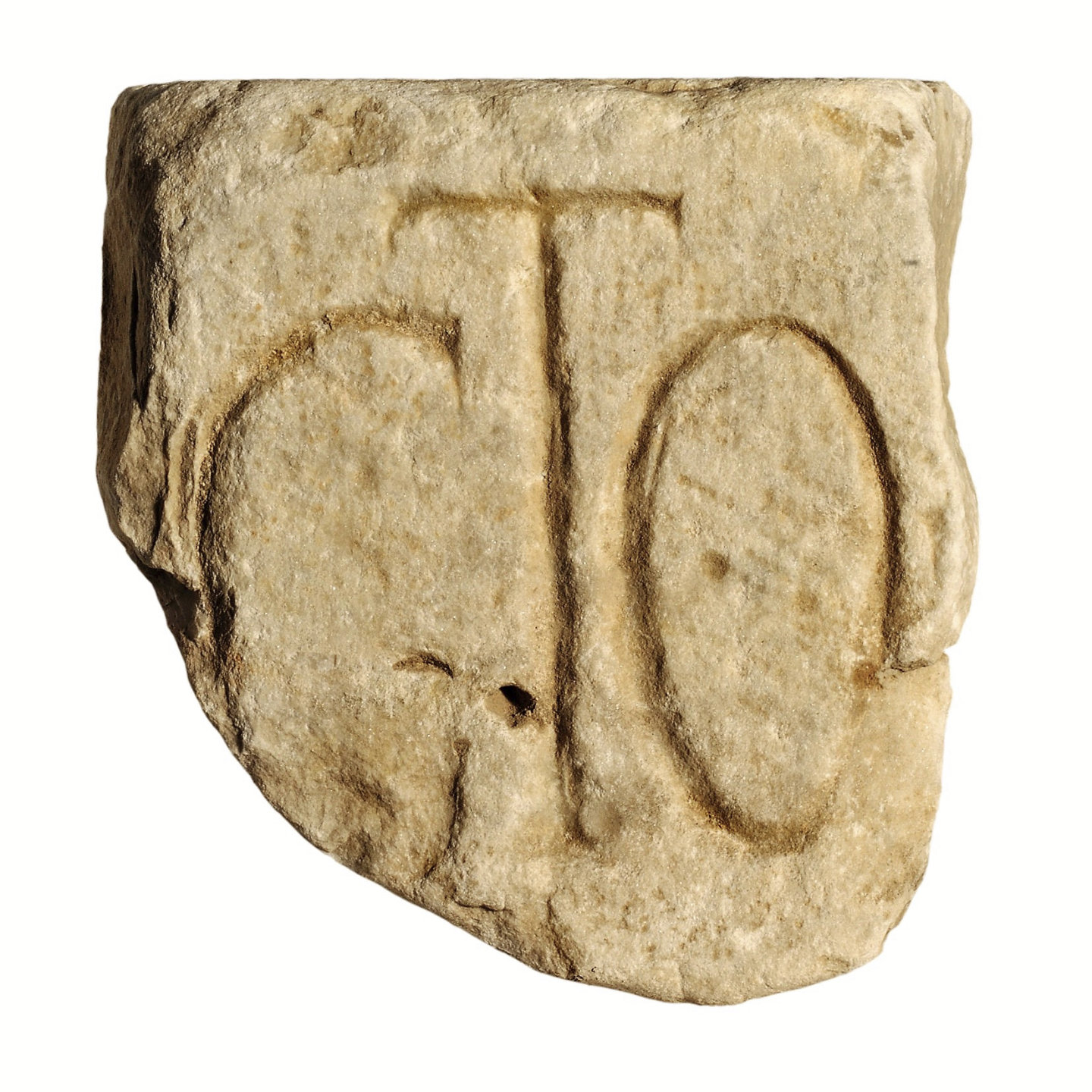
This fragment of the base of a statue from Tarragona, Spain, bears an inscription which appears to be dedicated to the invincible Mithras.
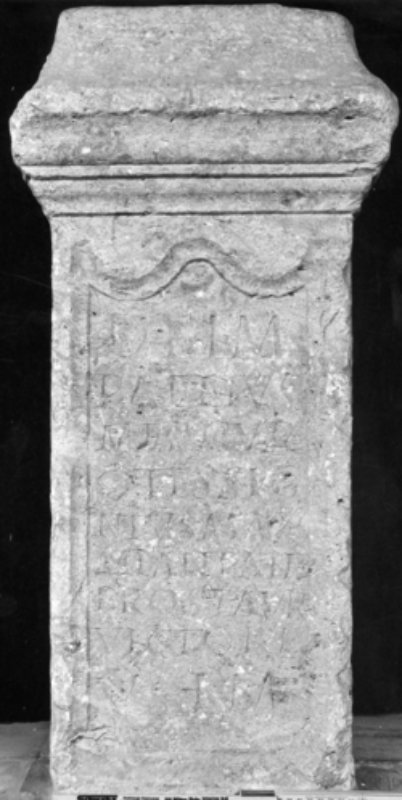
This altar to Mithras found in Aquilieia mentions several persons of a same community.
Marble tauroctony relief fragment from near Dolna-Malina, Thracia, depicting part of Mithras as bull-slayer together with Cautopates; no further details are available.
Small Mithraic sanctuary discovered in 1958 in the grotto called Adam near Tirgușor, Moesia Inferior, about 30 km from Constanța; the monuments are remarkable for their Greek inscriptions.
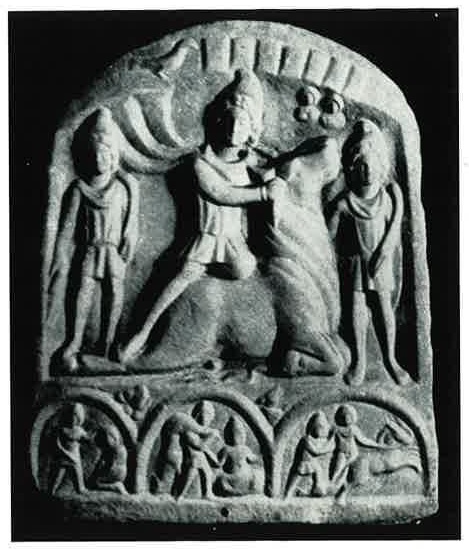
White marble tauroctony relief from the ruins of the Roman castle near Koniovo, Moesia Superior, depicting the standard bull-slaying scene.
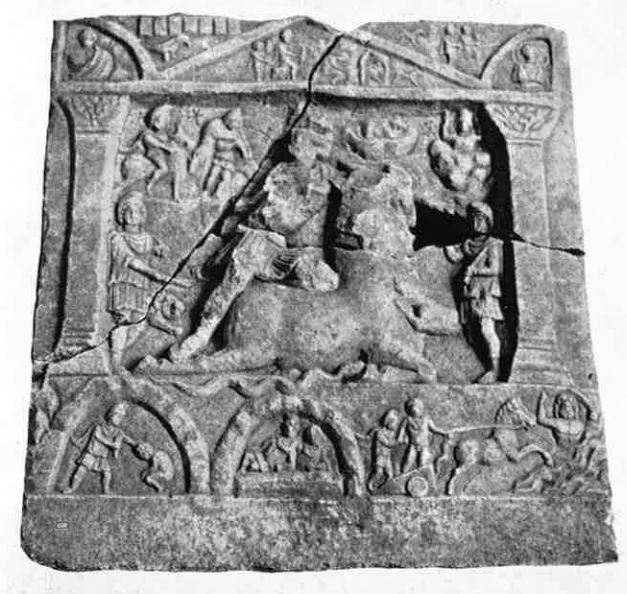
Large marble tauroctony relief from near Tavalicavo, Moesia Superior, with the shape of a temple façade: two columns supporting a pediment, the capital decorated with a head of Medusa, and the tauroctony in the central field.
