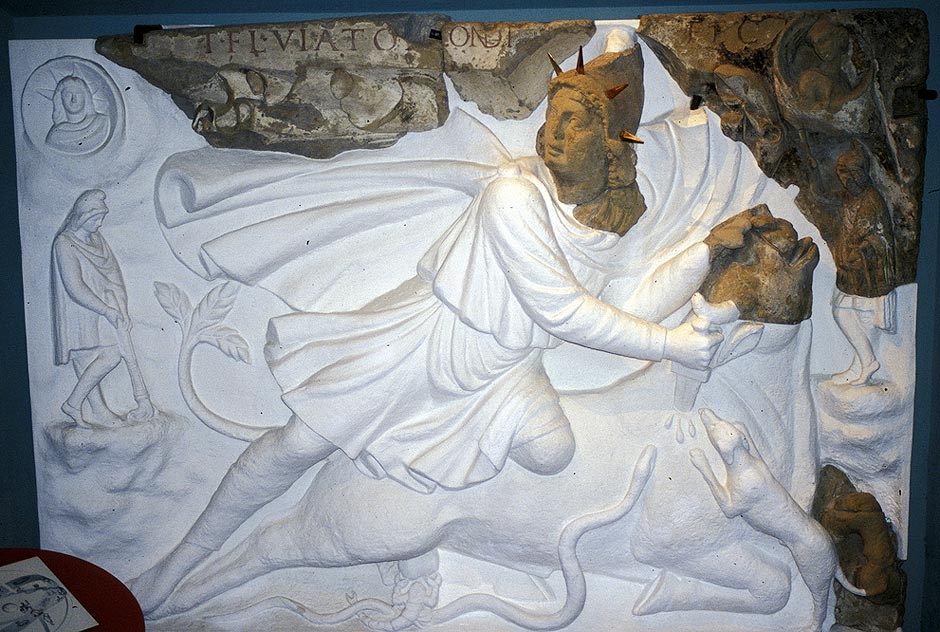
Of this great relief of Mithras slaying the bull only a few segments remain.
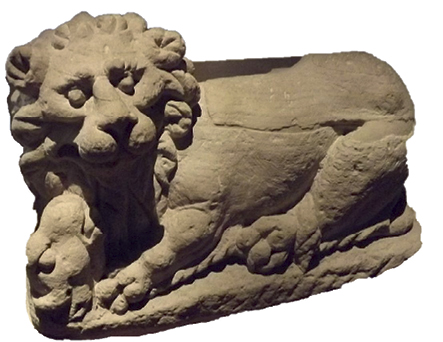
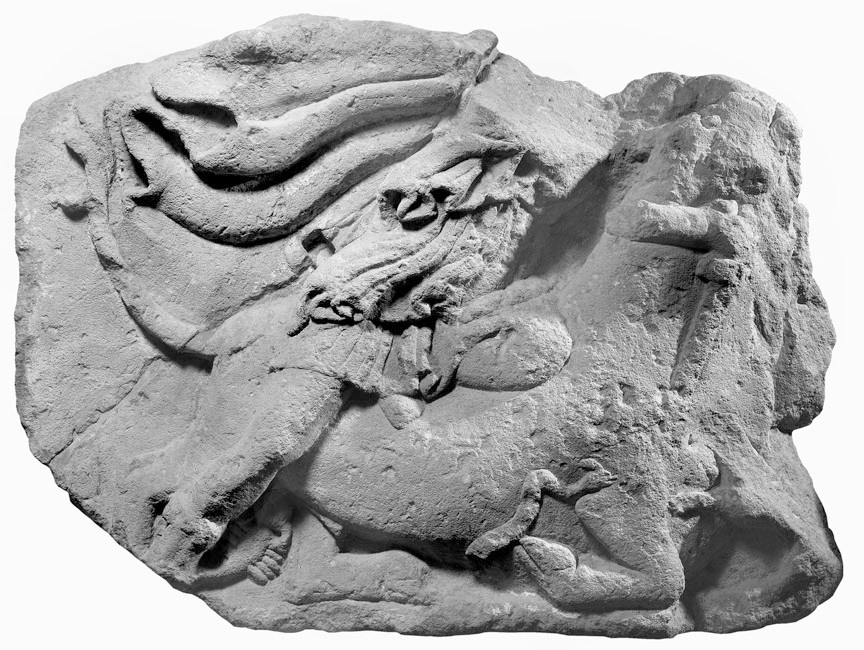
Exceptional sculpture of a lion devouring a bull’s head founded in 1894 in Carnuntum, Pannonia.
Only parts of the knees of Mithras, emerging from the rock, have been preserved from this monument of Petronell-Carnuntum, Austria.

Relief of Mithras killing the bull with an inscription from a certain Aurelius Macer who dedicates it to Sol Invictus Mithras.
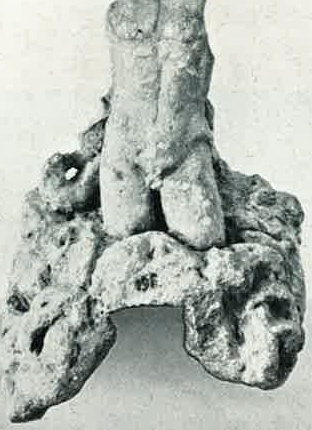
Sandstone petrogenesis from Petronell-Carnuntum (Lower Austria), depicting Mithras emerging from the rock, preserved from the knees upwards.
Sandstone relief of Mithras killing the bull, broken in two parts and partly restored, with dog, serpent and scorpion preserved; formerly in Vienna, now on loan to the Museum Carnuntinum.
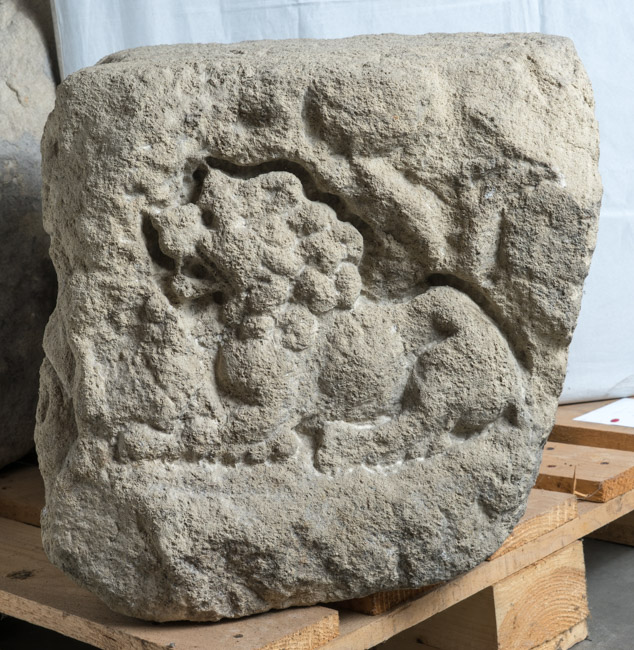
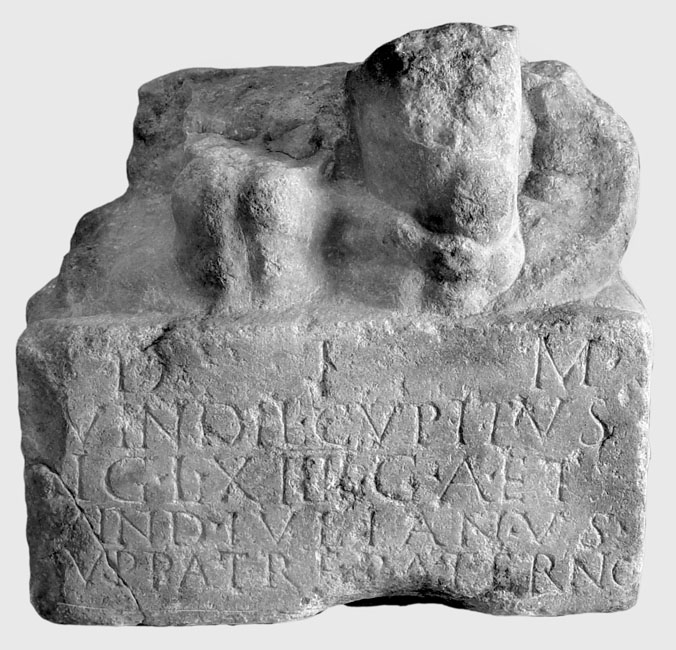
Sandstone base carved on two sides, with a head of Medusa framed by acanthus leaves and a reclining lion holding a head between its forelegs.
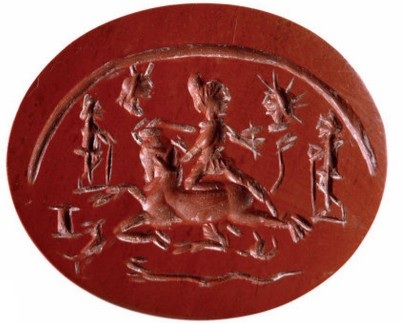
An oval carnelian gem from Carnuntum showing Mithras tauroktonos in a grotto. Sol and Luna appear above, with both torchbearers and a small altar before the bull.
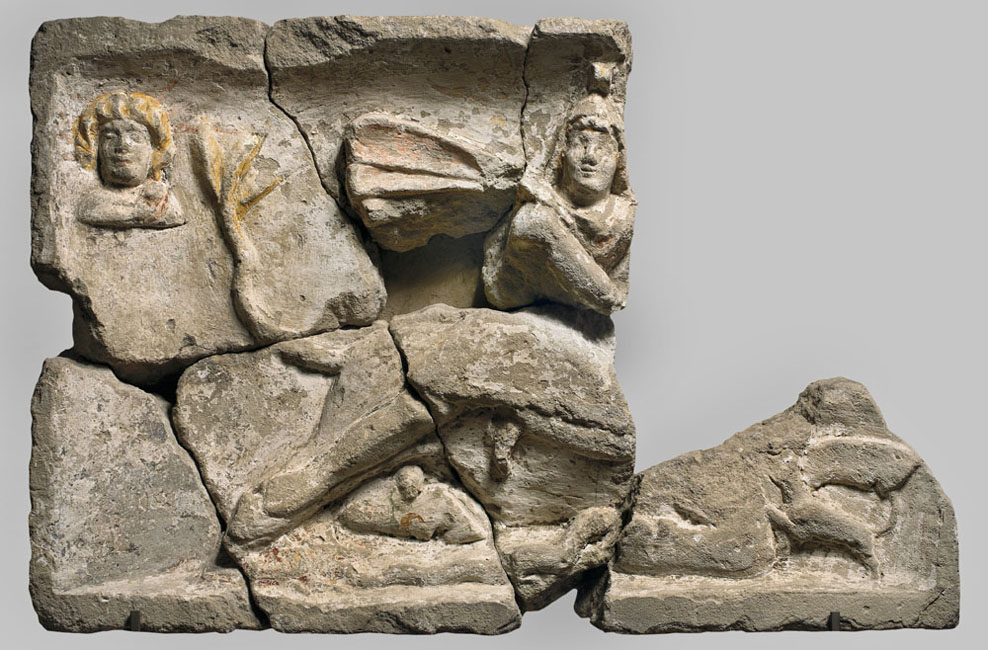
Sandstone relief of Mithras as bull-slayer, found at Petronell in 1932, with dog, serpent and scorpion, traces of polychromy preserved, now in the Museum Carnuntinum.
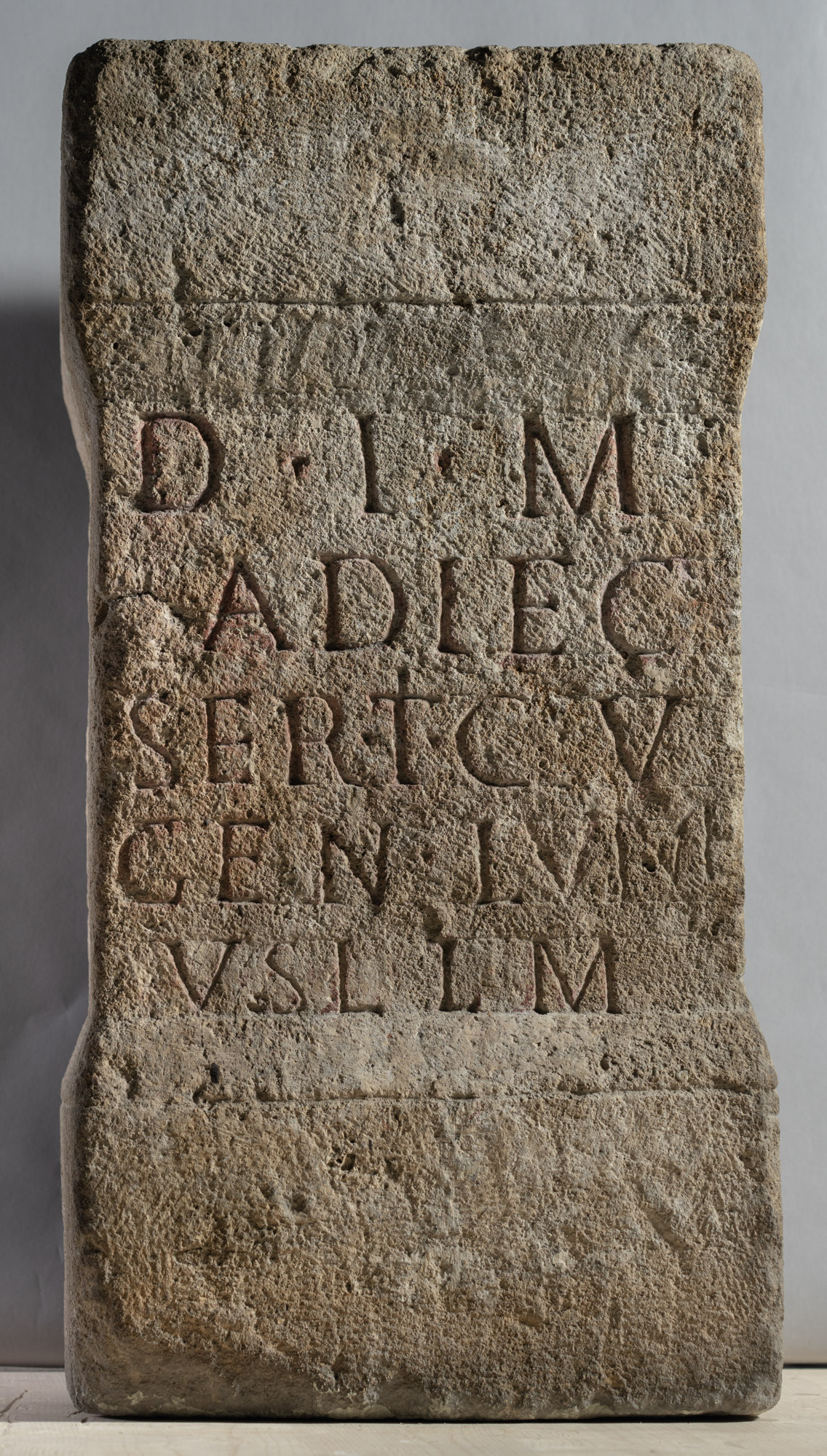
There is no consensus as to whether the altar of the slave Adiectus from Carnuntum is dedicated to a Mithras genitor of light.
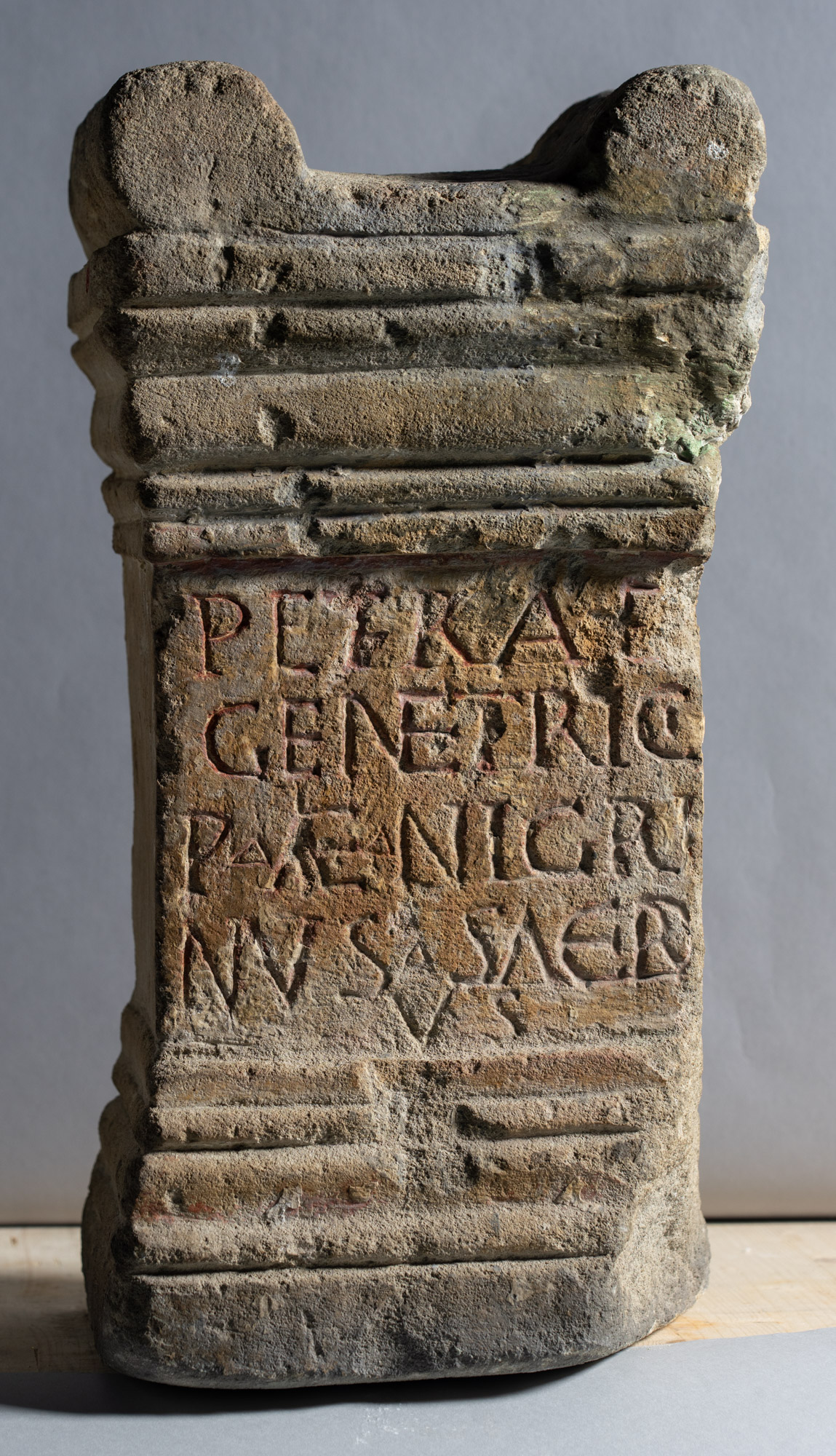
Aelius Nigrinus dedicated this small altar in Carnuntum to the rock from which Mithras was born.
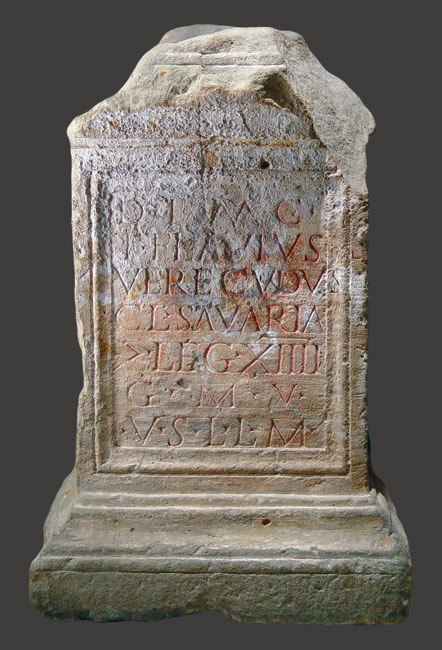
This monument to Mithras and Cautes (or Cautopates) was erected in Carnuntum by the centurion Flavius Verecundus of Savaria.

According to the scarcely detailed design of von Sacken, the lay-out of the temple must have been nearly semi-circular.
The second temple devoted to Mithras in Carnuntum is situated besides a Jupiter's temple.
Mithraeum III found in the west part of Petronell near Hintausried in August 1894 by J. Dell and C. Tragau.
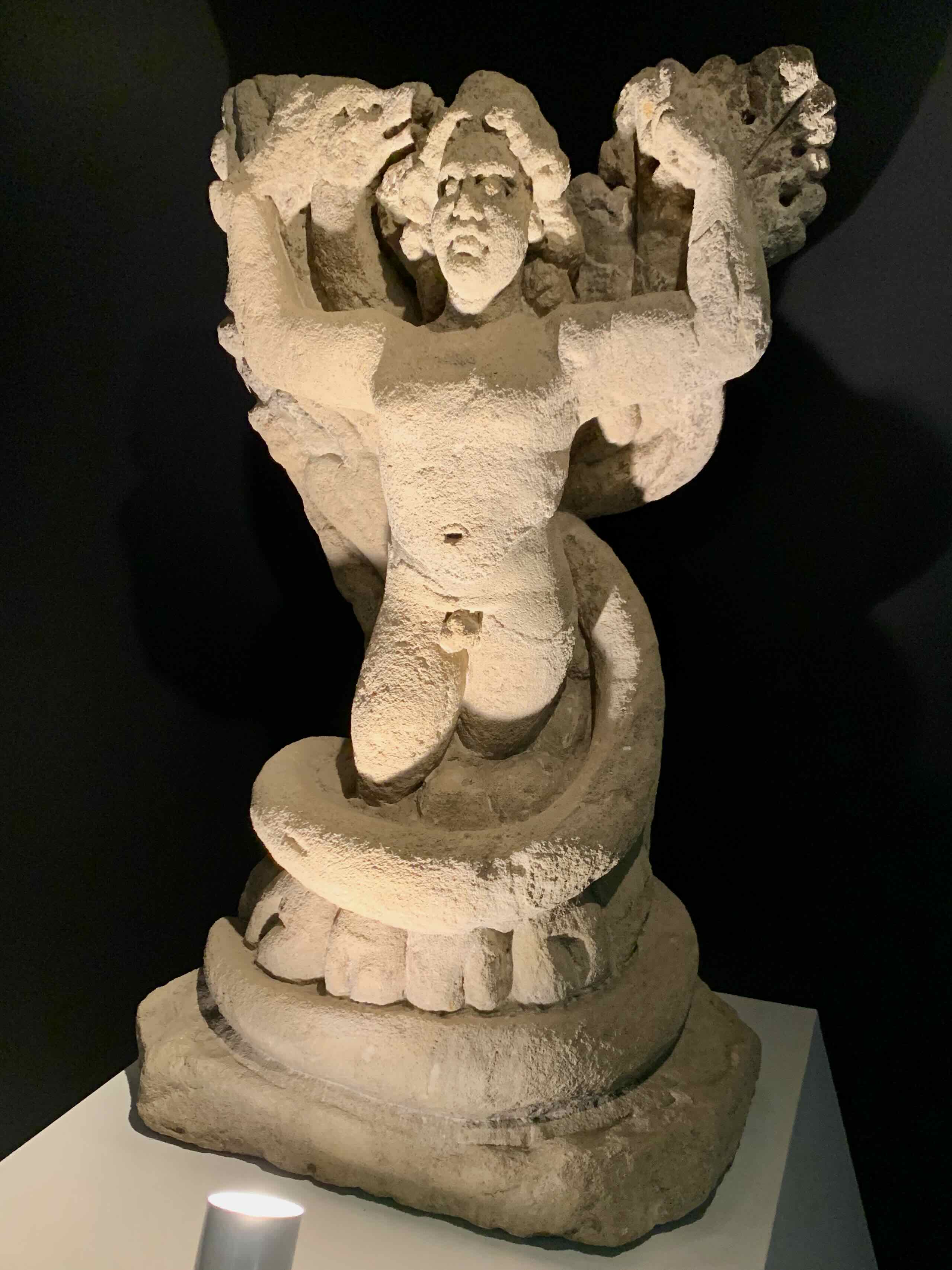
Mithras Petrogenitus, born from the rock, from the Mithraeum of Carnuntum III.
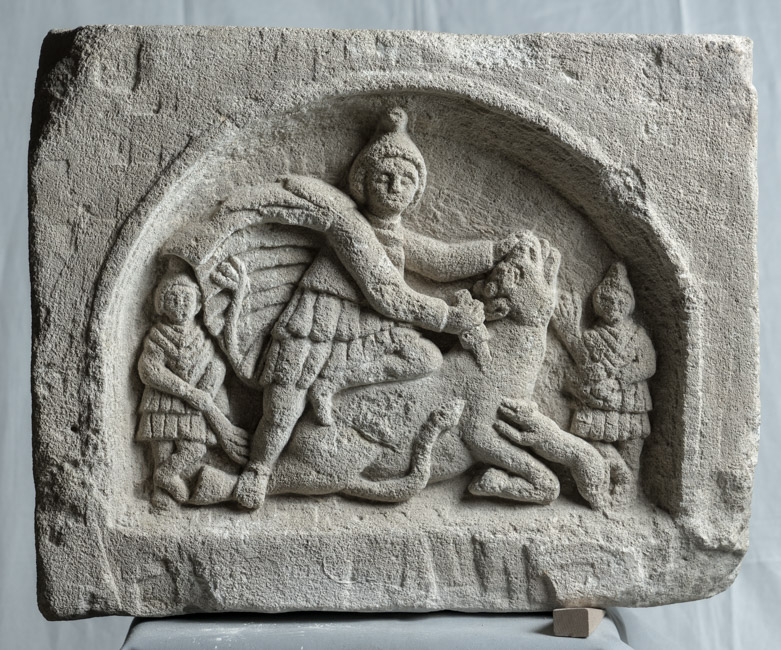
This relief found at Carnuntum represents Mithras slaughtering the bull, without the scorpion, in the sacred cave.
On this slab, Gaius Iulius Propinquos indicates that he made a wall of the Mithraeum at his own expense.
