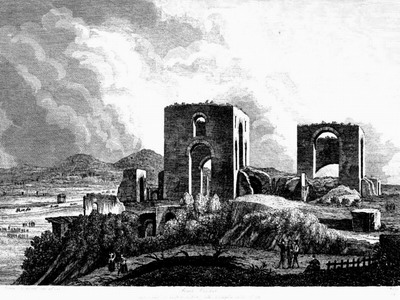
Mithras and other oriental gods were worshipped in the shrine of Zeus near the Villa of the Quintilians in Rome.

Fragment of a marble relief (H. 0.27 Br. 0.38 D. 0.045).

Relief possibly depicting Mithras-Men holding a torch and a a bust of Luna on a crescent.

Fragment of a white statue depicting a naked god entwined by a serpent with its head on his chest, found in the River Tiber.
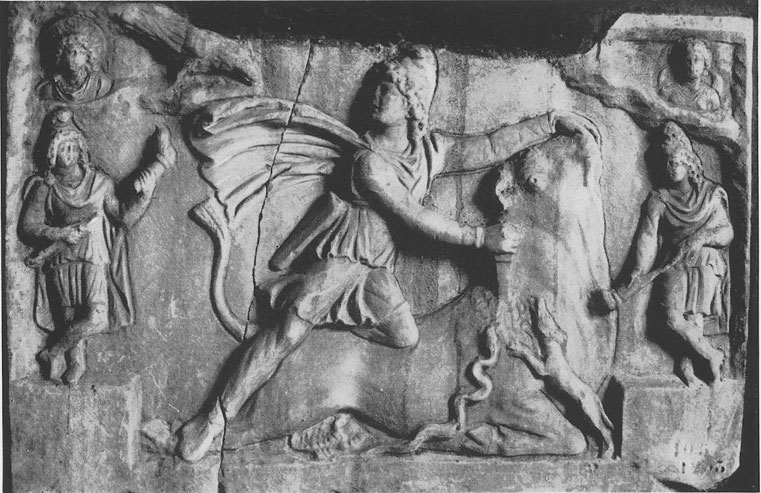
White marble relief depicting Mithras killing the bull, found broken in two parts in 1872 near Salita delle Tre Pile in Rome.

This is the first known inscription that includes Phanes alongside Mithras found in a Mithraic context.
This cylindrical marble altar was dedicated by the same Pater Proficentius as the slab, both monuments found in the Mithraeum beneath the Basilica of San Lorenzo.
This marble monument was dedicated in Rome by the slave Fructus and his son Myro.
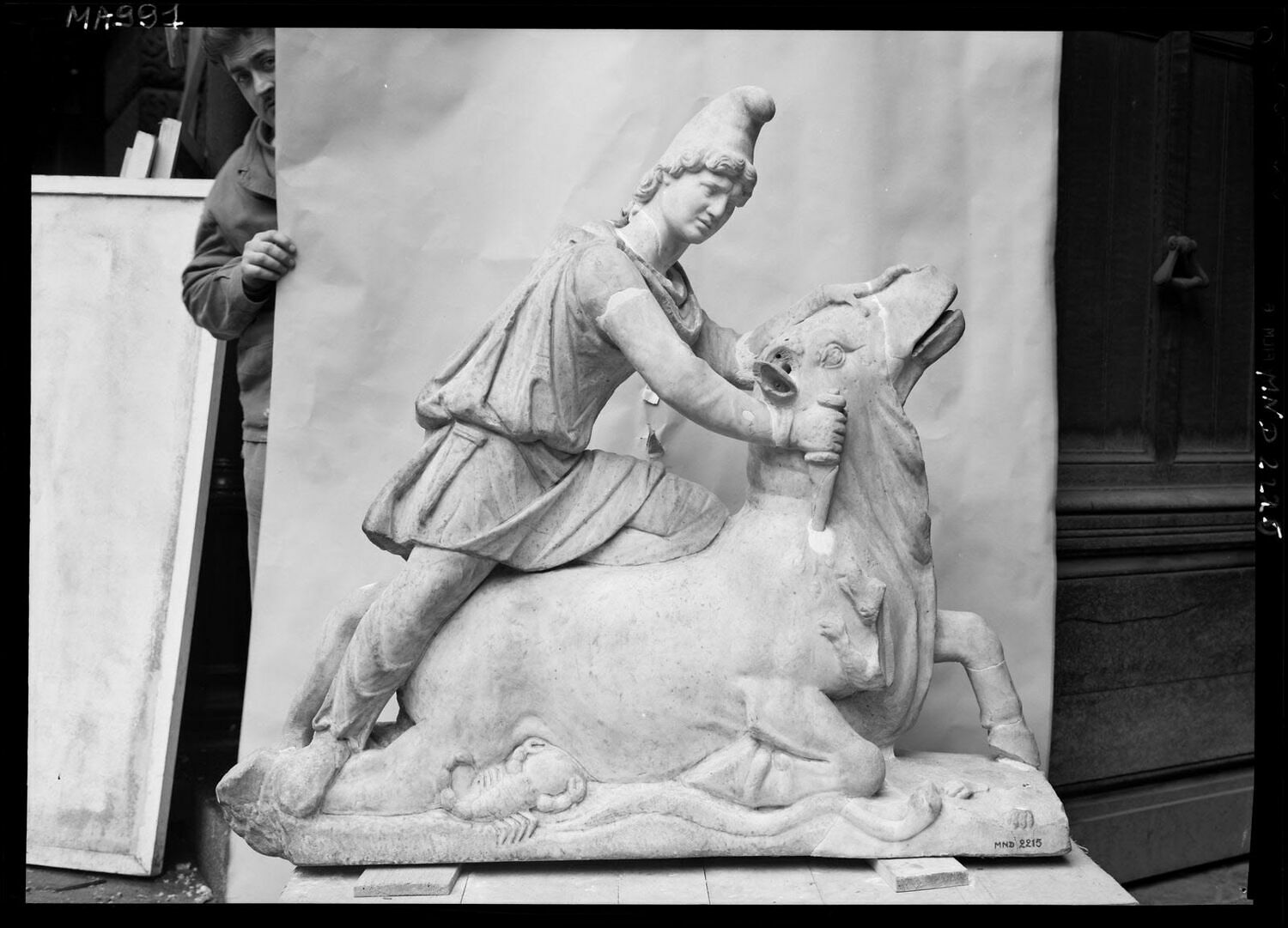
This sculpture of Mithras killing the bull, which belongs to the Louvre Museum, is currently on display in Varsovia.
In this 4th-century Roman altar, the senator Rufius Caeionius Sabinus defines himself as Pater of the sacred rites of the unconquered Mithras, having undergone the taurobolium.
This marble slab, found in the Mithraeum of San Clemente, bears an inscription by a certain Aelius Sabinus for the health of the Emperor Antoninus Pius and his sons.
This marble bust of Sol, found in the Mitreo di San Clemente, had five holes in the head where rays had been fixed.
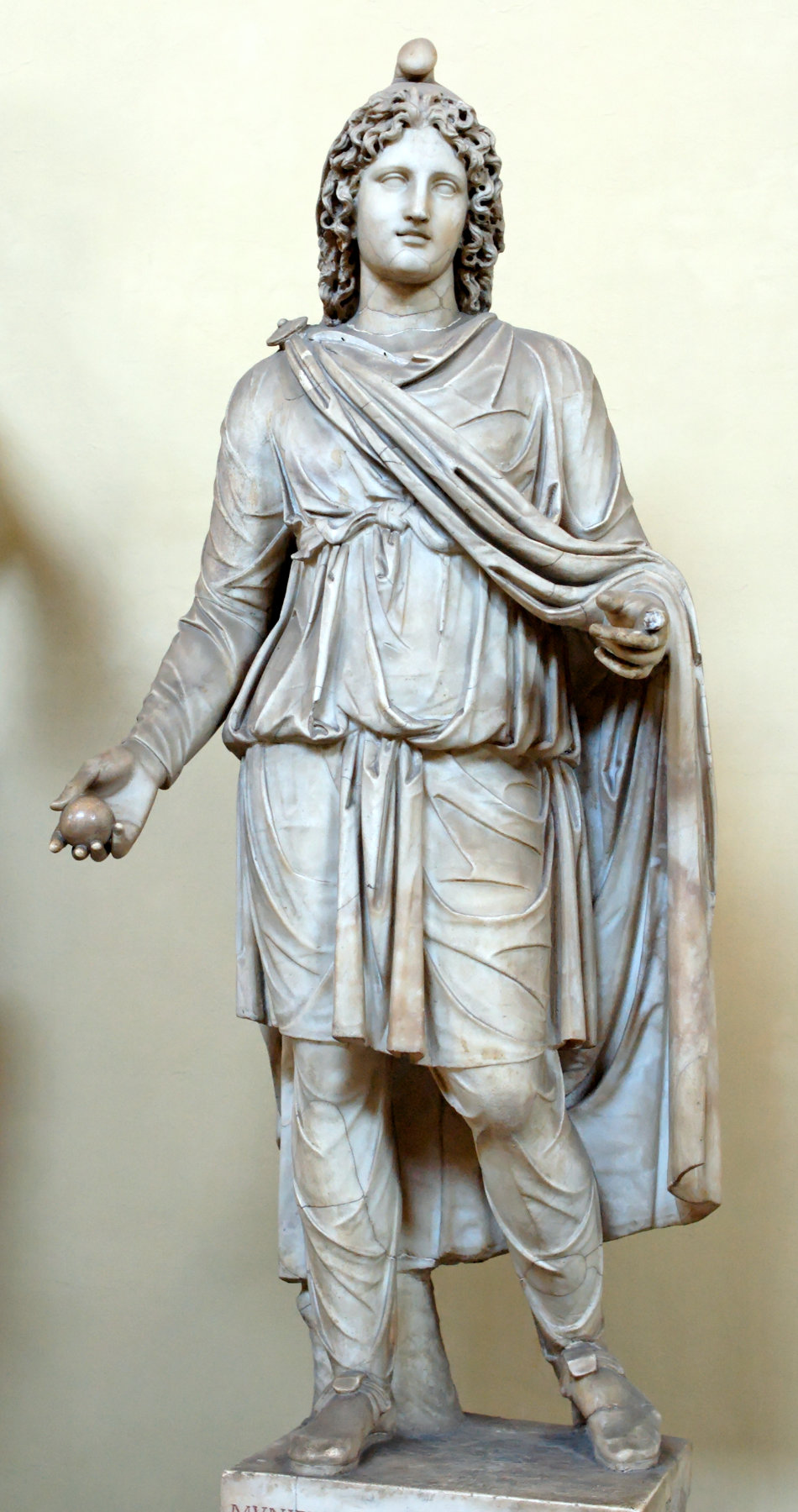
This sculpture, probably of Cautopates, now in the Musei Vaticani, was transformed into Paris.
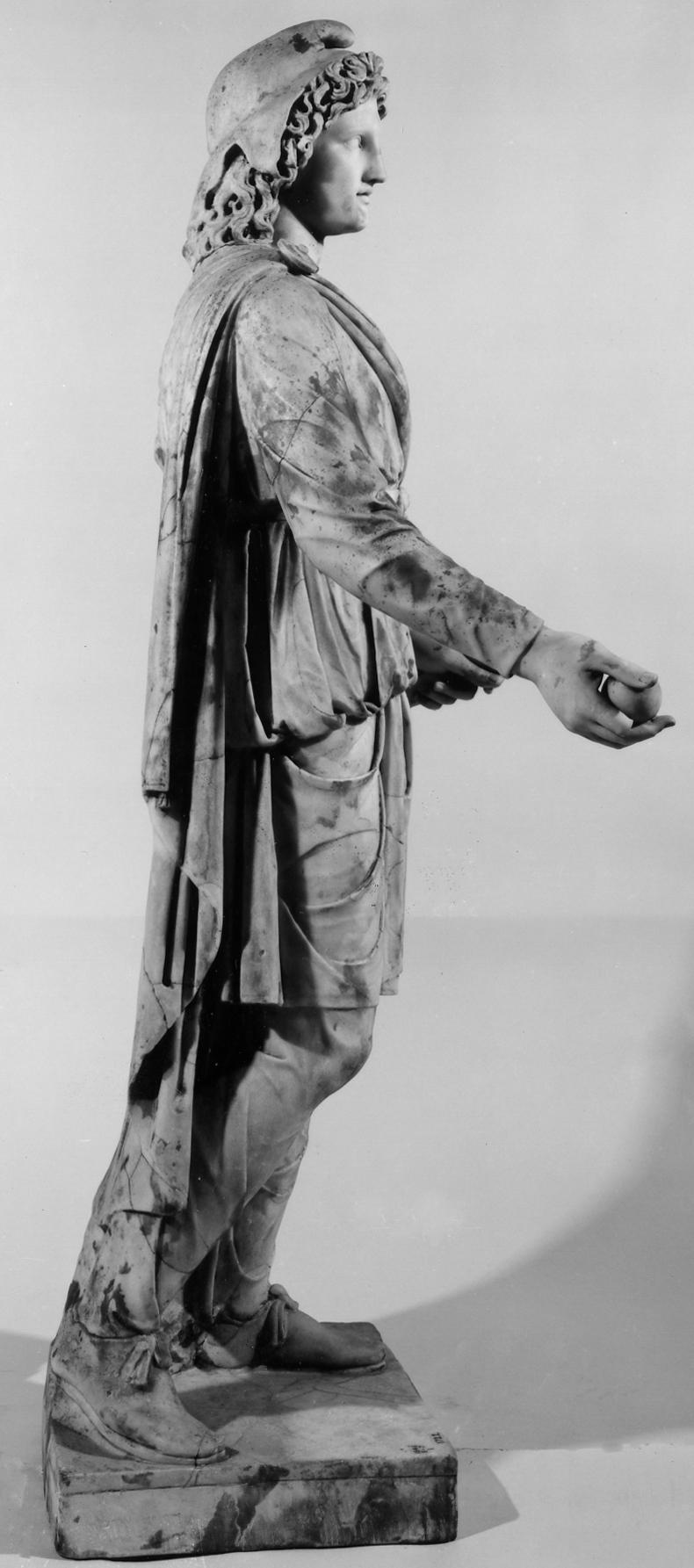
This is one of the two torchbearers, probably Cautes, transformed into Paris, now in the British Museum.
This inscription was dedicated to God Cautes by a certain Flavius Antistianus, Pater Patrorum in Rome.
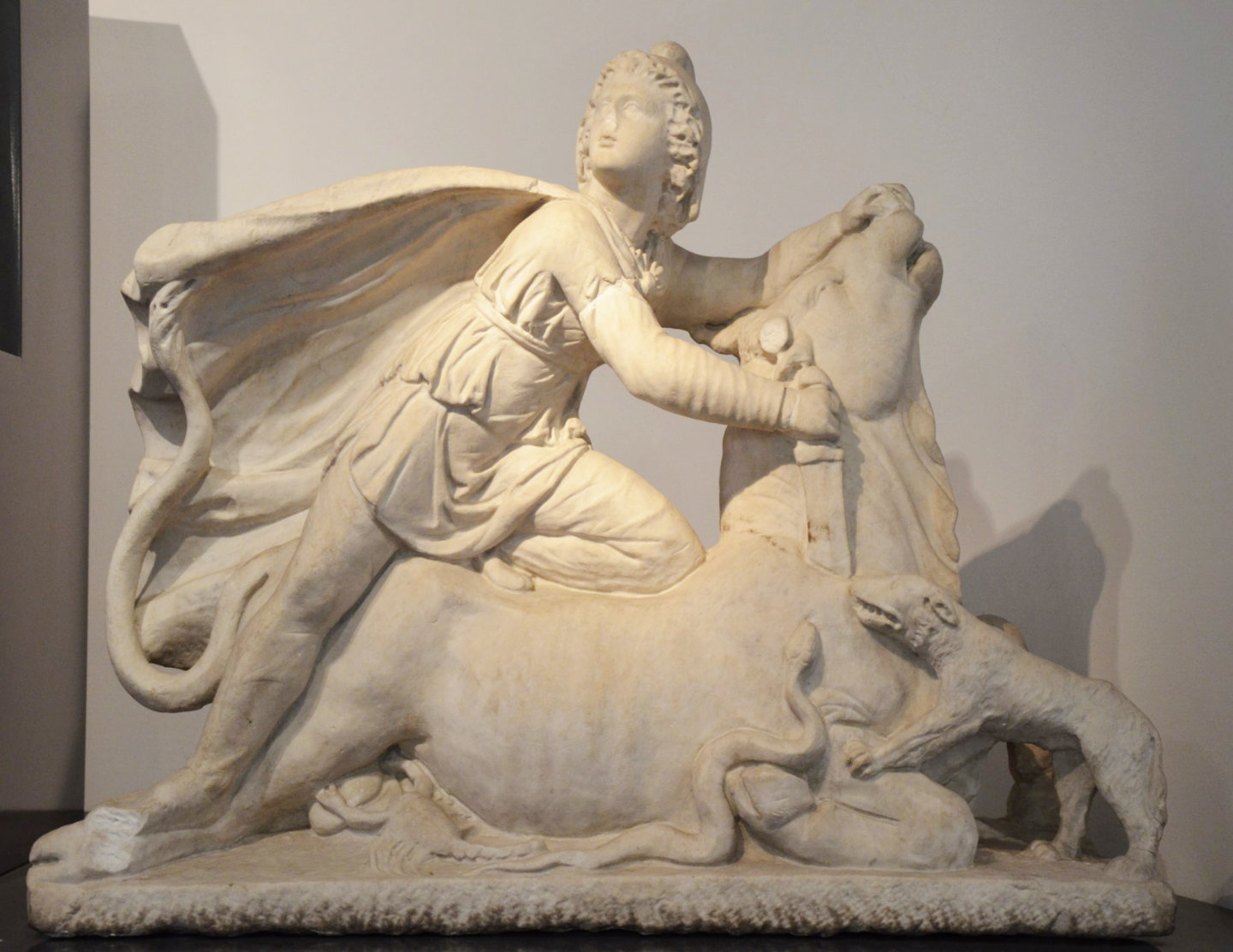
This statue of Mithras as a bullkiller was bought at Rome where it might be found.
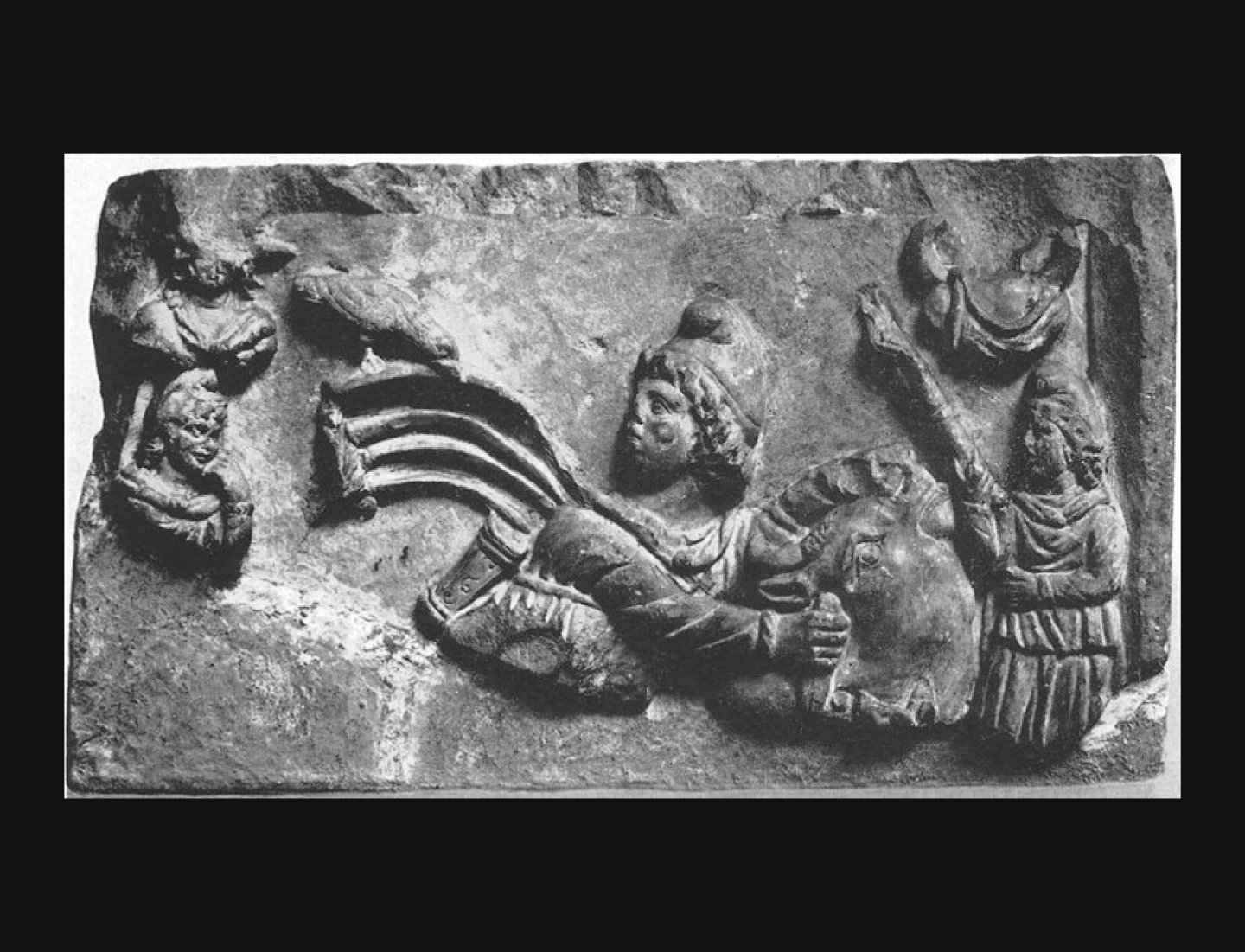
Franz Cumont bought this relief of Mithras as a bullkiller from a dealer who claimed to have found it in a vineyard near the church of Saint Pancrace, in Rome.
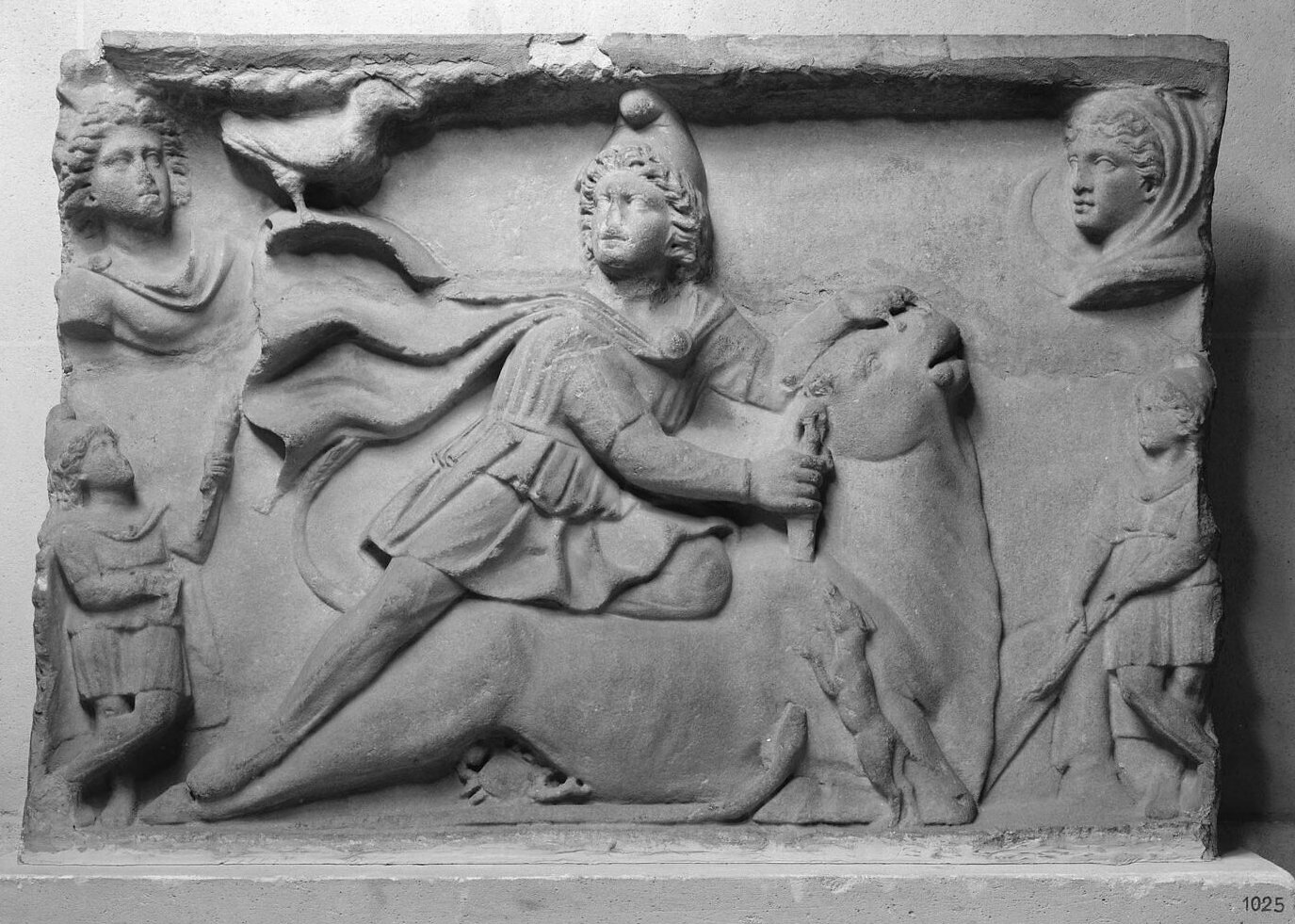
This is one of the three reliefs of Mithras as a bullkiller from the Villa Borghese collection that belong to the Louvre museum, now in the Louvre Abu Dhabi.
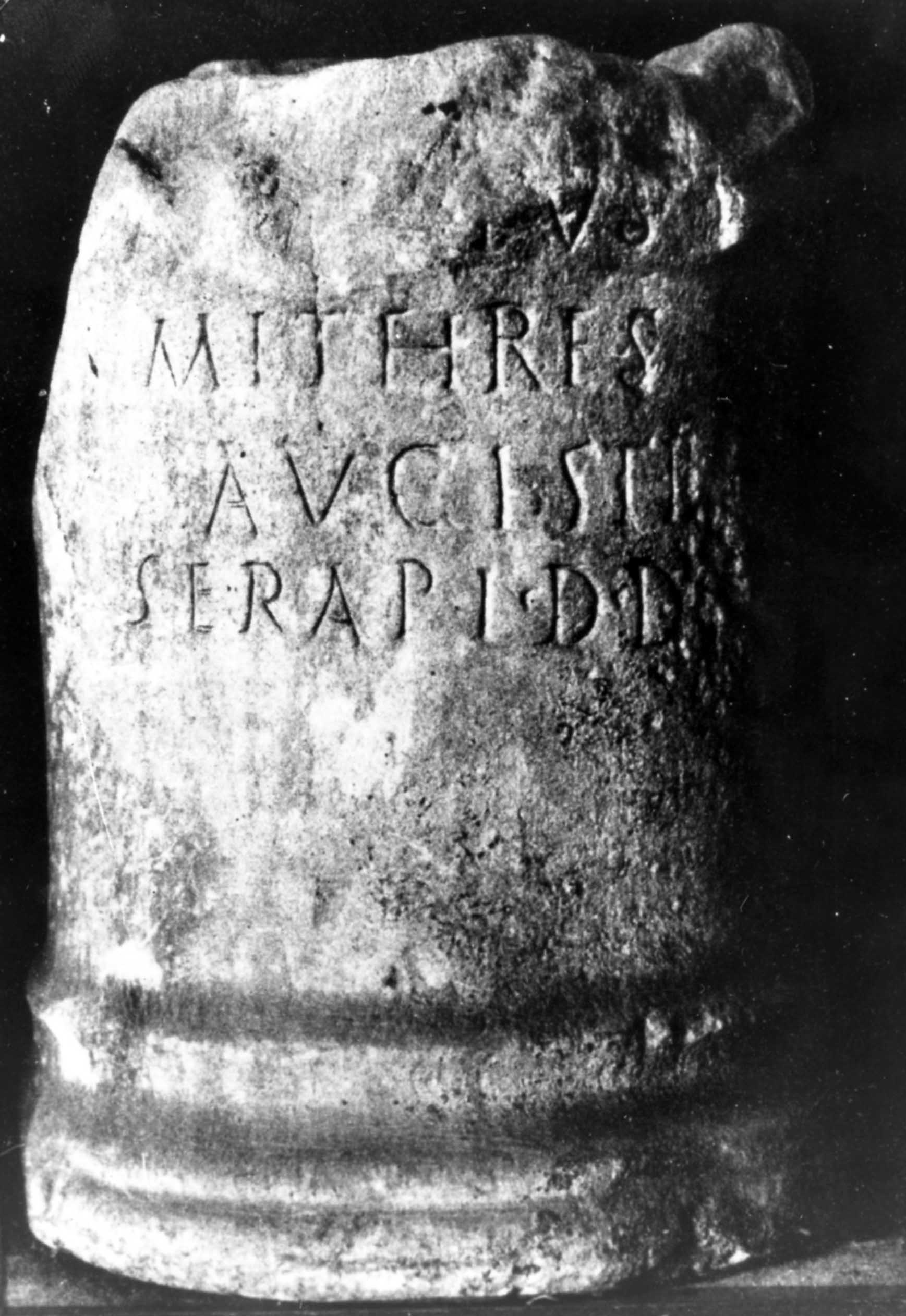
This monument, found in the Domus Flavia in Rome, bears an inscription by a certain Aurelius Mithres.
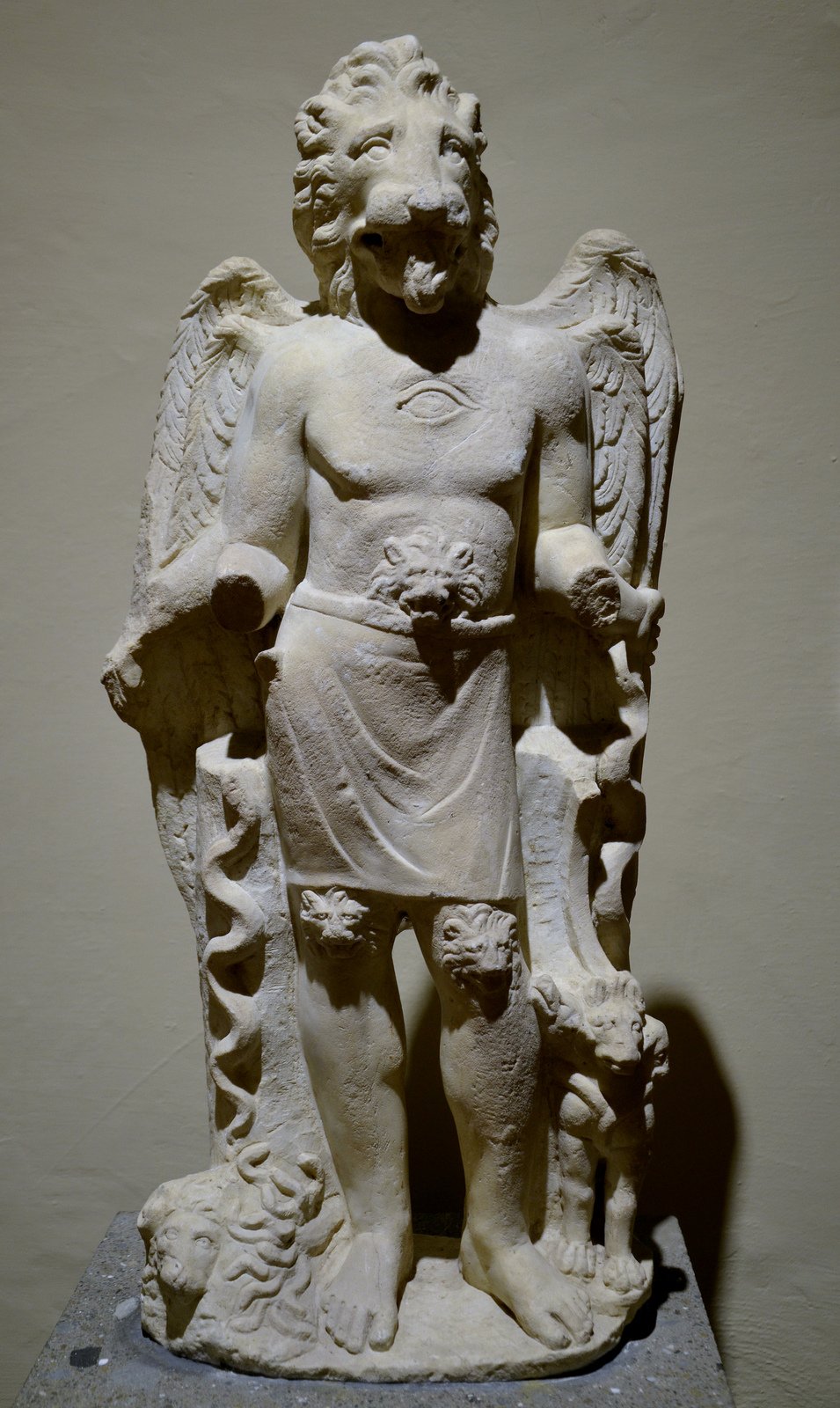
This lion-headed marble was found on the ruins of the Alban Villa of Domitianus.
