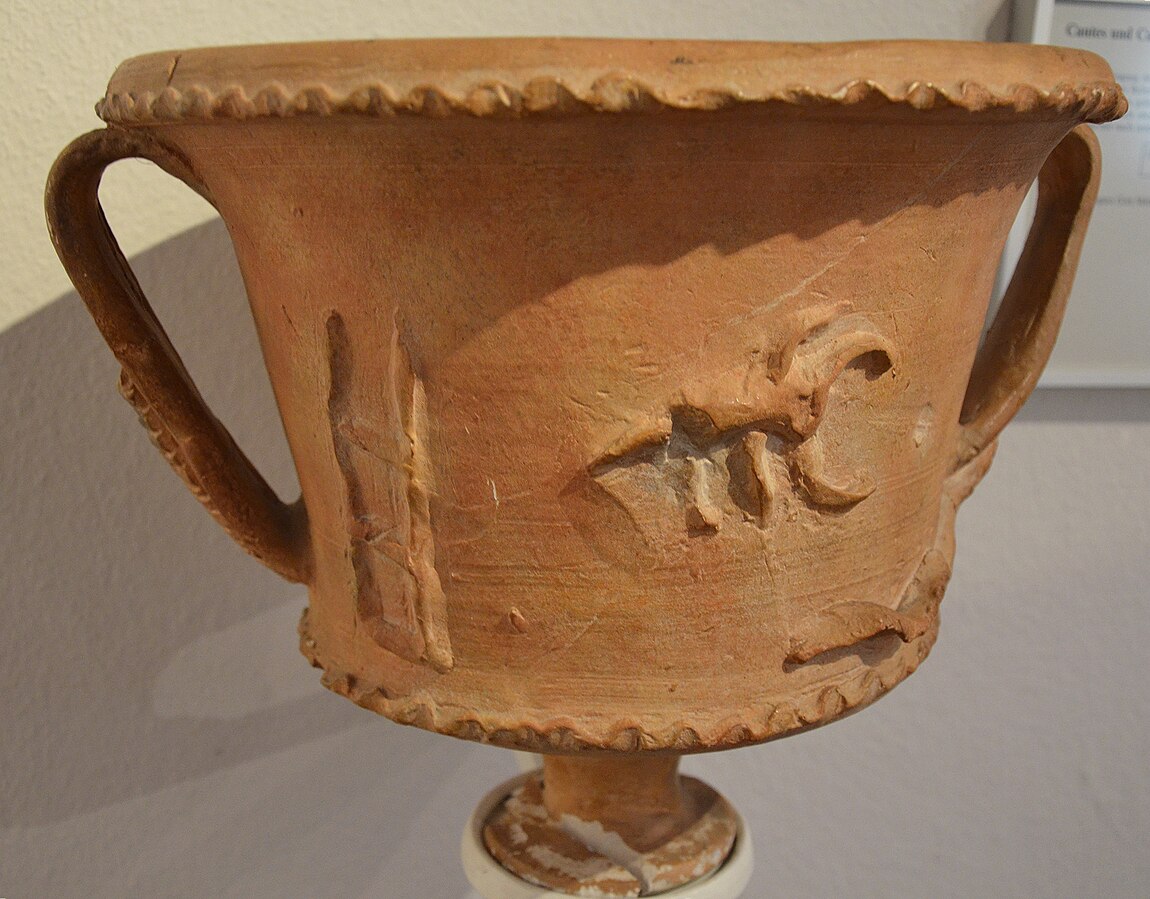
Terracotta krater from the southern part of the Friedberg Mithraeum, discovered in 1849. The vessel is decorated in relief with serpents, a scorpion and a ladder-like motif.

This Mithraic temple, also known as the Mithraeum of the Olympii, dates to the 3rd century and was rediscovered in 15th-century Rome, but it has not been preserved.
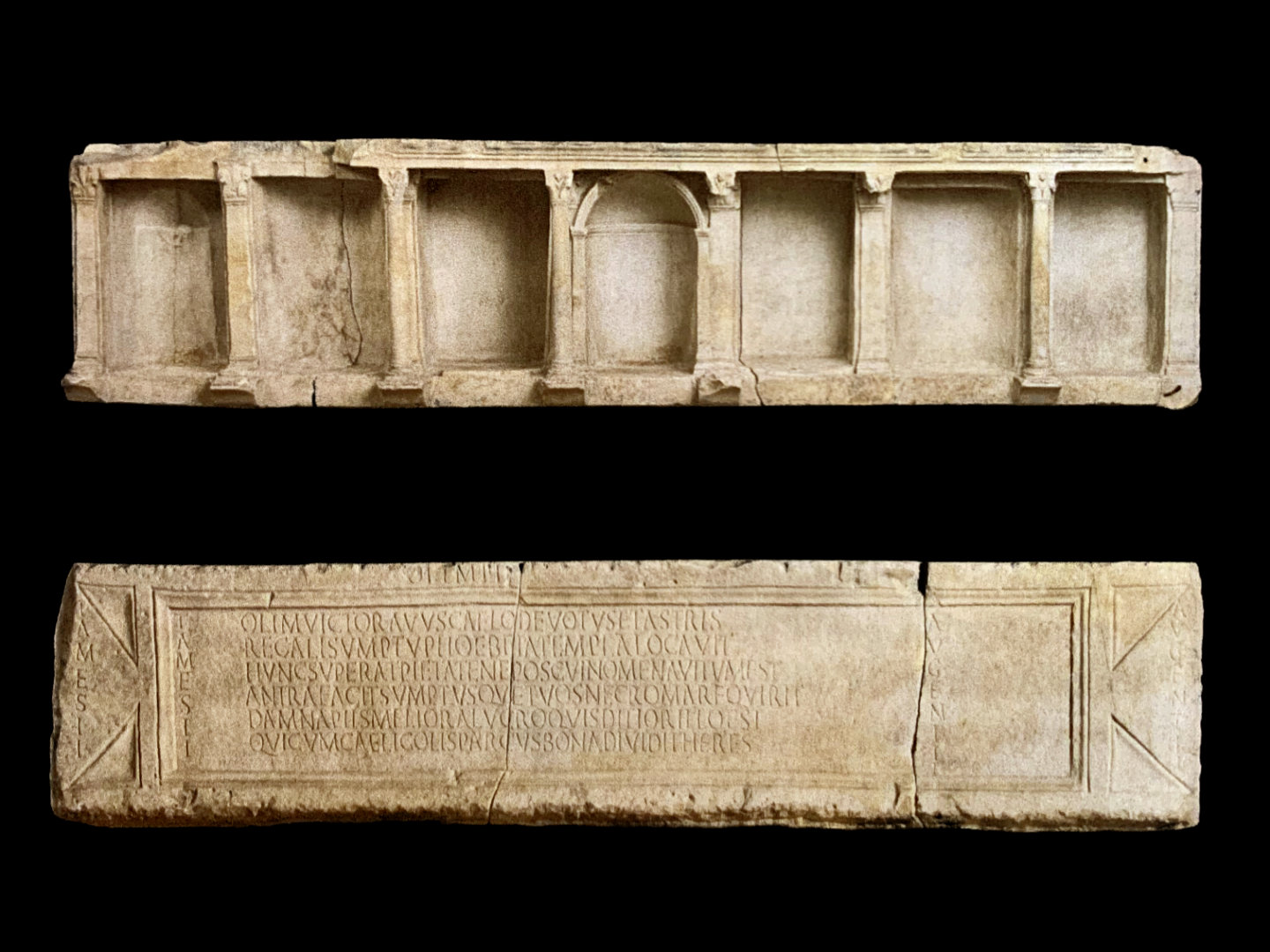
This monument is the only one still available from the disappeared Mithraeum in Piazza S. Silvestro in Capite.
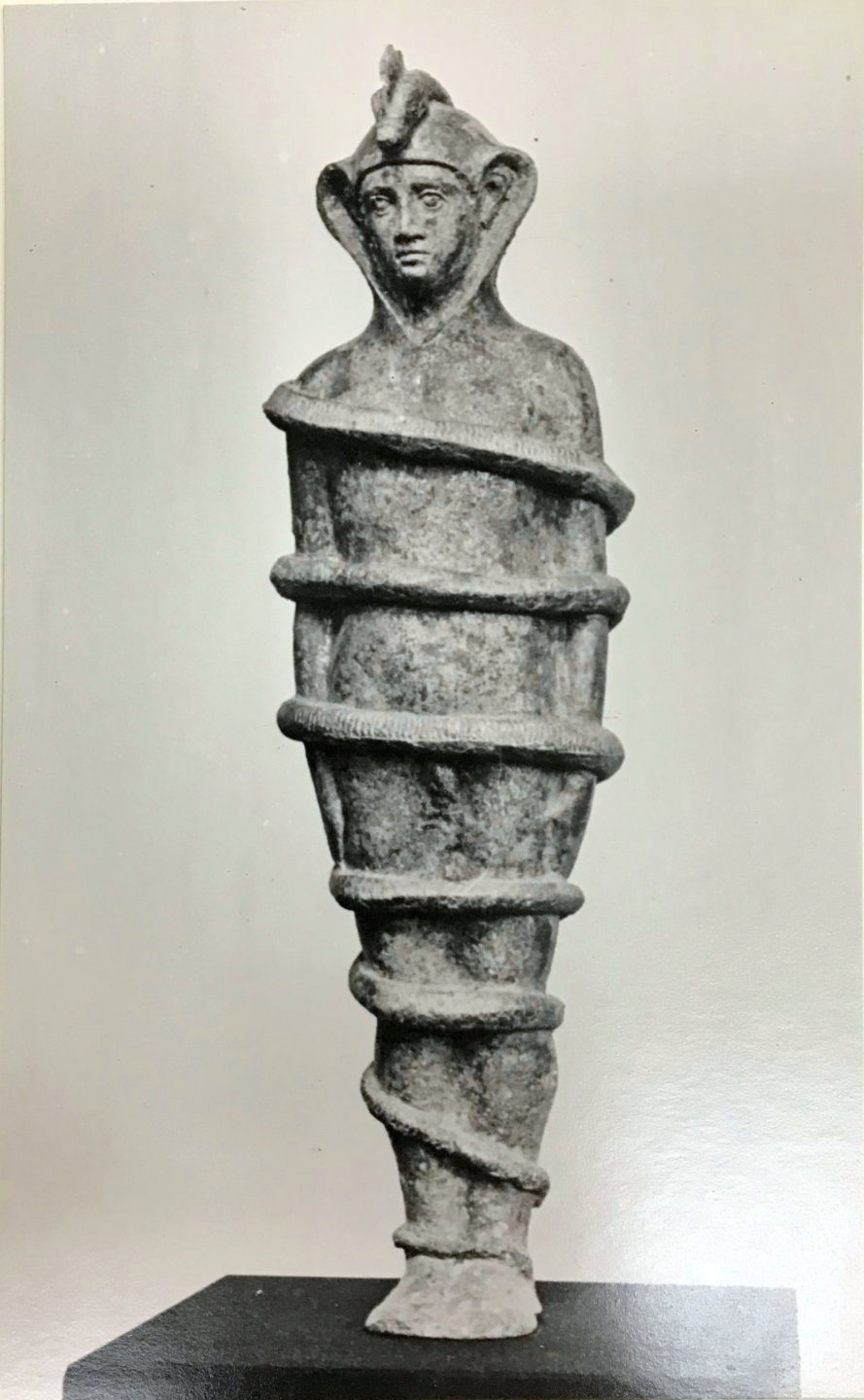
Roman relief from a sanctuary on the Janiculum Hill (Rome), showing a male figure bound by a serpent coiled seven times.
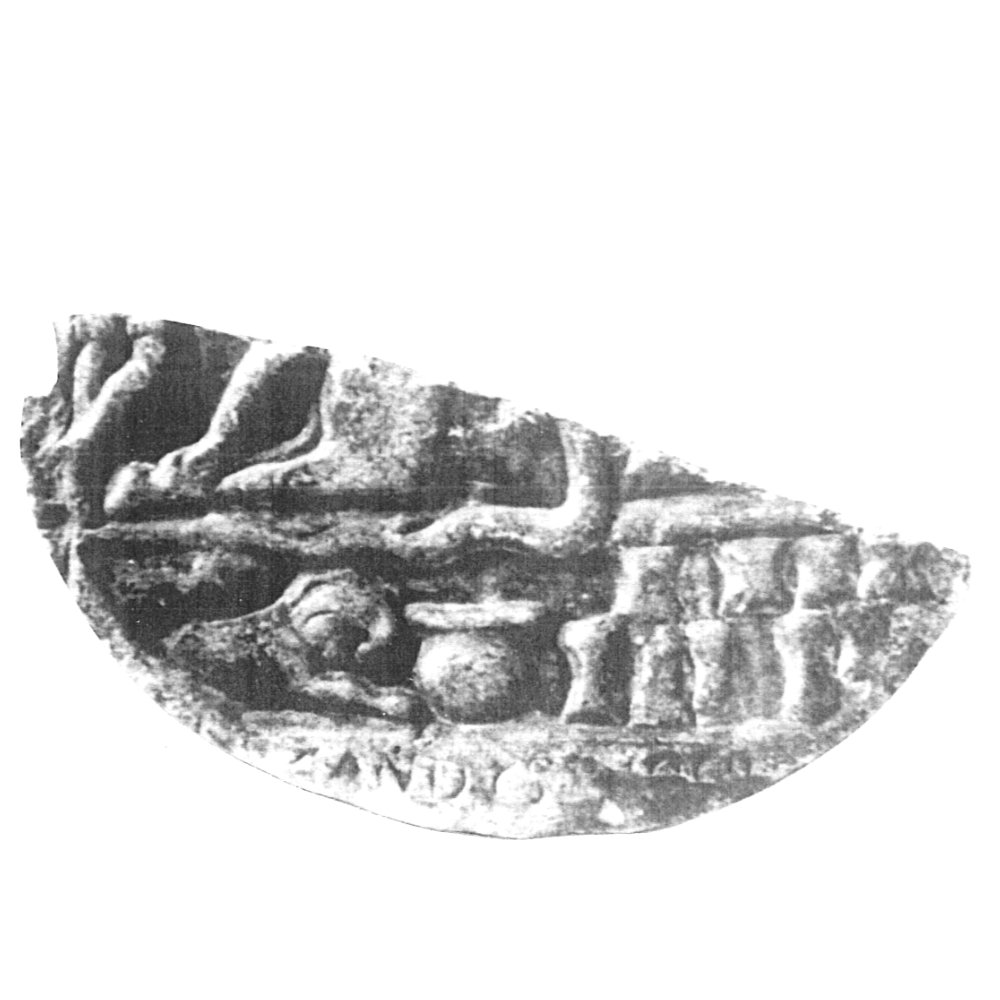
This tauroctony may have come from Hermopolis and its style suggests a Thraco-Danubian origin.
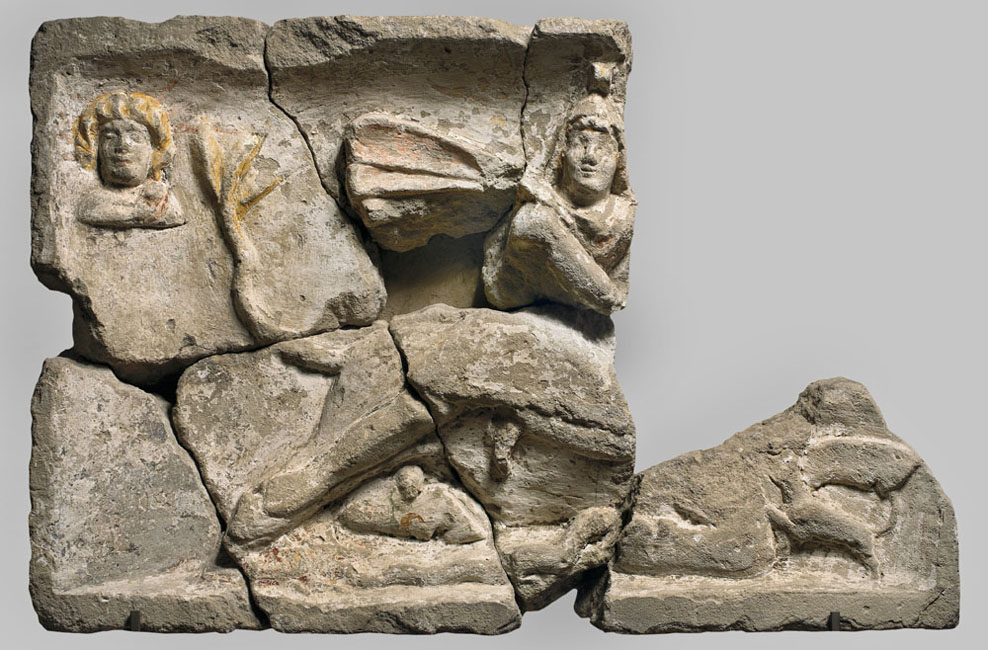
Sandstone relief of Mithras as bull-slayer, found at Petronell in 1932, with dog, serpent and scorpion, traces of polychromy preserved, now in the Museum Carnuntinum.

Fragmentary relief corner depicting Mithras as bull-slayer, preserving the bull’s hindquarters, scorpion, serpent and part of a torchbearer, with a partial inscription.
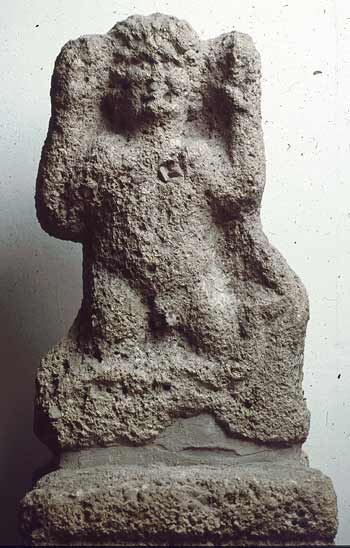
Conglomerate statue of the birth of Mithras, found in a burnt layer, showing the god nude emerging from the rock with raised hands and a snake.
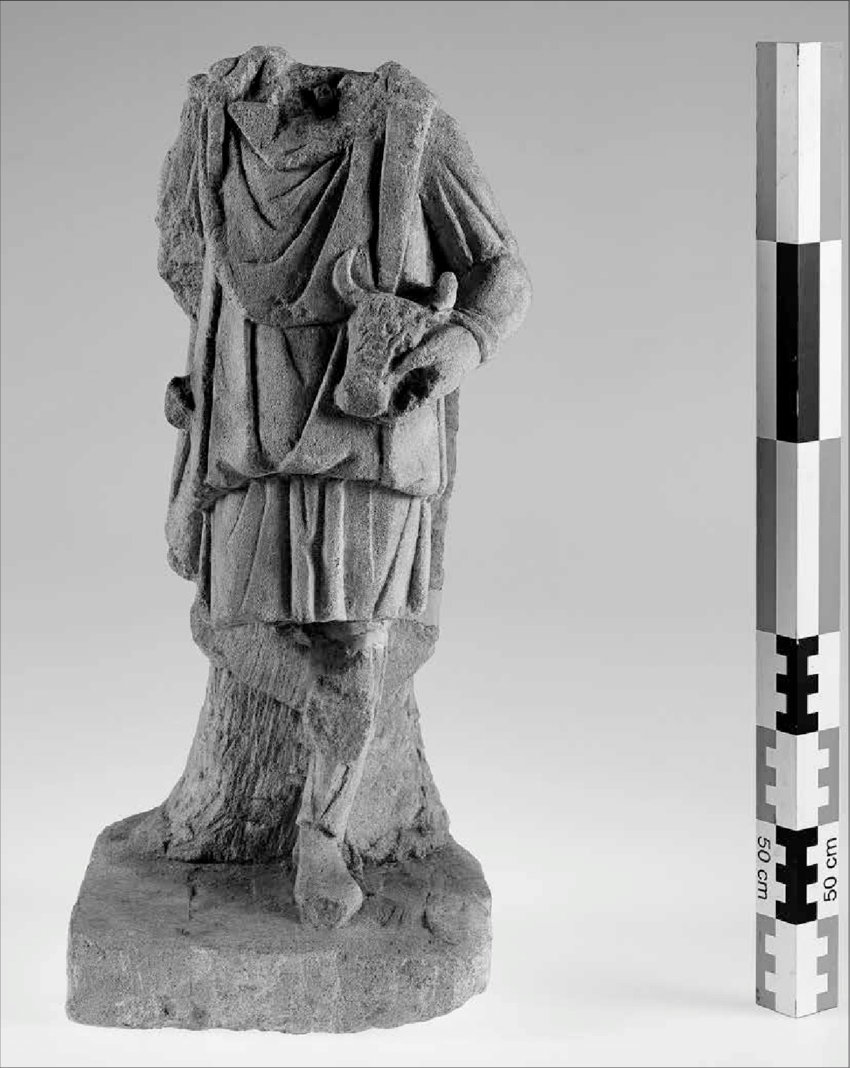
Statue of Cautes from Bodobrica, discovered around 1940, depicting the torchbearer standing before a tree or rock and associated with a bucranium.
Emperor Julian may have been initiated into the cult of the god Mithras at the Mithraeum of Vienne, France, according to Turcan.
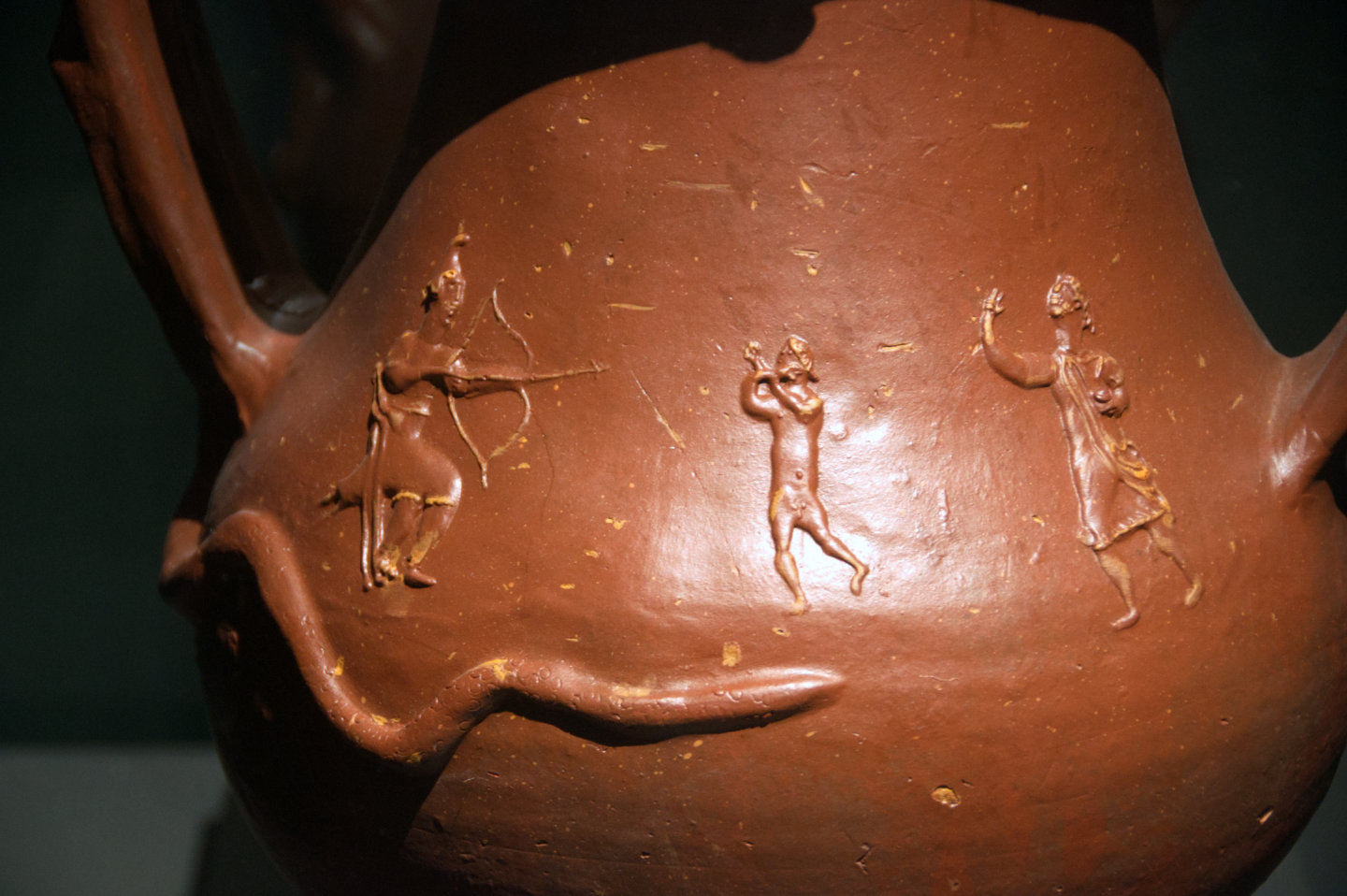
The Mithraic vase from Ballplatz in Mainz depicts seven figures arranged in two narrative sequences, commonly interpreted in relation to initiation rites.
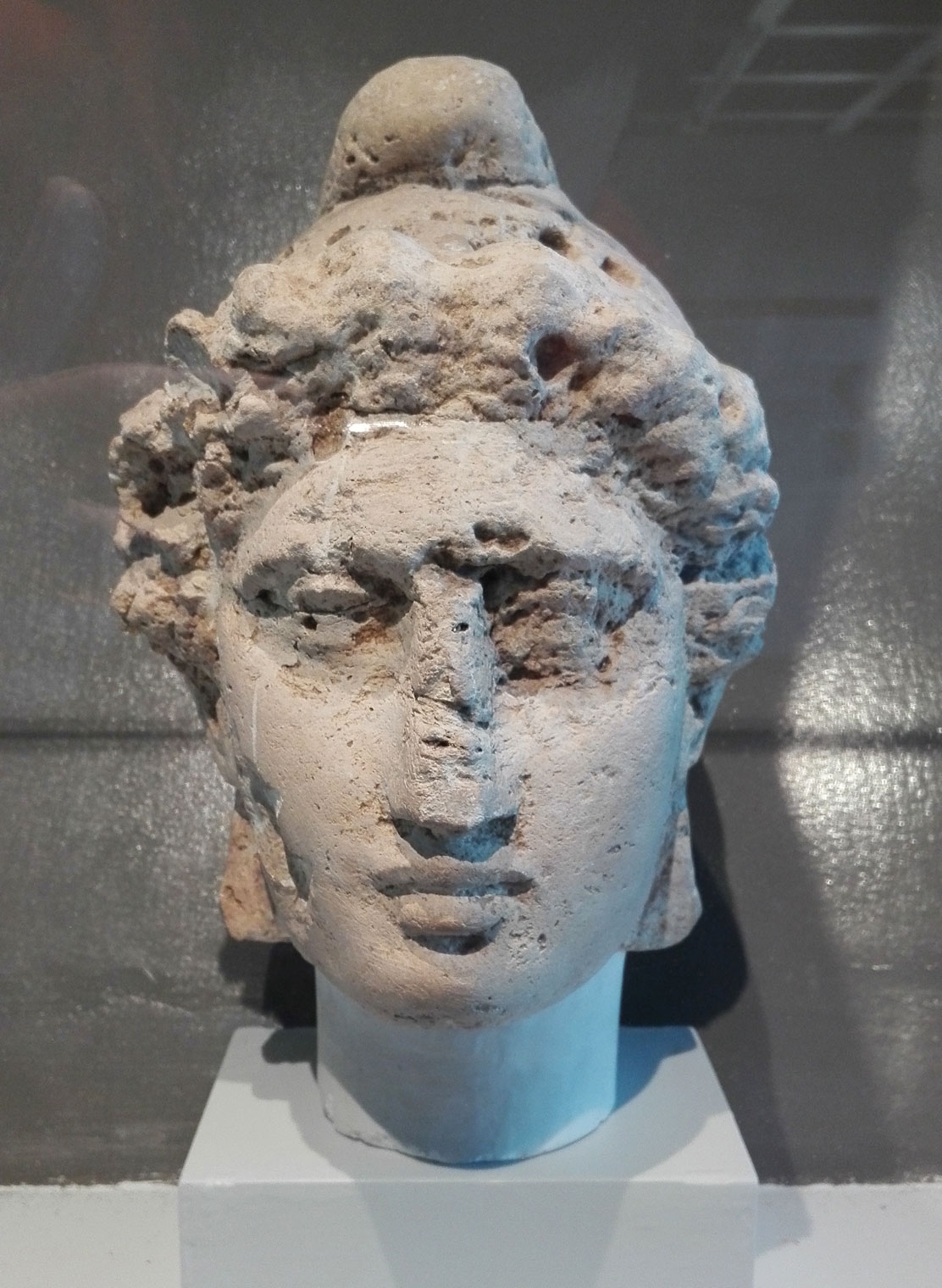
Head, possibly of Mithras, wearing a Phrygian cap, found in the bed of the Millicri River, near Locri, Calabria.
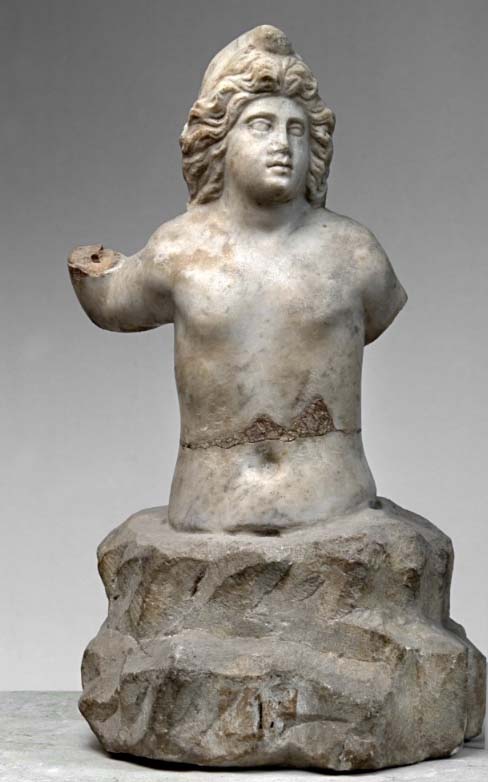
Mithras being born from the rock (petrogenia), acquired in Rome and formerly kept in Berlin.
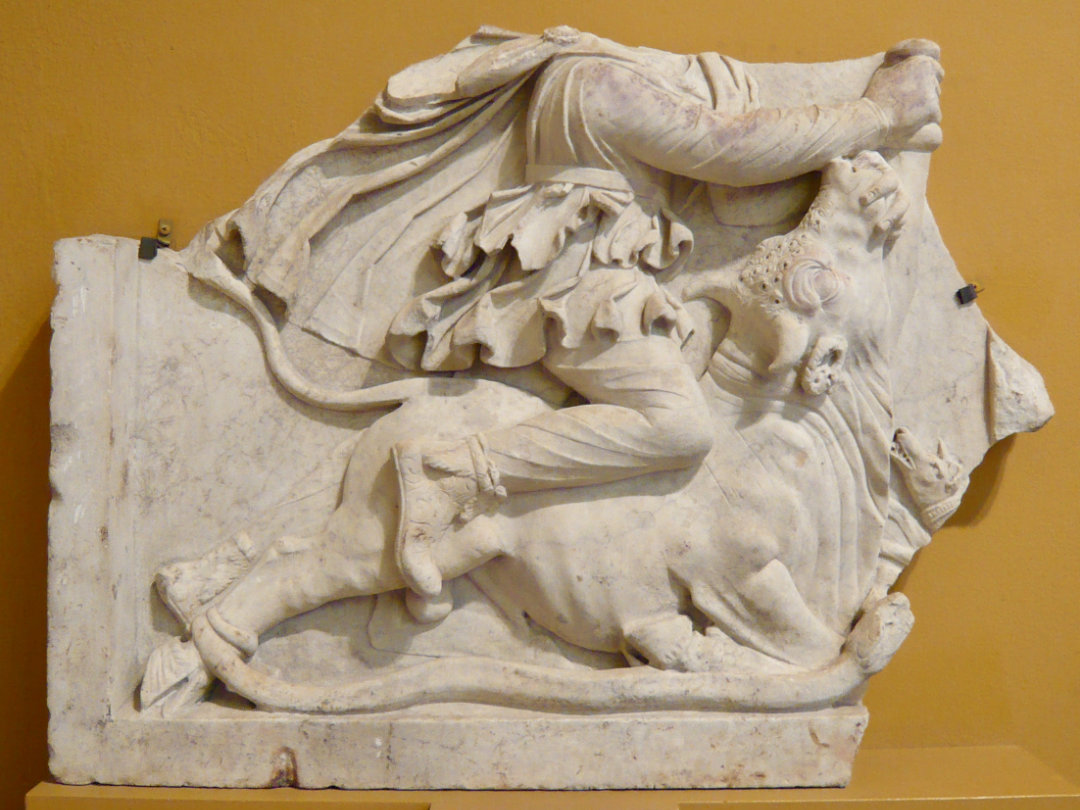
This fragmentary relief depicts Mithras killing the bull in the usual manner, remarkably dressed in oriental attire.
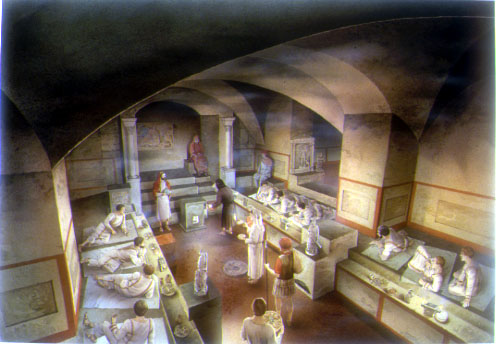
The Mithraeum of the Crypta Balbi was locted in the middle of a densely populated insula near the theatre of Cornelius Balbus.
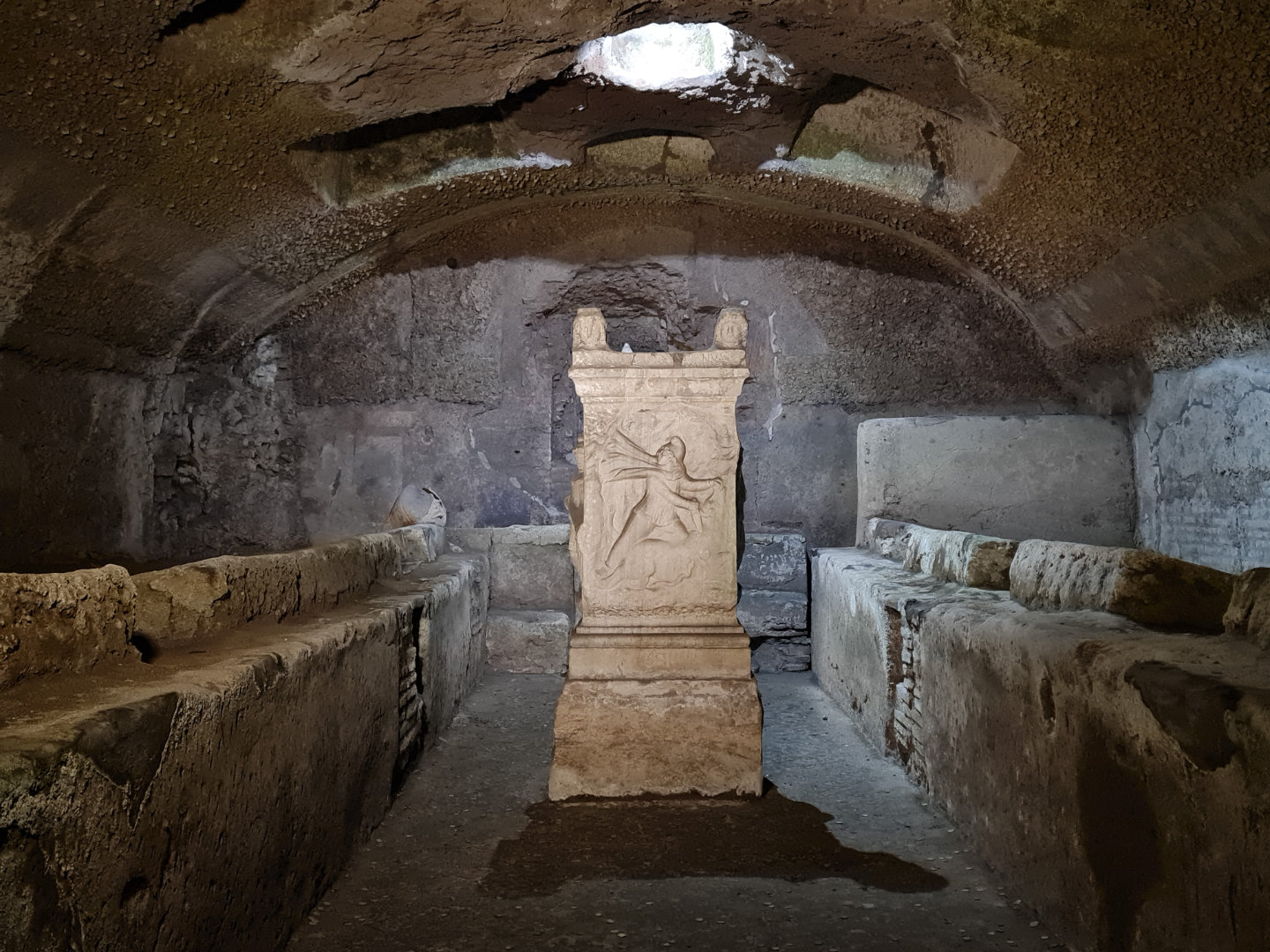
The Mithraeum under the Basilica of San Clemente made part of a notable Roman house.
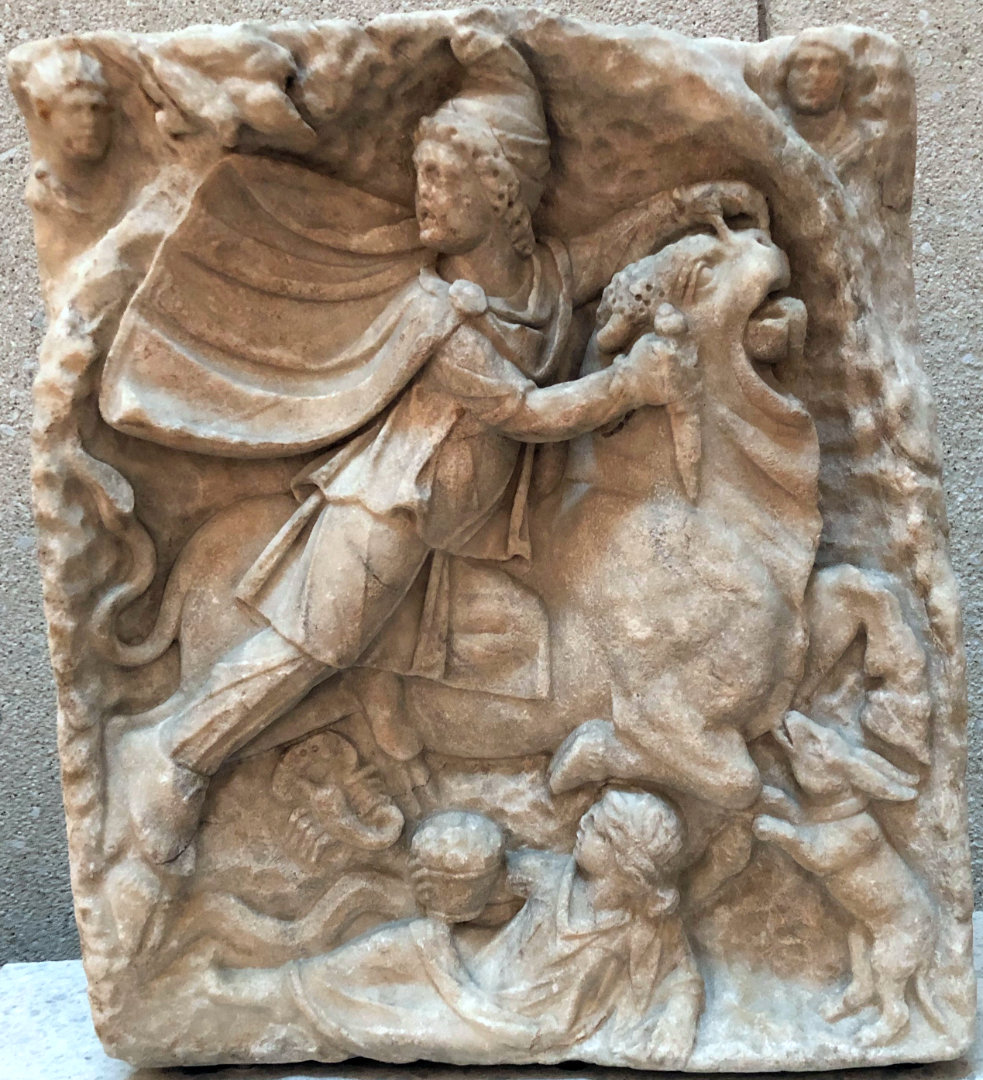
This tauroctony relief is distinguished by the rare depiction of Tellus reclining beneath the bull.
Small limestone stele, discovered at Apt in 1903. It depicts a standing torchbearer in the conventional Mithraic posture and dress, accompanied by a cock placed at his feet.
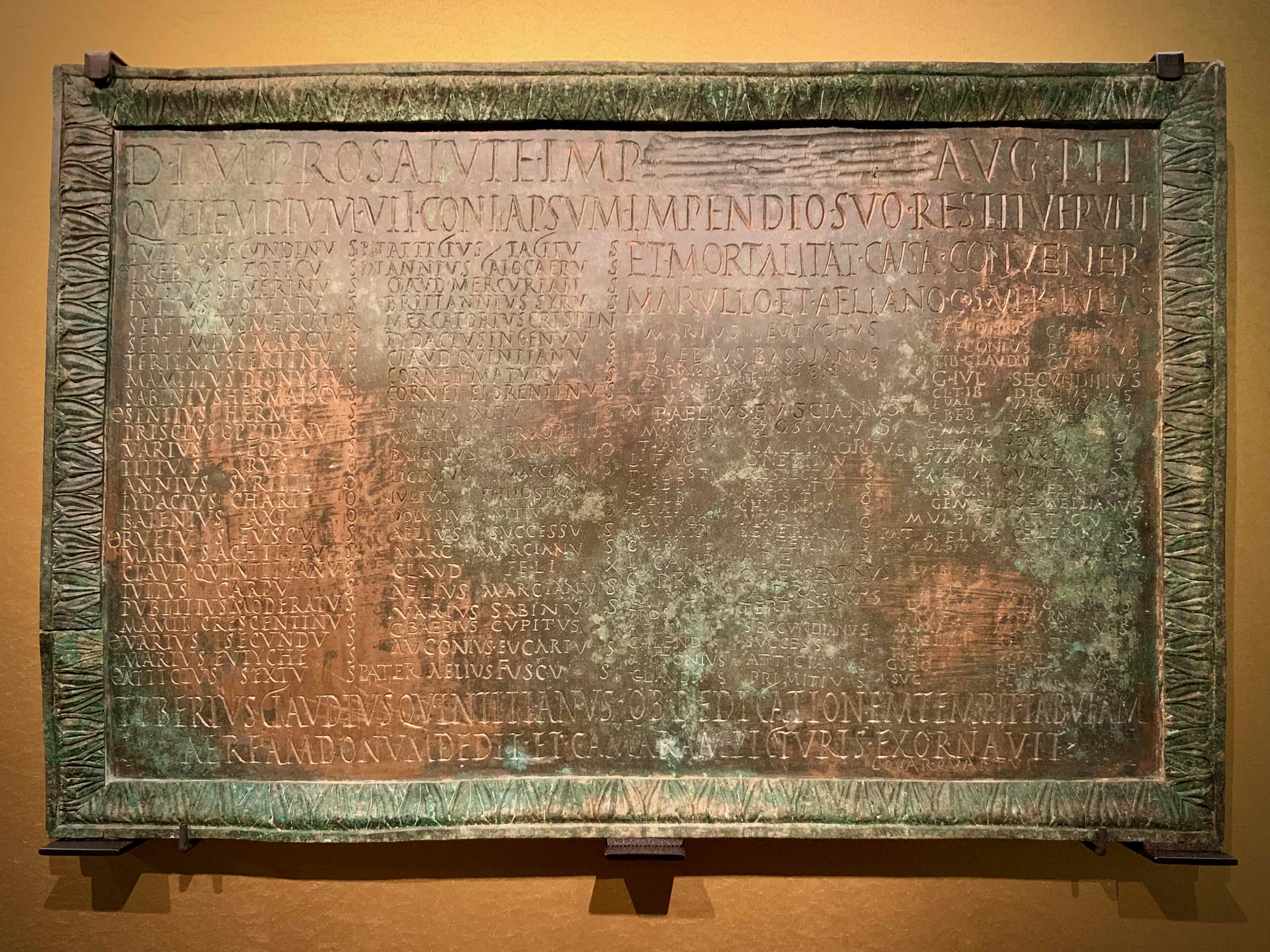
The bronze bears the dedication of a restoration of a Mithraeum carried out in 183.
