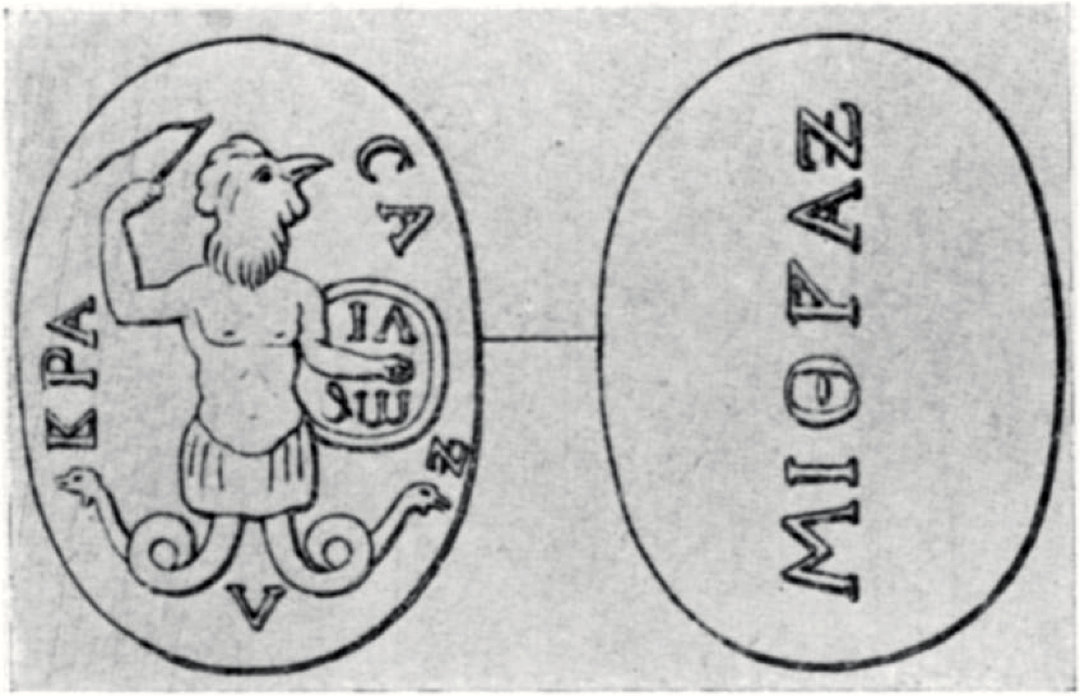
This syncretic amulet depicting Abraxas and the word MIΘPAZ was once displayed in the Cappello Museum of Venice.
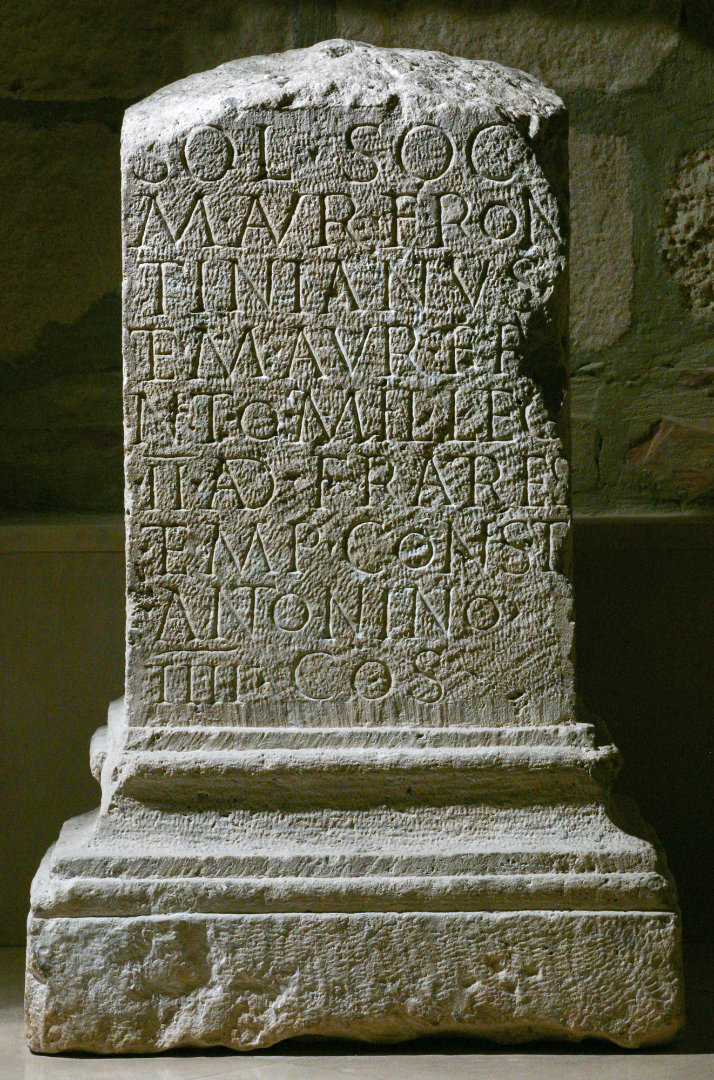
This fragmented altar was erected by two brothers from the Legio II Adiutrix who also built a temple.
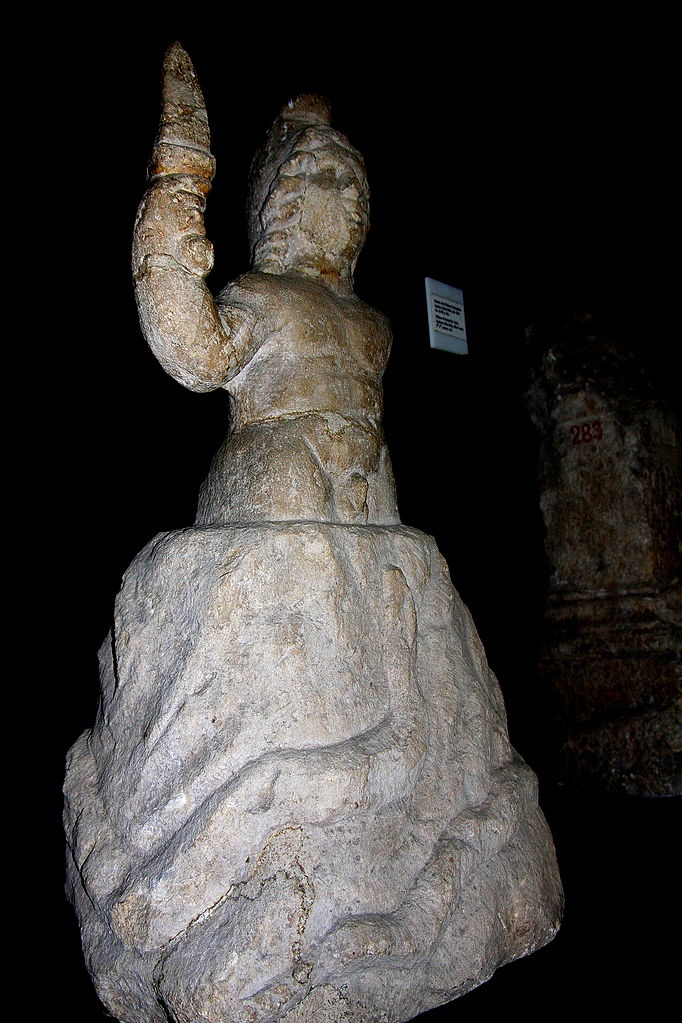
As usual, the solar god rises a dagger with one of his hands while emerges from the rock.
Mithras Petrogenitus, born from the rock, from the Mithraeum of Carnuntum III.
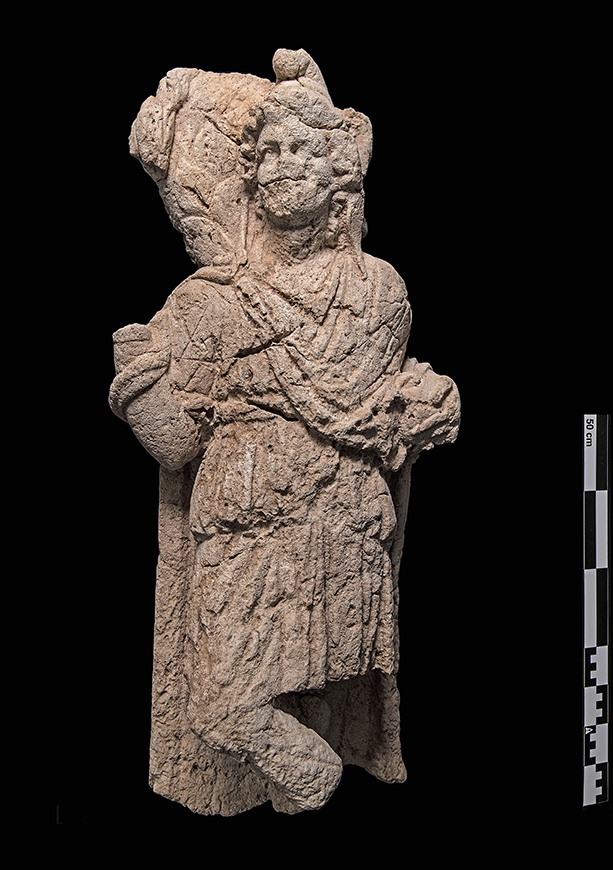
This remarkable relief by Cautes was found in what appears to be a mithraeum in Trier.

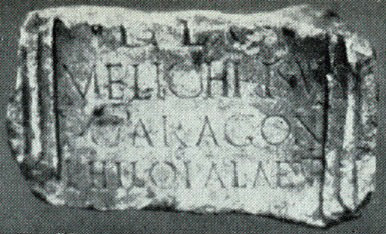
This is one of the few known Mithraic inscriptions dedicated by a member who attained the grade of Perses.
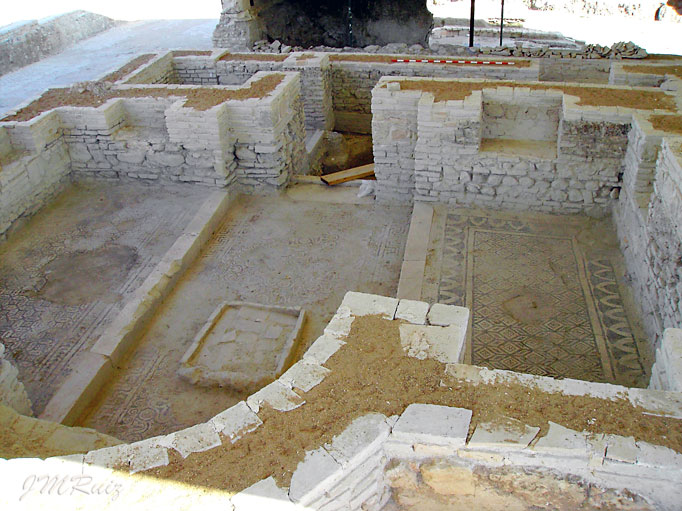
One of the rooms of the villa has been interpreted as a mithraeum, but we do not have enough evidence to confirm this.
An unusual feature of this very ancient relief is that Cautopates carries a cockerel upside down, while Cautes carries it right-side up.
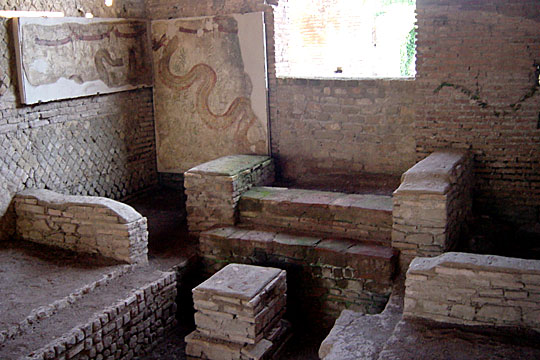
The Mithraeum of the Snakes preserves paintings of serpents, representing Genius Loci, part of an older private sanctuary, which were respected in the temple of Mithras.
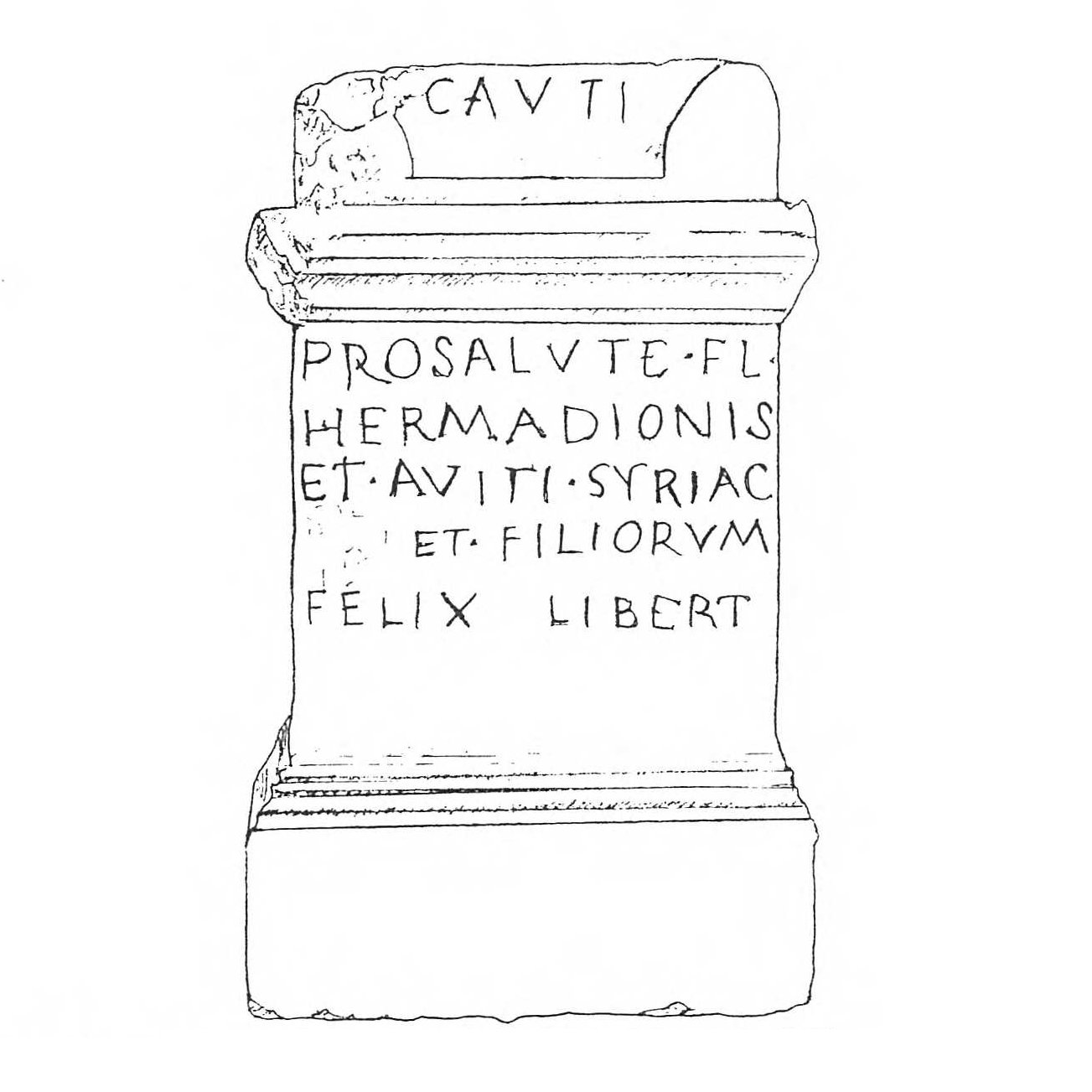
A certain Hermanio has been identified in the dedication of several monuments in different cities in Dacia and even in Rome.
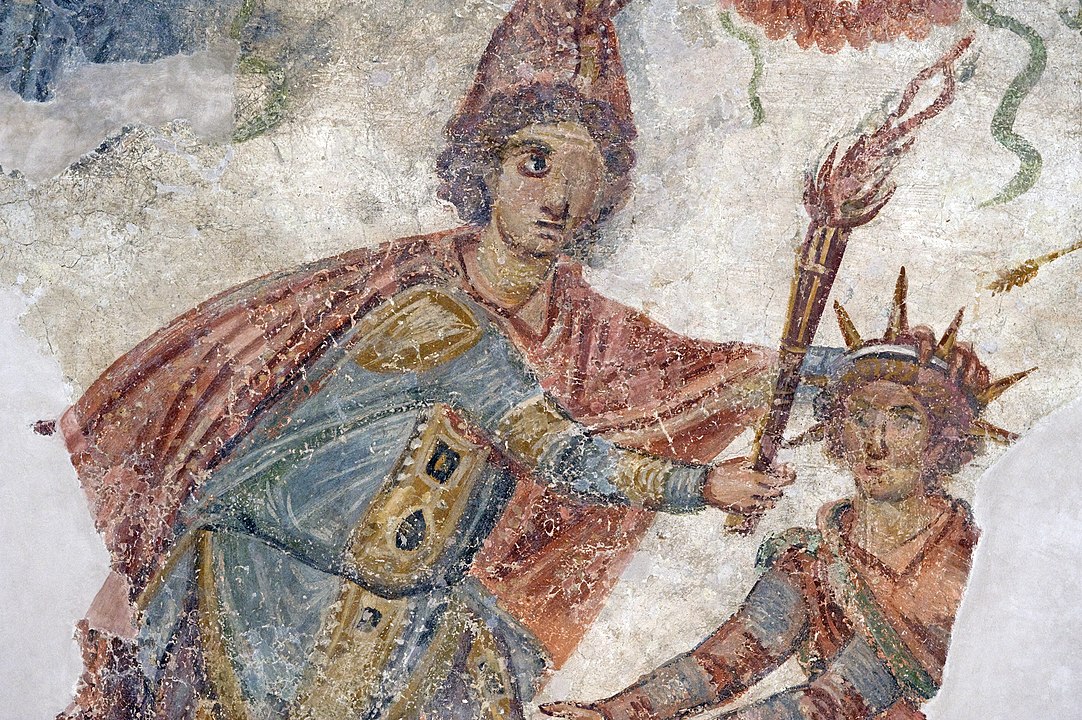
Fresco du Mithraeum de Hawarte, Syria, depicts Mithras' victory over the Sun.
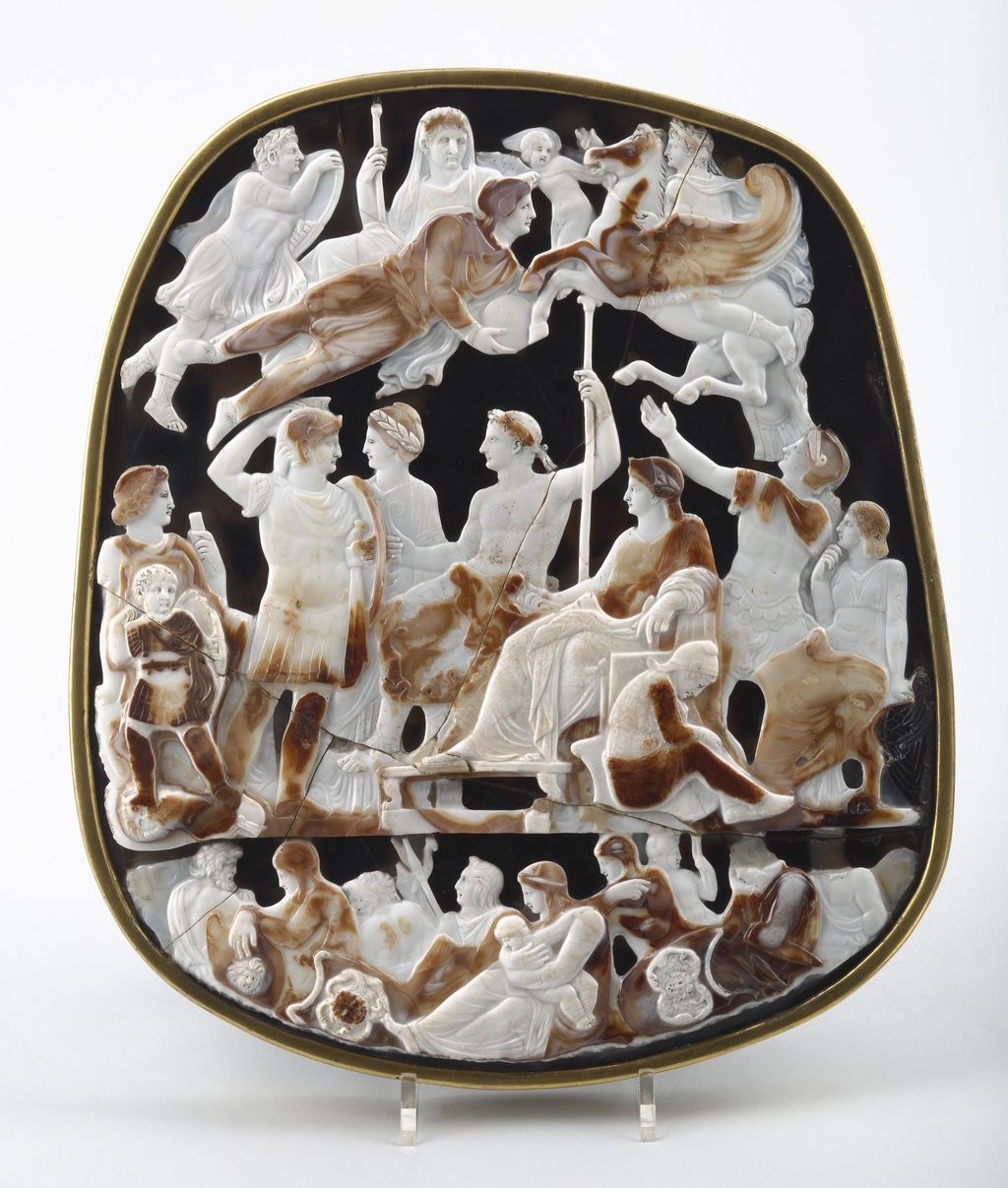
Some authors have speculated that the flying figure dressed in oriental style and holding a globe could be Mithras.
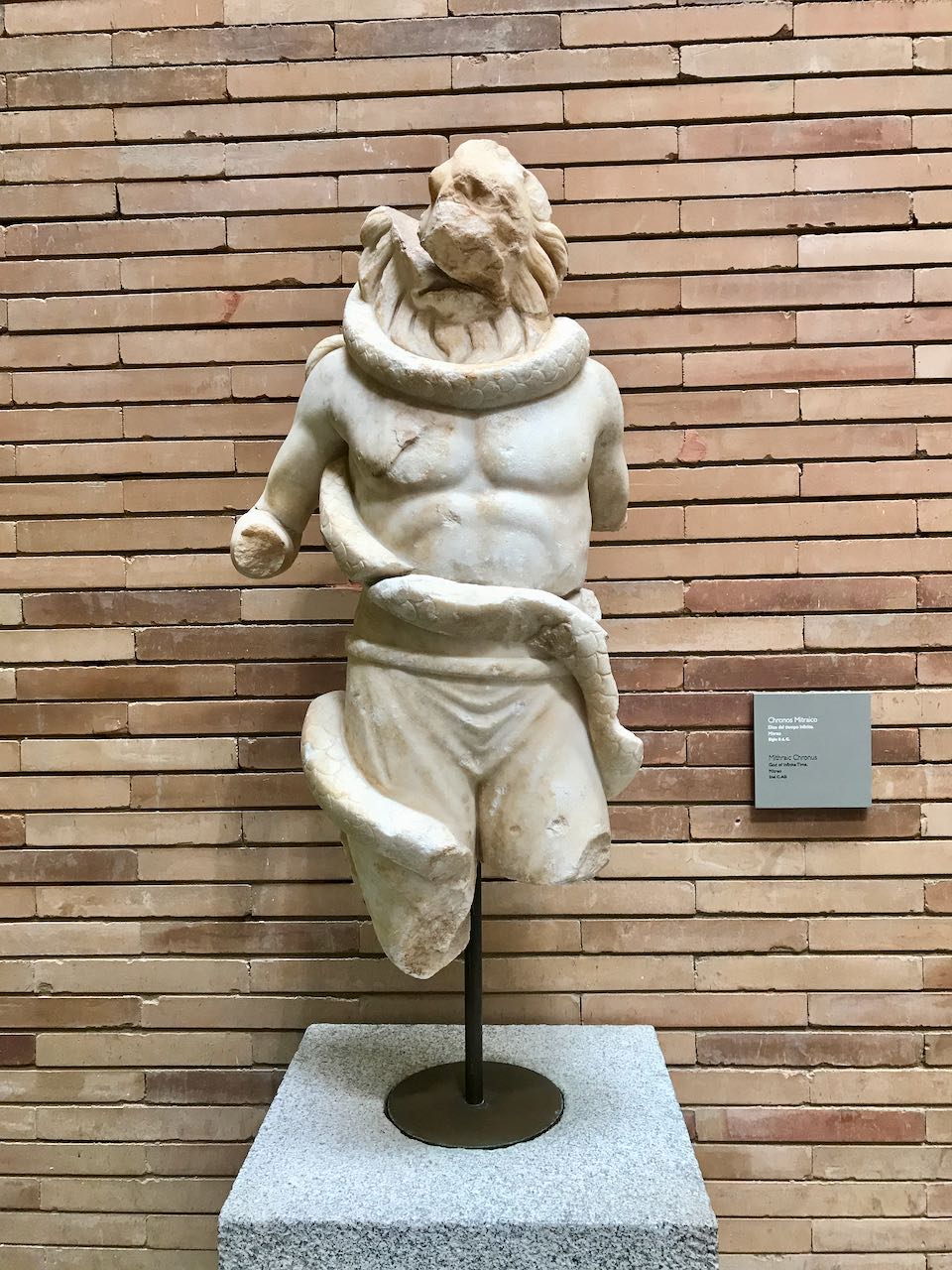
The lion-headed figure, Aion, from Mérida, wears oriental knickers fastened at the waist by a cinch strap.
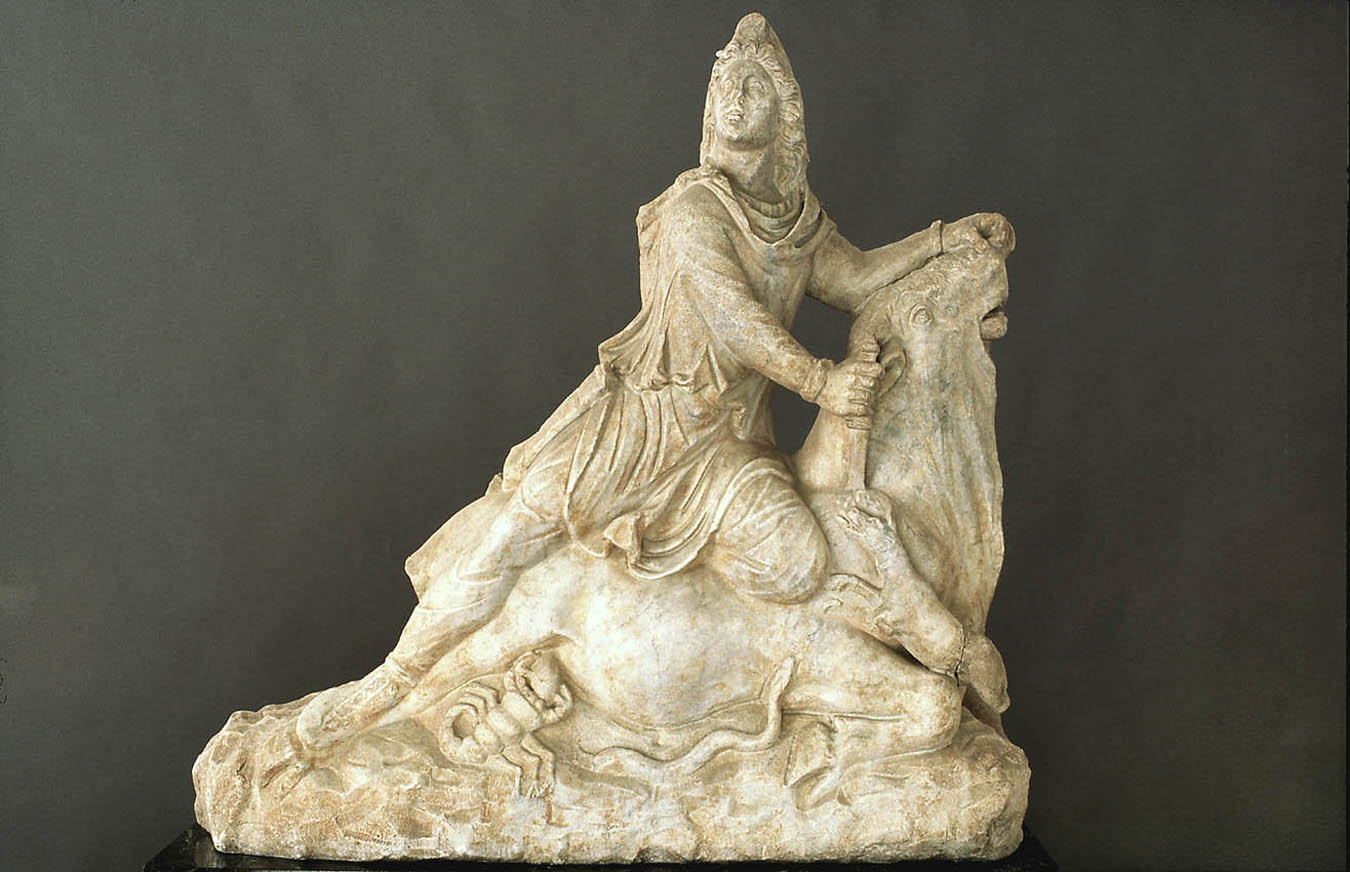
The Mithras of Cabra is the only full preserved Tauroctony sculpture found in Spain yet.
This altar found in Sentinum bears an inscription from two brothers.
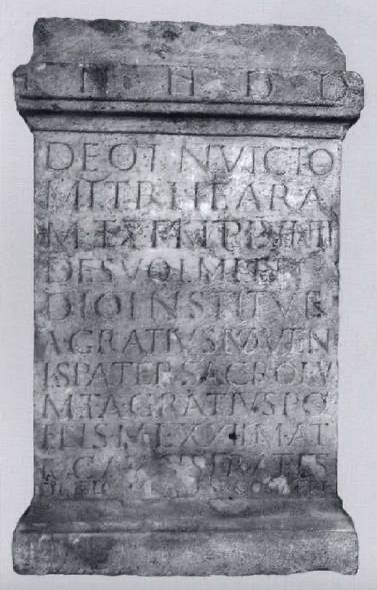
The monument was dedicated by two brothers, one of them being the Pater of his community.
This inscription reveals the names of 36 cultori of Sentinum, one of whom bears the title of pater leonum.

The Mithraeum of Spoleto was found in 1878 by the professor Fabio Gori on behalf of Marquis Filippo Marignoli, owner of the land.
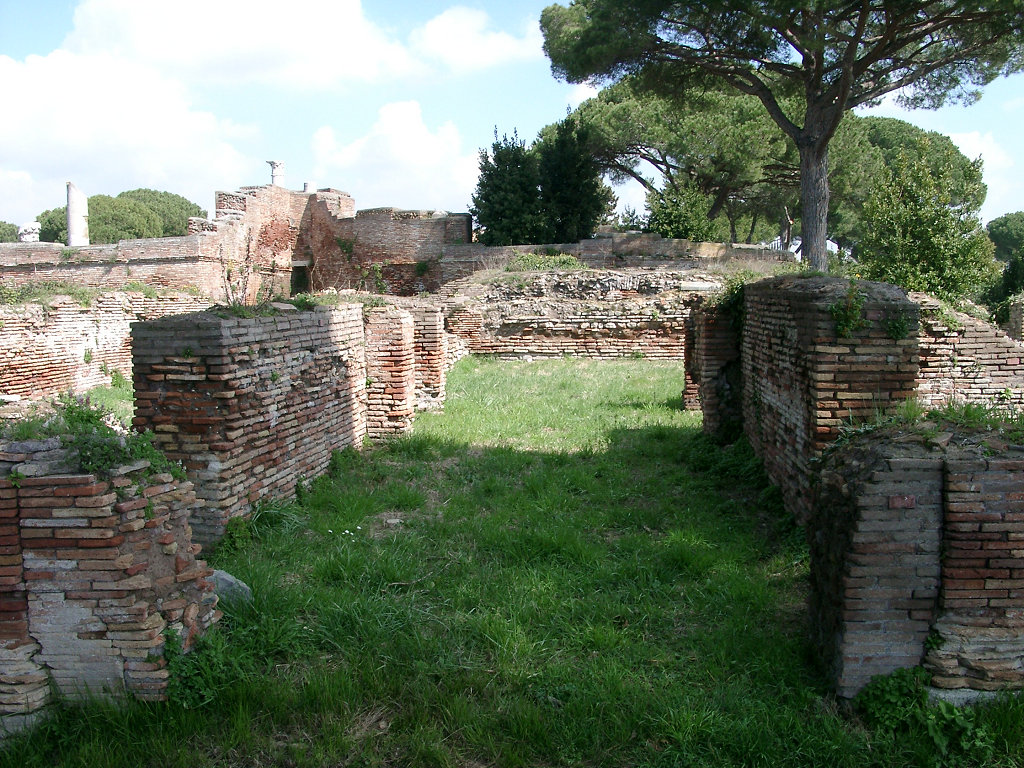
The Mithraeum of Frutosus was in a temple assigned to the guild of the stuppatores.

This tabula marmorea was consecrated by a certain slave Vitorinus in Tibur, nowadays Tivoli, near Rome.
