Your selection in monuments gave 200 results.
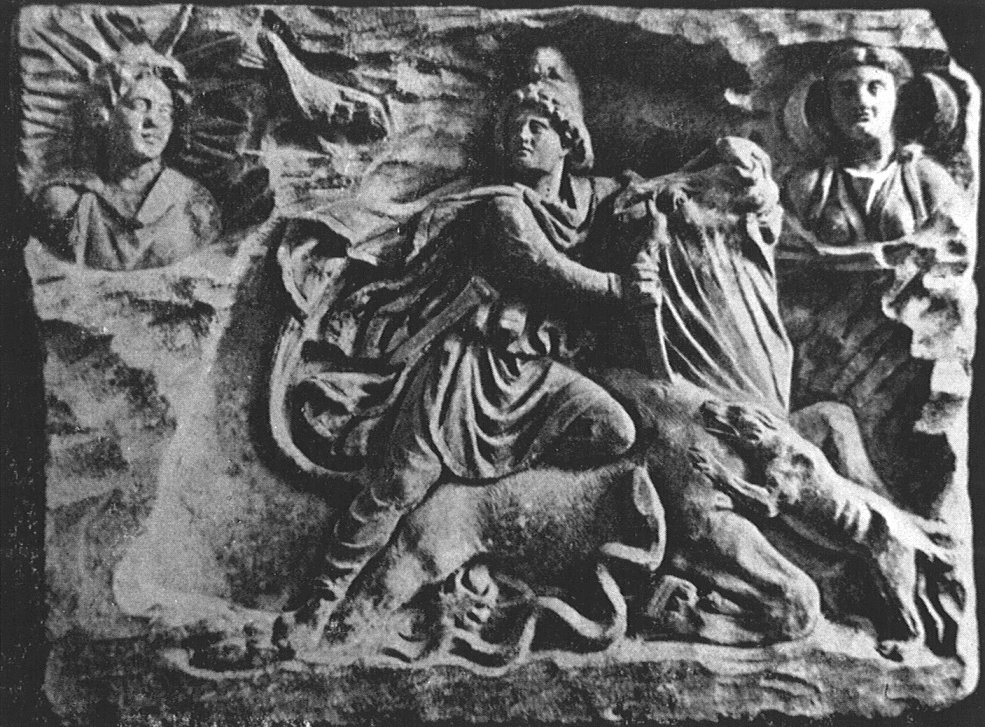
This marble relief depicting Mithras as a bull slayer was found in the back room of the Mithraeum of the Circus Maximus.

This marble relief depicting Mithras killing the bull, found at Porto d’Anzio in 1699 and now lost, is known from a engraving by del Torre.

This relief of Mithras slaying the bull, framed by acanthus leaves, was sold at auction in 2011 by Bonhams.
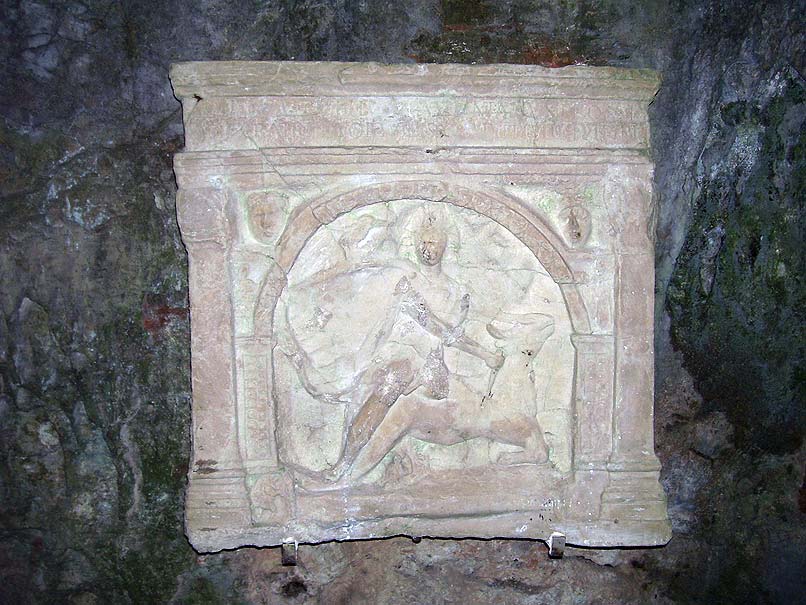
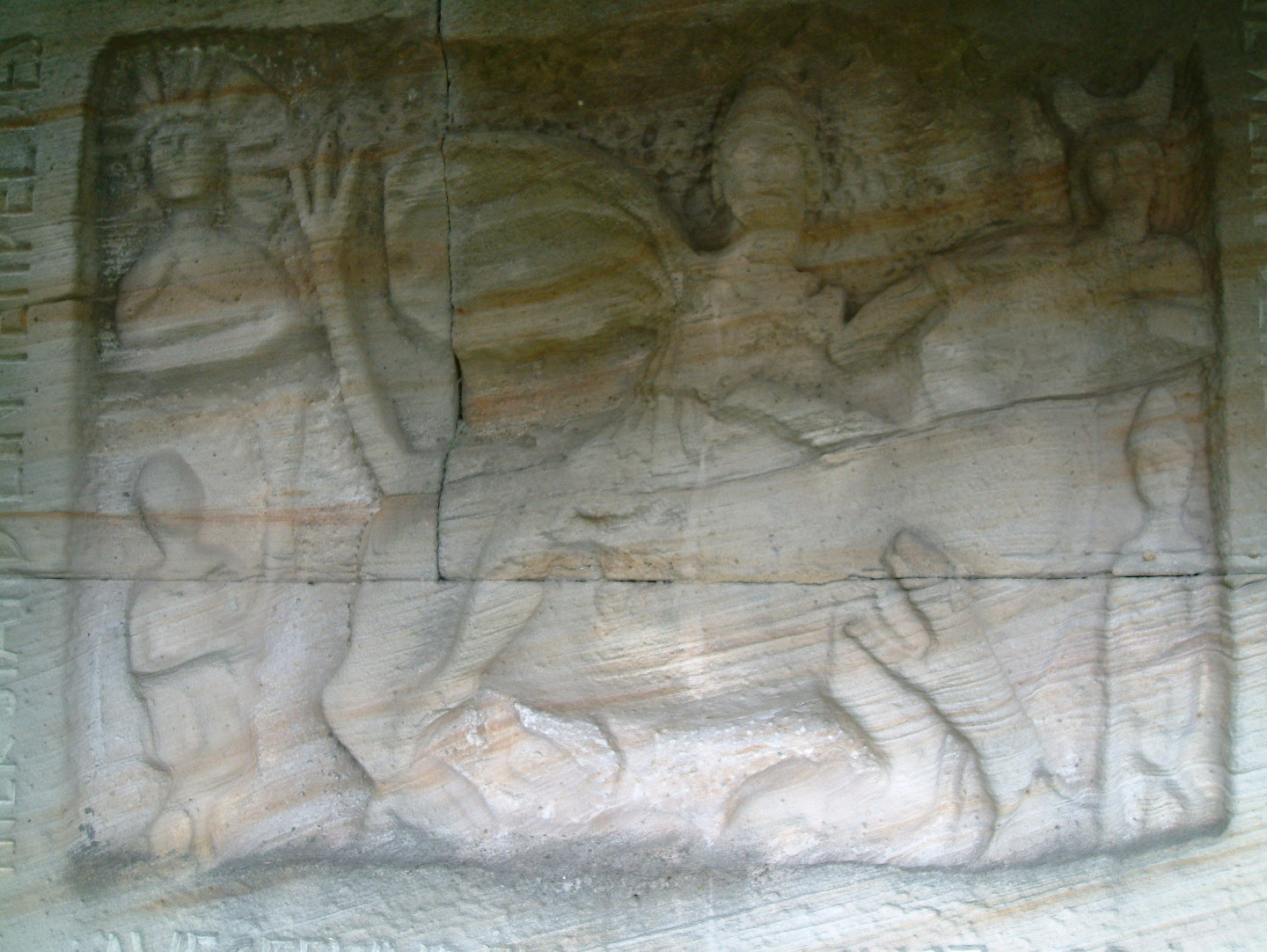
This relief of Mithras killing the bull found in Gimmeldingen, Germany, lacks the usual raven.

Roman stone low-relief depicting Mithras as a bull-slayer, with the upper part of his head missing.

Two marble statues of Cautes and Cautopates discovered in the Mithraeum of Rusicade, accompanied by symbolic animals including a lion, scorpion, dolphin and bird.

These fragments of a monumental tauroctony found in the Cerro de San Albín must have decorated the Gran Mitreo de Mérida, which has not yet been found.
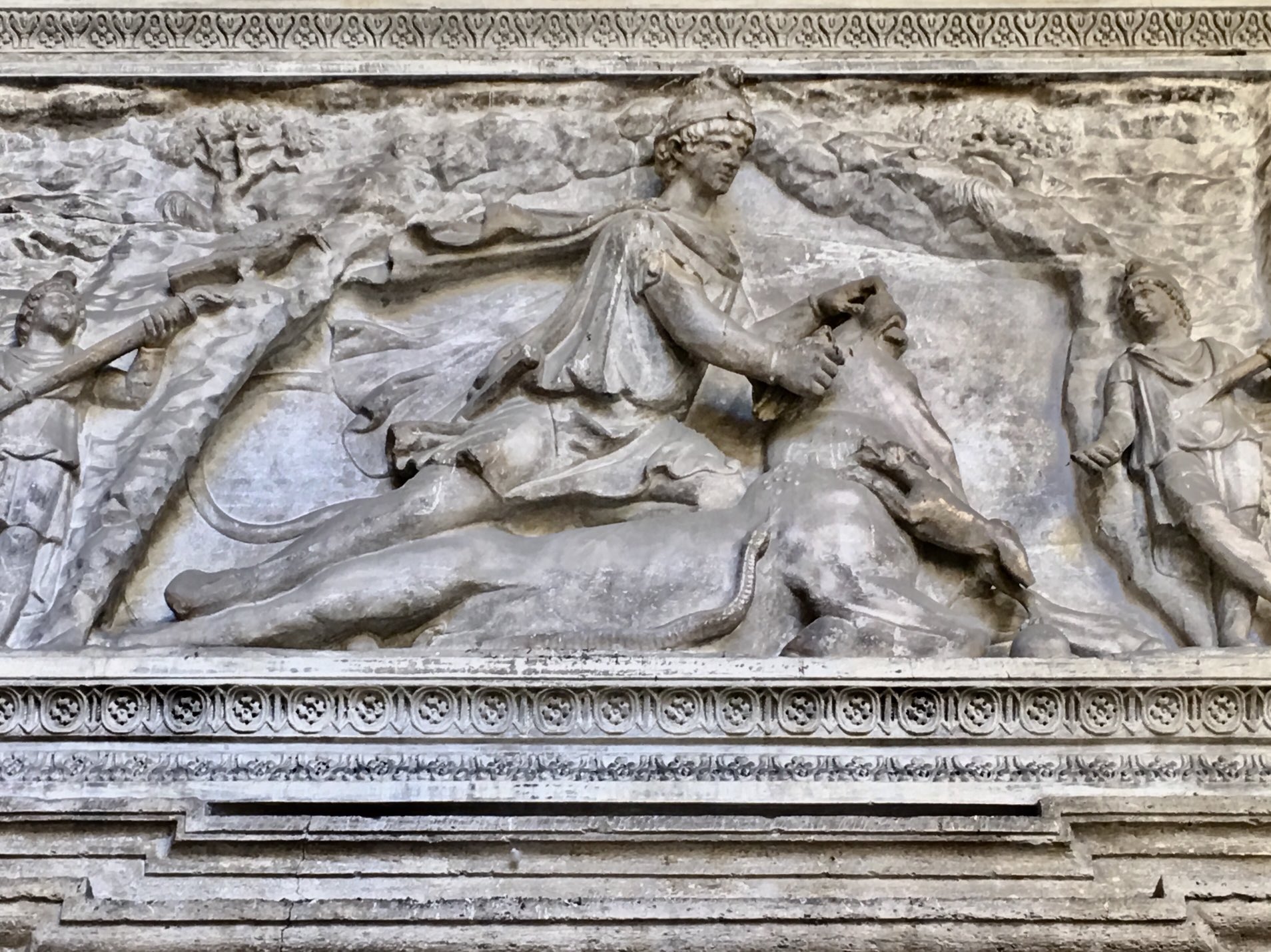
This relief of Mithras as a bullkiller, probably found in Rome, has been part of the Palazzo Mattei collection since at least the end of the 18th century.
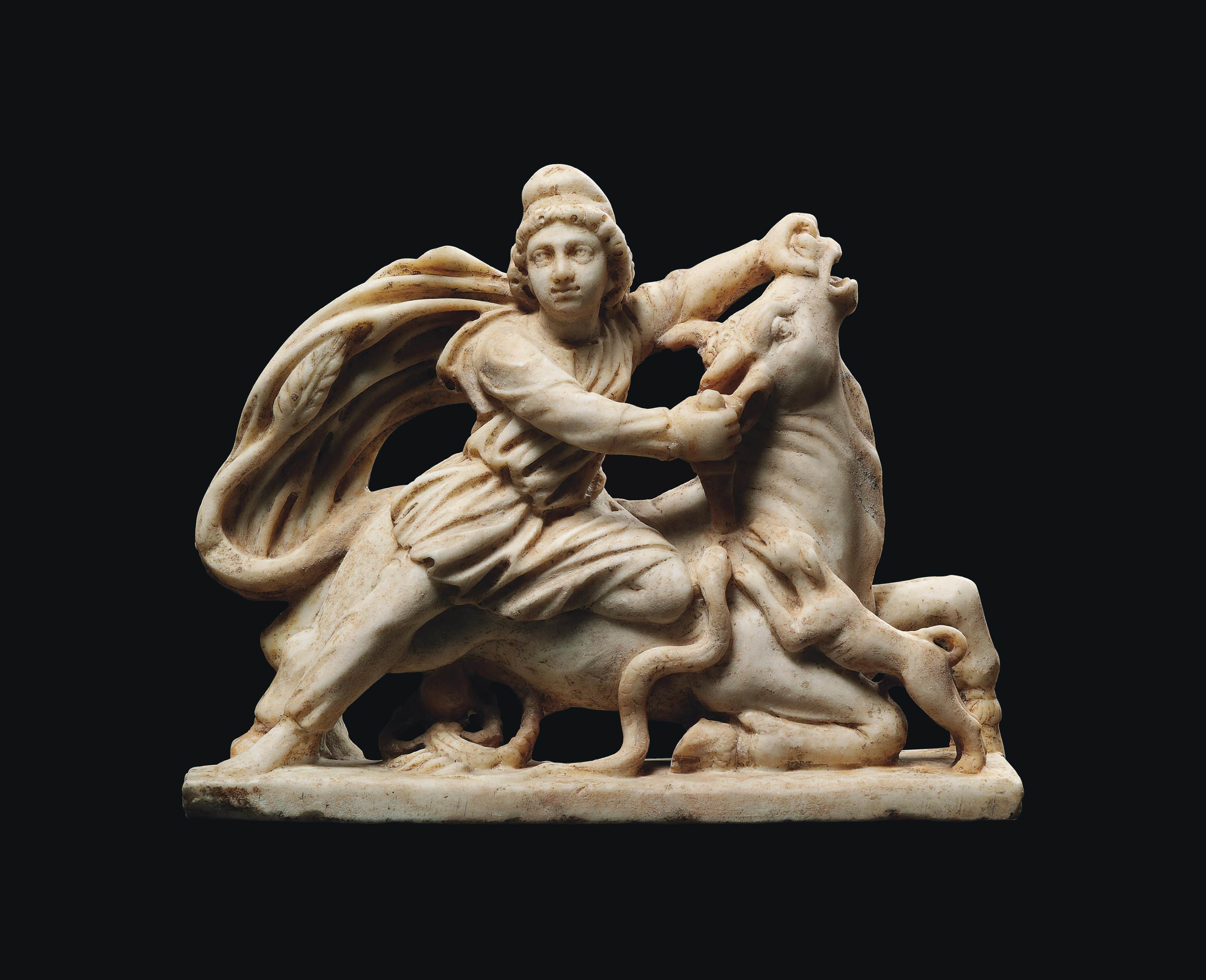
Marble group of Mithras slaying the bull, formerly sold by Antiquarium Ltd., New York.
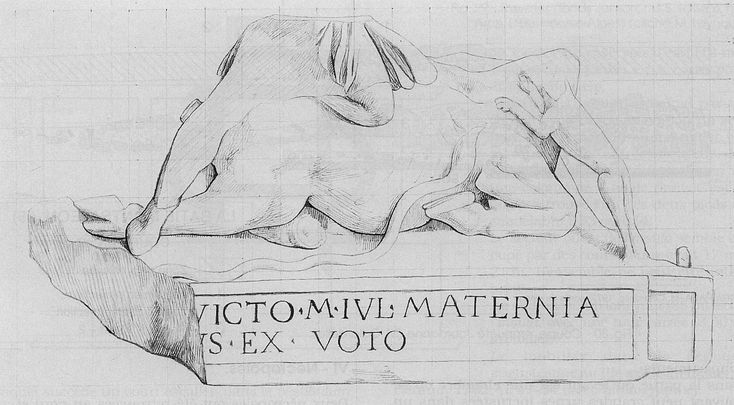
This damaged relief of Mithras killing the bull found in 1804 and formerly exposed at Gap, is now lost.
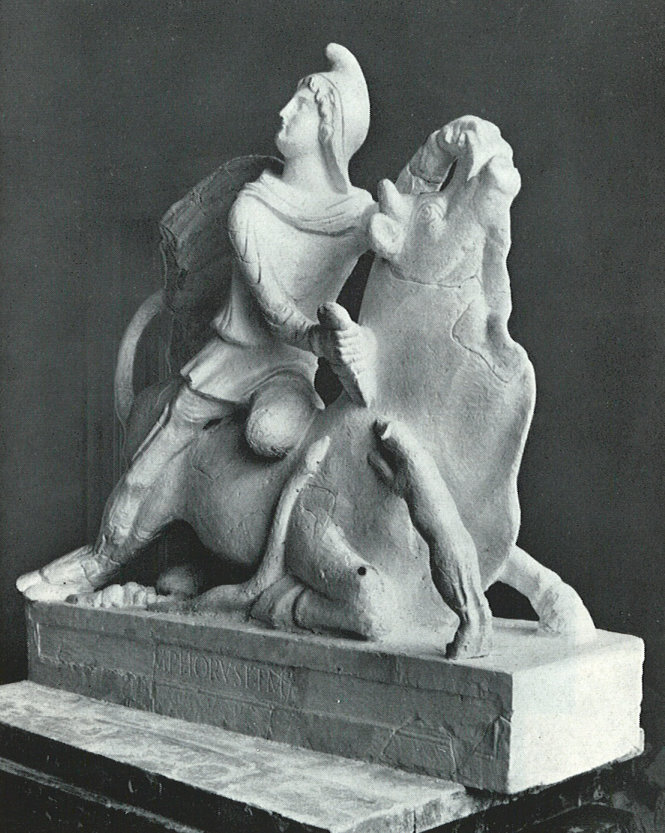
This sculpture of Mithras killing the sacred bull bears an inscription that mentions the donors.
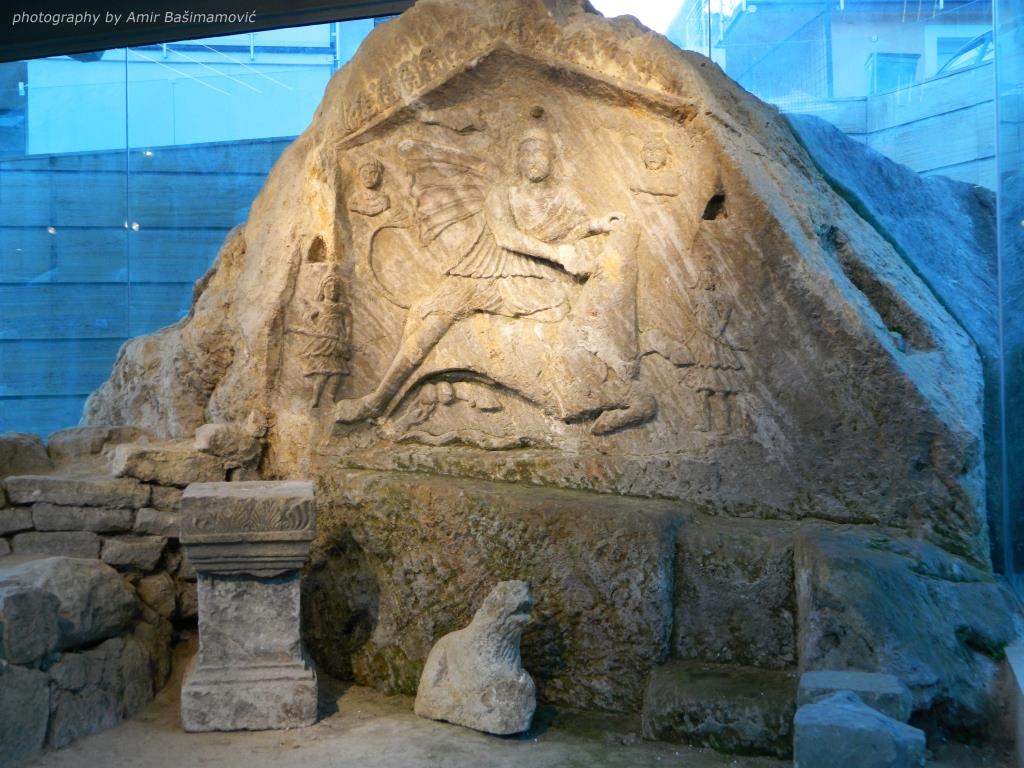
The relief of Mithras killing the bull from the Jajce Mithraeum is walled into the cult niche and surmounted by a roof.
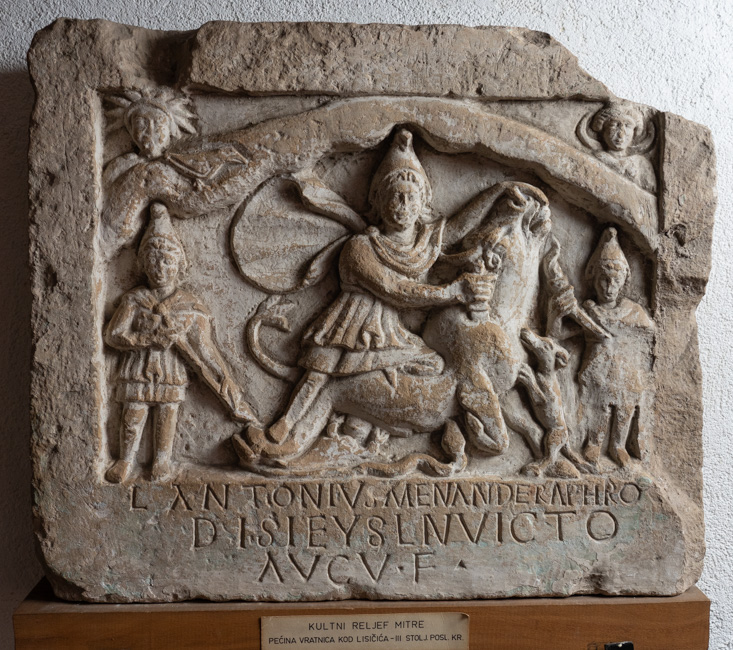
This relief of Mithras as a bullkiller found at Vratnitsa, near Lisicici in northern Macedonia, was signed by a certain Menander Aphrodisieus.
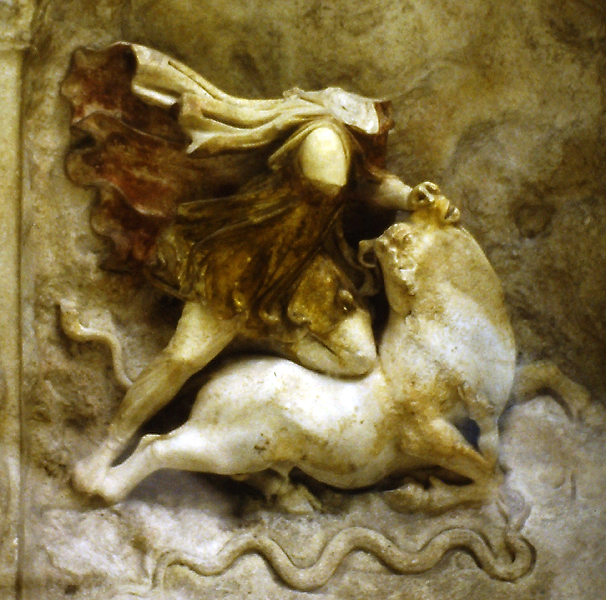
In the Tauroctony of Hermopolis, Cautes and Cautopates are placed over two columns at each side of the sacrifice.
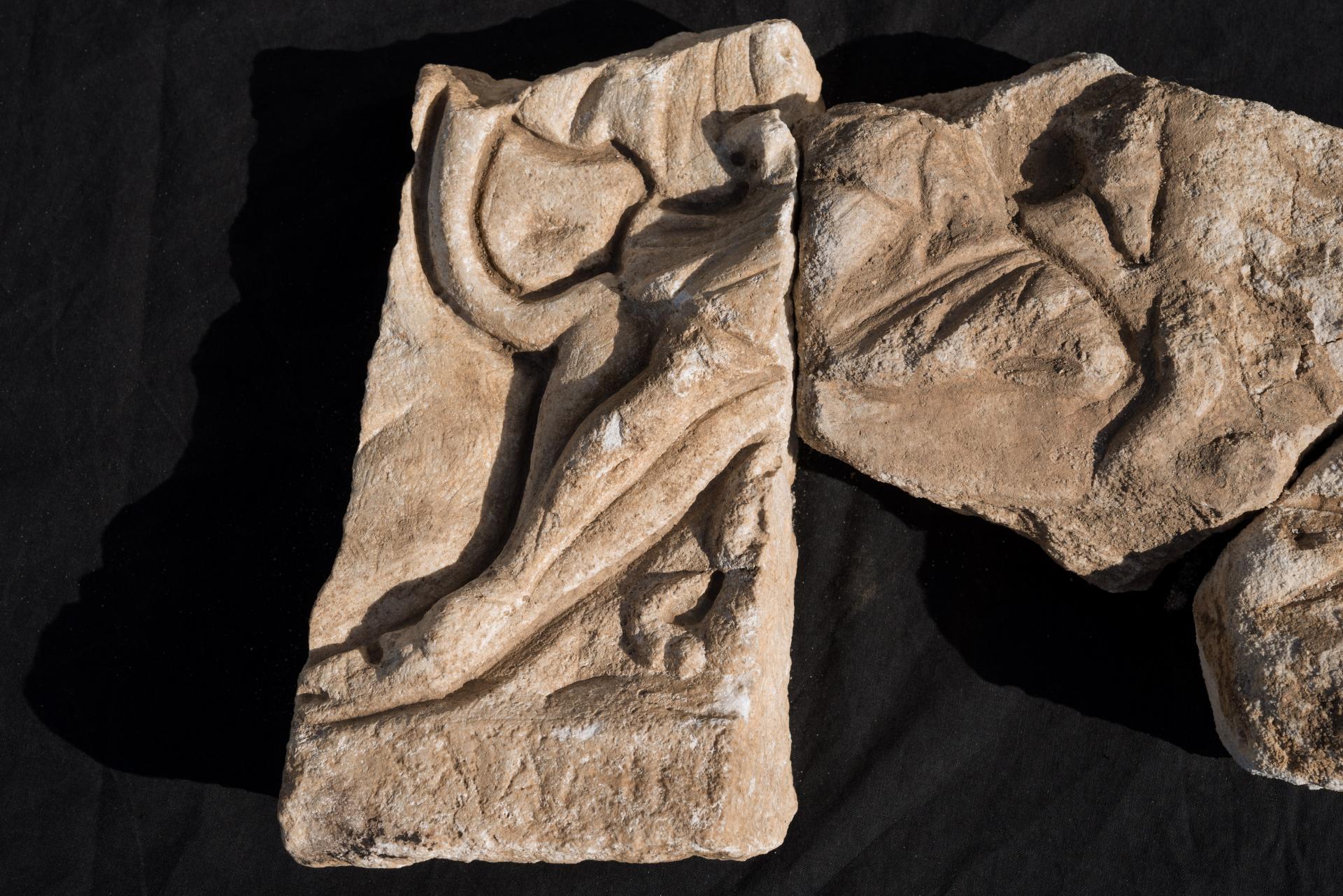
The archeologists have found three fragments of the Tauroctony of Lucciana, which includes Cautes and Cautopates.
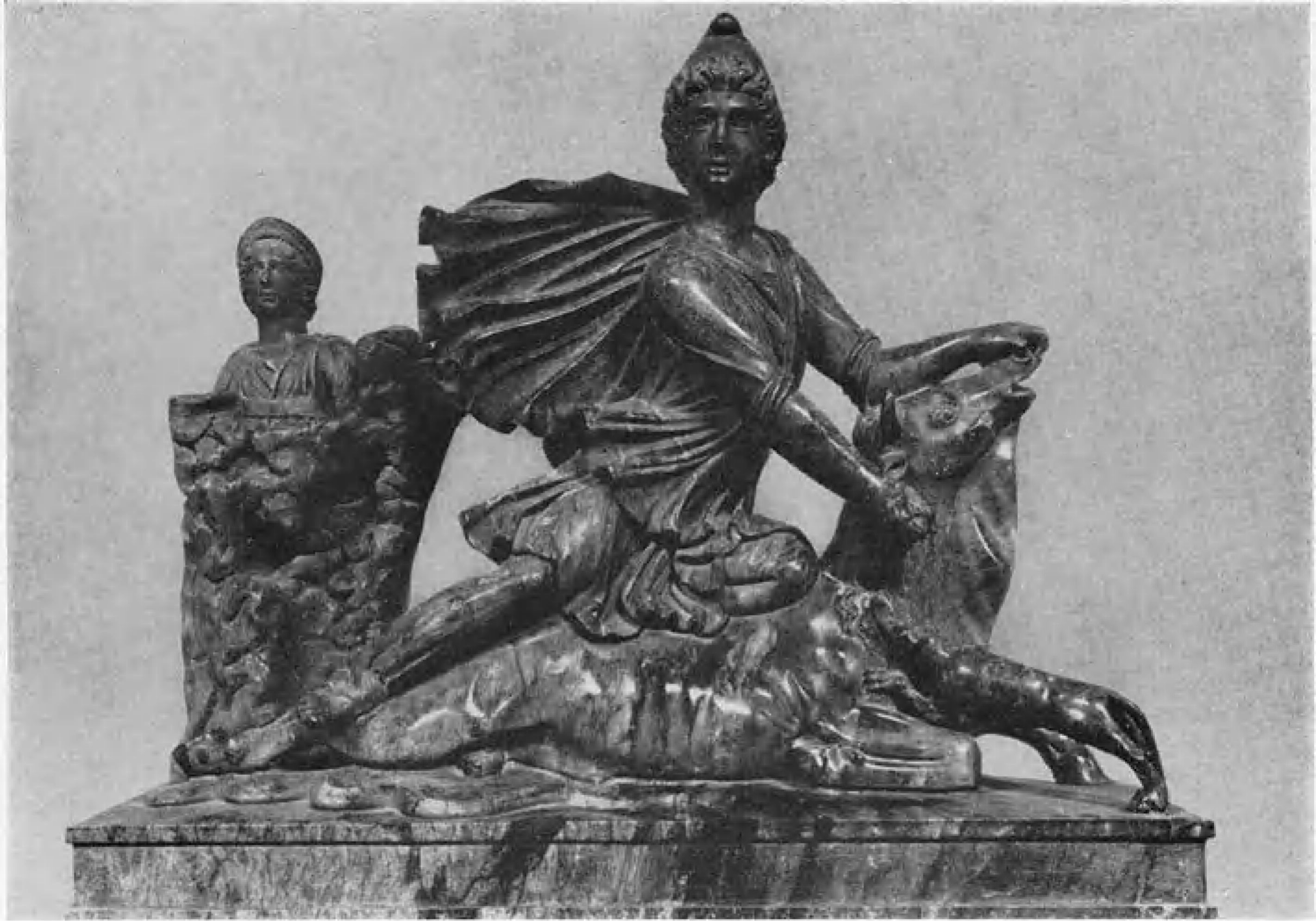
This black marble of Mithras killing the Bull has belonged to the sculptor Carlo Albacini.
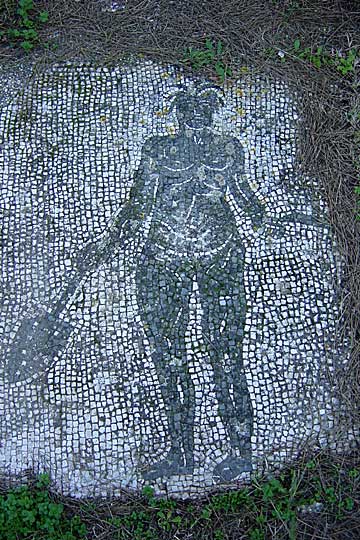
Several figures related to the Mysteries of Mithras are depicted on the mosaics of the Mithraeum of the Animals.

Relief of Mithras killing the bull with an inscription from a certain Aurelius Macer who dedicates it to Sol Invictus Mithras.
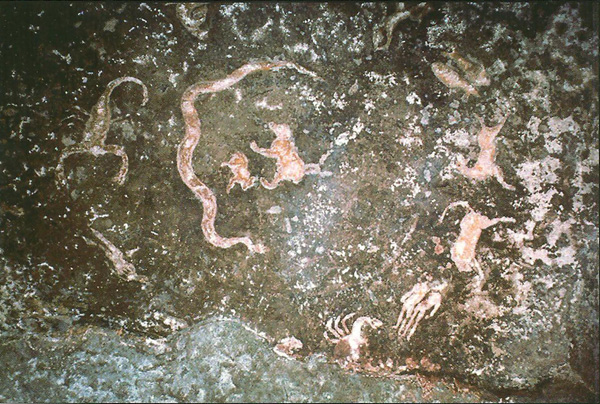
Solis invicti Mithrae studiosus astrologiae who was at the same time ’caelo devotus et astris’.
