
Decorated ceramic vessel showing Mithras slaying the bull together with torchbearers, zodiacal motifs and figures of abundance.
Sculpted lion’s head from Vichy tentatively described as Mithraic in regional archaeological literature.
Pair of inscriptions from Lugdunum recorded in the Corpus Inscriptionum Latinarum.
Pair of Castor ware vessels interpreted as ritual banquet deposits from the Mithraeum of Procolitia.
Sandstone altar combining imagery of Apollo, Mithras and the torchbearers Cautes and Cautopates near the Roman fort of Whitley Castle.
Bearded nude statue formerly claimed to be Mithraic but later rejected as a seventeenth-century sculpture unrelated to the cult.
Small altar dedicated to Cautopates discovered at Ospedaletto di Gemona and later lost.
Fragmentary inscription from Pola preserving a possible reading of the name Atticus.
Group of inscriptions from Umbria including one entry reassigned to Interamna Lirenas in Latium.
Marble relief showing Mithras slaying the bull inside a vaulted cave accompanied by Sol, Luna and the torchbearers.
Circular marble relief preserving part of the bull, a serpent and zodiacal signs associated with Mithraic iconography.
Fragmentary remains of statues identified as representations of the Mithraic torchbearers.
Group of monuments from Lepcis Magna published among the principal Mithraic remains of Roman Tripolitania.

The tauroctonic relief from Dragus includes a naked flying figure that Vermaseren has identified as Phosporus or Lucifer.
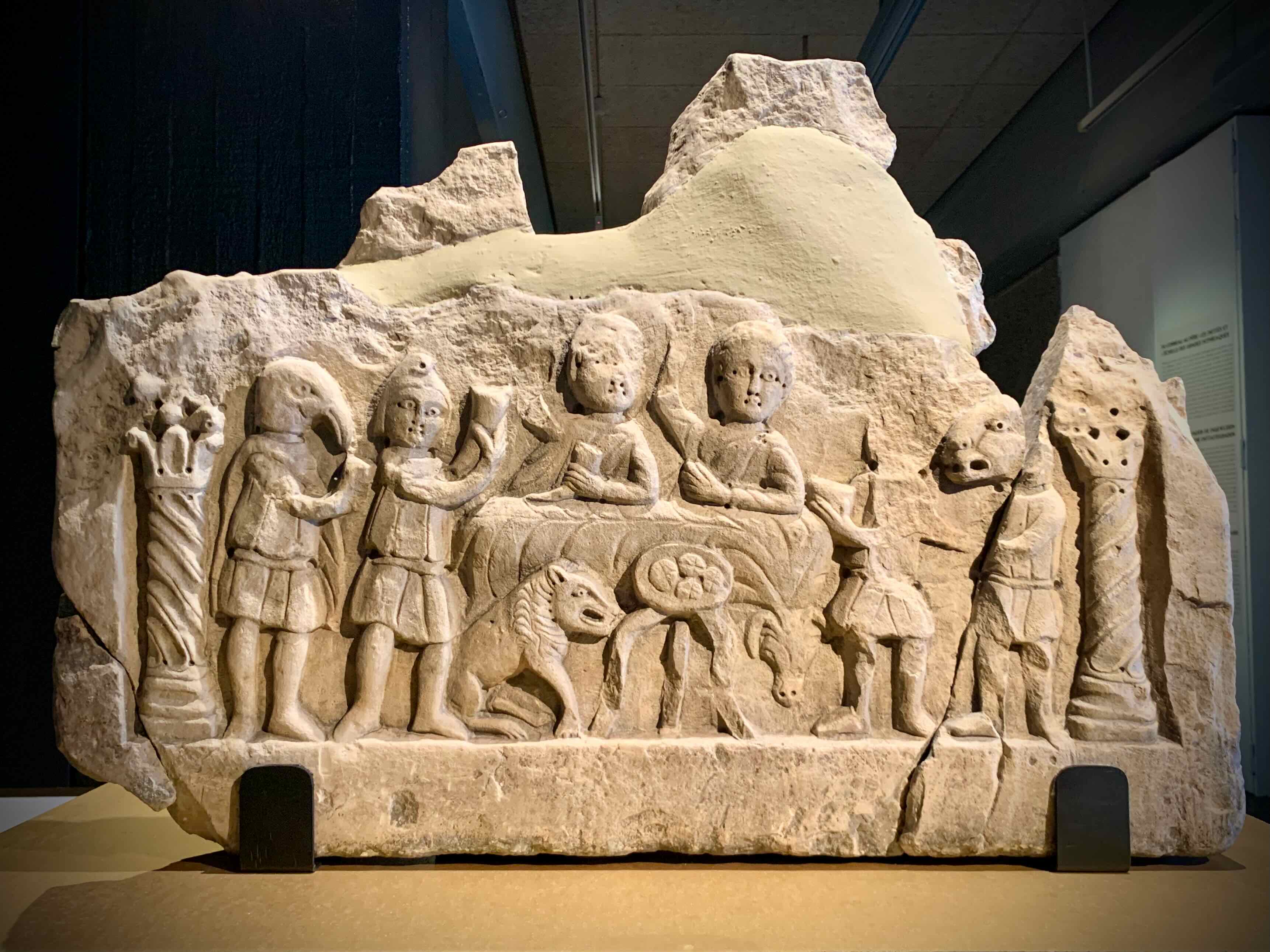
The mithraic relief of Konjic shows a Tauroctony in one side and a ritual meal in the other.
Evidence for a Mithraeum at Sentinum (modern Sassoferrato) in ancient Umbria, attested by a marble tauroctony group and three inscriptions, with a related mosaic found on the grounds of the Countess of Leuchtenberg and later given to King Louis of Bavaria…
A marble statue fragment found at Sentinum (modern Sassoferrato) in ancient Umbria, walled in the atrium of the Palazzo Raccamadoro-Ramelli, showing Mithras tauroctone with dog, serpent and scorpion, one foot pointing towards a torchbearer; the bull's head, tail and Mithras'…
A white marble fragment from Ocrea in Umbria bearing the name "Mitrha" (sic), possibly related to Mithraic monuments from nearby sites.
An earthen lamp bearing the name of C. Dessi along with two coins of Constantine and one of Gratianus, found in the Mithraeum at Spoleto in Umbria.
A medal in the form of a Grecian cross from the Mithraeum at Spoleto, showing busts of a bearded man and a veiled woman each with a radiate crown, identified by Cumont as Sol and Luna.
