Your selection in monuments gave 300 results.
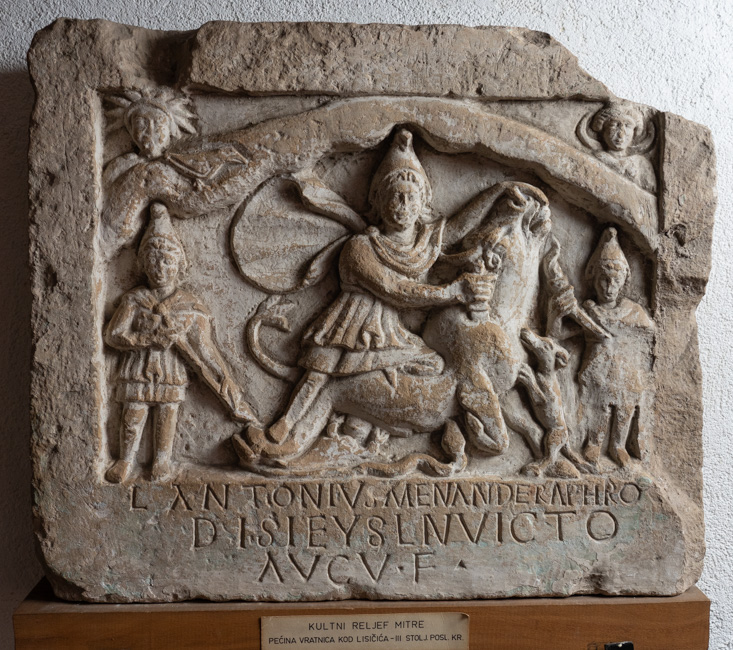
This relief of Mithras as a bullkiller found at Vratnitsa, near Lisicici in northern Macedonia, was signed by a certain Menander Aphrodisieus.
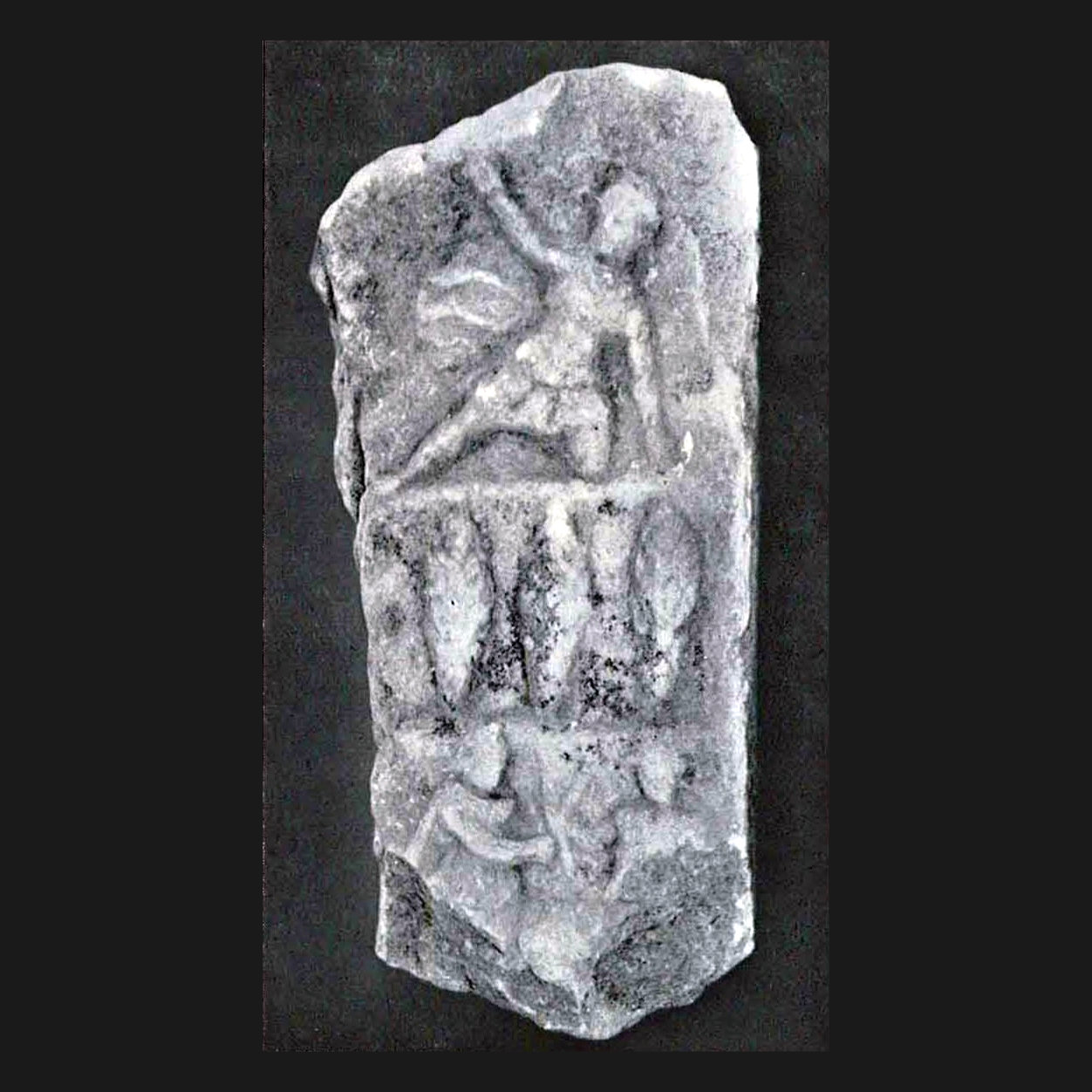
These fragments of a cult relief of Mithras were found at the Mithraeum II of Ptuj, Slovenia.
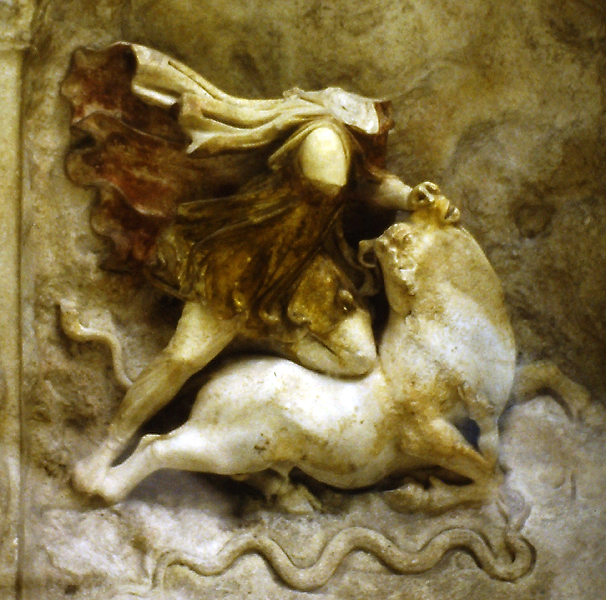
In the Tauroctony of Hermopolis, Cautes and Cautopates are placed over two columns at each side of the sacrifice.
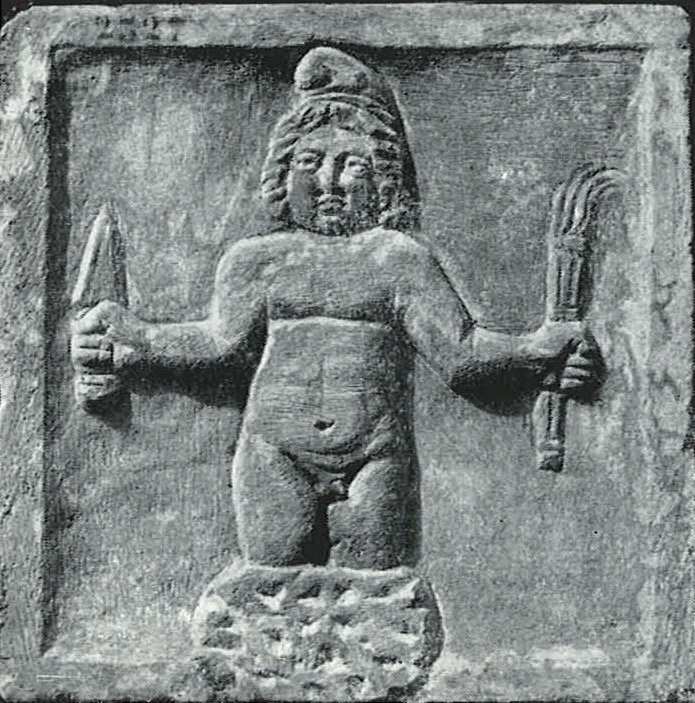
The relief of Mithras being born from the rock of the Esquiline shows the young god naked, as usual, with a torch and a dagger in his hands.
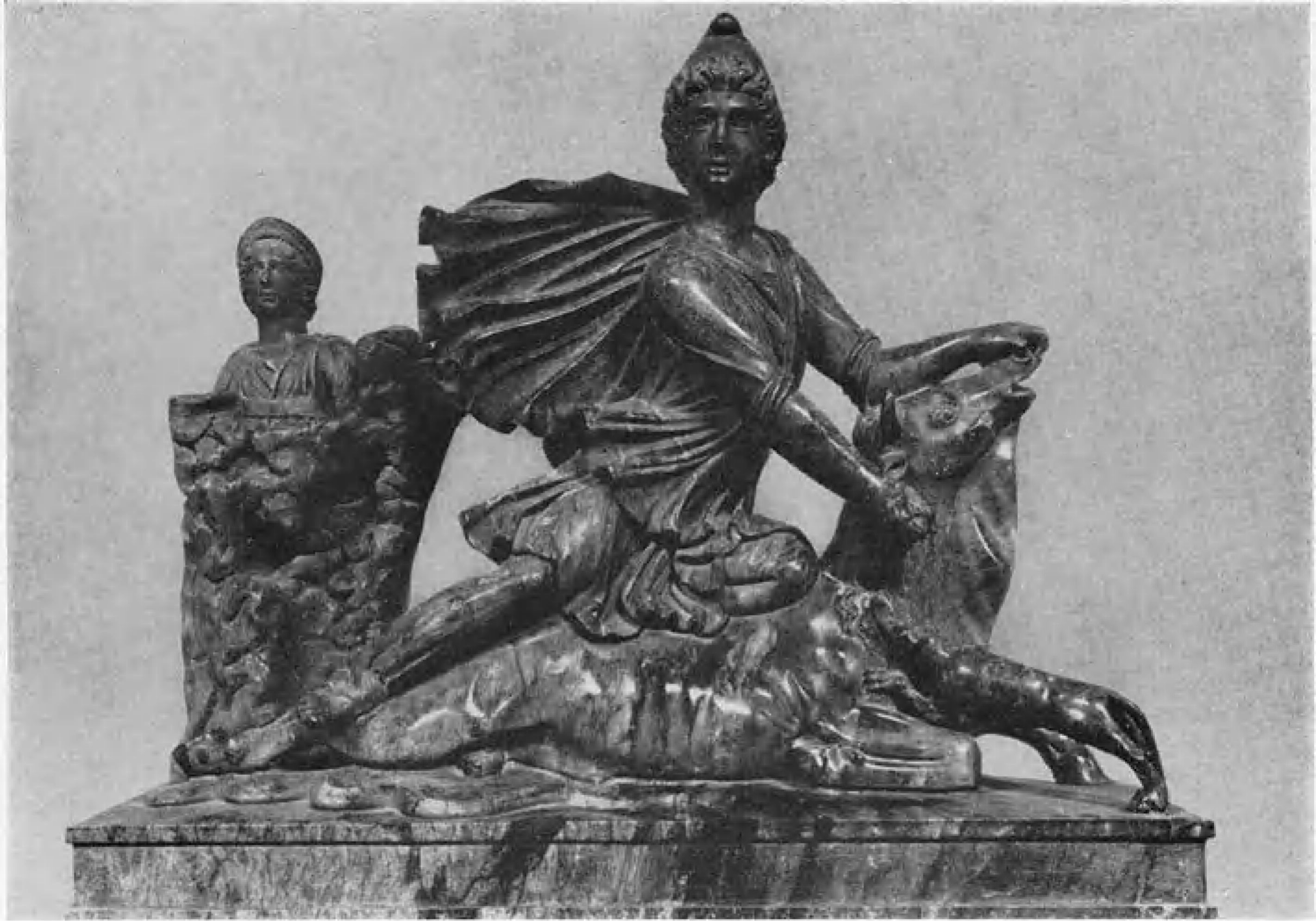
This black marble of Mithras killing the Bull has belonged to the sculptor Carlo Albacini.

Relief of Mithras killing the bull with an inscription from a certain Aurelius Macer who dedicates it to Sol Invictus Mithras.
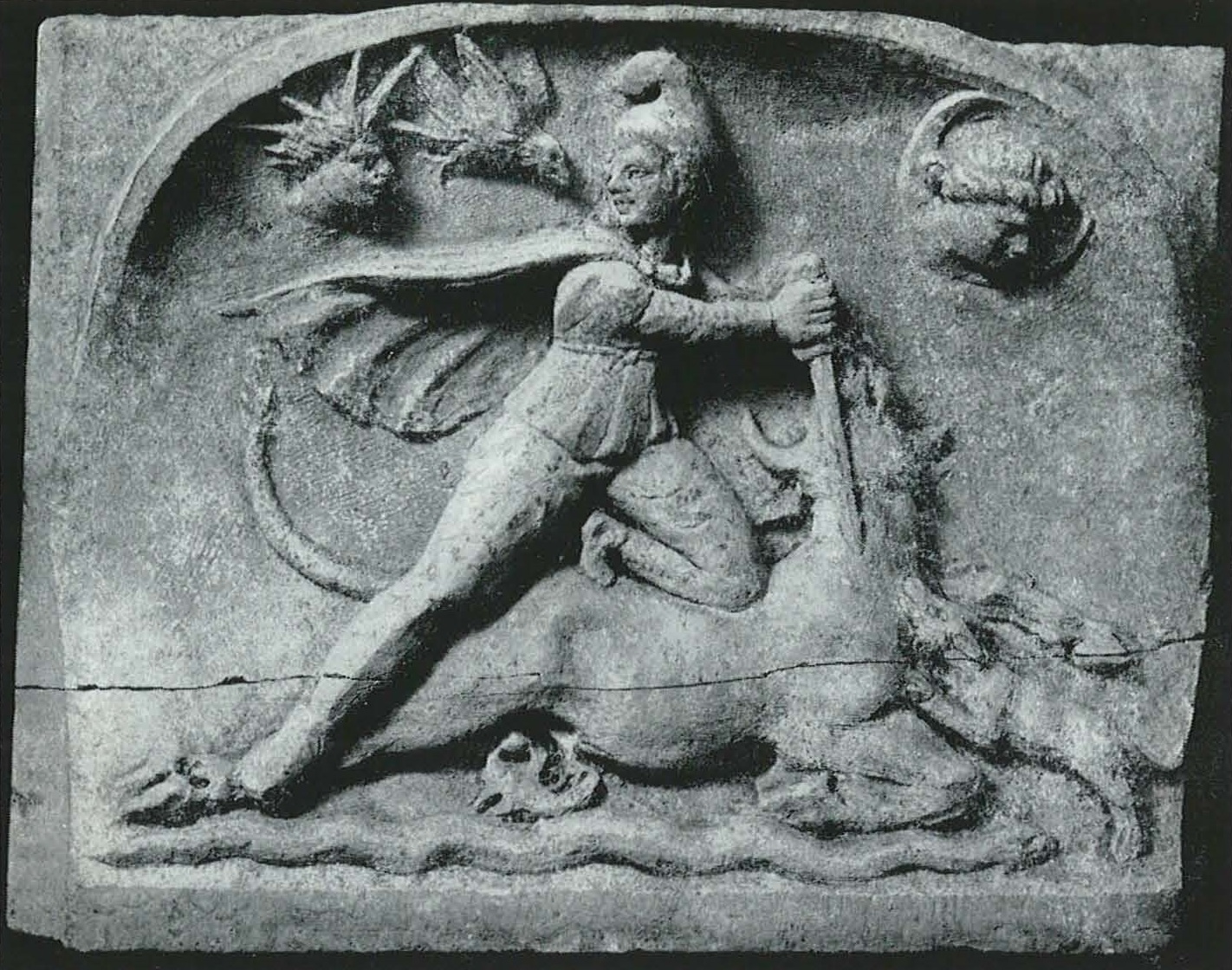
This simple relief of Mithras killing the bull without his companions Cautes and Cautopates was found in the so-called Mithraeum of the Esquilino, Rome.

White marble statue of Mithras killing the sacred bull preserved in the Museo Nacional Romano.
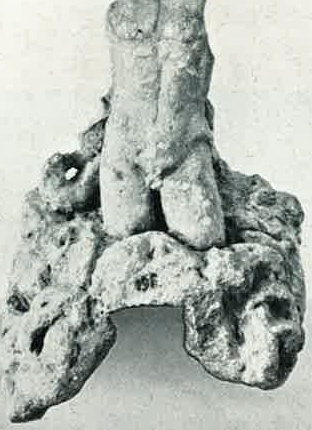
Sandstone petrogenesis from Petronell-Carnuntum (Lower Austria), depicting Mithras emerging from the rock, preserved from the knees upwards.
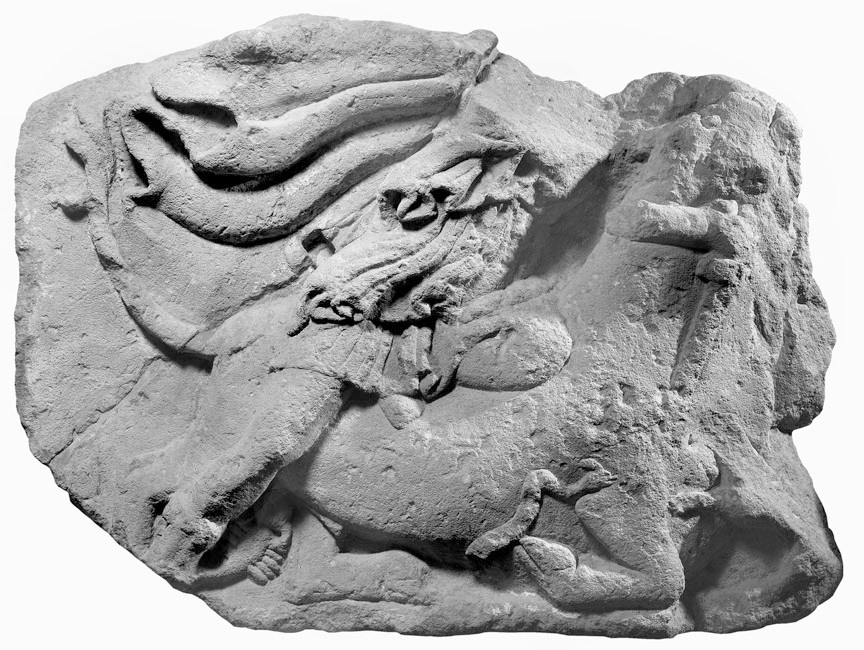
Sandstone relief of Mithras killing the bull, broken in two parts and partly restored, with dog, serpent and scorpion preserved; formerly in Vienna, now on loan to the Museum Carnuntinum.

This remarkable double-sided relief depicts the myth of Mithras and the Tauroctony on one side, and a scene of Mithras the hunter and the banquet of Mithras and the Sol on the other.
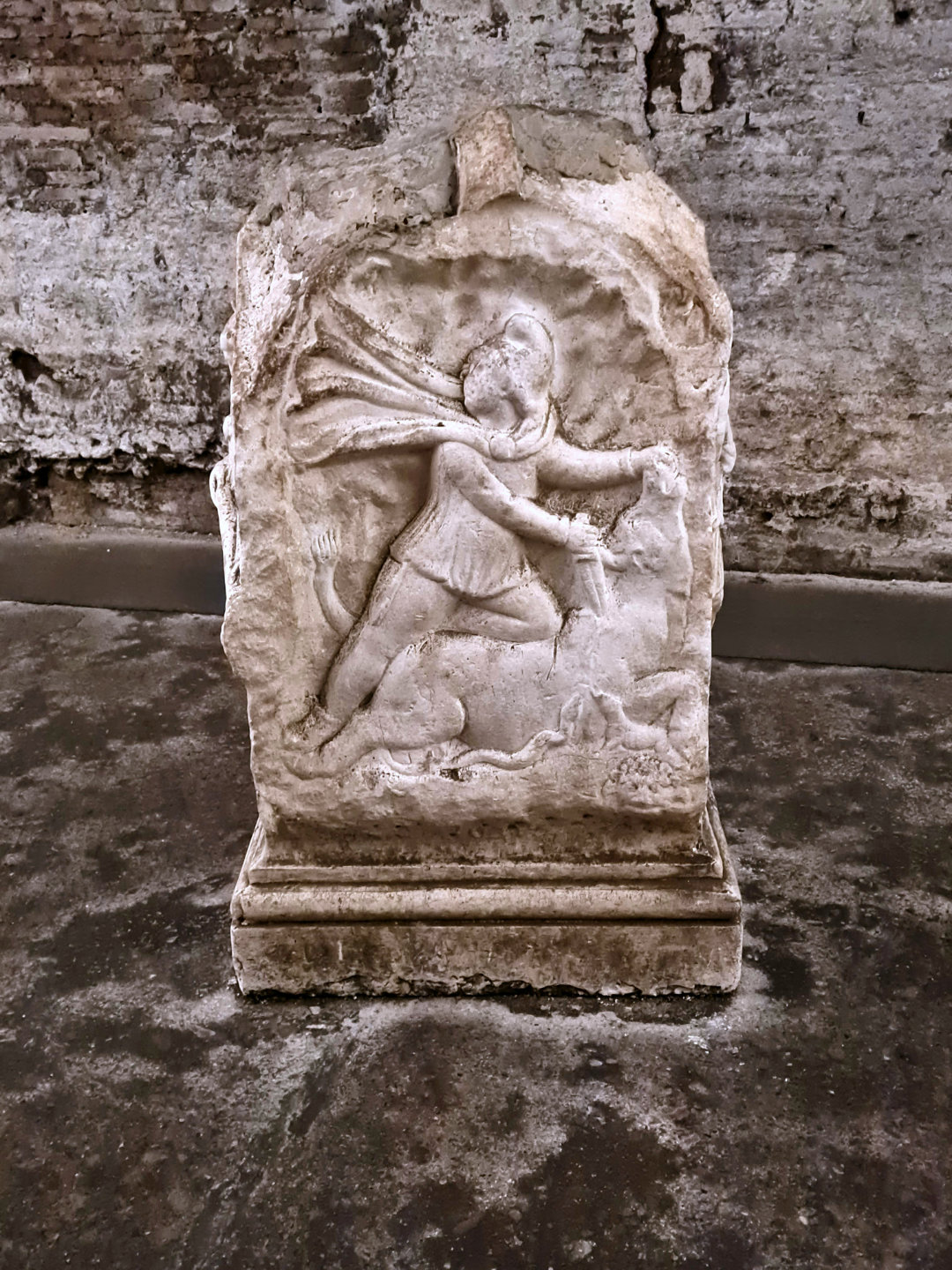
The altar of the Mithraeum of San Clemente bears the Tauroctony on the front, Cautes and Cautopates on the right and left sides and a serpent on the back.
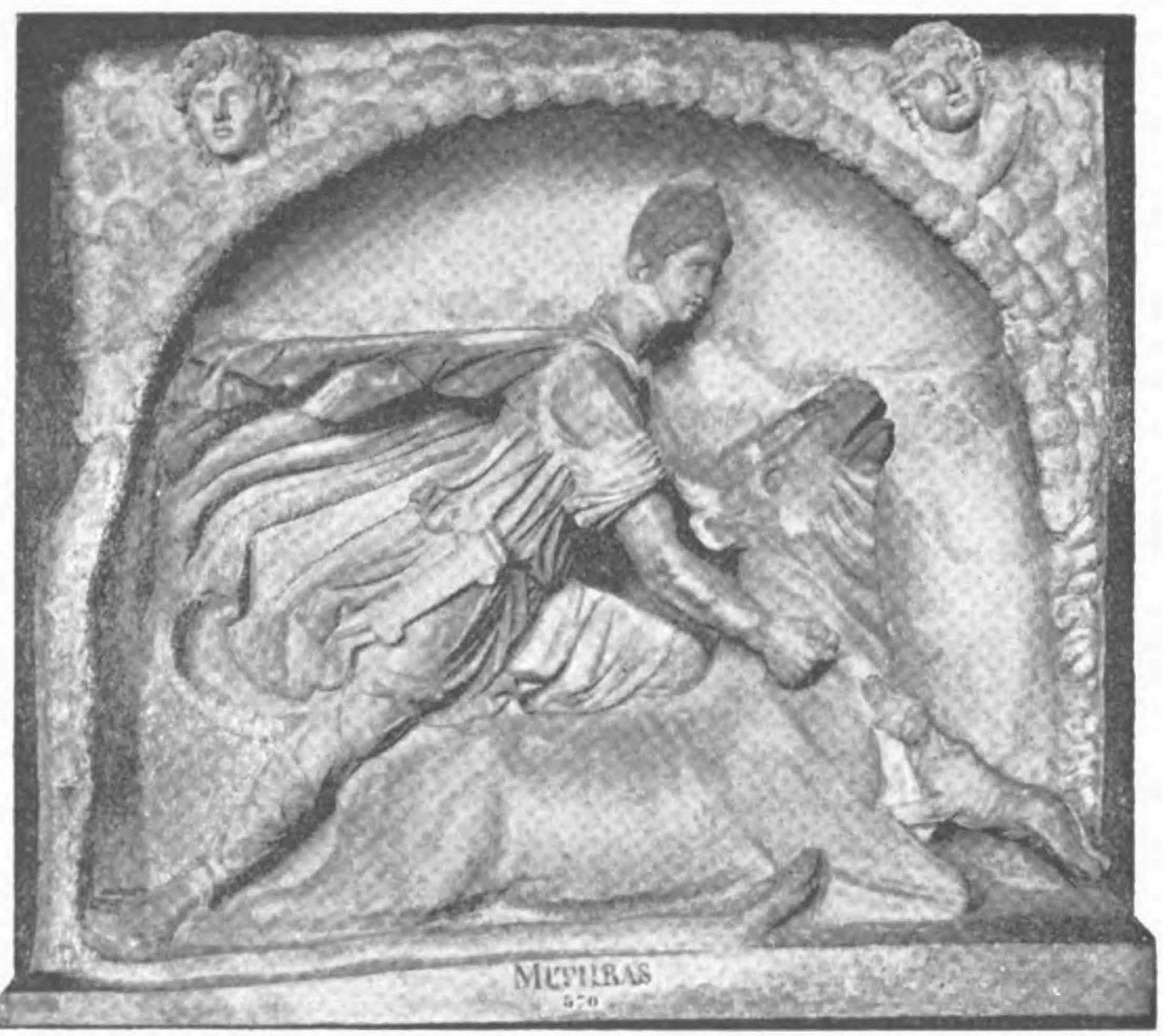
This is one of the three reliefs depicting Mithras killing the bull that the Louvre Museum acquired from the Roman Villa Borghese collection.
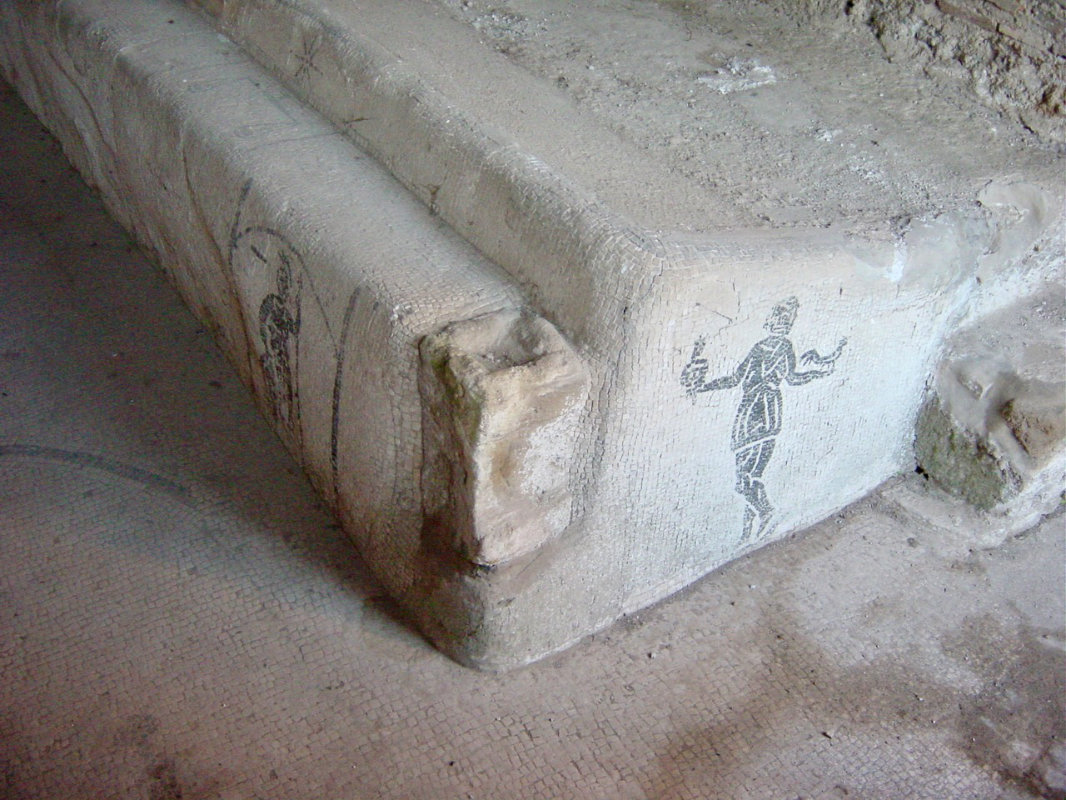
At the entrance to the Mithraeum of the Seven Sferes, Cautopates holds the torch with both hands and Cautes holds the torch in his right hand and a cock in his left.
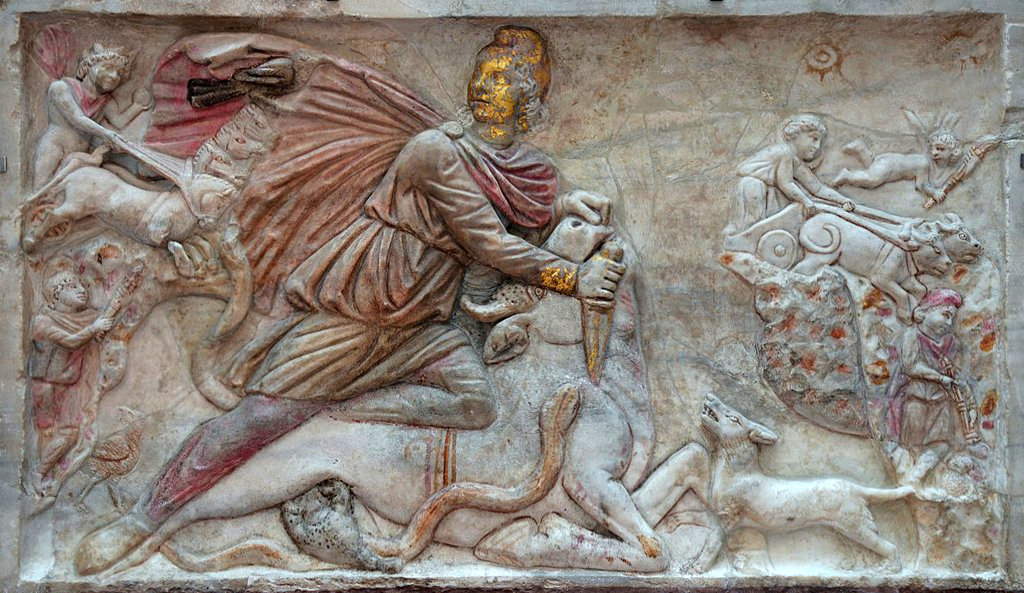
The relief of Mithras killing the bull of Stefano Rotodon preserves part of his polycromy and depicts two unusual figures: Hesperus and an owl.
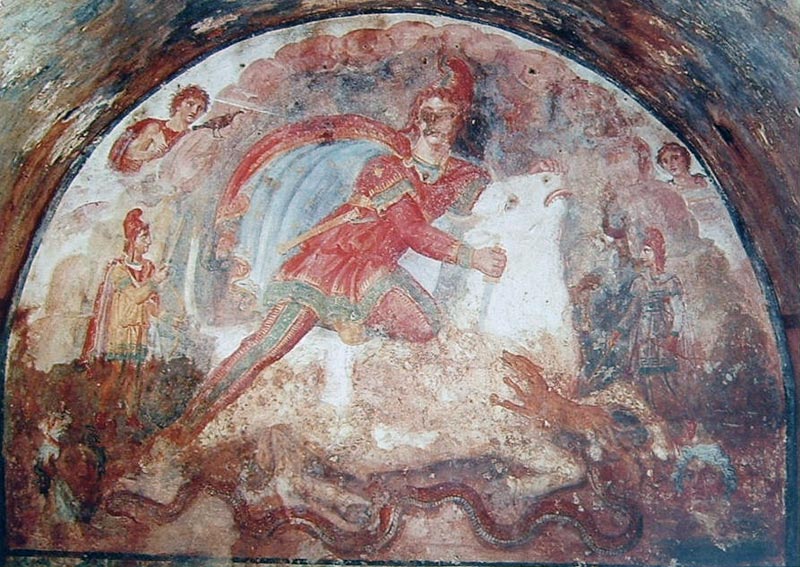
The main fresco of the Mithraeum of Santa Maria Capua Vetere portrays Mithras slaughtering a white bull.
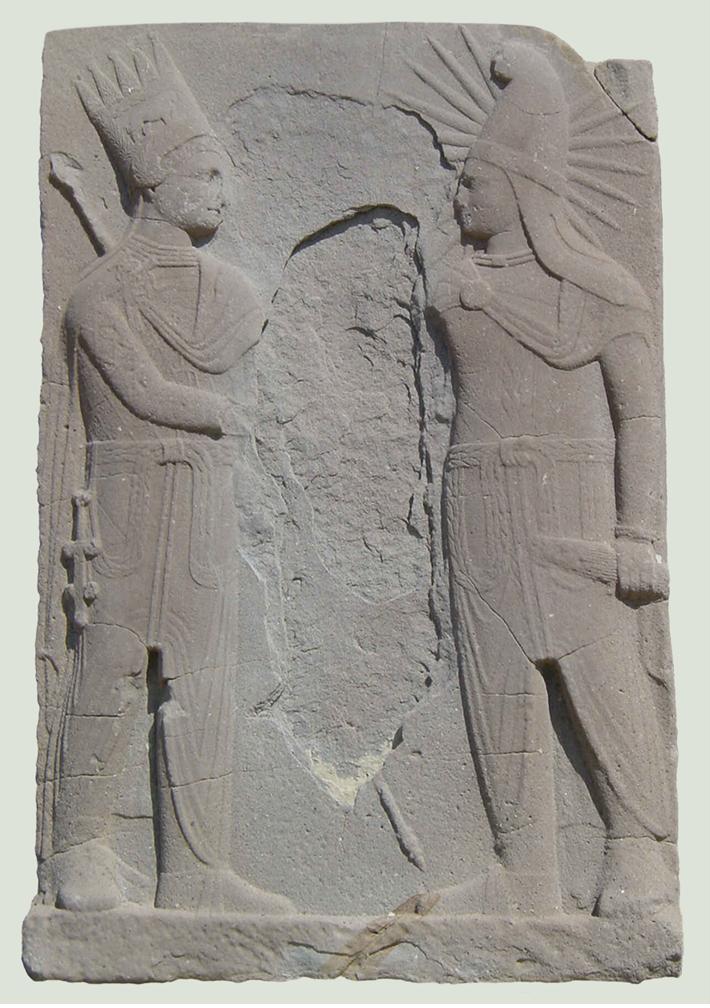
Antiochus I of Commagene shakes Mithras hands in this relief from the Nemrut Dagi temple.
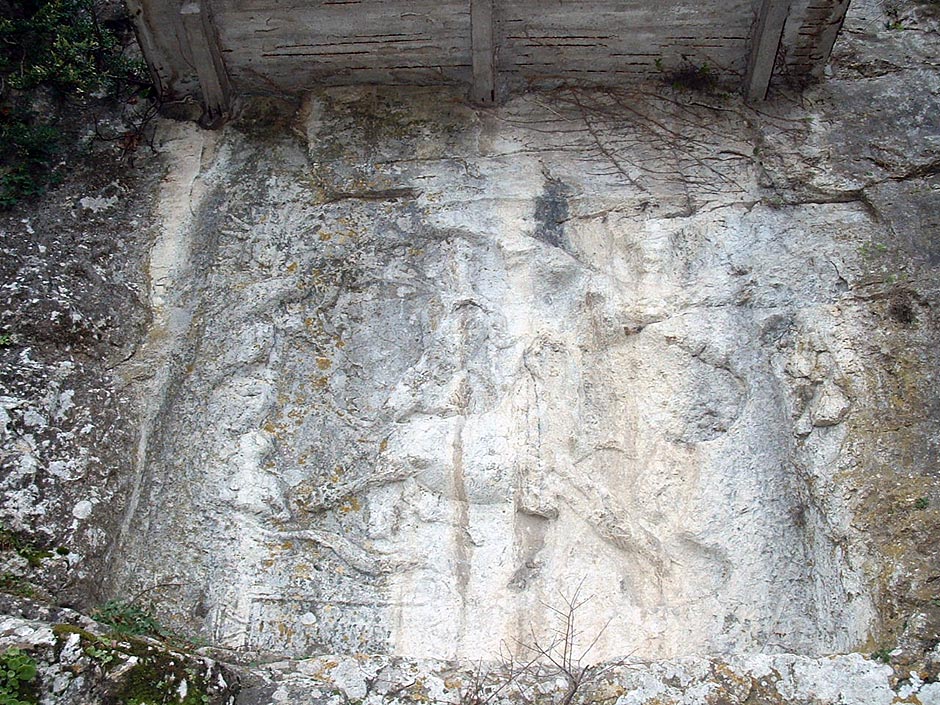
The low relief of Bourg-Saint-Andéol depicting Mithras killing the bull has been chiseled on the rock.

This remarkable marble relief from the end of the 3rd century was discovered in the most remote room of the Mithraeum in the Circo Massimo.
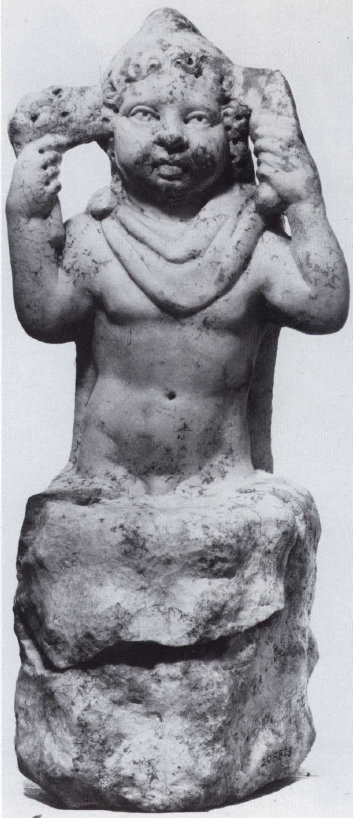
The second statue of Mithras rock-birth was found in the Mitreo di Santo Stefano Rotondo shows a childish Mitras emerging from the rock.
