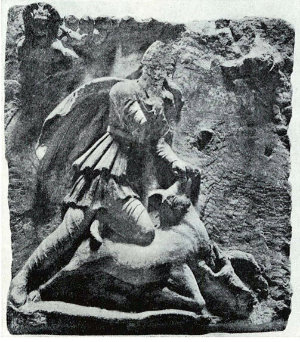
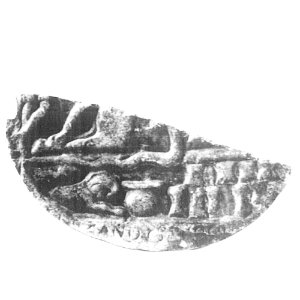
The Mithraic material documented in Roman Aegyptus reflects the exceptional cultural and religious complexity of the province, particularly in connection with Alexandria and its cosmopolitan environment. The evidence illustrates the interaction of Mithraic communities with broader networks of trade, administration and eastern Mediterranean religious exchange.


People attested in Aegyptus


Provinces of Aegyptus
Aegyptus
Aegyptus occupied a unique position within the Roman world where Mediterranean trade, Nile networks and ancient religious traditions intersected.
Places in Aegyptus
Alexandria
Alexandria was founded by Alexander the Great in April 331 BC as one of his many city foundations. After he captured the Egyptian Satrapy from the Persians, Alexander wanted to build a large Greek city on Egypt’s coast that would bear his name.
Hermopolis
Hermopolis, the city of Hermes, was an important city located between Lower and Upper Egypt. A provincial capital since the Old Kingdom of Egypt, Hermopolis developed into a major city of Roman Egypt.
Memphis
Mampsis or Memphis, today Mamshit, Arabic Kurnub, is a former Nabataean caravan stop and Byzantine city.
Mendes
Mendes was a famous city that attracted the notice of most ancient geographers and historians, including Herodotus, Diodorus, Strabo, Mela, Pliny the Elder, Ptolemy, and Stephanus of Byzantium. The city was the capital of the Mendesian nome.
Oxyrhynchus
Oxyrhynchus, also known by its modern name Al-Bahnasa, is a city in Middle Egypt located about 160 km south-southwest of Cairo in Minya Governorate.
References
- Attilio Mastrocinque (2022) The Mithraic Prophecy
- Israel Campos Méndez (2026) Mitra. Un dios entre Oriente y Occidente
- Laurent Bricault & Philippe Roy (2021) Les cultes de Mithra dans l’Empire romain
- Luther H. Martin (2016) The Mind of Mithraists. Historical and Cognitive Studies in the Roman Cult of Mithras
- René de Obaldia & Reinhold Merkelbach (1994) Mithras. Ein persisch-römischer Mysterienkult
- Roger Beck (2004) Beck on Mithraism. Collected Works with New Essays
- Roger Beck (2007) The Religion of the Mithras Cult in the Roman Empire. Mysteries of the Unconquered Sun
