Biography
of Antonius Valentinus
- Antonius Valentinus, an eques, is attested as a member of a Mithraic community (syndexios) at the Mithraeum of Dura Europos.
- Also recorded as Centurion and commander of vexillations.
- Attested in the early 3rd century.
- Attested at Dura Europos, Syria-Coele, Syria in 168 (TNMM 454).
TNMP 41
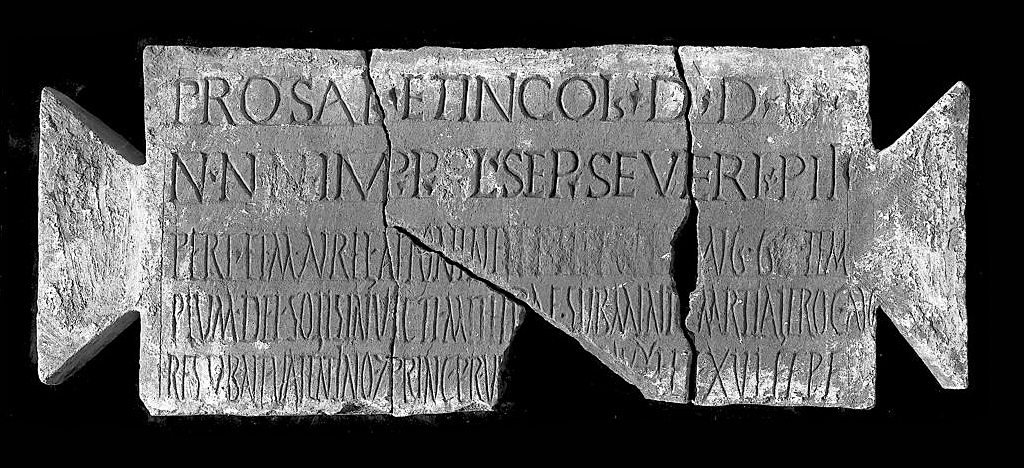
Antonius Valentinus was a Roman centurion and commander of detachments (praepositus vexillationum) drawn from Legio IV Scythica and Legio XVI Flavia Firma. He is attested at Dura-Europos during the reign of Septimius Severus, when he supervised the restoration and major enlargement of the local Mithraeum between 209 and 211 CE (TNMM 454).
His name appears in the dedicatory inscription placed above the entrance of the sanctuary, which records that the templum dei Solis Invicti Mithrae was restored for the welfare of Septimius Severus, Caracalla and Geta while Minicius Martialis served as imperial procurator. The text presents Valentinus as the officer responsible for the project and indicates the direct involvement of military personnel from two Syrian legions in the rebuilding works.
The renovation transformed what had originally been a relatively modest sanctuary into a substantially larger monument. Archaeological evidence shows that the building was expanded, provided with new architectural features around the cult niche, and richly decorated with painted programmes. The scale of the undertaking suggests access to considerable resources and manpower, possibly supported through military channels under imperial supervision (Rostovtzeff et al. 1939; DeLeeuw 2011; McCarty & Egri 2020).
The inscription does not explicitly identify Valentinus as an initiate of Mithras. Nevertheless, his close association with the restoration of the sanctuary, together with the prominent role played by military officers in the history of the Durene community, makes it highly probable that he belonged to the local Mithraic congregation. His activity coincides with the Severan period, when the cult appears to have expanded significantly among Roman troops stationed in Syria. As Richard Gordon has observed, the participation of vexillations from Legio IV Scythica and Legio XVI Flavia Firma implies that Mithraic worship was already familiar within the military environments from which these detachments were drawn (Gordon 2001).
References
- Shrine to the God Mithras (Mithraeum).
- Frank Edward Brown, Michael Ivanovich Rostovtzeff & Charles Bradford Welles (eds.) (1939) The Excavations at Dura-Europos.
- Franz Cumont & Eric David Francis. ‘The Dura Mithraeum’. Mithraic Studies, Vol. 1, pp. 151–214.
- Lisa R. Brody & Gail L. Horffman (eds.) (2001) Dura Europos.
- Lucinda Dirven (2025) ‘Dura-Europos: Past, Present, Future’. Dura-Europos: Past, Present, Future, pp 148-169.
- Lucinda Dirven (2025) ‘Dura-Europos: Past, Present, Future’. Dura-Europos: Past, Present, Future, pp 148-169, pp. 148–169.
- Michael J. Fuller (2015) The Shrine of the Holy God Mithras at Dura-Europos: A Study of Religious Interaction in Roman Syria..
- Richard Lindsay Gordon (2001) Trajets de Mithra en Syrie romaine.
Attestations
Inscription on the restoration of the Mithraeum of Dura Europos
TNMM 454
Antonius Valentinus, centurio, made this plaque for the salut des empereurs Septimus Severus and Marcus Aurelius.
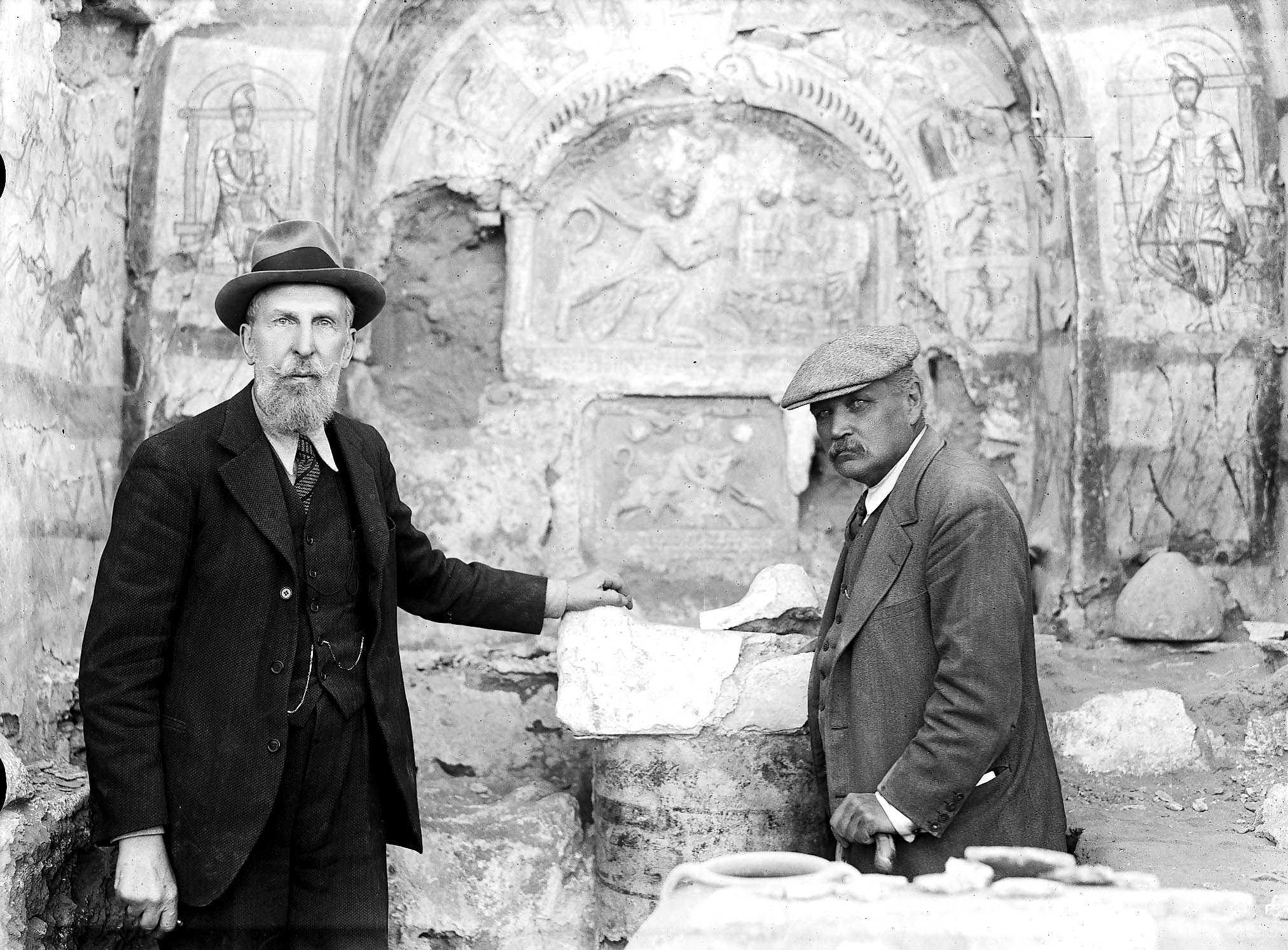
Mithraeum of Dura Europos
TNMM 34
The most emblematic of the Syrian Mithraea was discovered in 1933 by a team led by the Russian historian Mikhaïl Rostovtzeff.