
Biography
of Libeianos
- Libeianos, a free citizen, is attested as a Pater at the Mithraeum of Dura Europos.
- Attested at Dura Europos, Syria-Coele, Syria in 212 – 217 (TNMM 468).
TNMP 77
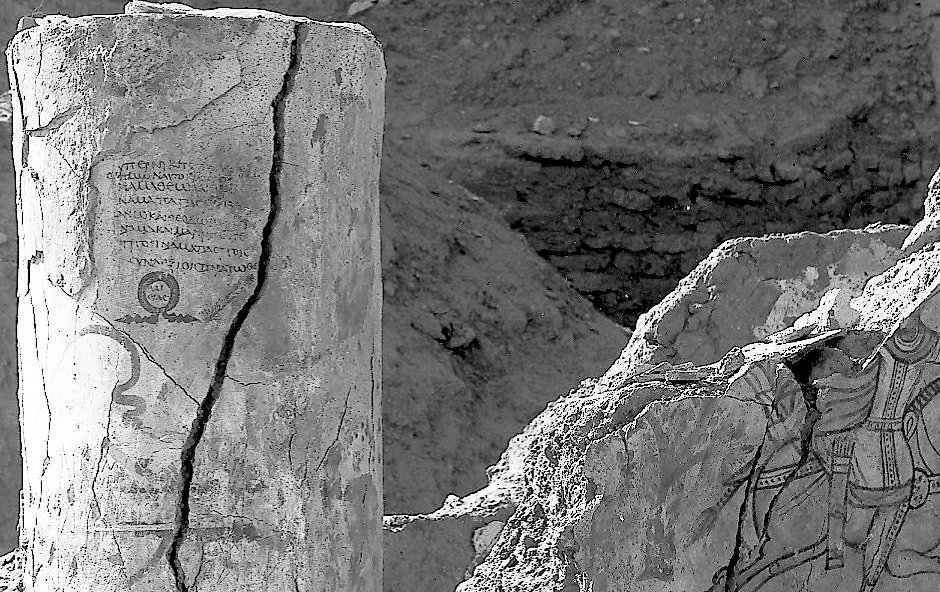
Libeianos is known from a single Greek inscription discovered in the Mithraeum of Dura Europos and dated to the reign of Caracalla (212–217 CE). The text invokes Mithras and honours two individuals identified as patres, Libeianos and Theodoros, together with Mareinos, who bears the title petitor, and all the syndexioi of the community (TNMM 468).
The inscription provides the only evidence for Libeianos and offers no information regarding his family, occupation, ethnic background or civic status. His otherwise unattested name is unusual and its origin remains uncertain. Nevertheless, his designation as pater indicates that he occupied one of the highest positions within the local Mithraic hierarchy and belonged to the leadership of the congregation that worshipped in the Dura Europos Mithraeum.
Libeianos appears during a period when the sanctuary was closely associated with the city’s military and Palmyrene communities. Beyond his participation in this dedication, however, nothing further is known about his life or career.
References
- Shrine to the God Mithras (Mithraeum).
- Frank Edward Brown, Michael Ivanovich Rostovtzeff & Charles Bradford Welles (eds.) (1939) The Excavations at Dura-Europos. Preliminary Report of the Seventh and Eighth Seasons of Work, 1933–1934 and 1934–1935.
- Franz-Valéry-Marie Cumont & Eric David Francis. ‘The Dura Mithraeum’. Mithraic Studies. Proceedings of the First International Congress of Mithraic Studies, Vol. 1, pp. 151–214.
- Lucinda Dirven (2025) ‘Dura-Europos: Past, Present, Future’. Dura-Europos: Past, Present, Future, pp 148-169.
- Lucinda Dirven (2025) ‘Dura-Europos: Past, Present, Future’. Dura-Europos: Past, Present, Future, pp 148-169, pp. 148–169.
- Michael J. Fuller (2015) The Shrine of the Holy God Mithras at Dura-Europos: A Study of Religious Interaction in Roman Syria..
Attestations
Column with inscription from Dura Europos
TNMM 468
The inscription pays homage to the emperor, probably Caracalla, to Mithras, the fathers, the petitor and the syndexioi.
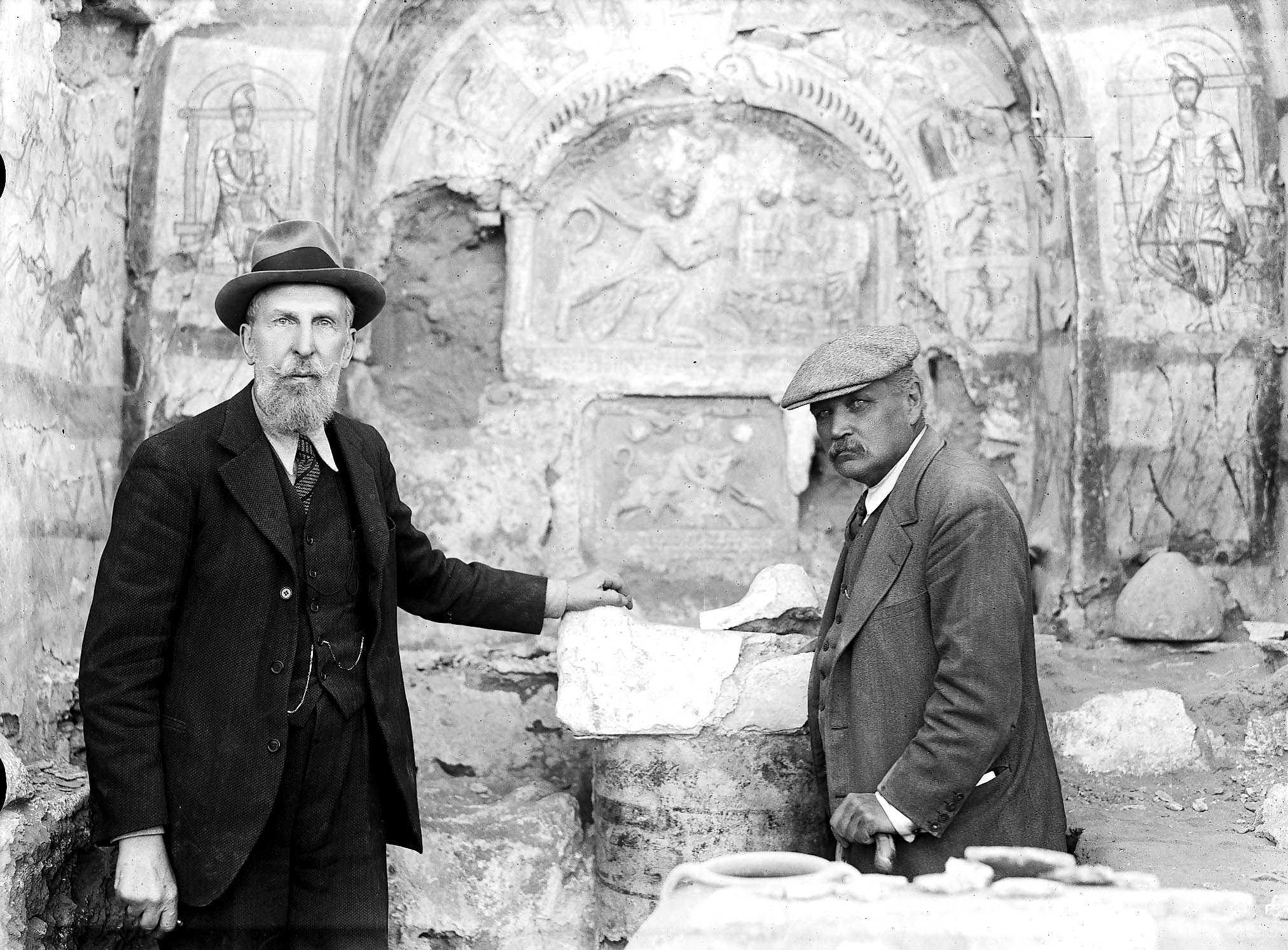
Mithraeum of Dura Europos
TNMM 34
The most emblematic of the Syrian Mithraea was discovered in 1933 by a team led by the Russian historian Mikhaïl Rostovtzeff.
