
Biography
of Theodoros
- Theodoros, a free citizen, is attested as a Pater at the Mithraeum of Dura Europos.
- Also recorded as Pater.
- Attested at Dura Europos, Syria-Coele, Syria in 212 – 217 (TNMM 468).
TNMP 78
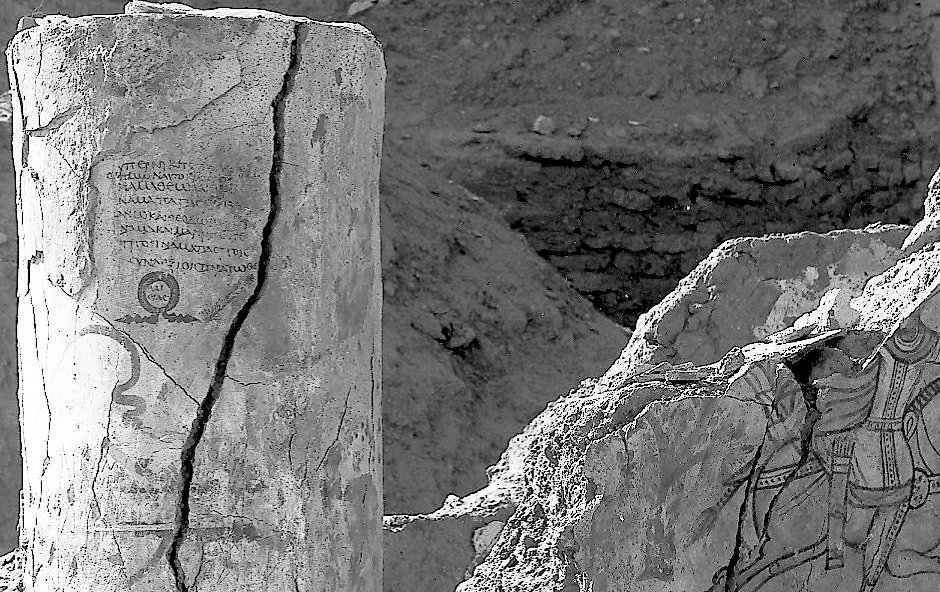
Theodoros is known from a Greek inscription discovered in the Mithraeum of Dura Europos and dated to the reign of Caracalla (212–217 CE). The text offers homage to Mithras, to the two patres Libeianos and Theodoros, to Mareinos the petitor, and to all the syndexioi gathered before the god (TNMM 468).
Although no further information survives concerning his family, profession or social background, the title pater places Theodoros among the senior members of the Mithraic community. His appearance alongside Libeianos suggests that the sanctuary was administered by more than one father at the time the inscription was carved.
Theodoros lived during a period of expansion and activity at the Mithraeum of Dura Europos, when the congregation included military personnel and members of the city’s diverse Greek, Palmyrene and local populations. Beyond this dedication, however, nothing certain is known about his life.
References
- Shrine to the God Mithras (Mithraeum).
- Frank Edward Brown, Michael Ivanovich Rostovtzeff & Charles Bradford Welles (eds.) (1939) The Excavations at Dura-Europos. Preliminary Report of the Seventh and Eighth Seasons of Work, 1933–1934 and 1934–1935.
- Franz-Valéry-Marie Cumont & Eric David Francis. ‘The Dura Mithraeum’. Mithraic Studies. Proceedings of the First International Congress of Mithraic Studies, Vol. 1, pp. 151–214.
- Lucinda Dirven (2025) ‘Dura-Europos: Past, Present, Future’. Dura-Europos: Past, Present, Future, pp 148-169.
- Lucinda Dirven (2025) ‘Dura-Europos: Past, Present, Future’. Dura-Europos: Past, Present, Future, pp 148-169, pp. 148–169.
- Michael J. Fuller (2015) The Shrine of the Holy God Mithras at Dura-Europos: A Study of Religious Interaction in Roman Syria..
Attestations
Column with inscription from Dura Europos
TNMM 468
The inscription pays homage to the emperor, probably Caracalla, to Mithras, the fathers, the petitor and the syndexioi.
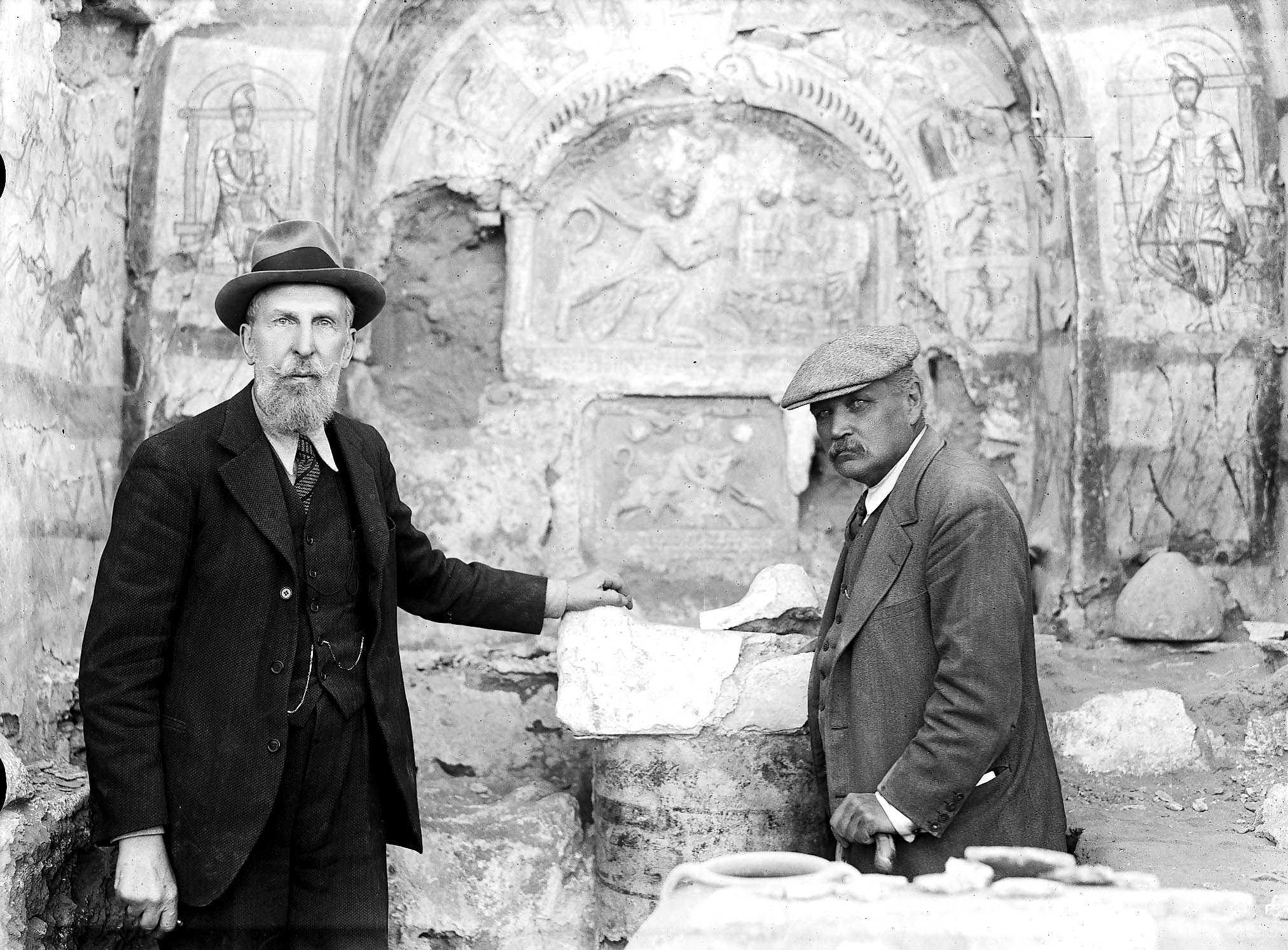
Mithraeum of Dura Europos
TNMM 34
The most emblematic of the Syrian Mithraea was discovered in 1933 by a team led by the Russian historian Mikhaïl Rostovtzeff.
