This site uses cookies to offer you a better browsing experience.
Find out more on how we use cookies in our privacy policy.

 
Support The New Mithraeum The New Mithraeum is an independent, non-profit project dedicated to Mithraic studies, ancient religions and classical culture. Developed and maintained independently since 2007, the site exists without advertising, paywalls or institutional funding. If you have found value in its articles, interviews, photographs or database, please consider supporting the project with a contribution. Every contribution helps keep The New Mithraeum open, free and alive. Thank you.
Support us →
Provincia

Mithras in Achaea

Achaea preserves some of the earliest and most culturally complex evidence for Mithraic cults in the Greek-speaking eastern Mediterranean.

The material documented in Achaea reflects the integration of Mithraic practices within the urban and intellectual environments of the Greek East. Major cities, long-standing religious traditions and maritime connections contributed to the circulation of cults across the province.
Mithraic monuments of Achaea


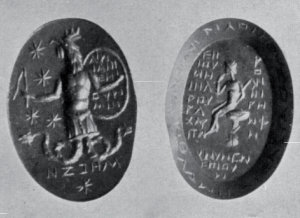
Intaglio of Abraxas and Mithras

Gnostic amulet found in the ancient Agora of Athens, depicting Abraxas on one side and a Mithraic inscription on the other.


Mithraeum of Thermes

The Mithraeum of Thermes in Greece was discovered in 1915 by Bogdan Filov.


Mithraeum of Eleusis

A Mithraeum has been identified in Eleusis where the last Hierophant form thespia had the rank of Father in the Mithraic Mysteries.


Mithraeum of Aigio

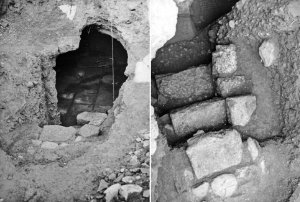
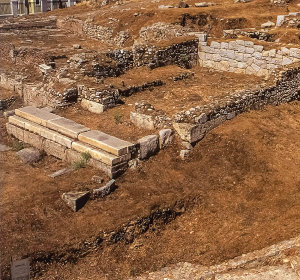
The underground cave which served as temple was cut into the conglomerate rock of the area, and a flight of eight steps of stone slabs led to it.


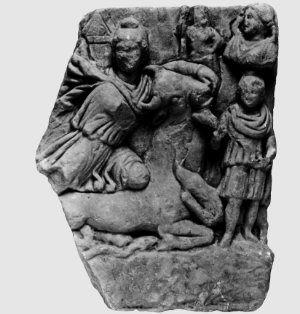
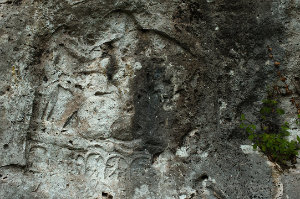
Tauroctony from Aigio

The Tauroctony of Patras was found years before the temple over which the relief of Mithras sacrificing the bull was supposed to preside.

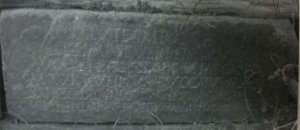
CIMRM 2351


Inscription by Aurelius Rufinus from Andros

This inscription reveals the existence of a Mithraeum on the island of Andros, Greece, which has not yet been found.

CIMRM 2350


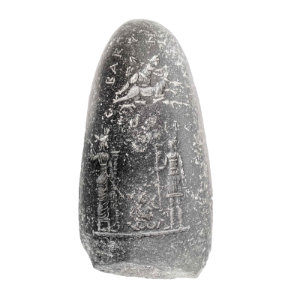
Re-used Neolithic axe-head inscribed with a Tauroctony

According to Christopher A. Faraone, the axe-head from Argos belong to a category of thunderstones reused as amulets.


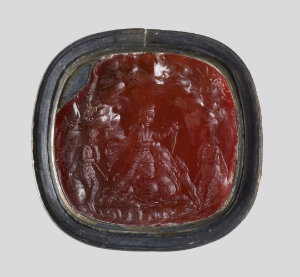
Intaglio of Mithras Tauroctonus at the Walters Art Museum

This ancient carnelian intaglio mounted in gold depicts Mithras slaying the bull surrounded by his companions Cautes and Cautopates.

CIMRM 2367


Mithraeum of Andros

An inscription by a certain Aurelius Rufinus reveals the existence of a Mithraeum on the island of Andros, but it has not yet been found.

Places in Achaea


Andros

Palaiopoli is an ancient city on the west coast of Andros in the Cyclades Islands, Greece, and was the capital of Andros, called Andros, during the Classical period.


Eleusis

Elefsina or Eleusis is a suburban city and municipality in Athens metropolitan area.


Rhodes

Rhodes is the largest of the Dodecanese islands of Greece and is their historical capital. The island has been known as Ρόδος (Ródos) which in ancient Greek was used to describe the pomegranate, whilst in modern Greek the same word is also used to de

Inscriptions from Achaea

Intaglio of Abraxas and Mithras

AΔWNAIE ABPACAE AEHIOYW IAW CABAWΘ.
O Adonai, Abraxas, AEĒIOUŌ, IAO, Sabaoth*.
* O Adonai, great Abraxas, breath of the seven vowels, IAO, God of Hosts..

Tauroctony from Aigio

Soli invic/to milites/ ..... uist/ .... esarcus
The soldiers [dedicated this] to Sol Invictus; … Vist… … Esarcus.

Inscription by Aurelius Rufinus from Andros

Pro salute imp[eratoris] Caesari[s] / L[uci] Septimi Severi et M[arci] Aur[eli] Antonini / Aug[ustorum] et P[ubli] Septimi Gaetae Caesari[s] / M[arcus] Aur[elius] Rufinus evocatus Aug[ustorum] n[ostrorum] / sancto deo invicto speleum constituit cum / mil[itibus] pr[aetorianis] Fl[avio] Clarino Ael[io] Messio Aur[elio] Iuliano.
For the salvation of the Caesar emperors Lucius Septimius Severus and Marcus Aurelius Antoninus Augustes and Publius Septimius Gaeta Caesar, Marcus Aurelius Rufinus, veteran [evocatus] of our emperors, to the pure invincible god, established the spelaeum, together with the praetorian soldiers Flavius Clarinus, Aelius Messius [and] Aurelius Julianus.

Re-used Neolithic axe-head inscribed with a Tauroctony

βακαζιχυχ
παπαφειρις
Son [or “soul”] of darkness
[Second word unkown]

References

Back to Top