Filtering by Tauroctony (Bull slaughter) in monuments gave 251 results.

The tauroctonic relief from Dragu includes a naked flying figure that Vermaseren has identified as Phosporus or Lucifer.
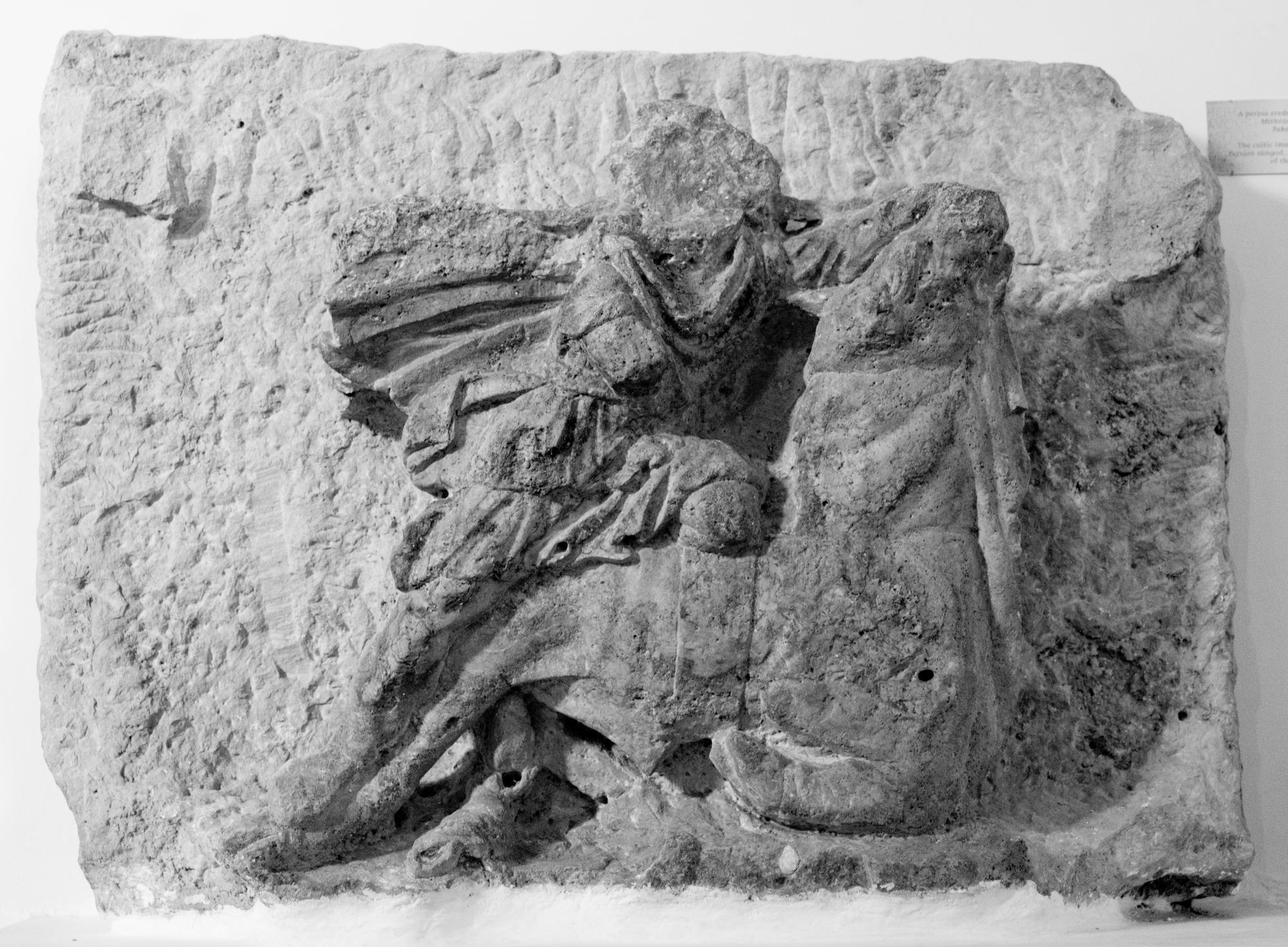
Relief showing Mithras slaying the bull, found at Paks in Roman Pannonia, modern-day Hungary.
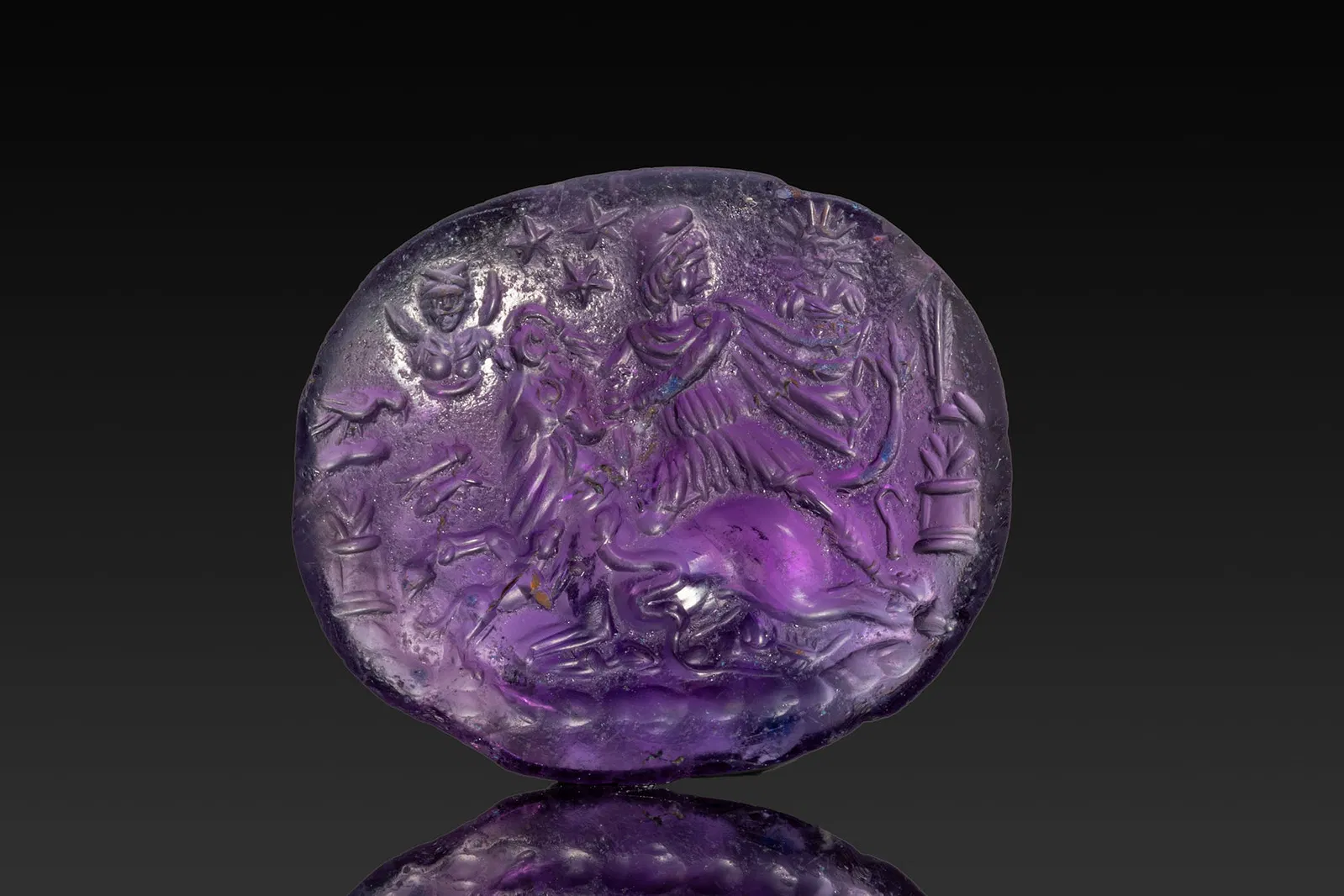
Amethyst intaglio engraved with Mithras slaying the bull, accompanied by Sol, Luna and other canonical Mithraic symbols.
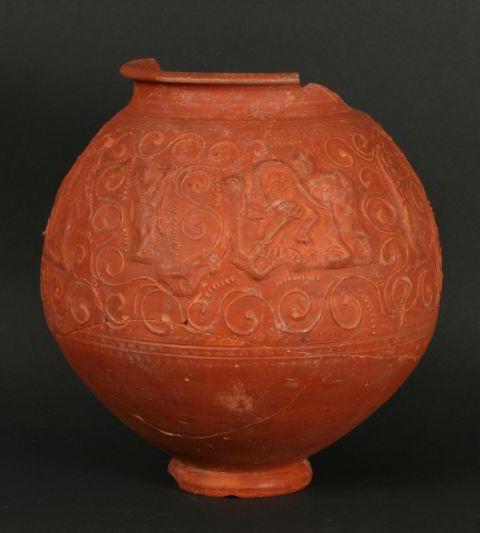
This terracotta vase features prolific decoration, including Mithras Tauroctonos, Fortuna, Cautes, a dog and Pan playing a syrinx.
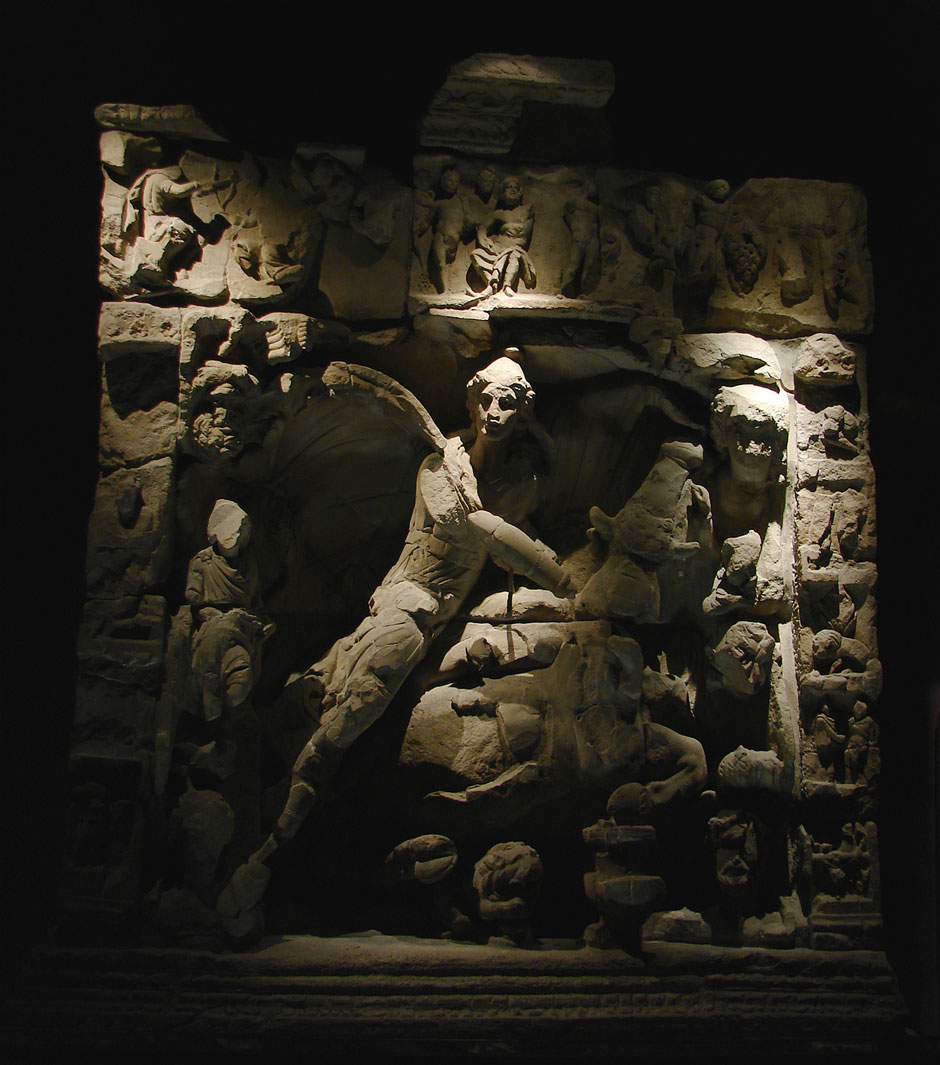
The Tauroctony of Saarbourg (Sarrebourg, ancient Pons Sarravi), France, contains most of Mithras deeds known in a single relief.

Two marble fragments from a small statuette discovered at Artashat in 1971 and later interpreted as possible remains of a tauroctony.
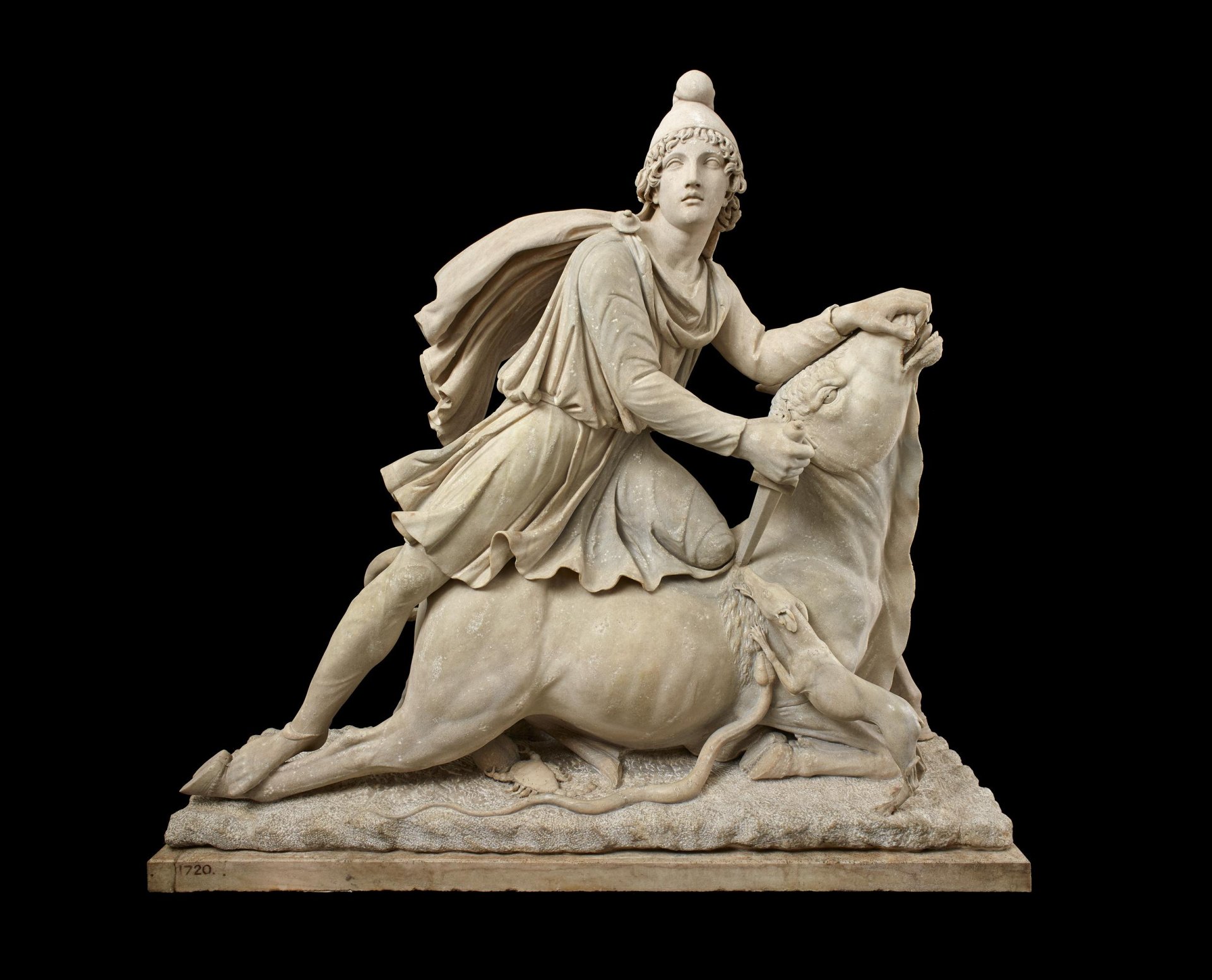
The sculpture of Mithras slaying the bull was transported from Rome to London by Charles Standish in 1815.
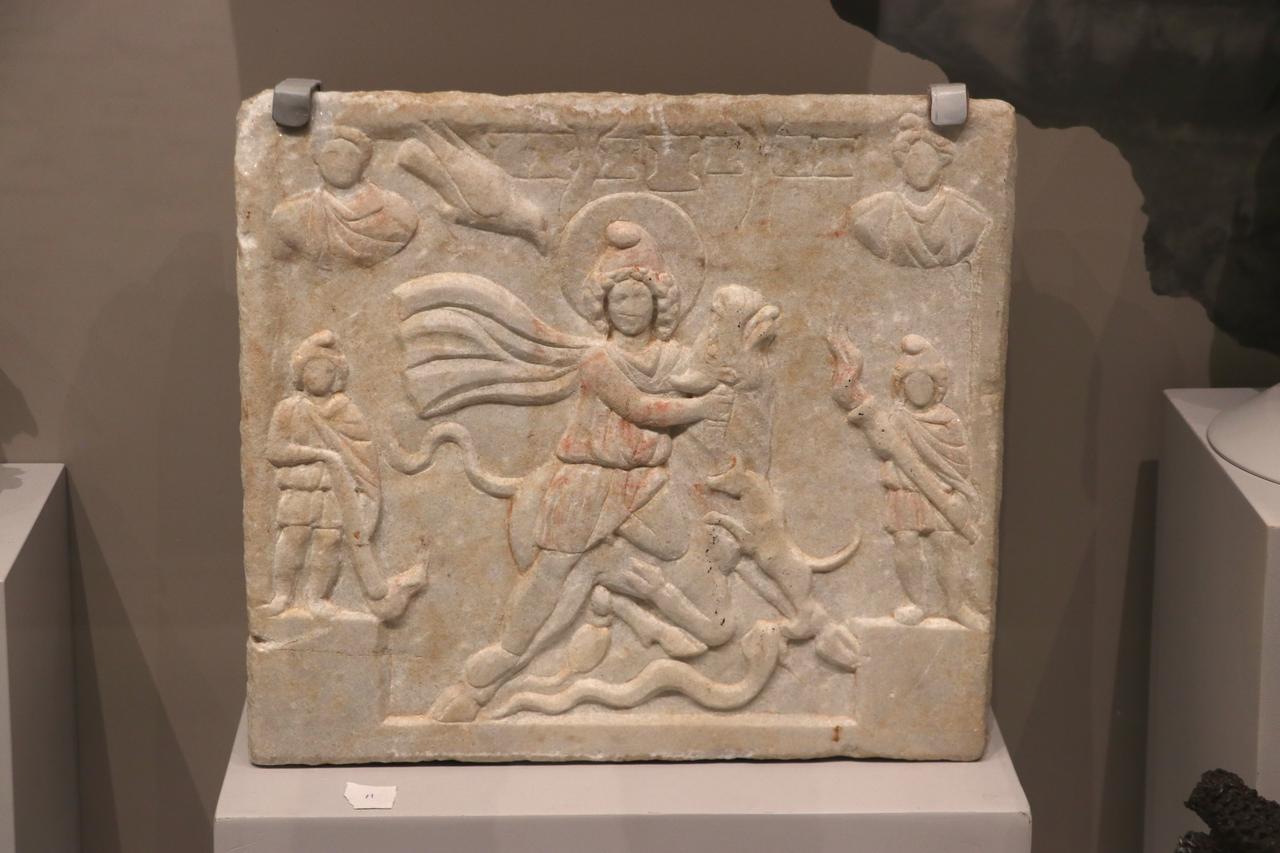
A marble tauroctony discovered in the military quarter of ancient Zeugma, providing the first known evidence for the cult of Mithras at the city.
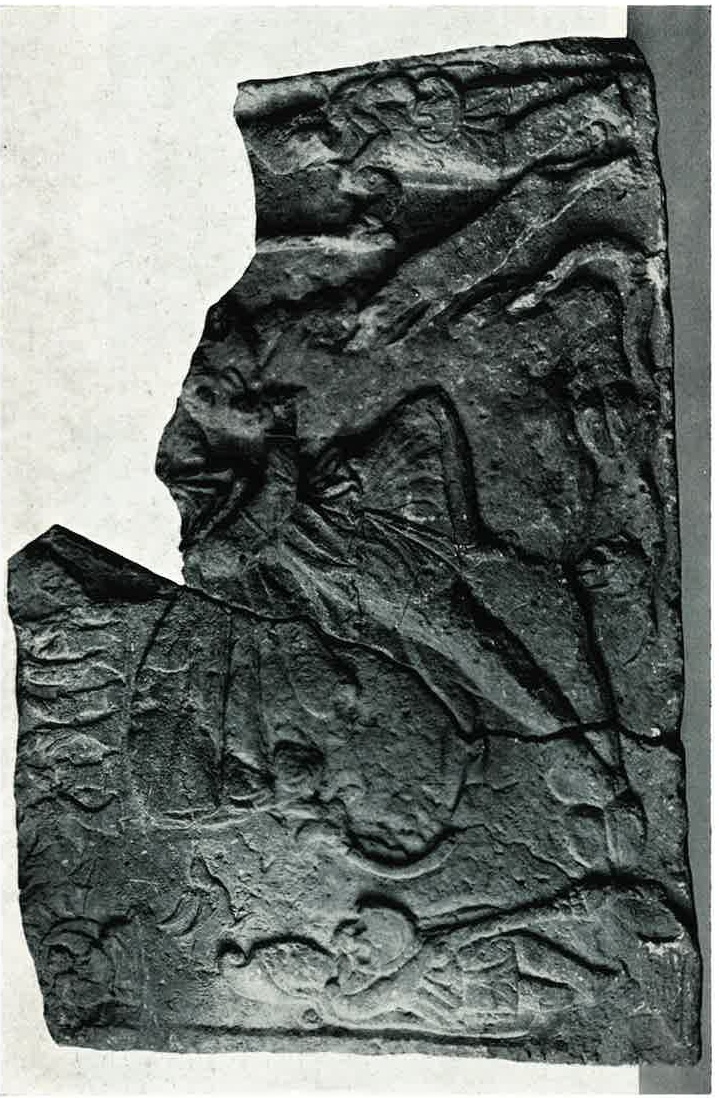
Marble relief from the Mithraic sanctuary founded by brothers Marcus Aurelius Frontinianus and Marcus Aurelius Fronto.
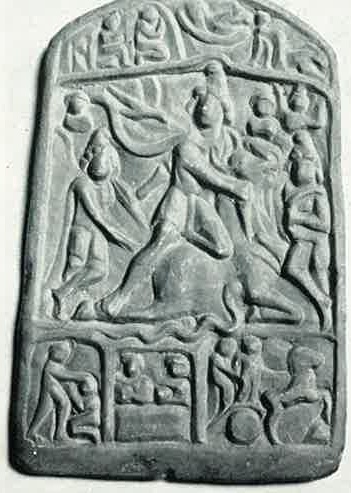
Small marble relief from Alcsút, near modern Alcsútdoboz, combining the central tauroctony with scenes of Mithras’ deeds, including the water miracle, sacred meal and ascent in Sol’s chariot.
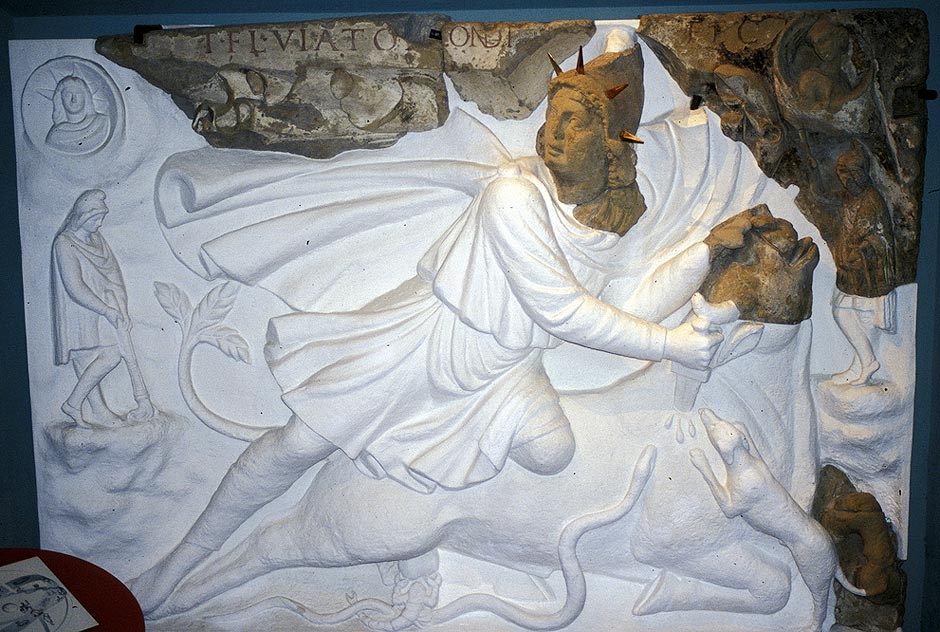
Monumental painted tauroctony dedicated by Titus Flavius Viator, with traces of its original polychromy and fittings for metal rays on Mithras’ Phrygian cap.
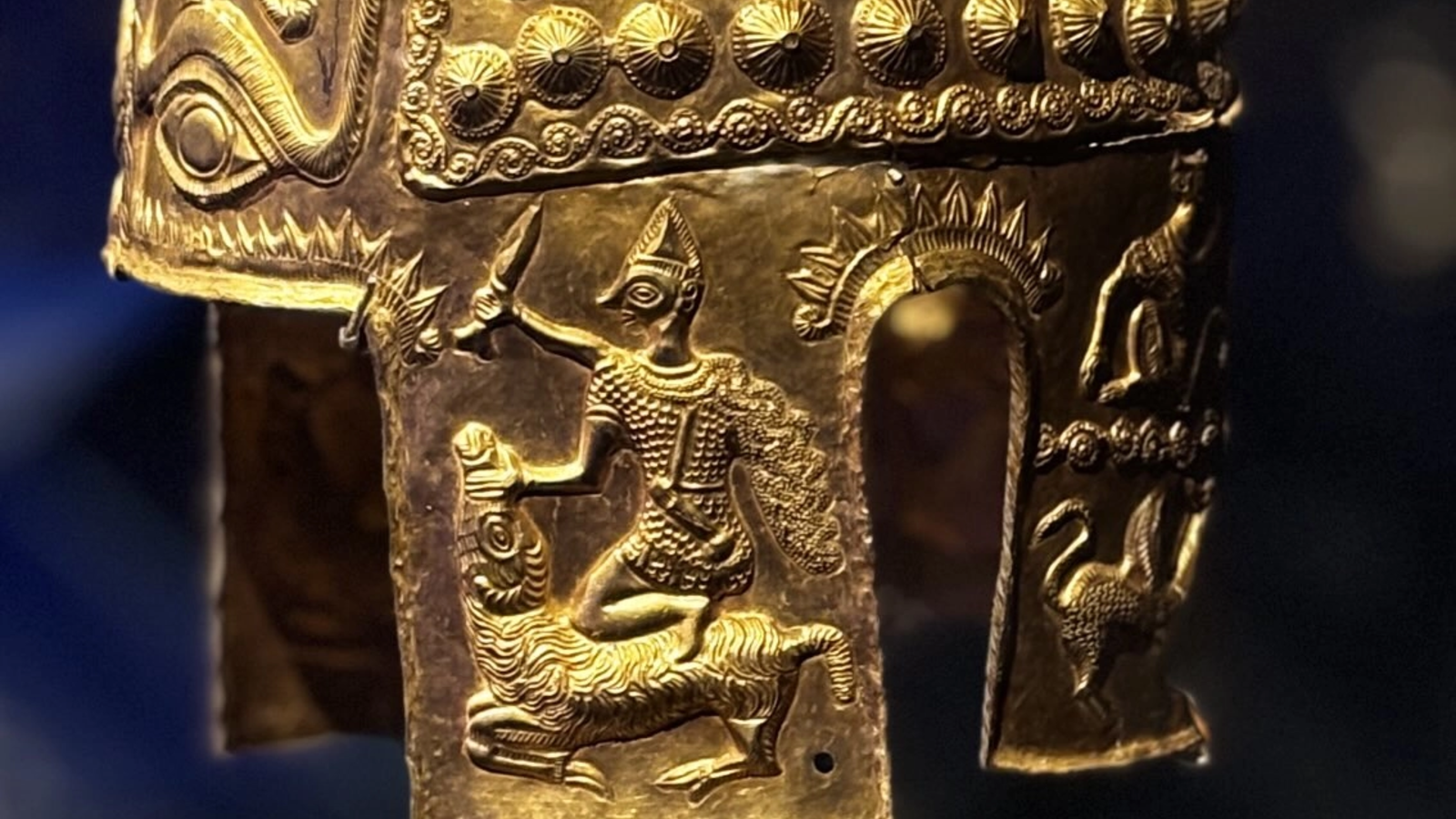
A Getic ceremonial gold helmet bearing a ram-sacrifice scene proposed by some scholars as a possible iconographic precursor to the Mithraic tauroctony.
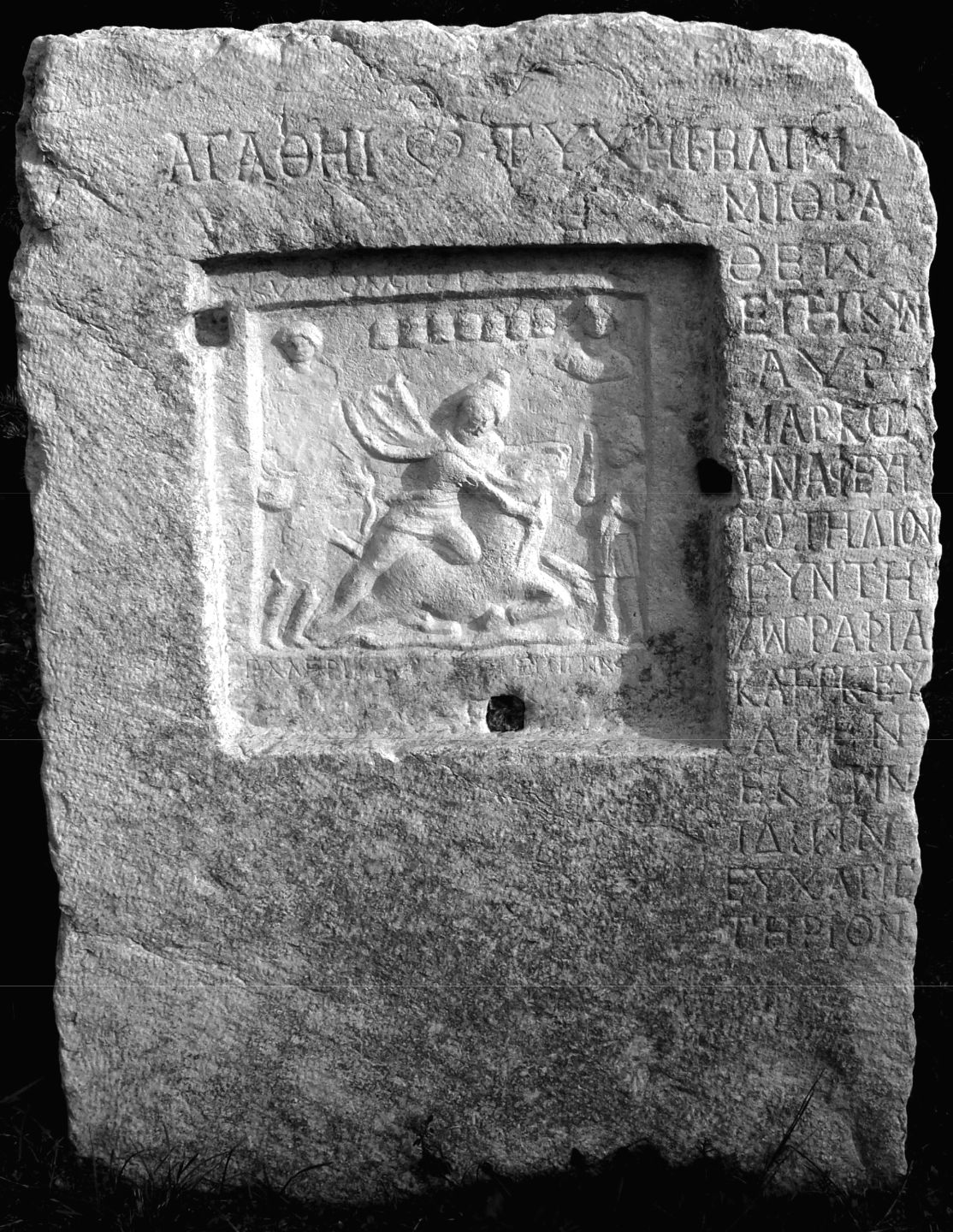
The Tauroctony of Nicopolis ad Istrum is a rare Mithraic stele bearing two Greek dedications from different phases of its use.
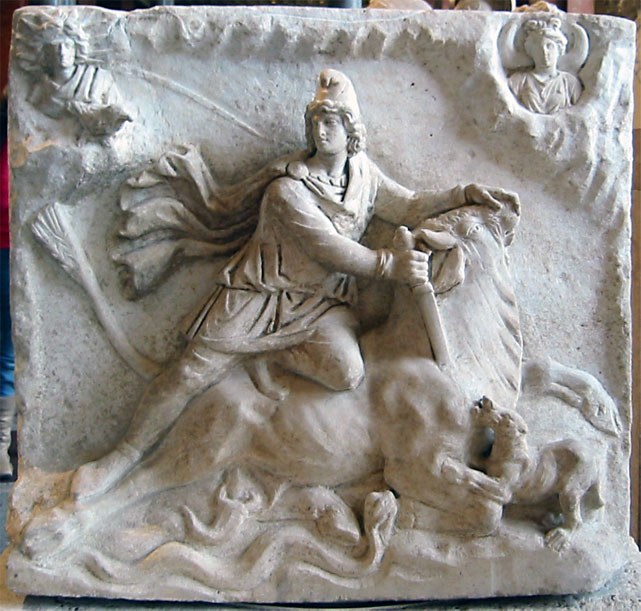
The marble shows Mithras slaying the bull, on one side, and Sol and Mithras feasting on a bull skin, on the other.
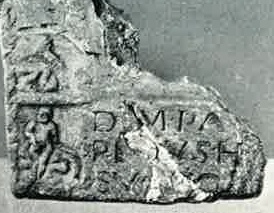
Fragmentary two-sided Mithraic relief depicting the rock-birth, Zodiac and other mythological scenes from Stockstadt.

Relief of bluish marble in the Casino of the Villa Doria Pamphili showing Mithras slaying the bull with the usual animals, cross-legged torchbearers, and Sol in a quadriga and Luna in a biga in the upper corners.
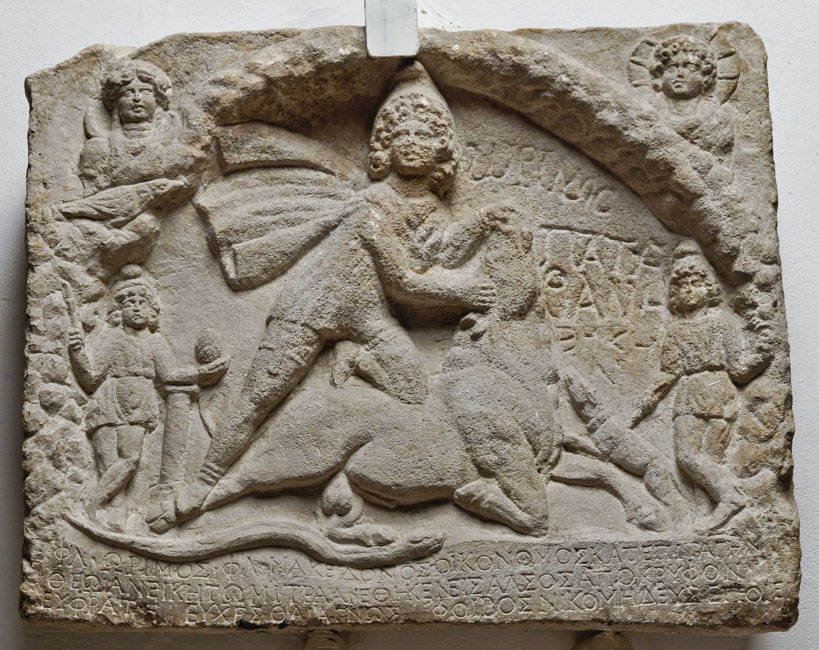
This limestone relief of Mithras killing the bull bears an inscription by a certain Flavius Horimos, consecrated in a ’secret forest’ in Moesia.
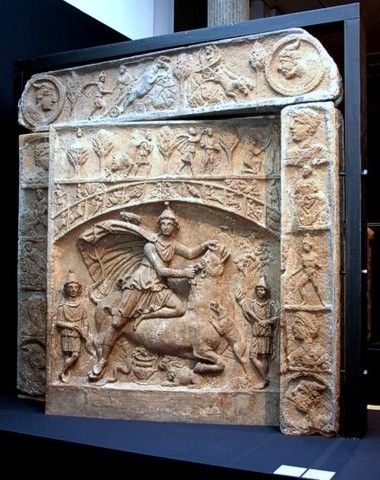
This relief is so well-known that it has been reproduced in nearly every handbook of archaeology and of history of religions.
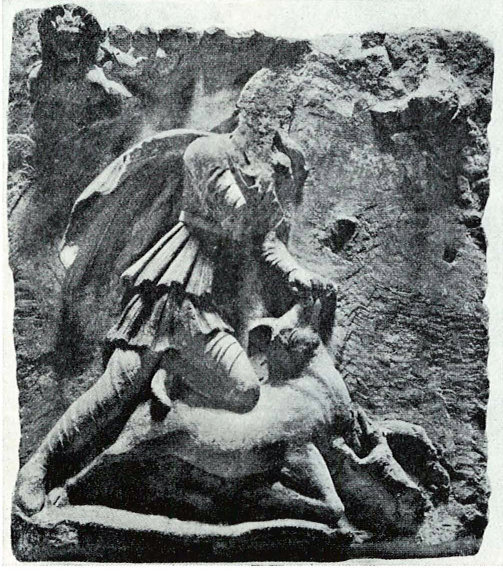
Limestone tauroctony relief from the Mithraeum of Memphis, depicting Mithras sacrificing a small bull inside a rocky cave.
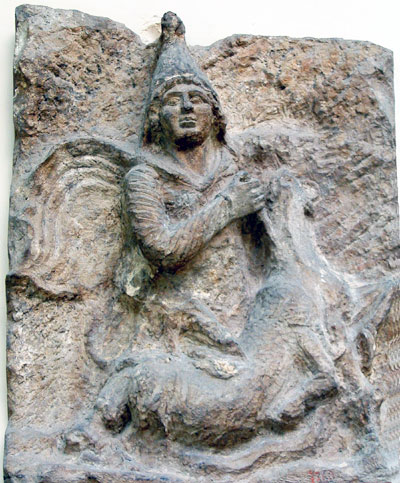
Primitive limestone tauroctony relief from the Mithraeum of Memphis, preserving a simplified representation of Mithras slaying the bull.
