Your selection gave 487 results.

1991-2005 Grabungstechniker - Archaeological Site Supervisor LVR - APX Xanten / LAND GmbH

A Romano-Germanic woman whose inscription became central to debates on female participation in the Mithraic cult.
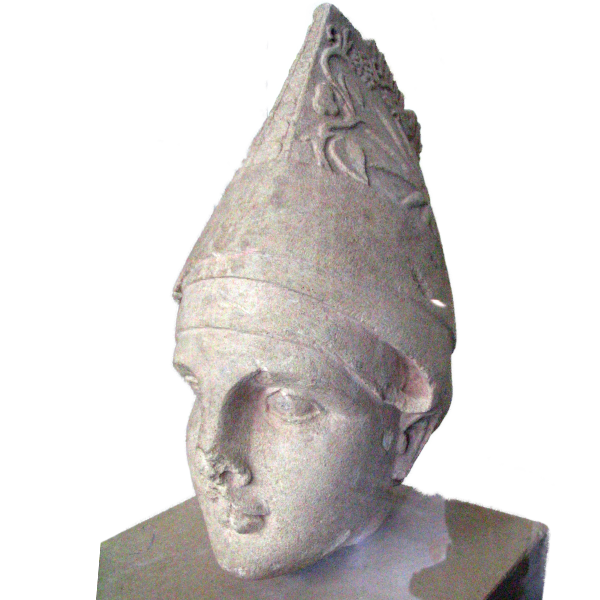

Roman centurion who supervised the Severan reconstruction and expansion of the Mithraeum of Dura-Europos.

Pater who consecrated the Mithraeum of Gimmeldingen during the final phase of Mithraic worship in the Rhineland.

Pater of the Mithraeum of Lucretius Menander at Ostia, honoured by a dedication from Diocles in the late second or early third century CE.

Mithraic devotee known from Dacia and tentatively associated with inscriptions from Rome and Poetovio.


A votive altar dedicated to Deus Invictus Mithras by Paterna, among the few women explicitly associated with Mithraic worship.
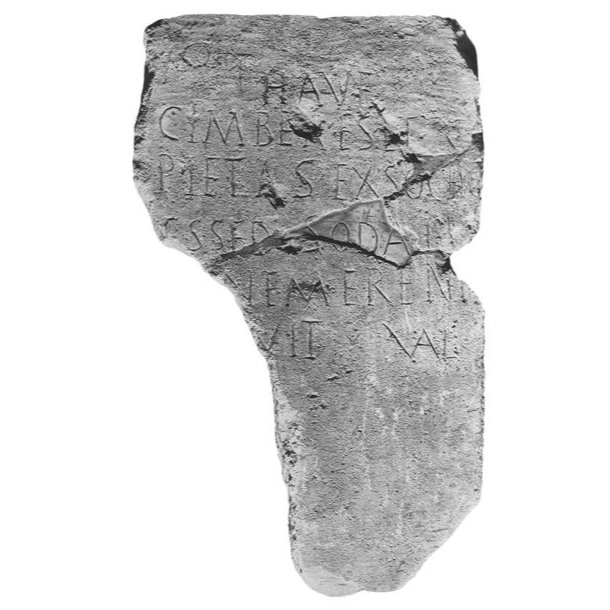
This monument with an inscription by two individuals was found in the first mithraeum of Cologne, Germany.
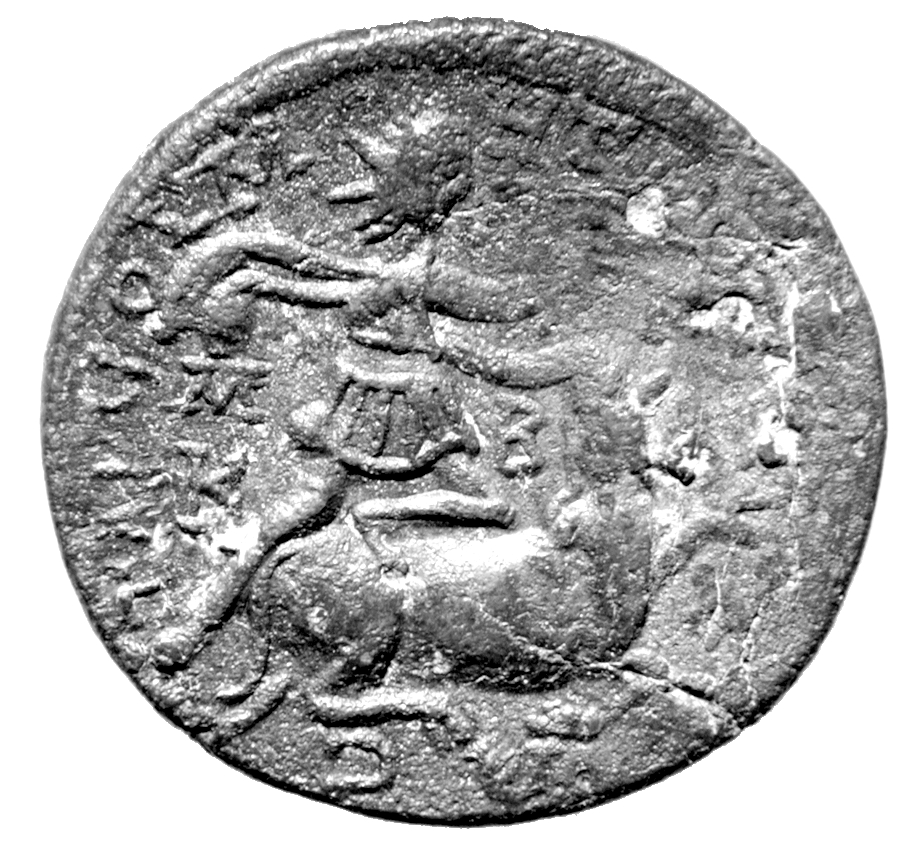
The bronze medallion, from Cilicia, shows Mithras Tauroctonus on the revers.
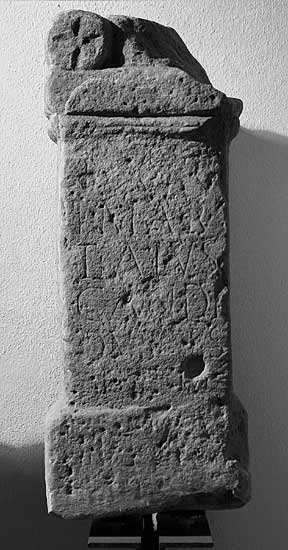
Bright red sandstone altar from Mithraeum II at Stockstadt dedicated to Deo Cauti by Titus Martialius Candidus, found near the north podium.
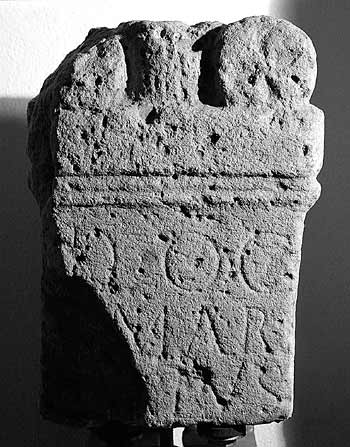
These two inscriptions by a certain Titus Martialius Candidus are dedicated to Cautes and Cautopates.

Member of a Mithraic community at Stockstadt who dedicated altars to Cautes and Cautopates.
Fragment of a sandstone relief from Nida-Heddernheim depicting the torchbearer Cautopates.

Zwiefalten belongs to the upland territory historically associated with the province of Raetia.
Wahlheim lies within the Upper Germanic frontier zone and has produced material from the Roman period.
The vicus Altiajensium formed part of the civilian settlement network associated with the Rhine frontier.
Tabernae became an important settlement and production centre in the Rhine frontier region.
Solicinium occupied an important position within the frontier region of southwestern Germania.
