Your search Al-Bahnasa gave 3013 results.

Oxyrhynchus, also known by its modern name Al-Bahnasa, is a city in Middle Egypt located about 160 km south-southwest of Cairo in Minya Governorate.
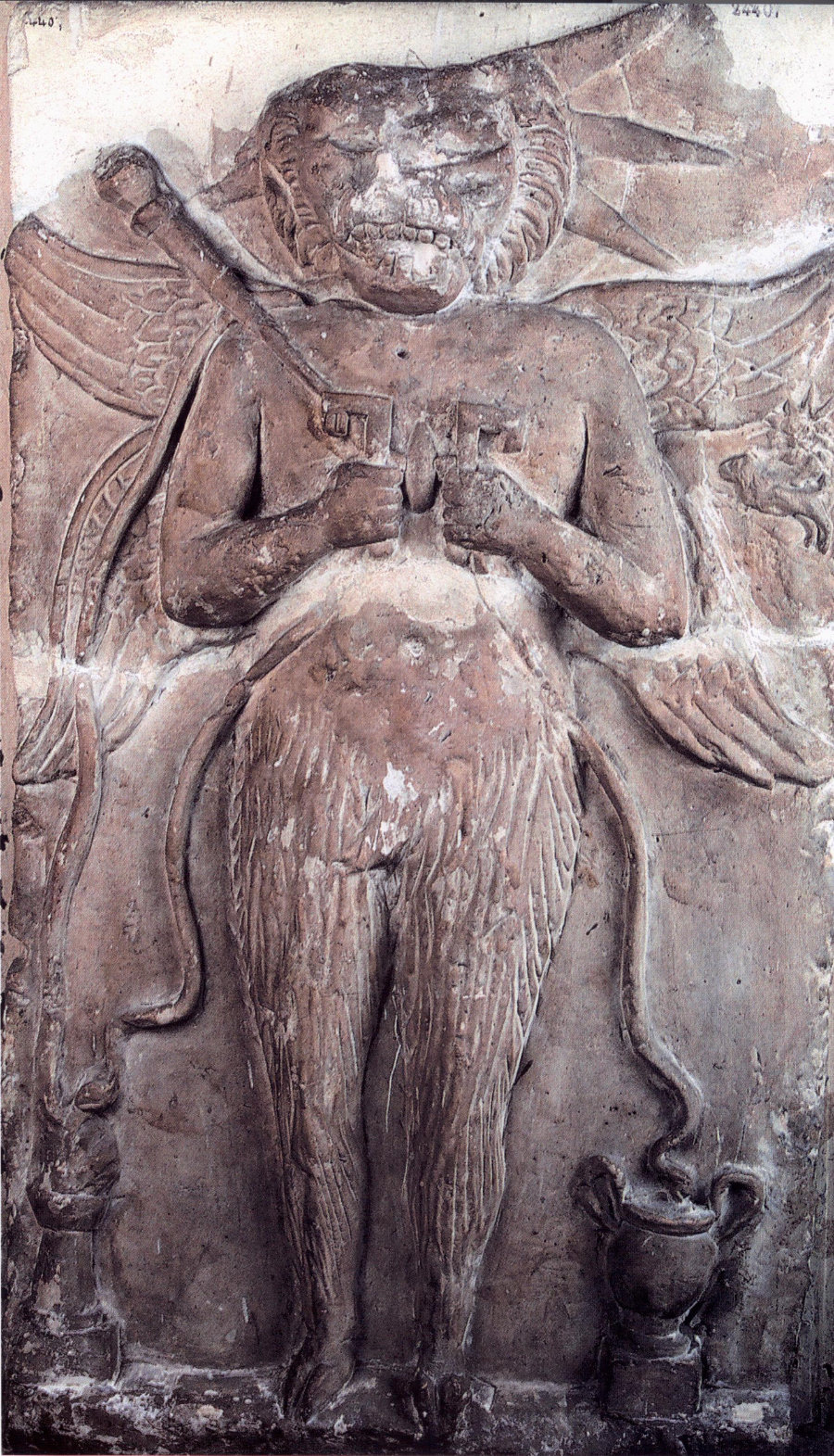
Limestone relief from ancient Oxyrhynchus depicting a four-winged lion-headed deity with keys, torch and three serpents, one of which emerges from the god’s mouth towards a burning altar.
It is only when the penis stands up straight, that it emits semen, the source of life. It is then called the phallus and has been considered, since earliest prehistory the image of the creative principle, a symbol of the process by which the Supreme

Guides, maps and additional information on the Basilica, the Mithraeum and the archaeological area of San Clemente.
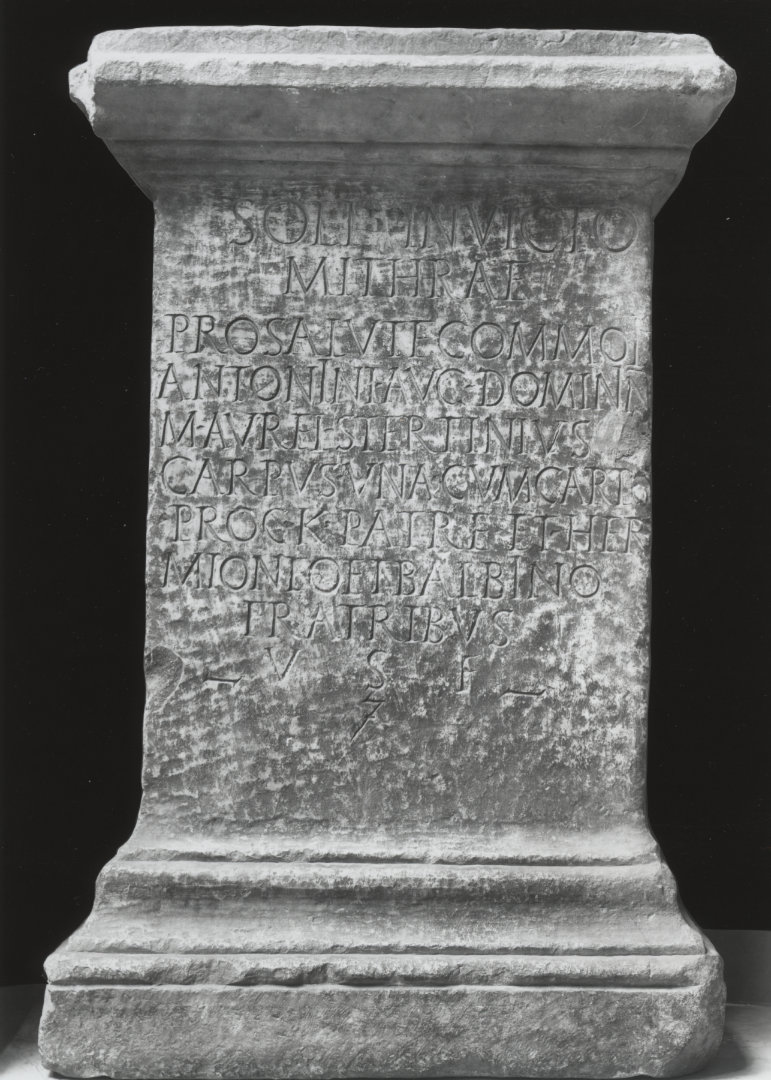
This altar bears an inscription to the health of the emperor Commodus by a certain Marcus Aurelius, his father and two other fellows.
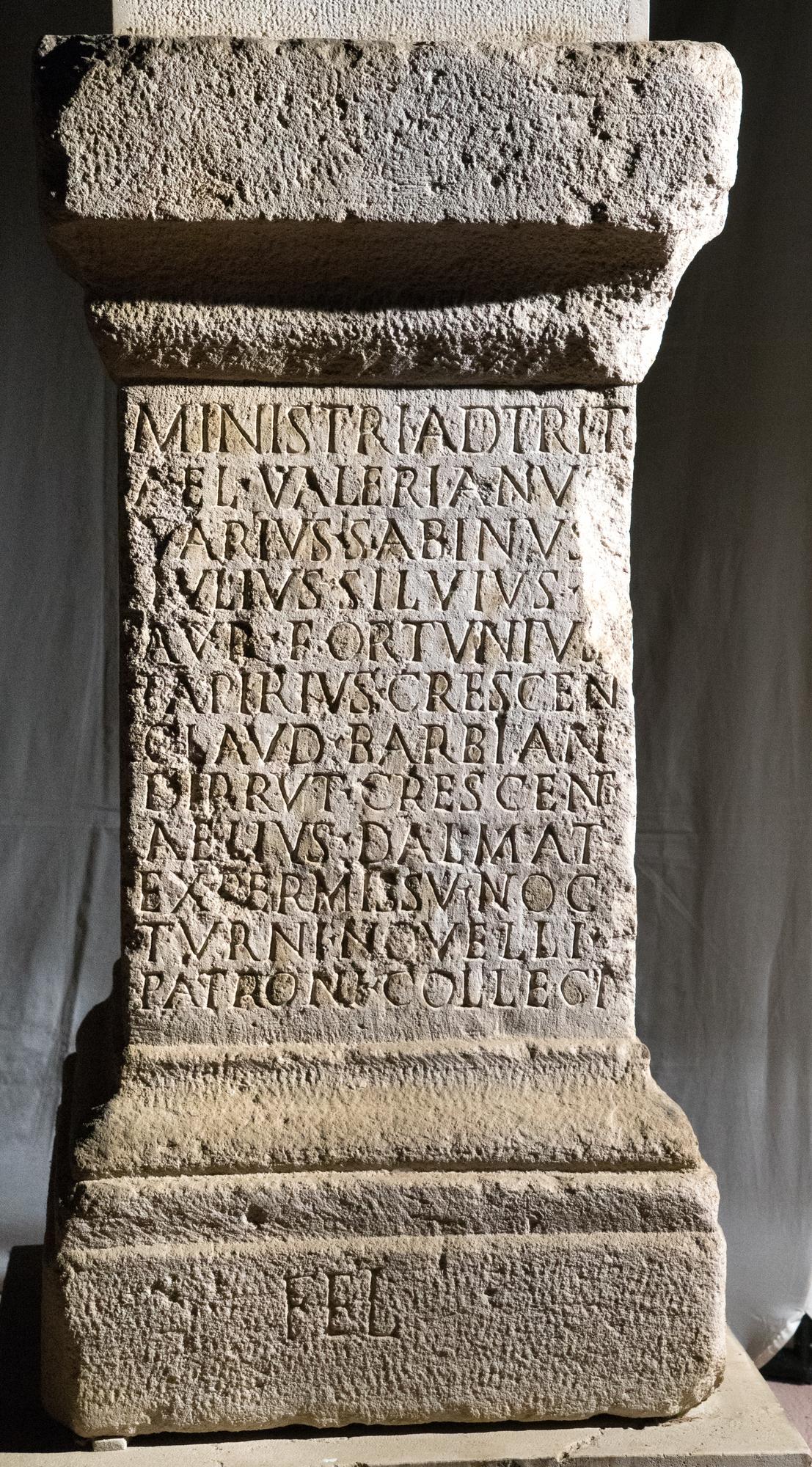
This inscribed limestone altar from Roman Salona preserves several lists of ministers associated with the Tritones collegium during the Tetrarchic period.
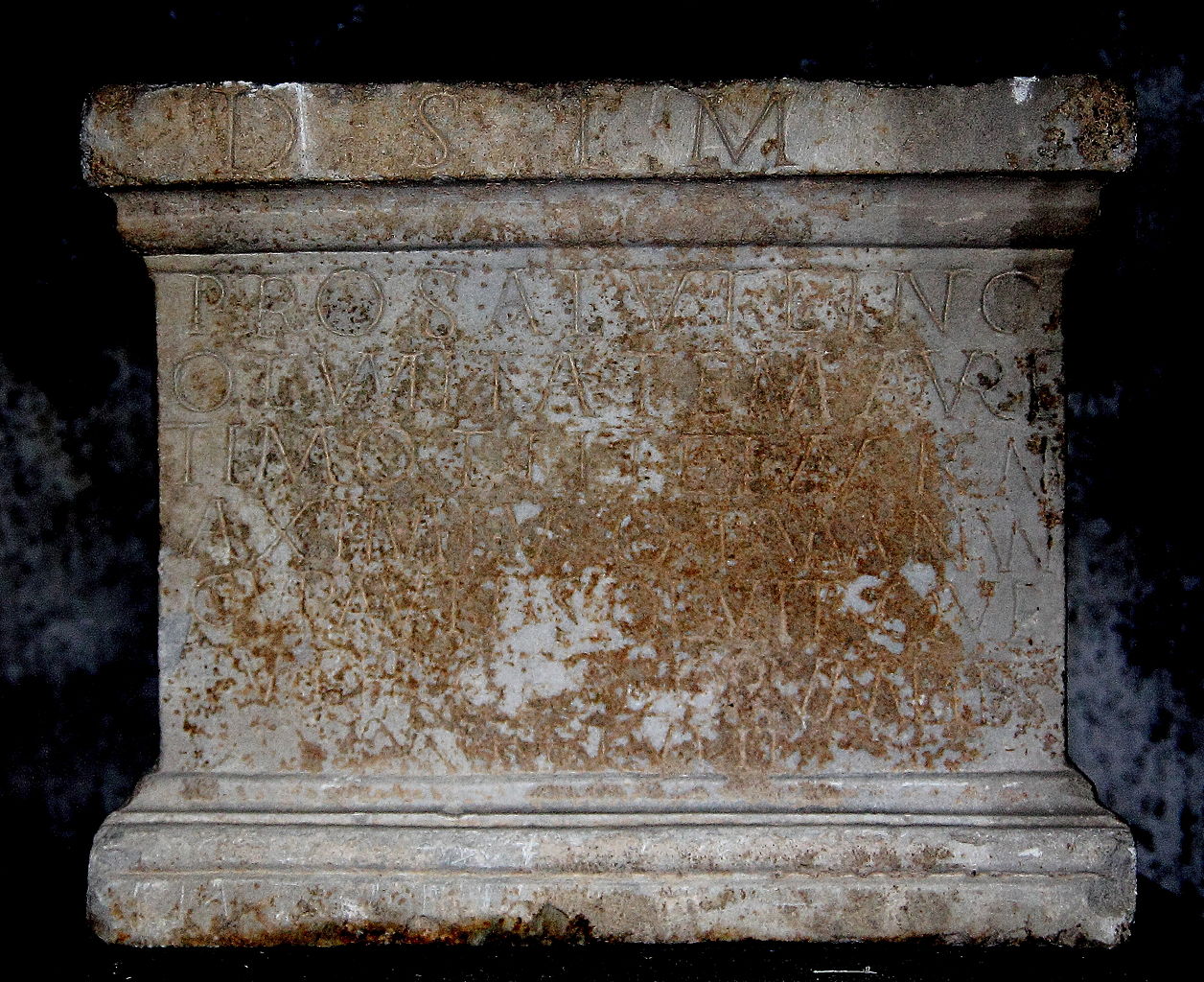
Mithraic stele, from Alba Iulia, Romania, with inscription.
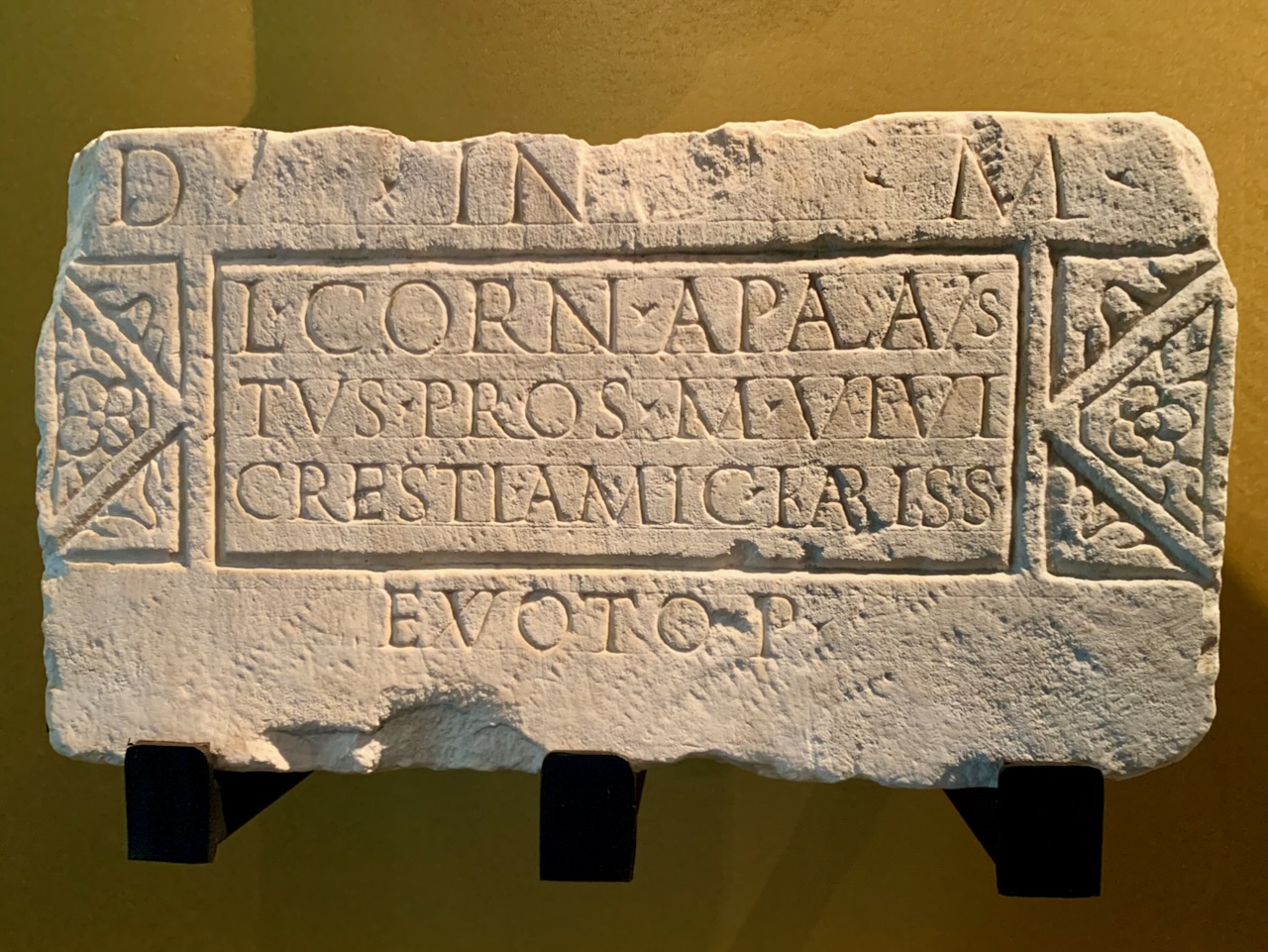
The altar that now stands in Split was dedicated to Invincible Mithras for the health of a dear friend.
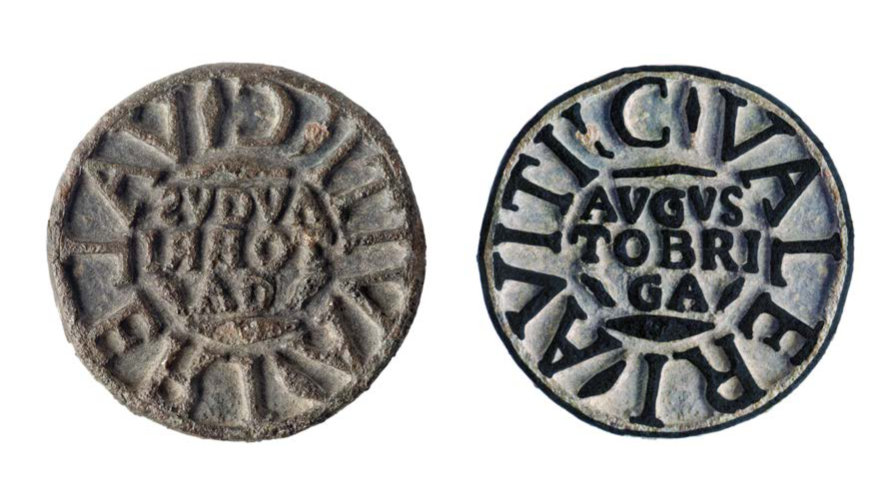
Bronze personal seal of a duovir of Tarraco and owner of the villa of Els Munts.

Five fragments of a red terra-sigillata vessel showing Cautopates with his torch pointing downwards, in Eastern attire and cross-legged, with the hoof of the bull's hindleg before him, found at Alesia (Mont-Auxois) in Lugdunensis.
A red terra-sigillata cup bearing a relief tauroctony of Mithras, with Cautes and Cautopates cross-legged on either side, found at Alesia (Mont-Auxois) in Lugdunensis and now kept at Saint-Germain-en-Laye.
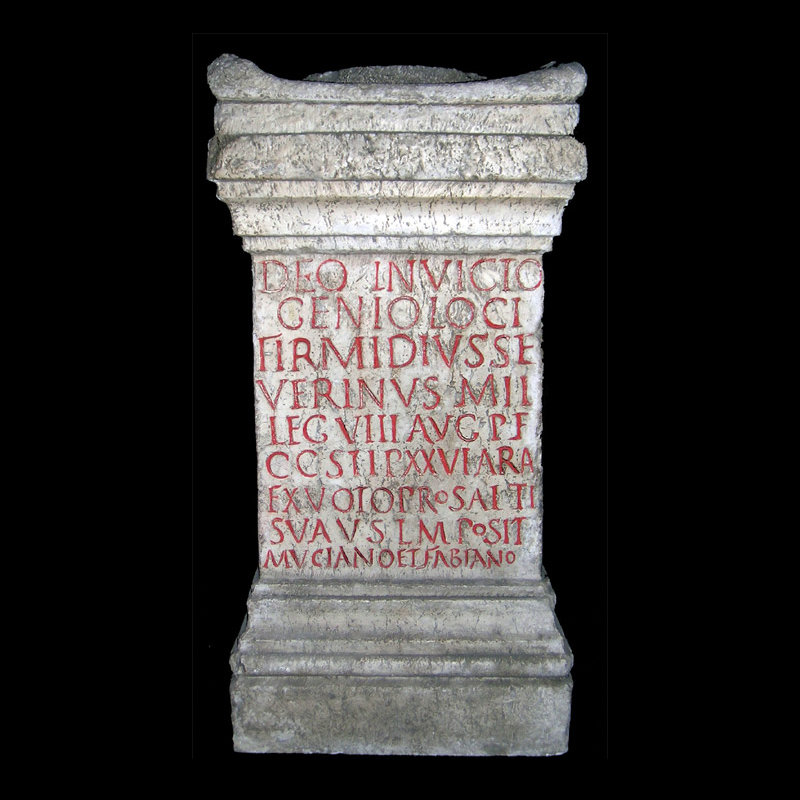
This limestone altar bears an inscription from its donor, Firmidius Severinus, in honour of Mithras after 26 years of service in the Legio VIII Augusta.
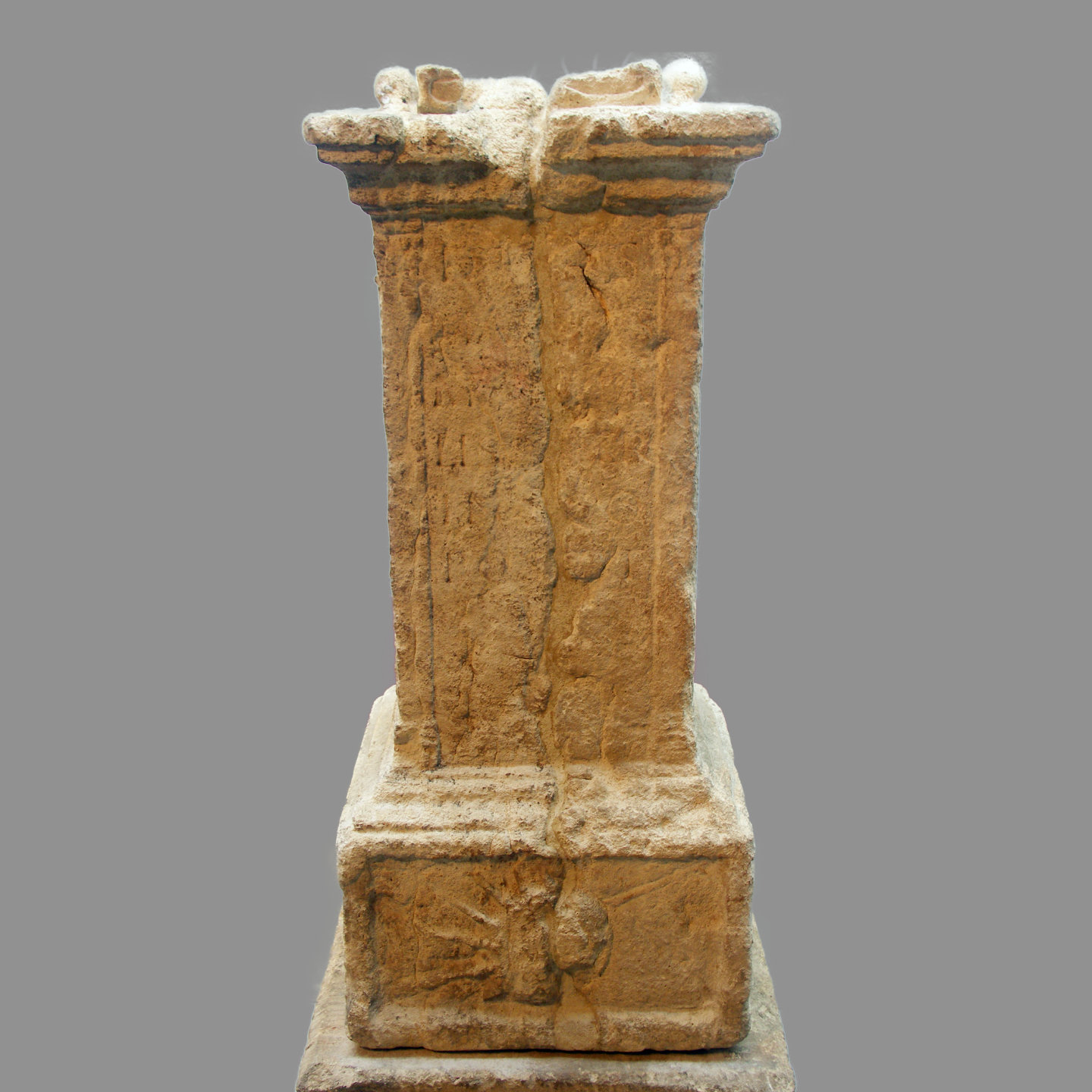
This stone altar fround in Altbachtal bears an inscription by a certain Martius Martialis.
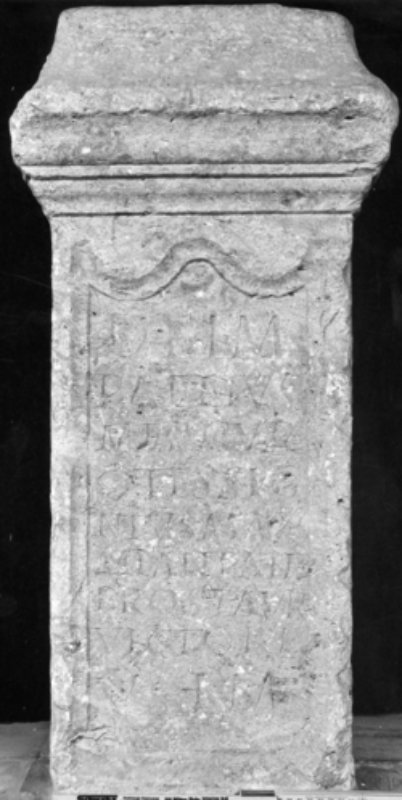
This altar to Mithras found in Aquilieia mentions several persons of a same community.
Group of Mithraic objects now preserved in the museum of the Société des Sciences de Semur at Alésia.
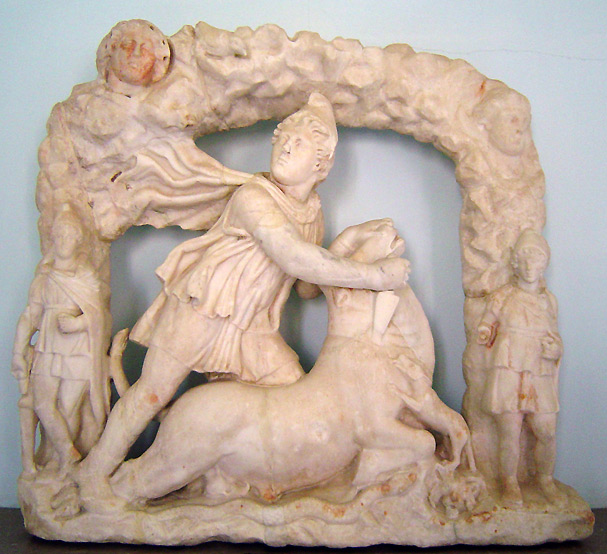
The assumed find-place of the Mithras Tauroctonus of Palermo is uncertain.
This marble tablet found at Portus Ostiae mentions a pater, a lion donor and a series of male names, probably from a Mithraic community.