Your search Al-Bahnasa gave 3015 results.
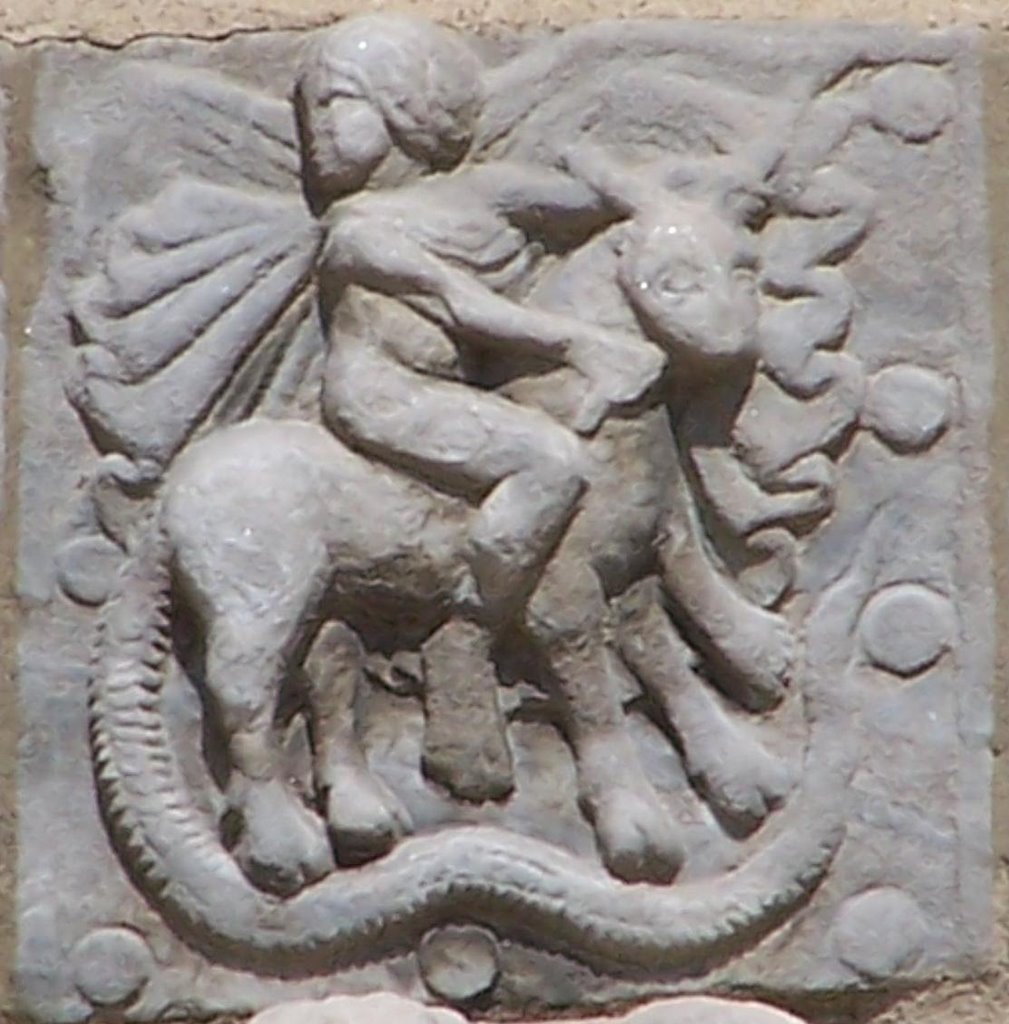
Mithras slaying the bull appears as the sign of Capricorn in a zodiacal sequence on the Pórtico del Cordero of the Abbey de Santo Domingo de Silos, Burgos, Spain.
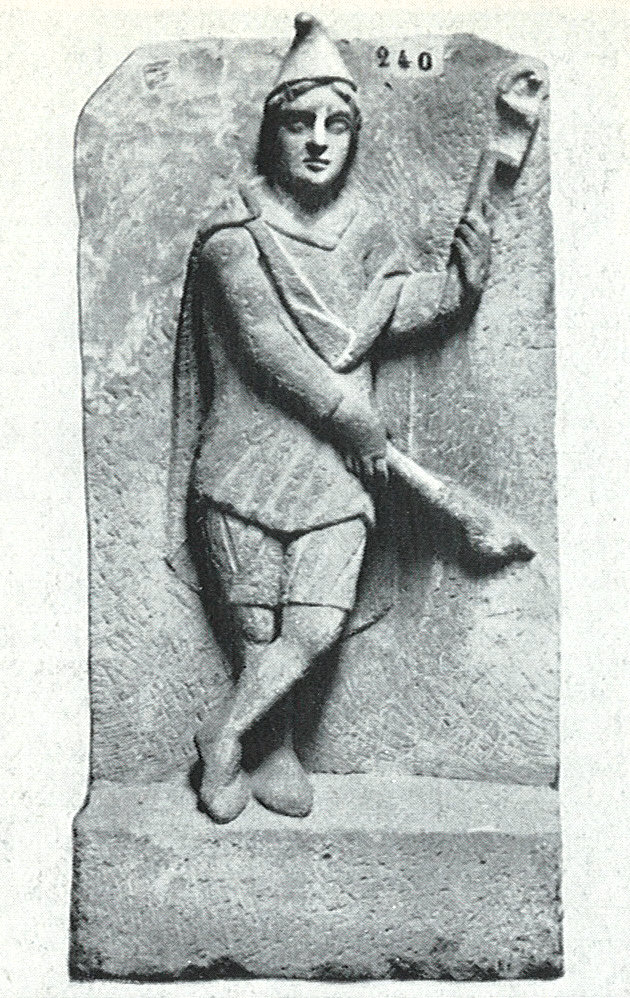
This Cautopates from Nida carries the usual downward torch in his right hand and a hooked stick in his left.
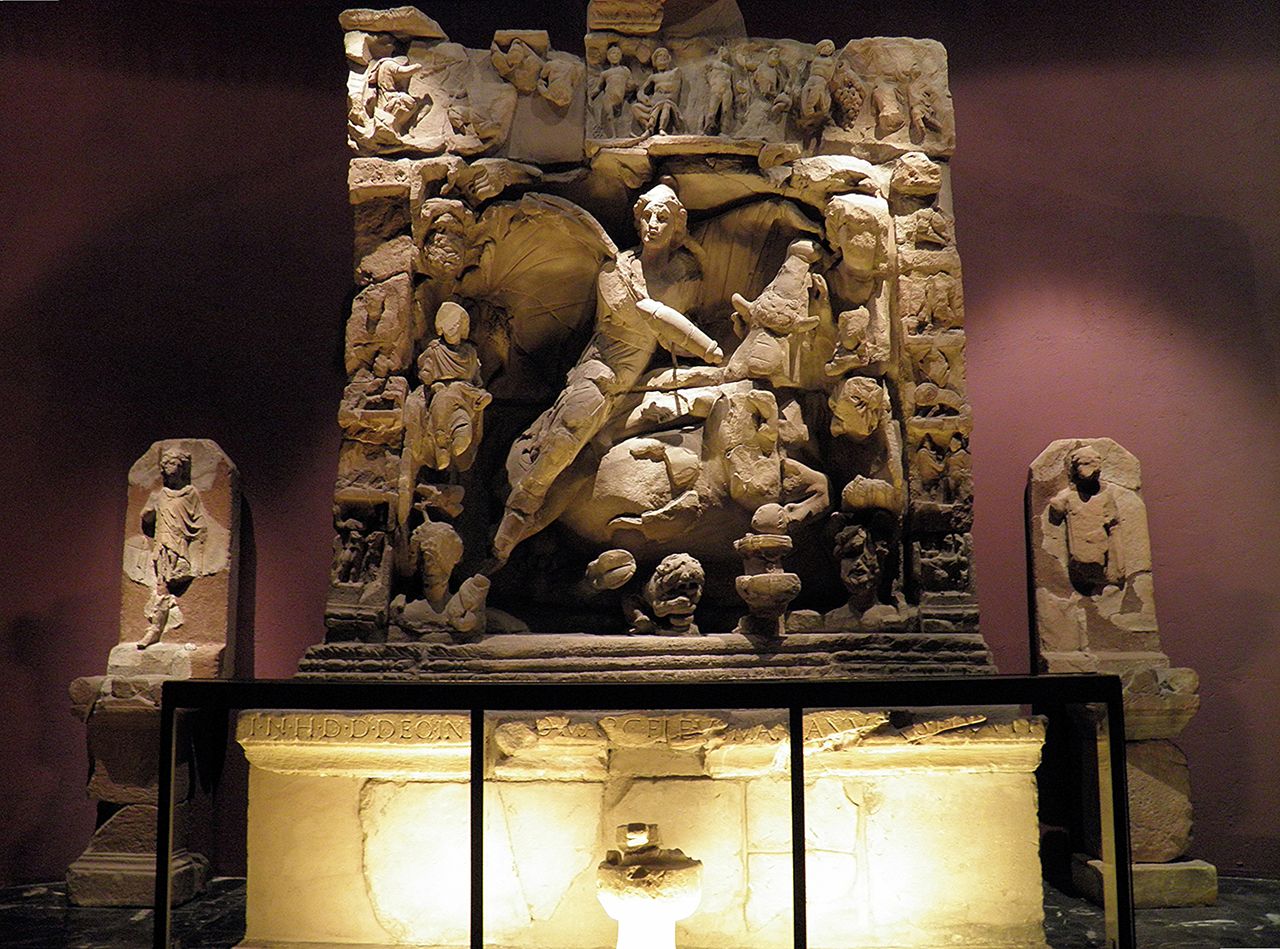
The base of these sandstone reliefs bears an inscription referring to a certain Marcellius Marianus.
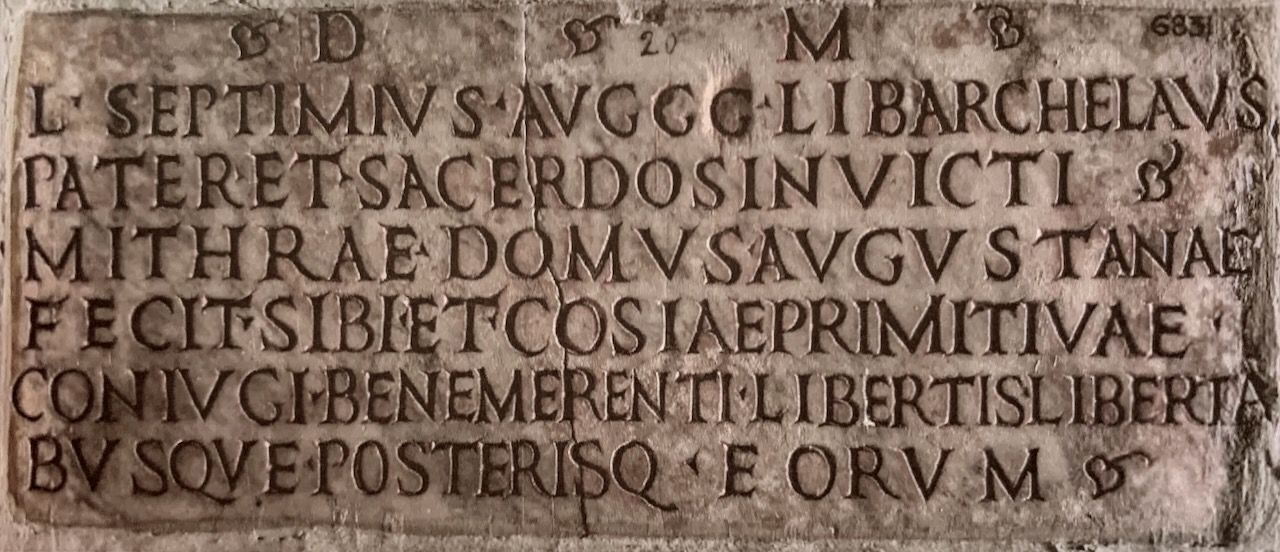
Marble funerary plaque erected by Lucius Septimius Archelaus, a Pater and priest of Mithras, for himself, his wife, and their freedmen and descendants.
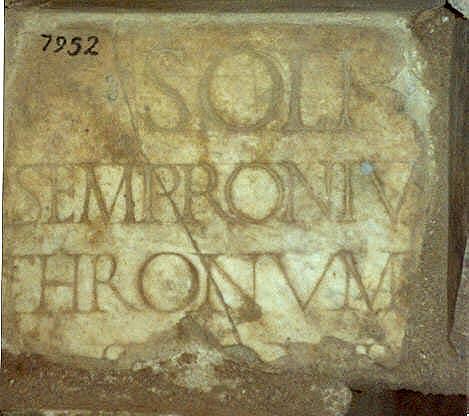
Slab marble indicates that Lucius Sempronius has donated a throne to the Mitreo delle Pareti Dipinte.
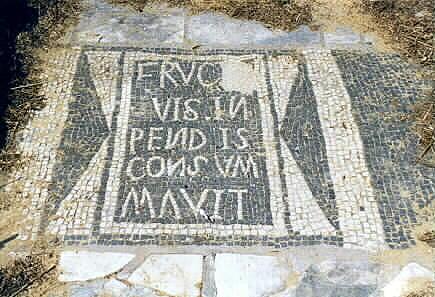
The mosaic bears an inscription indicating the name of the owner.
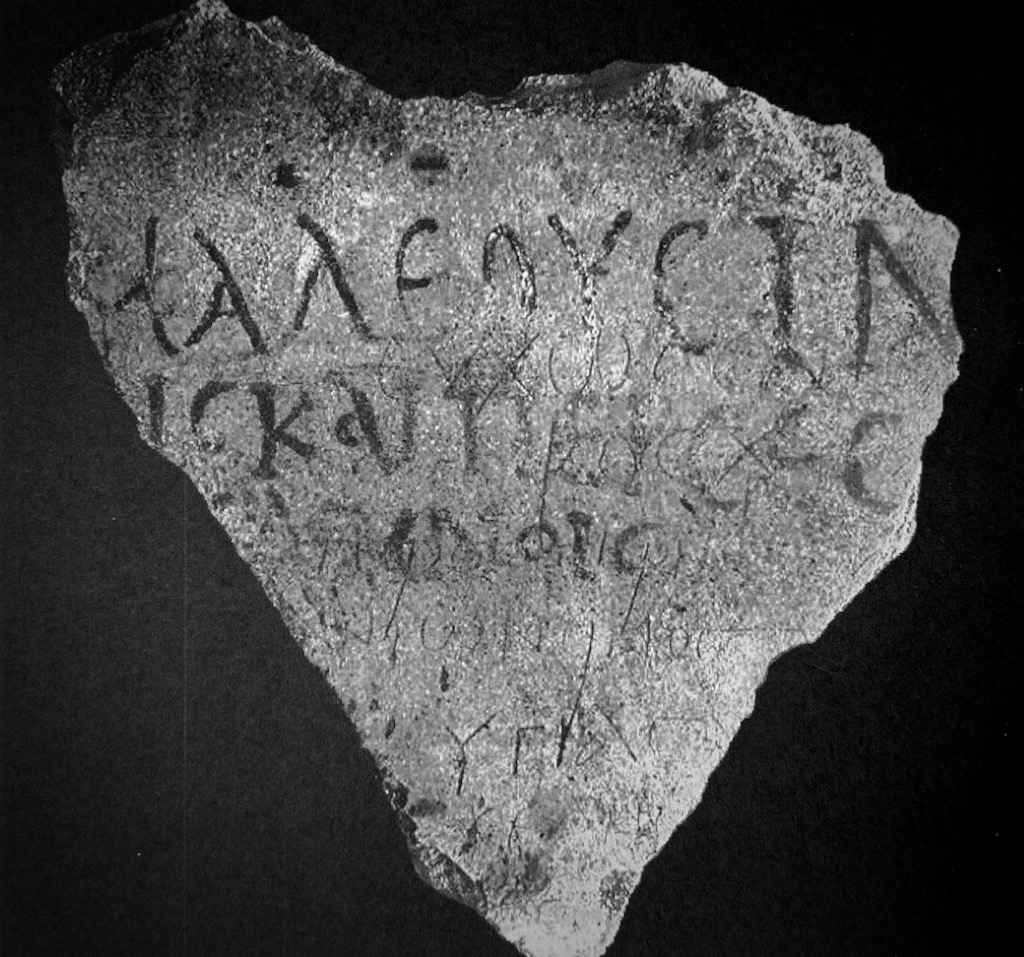
This short dipinto pays homage to the Lions and the Persians, the 4th and 5th Mithraic degrees.
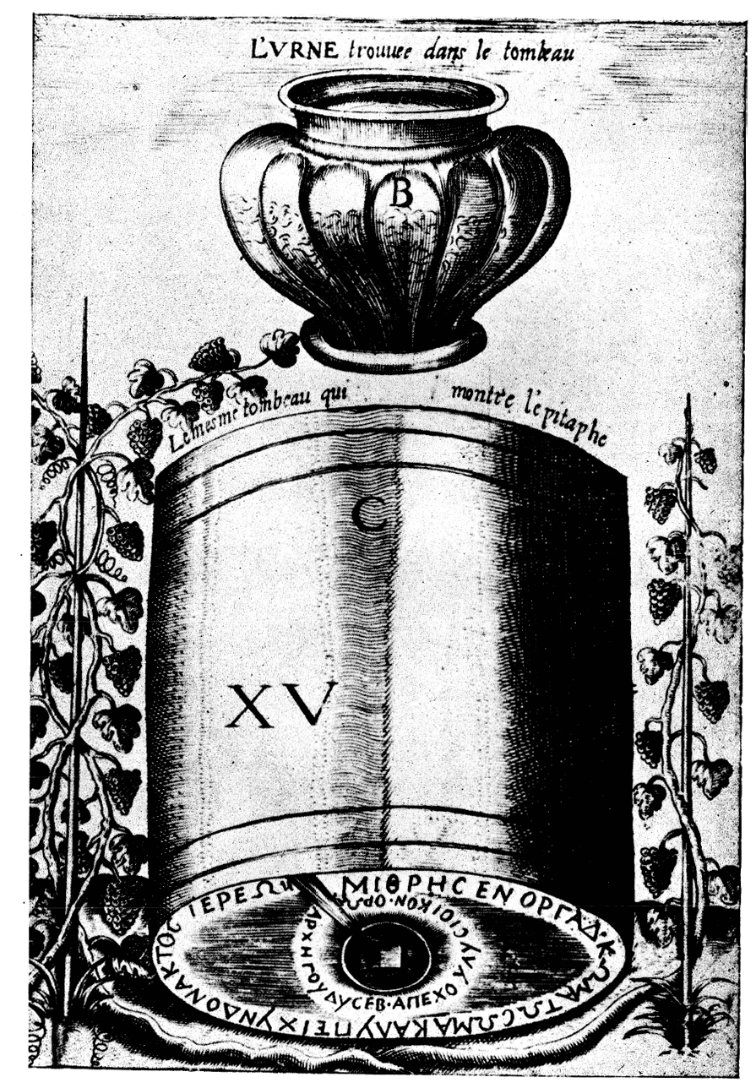
This funerary inscription, engraved on a stone urn discovered near Roman Dijon, mentions a certain Chyndonax, described as a priestly leader of Mithras.

This inscription by a certain Ioulianos, found at the entrance to the Dolichenum at Dura Europos, bears an inscription to Zeus Helios Mithras et Tourmasgade.

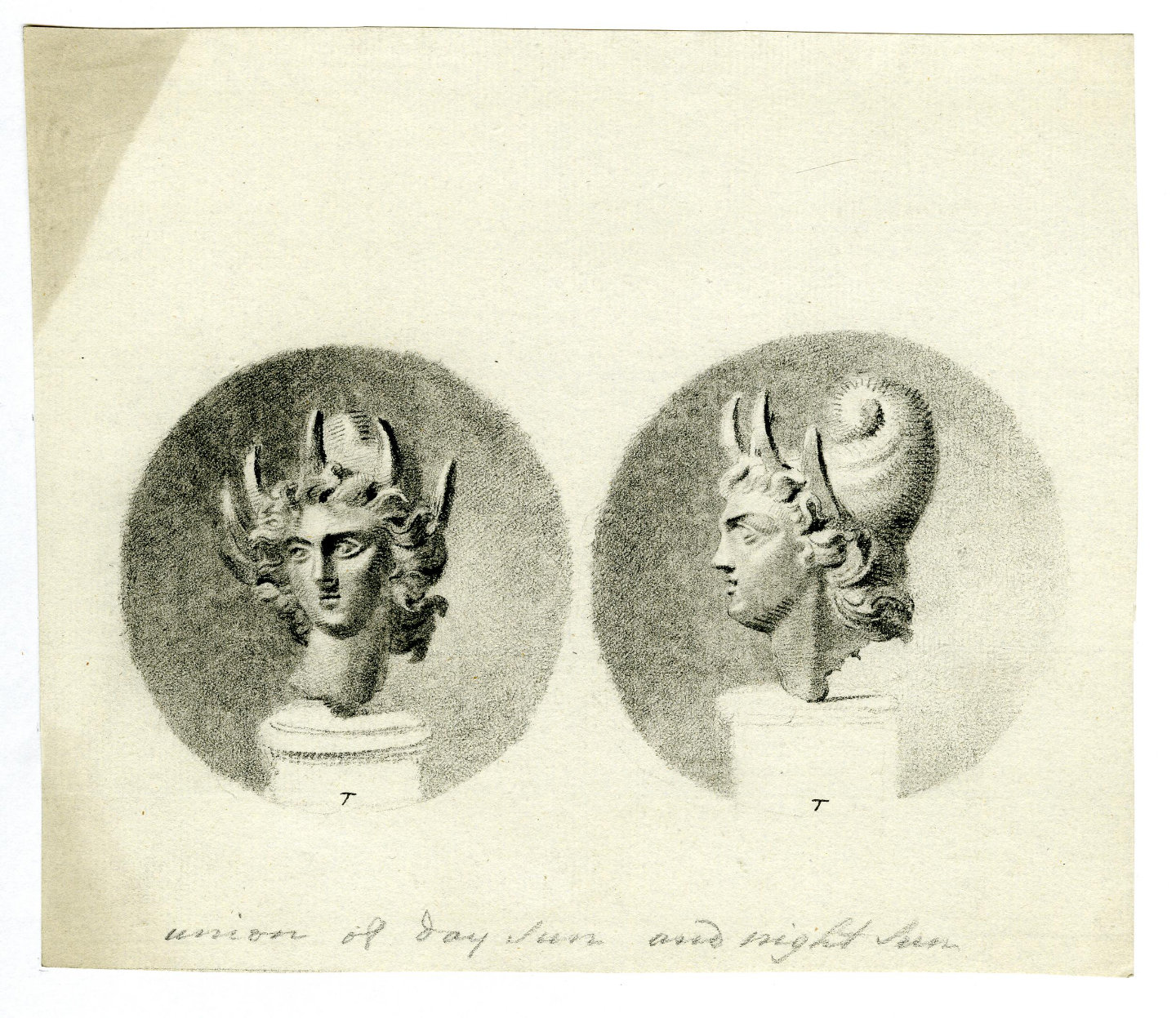
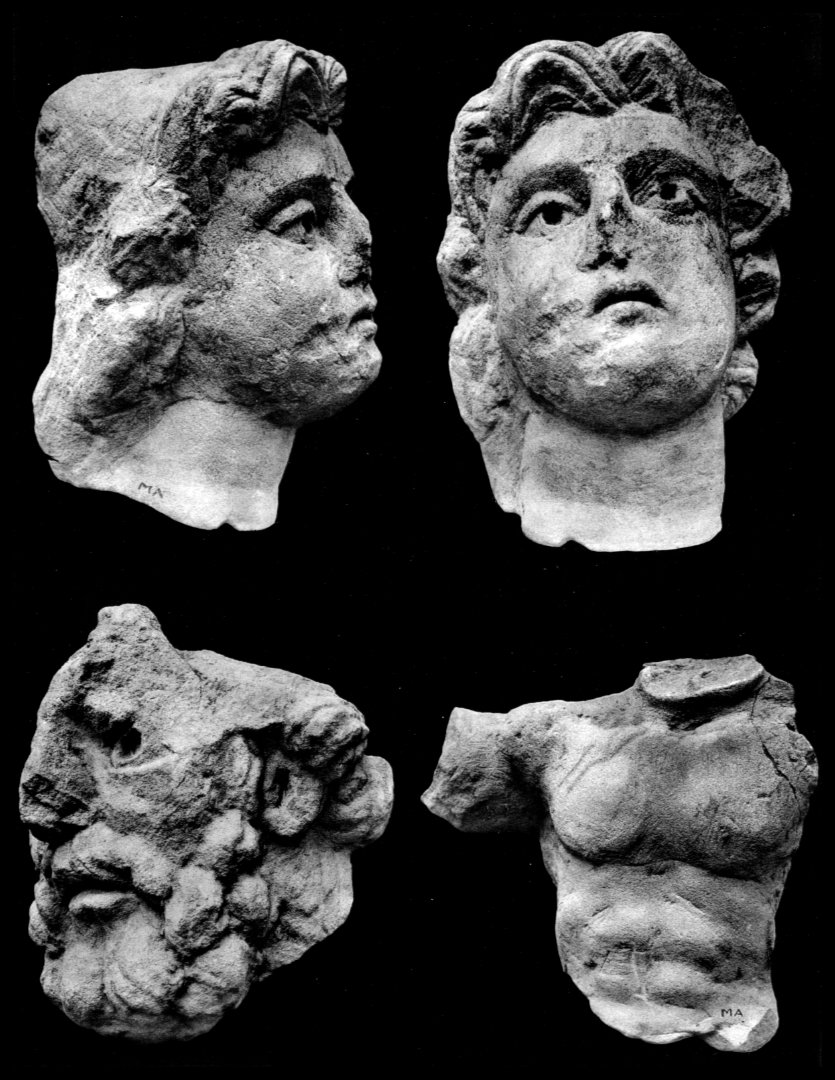
This fragment of the head of a young Mithras is one of the finds made during the excavations carried out by Jean-Jacques Hatt at Mackwiller, France, in 1955.
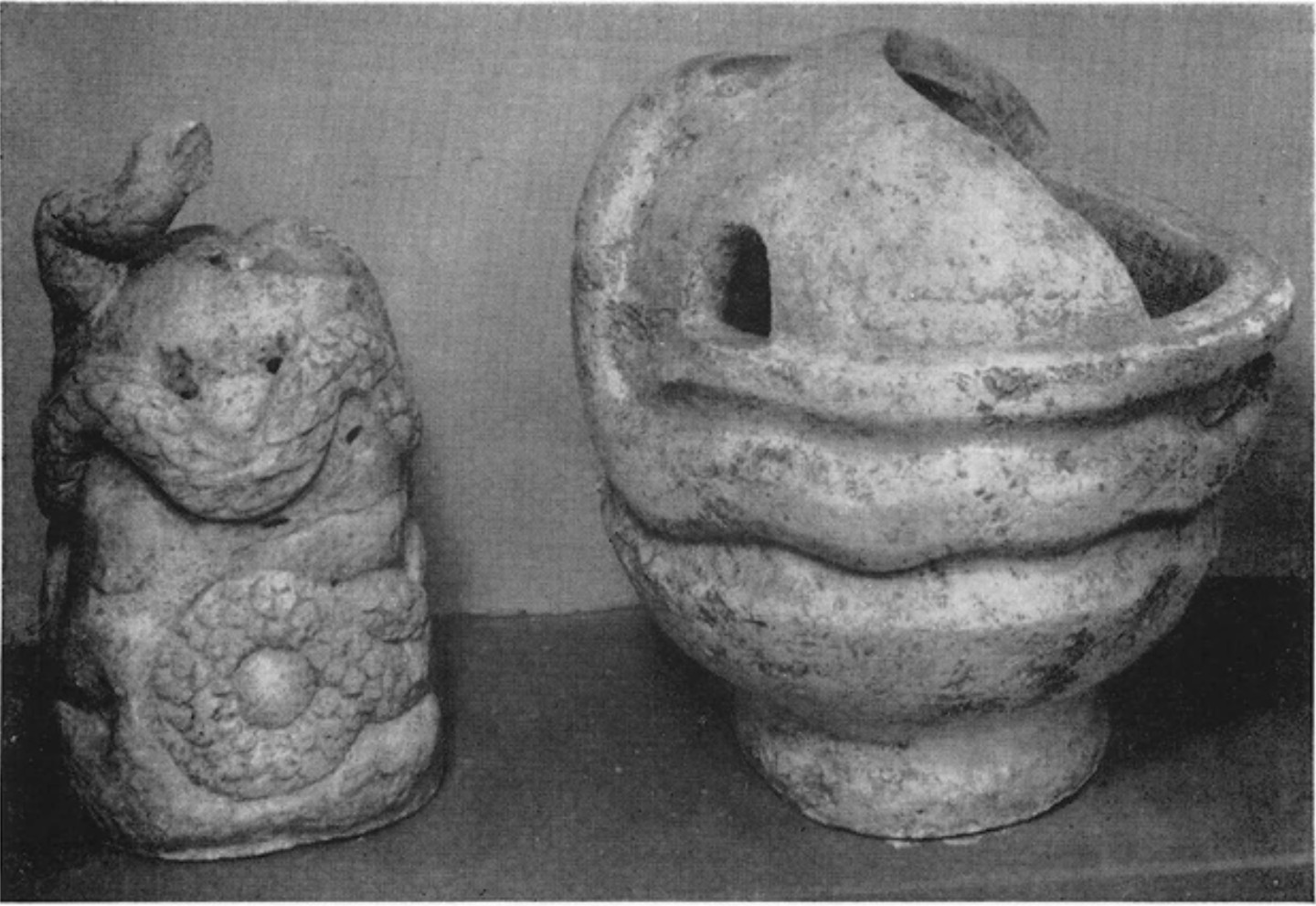
Both objects have a snake winding itself around them.
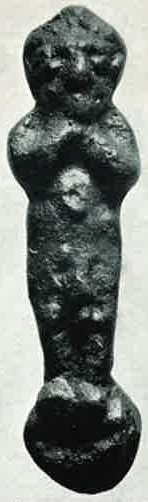
Bronze fibula from Petronell-Carnuntum, depicting a standing lion-headed Aion.
As this short inscription indicates, Aemilio Epaphorodito was both Pater and priest of the Mithraeum of the Seven Spheres.
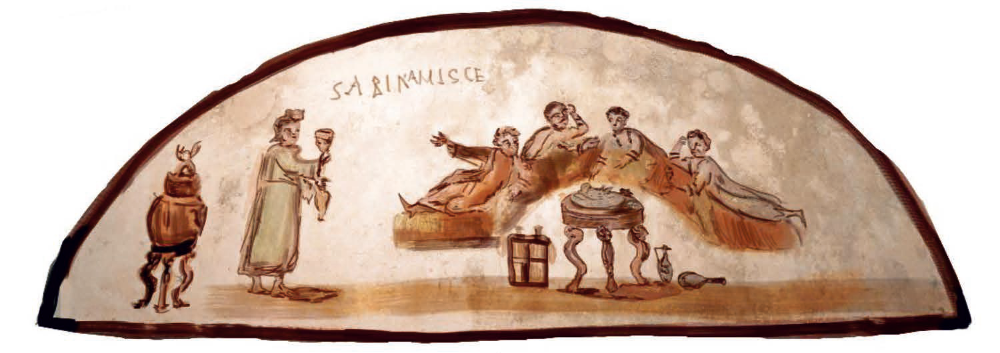
A dinner scene with Sabina from the Catacombe dei Santi Marcellino e Pietro, near Rome, may have been commissioned by a follower of Mithras.
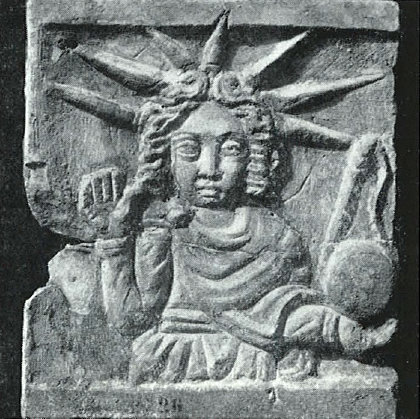
The relief of Sol was found during the construction of Piazza Dante in Rome in 1874.
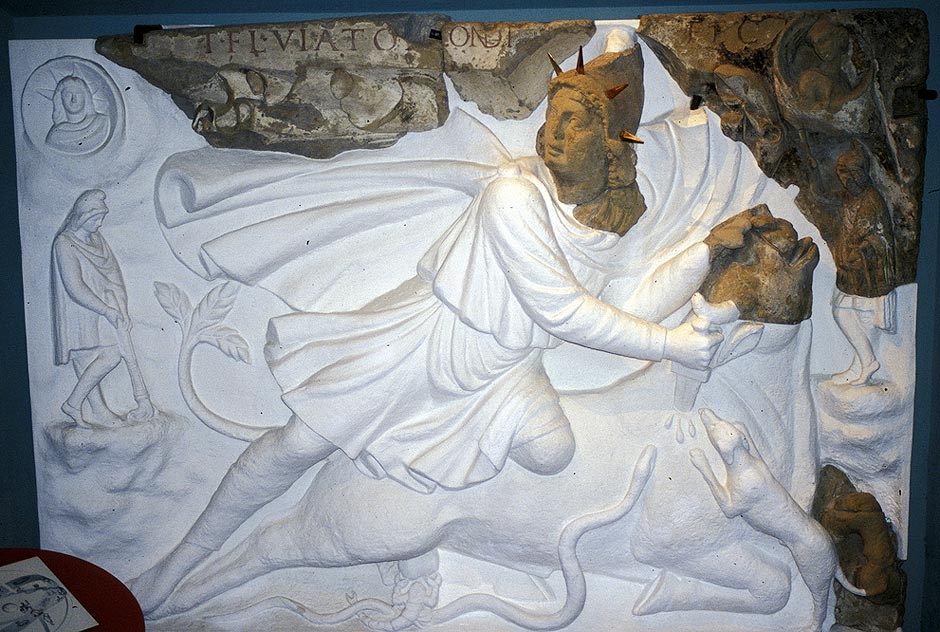
Of this great relief of Mithras slaying the bull only a few segments remain.
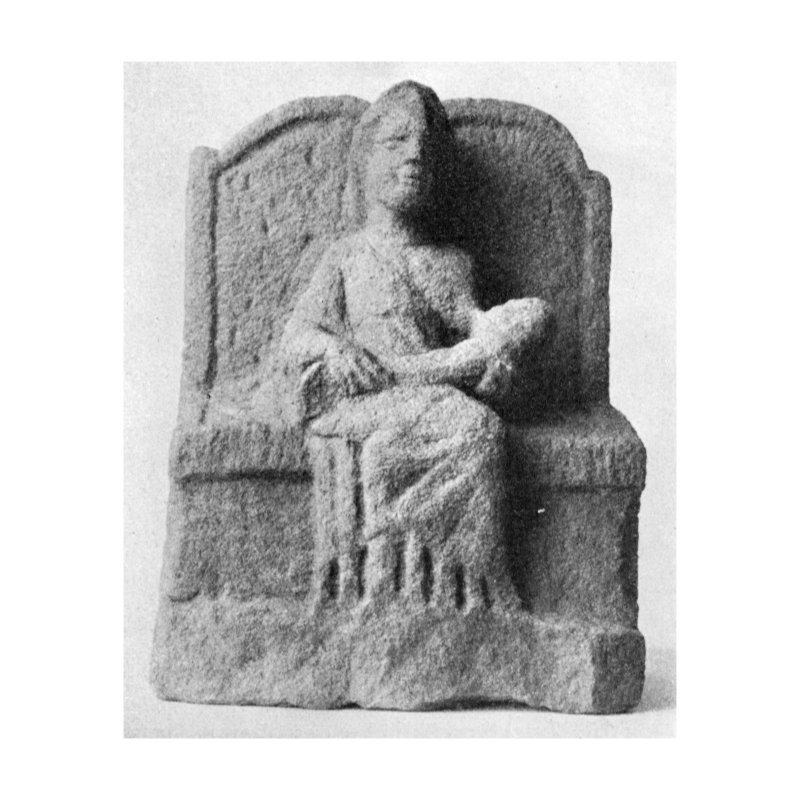
This unusual statue in Mithraic iconography of a mother nursing a child was found in the vestibule of the Mithraeum of Dieburg.

This marble statuette from Ostia depicts Cautopates lowering his torch beside a tapering rock associated with Mithras’ birth from stone.
