Your search Al-Bahnasa gave 3013 results.

Occupant of a richly decorated tomb at Oea once interpreted as evidence for female Mithraic initiation.

Rural slave devoted to Mithras on an estate near Valentia during the later second century CE.

Garlic merchant and devotee of Cautes whose dedication at Can Modolell reflects the integration of Mithraic worship into the commercial life of Roman Tarraconensis.

Imperial slave attested at the sanctuary of Can Modolell, a site closely associated with the early spread of Mithraism in Hispania.

A Mithraic worshipper whose offering reveals a pater patrum and leonine initiates in northern Hispania.

Recipient of a votive dedication invoking the healing protection of Deus Invictus in the Mithraic community of Emerita Augusta.

A slave of a certain Flavius Baeticus, Quintio dedicated an altar to the health of a companion.

Member of the Mithraic congregation of Emerita Augusta who commissioned a monumental torchbearer statue under Accius Hedychrus.

Gaius dedicated an altar to the god Invictus in Emerita Augusta in the 2nd century.

My research explores the emergent area of Digital Civics. I formulated the first definition, critical underpinning, and pedagogical model for this concept.

Gaius Accius Hedychrus was one of the most prominent Mithraists known from Roman Hispania and a central figure in the Mithraic community of Emerita Augusta during the mid-second century CE.

Centurion of Legio VII Gemina Antoniniana who dedicated an altar to Mithras at Locus, honouring his freedmen Victorius Secundus and Victorius Victor.

Sextus Pompeius Maximus was an Ostian pater, later honoured as pater patrum, whose benefactions transformed the Aldobrandini Mithraeum and linked him to the city’s ferry guilds.
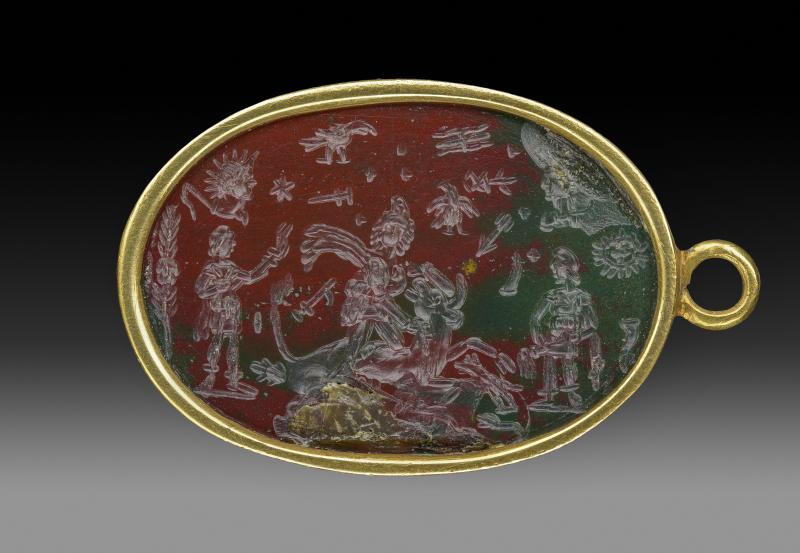
This intaglio portrays Mithra slaying the bull on one side, and a lion with a bee, around seven stars, and inscription, on the other.

Antistes and patron of the Mithraea of the Painted Walls and the Imperial Palace at Ostia.


Donor of a small altar from the Mithraeum of the Seven Gates, Sextus Fusinius Felix may belong to a family attested among Ostia’s augustales.


Marble relief fragments from the cult niche of the Mitreo della Planta Pedis at Ostia, preserving the bust of Sol in radiate crown, the raven's tail, the bust of Luna in crescent, and parts of the rocky border.
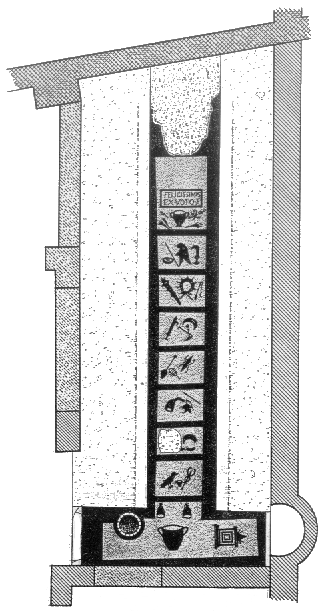
The Mithraeum Felicissimus has a floor mosaic depicting the seven mithraic grades.
