Your search Bad Ischl im Salzkammergut gave 1088 results.

Roman Syria preserves a major eastern corpus of Mithraic evidence within one of the empire’s most interconnected regions.
Lycia and Pamphylia preserve Mithraic evidence linked to southern Anatolian maritime and urban networks.
Moesia preserves a strongly militarised body of Mithraic evidence along the Danubian frontier of the empire.
Galatia preserves Mithraic evidence shaped by central Anatolian routes and eastern provincial networks.
Corsica and Sardinia preserve a small island corpus within the western Mediterranean diffusion of Mithraism.
Crete and Cyrene connect Mithraic evidence to island, North African and eastern Mediterranean networks.
Cappadocia preserves evidence shaped by military movement, eastern frontier dynamics and Anatolian religious landscapes.
Dalmatia preserves Mithraic evidence shaped by Adriatic routes, military movement and provincial urban centres.
Armenia occupied a strategic position between Roman and Iranian religious worlds during the centuries of Mithraic expansion.
The Alpine regions preserve scattered Mithraic evidence associated with military circulation and strategic routes across the western empire.

This inscription probably belonged to the fourth mithraeum of Poetovio and records the restoration of a Mithraic temple by the dux Aurelius Iustinianus.
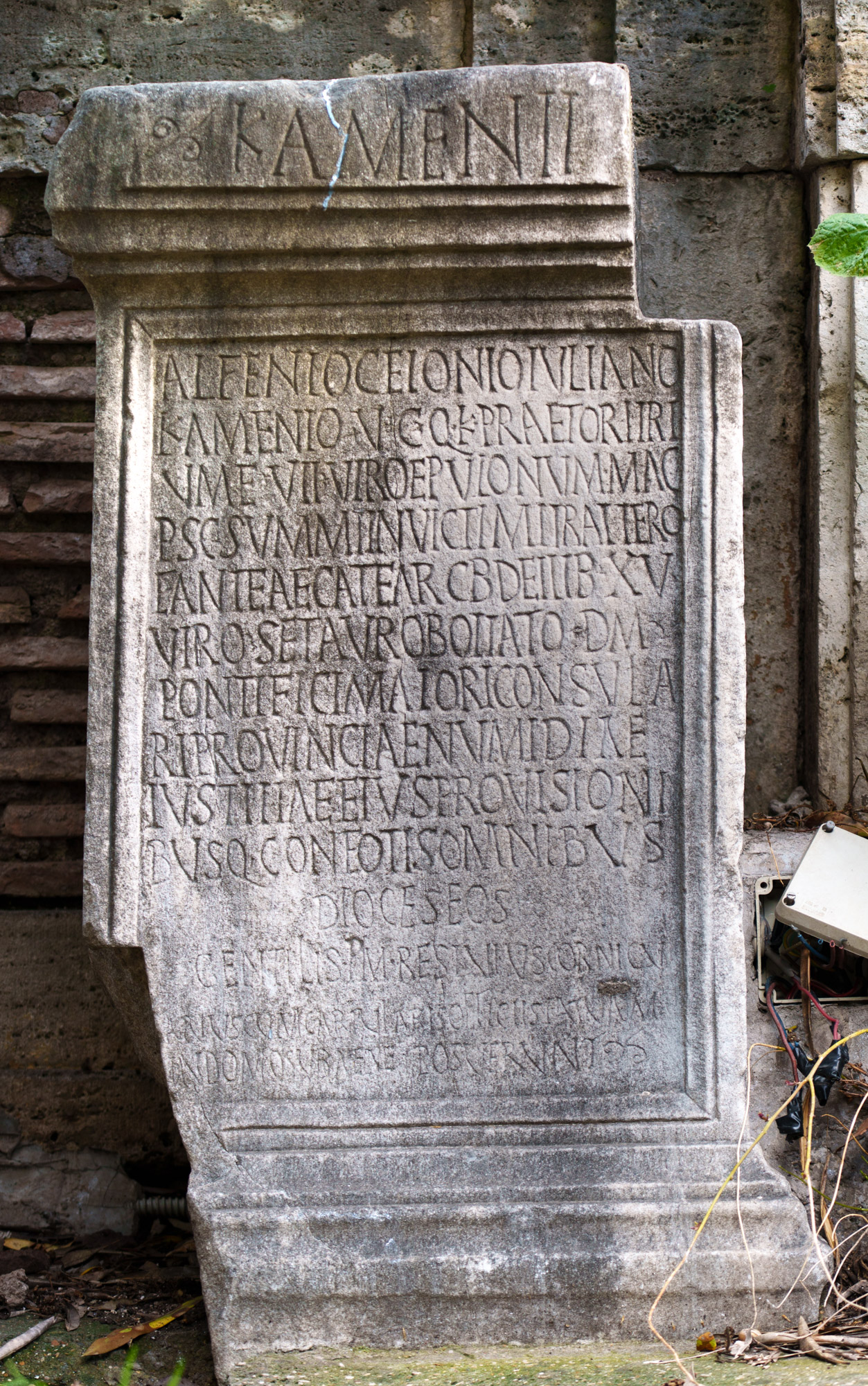
Honorific marble statue base dedicated to the senator and Mithraic pater Alfenius Ceionius Iulianus Kamenius by members of his provincial administration.
Marble altar dedicated at the Vatican Phrygianum in Rome by the Mithraic pater Alfenius Ceionius Iulianus Kamenius in 374 CE.
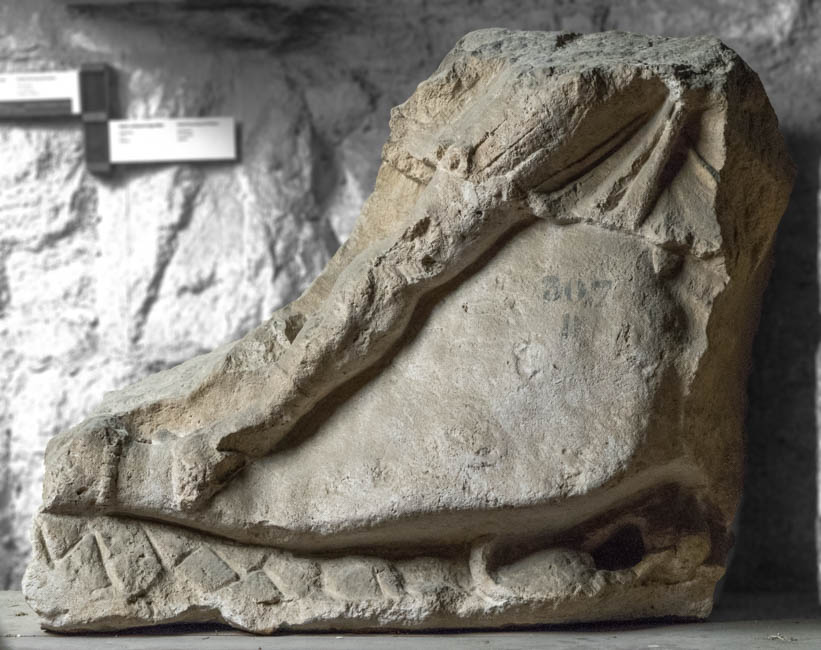
This large limestone fragment from Roman Salona preserves the hind part of the bull together with Mithras’ foot and traces of his red tunic.
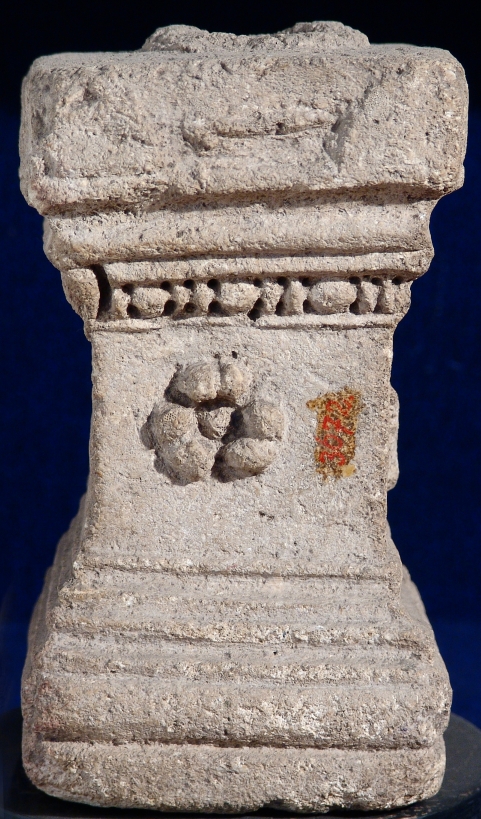
This limestone altar from Roman Dacia preserves a dedication to Mithras by a commander of the Ala II Pannoniorum.
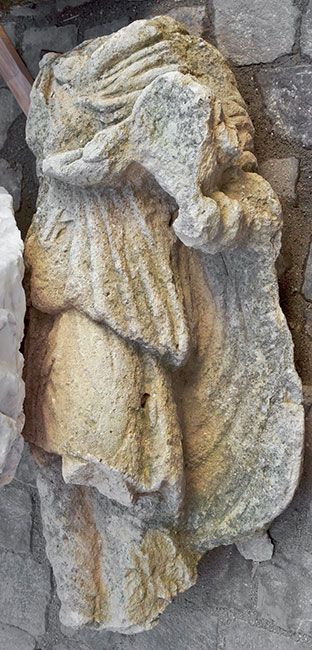
This weathered limestone statue from the Mithraeum of Apulum depicts a standing figure in Oriental attire holding the head of a bull or ram.
This eulogy of Saint Eugene of Trapezos tells how, in the time of Diocletian, he and two other Christian fellows destroyed a statue of Mithras.
This inscription shows that Publilius Ceionius, most distinguished man, dedicated a temple to Mithras at Mila, in the modern Constantina, Algeria.
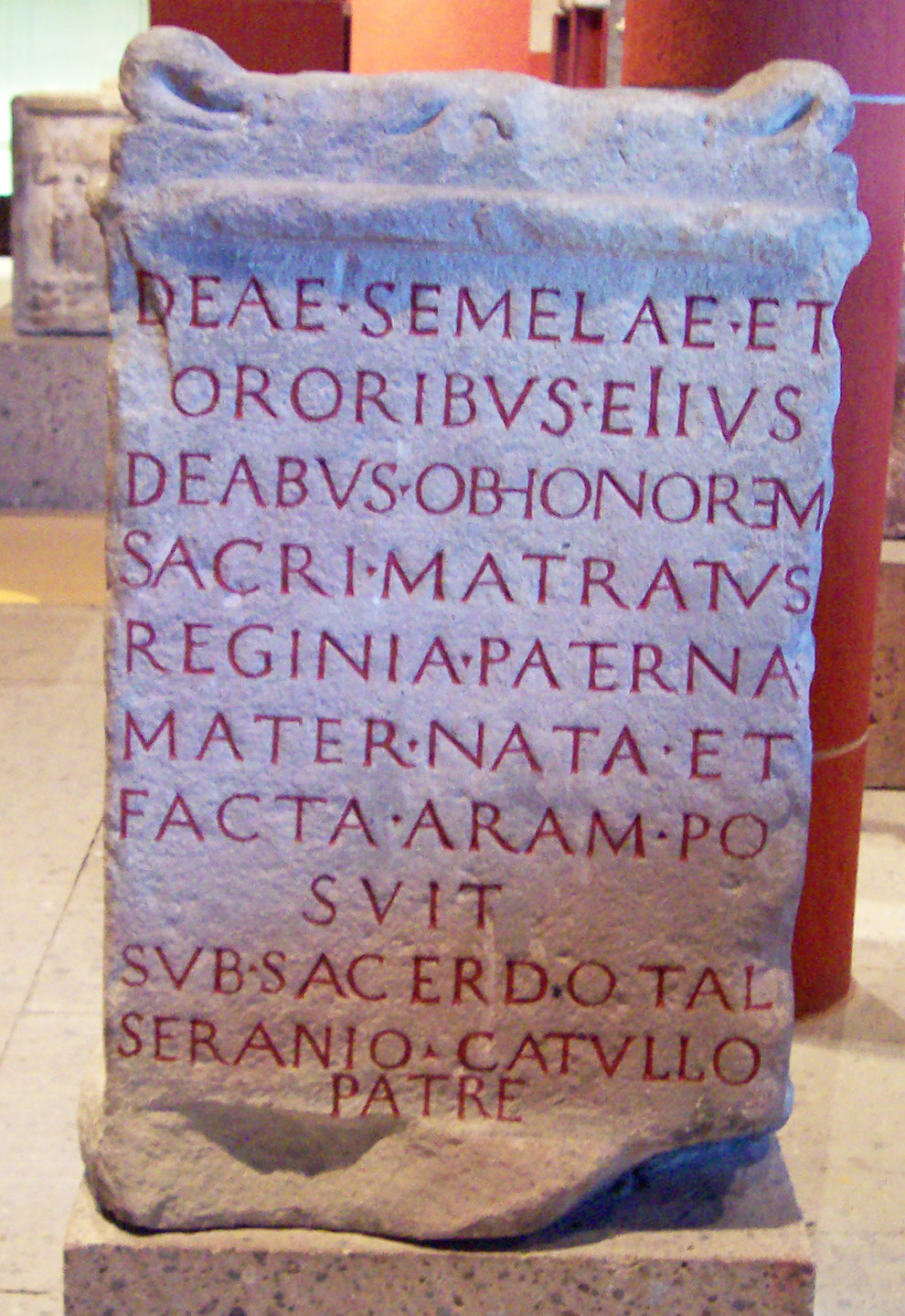
This sandstone altar found in Cologne bears an inscription to the goddess Semele and her sisters.
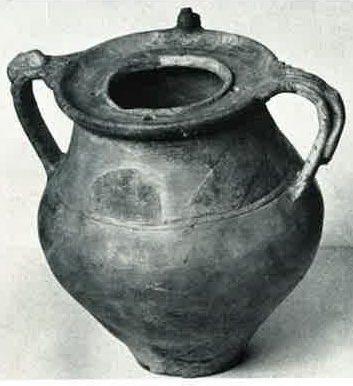
Sepulchral limestone inscription from the vicinity of the Mithraeum at Colonia Agrippina (Germania Inferior), mentioning the Mithraic grade Corax.
