Your search Bad Ischl im Salzkammergut gave 2084 results.

This volume collects the first results of the extensive and articulated research project dedicated to the Mithraeum of the Circus Maximus.

This monograph presents the findings from Robert J. Bull's 1973 excavation of the Mithraeum in Caesarea Maritima, Israel, including stratigraphic analyses, studies of frescoes and and insights into the site's historical significance.

This catalogue proposes, thanks to the contributions of some 75 international experts, a new synthesis for a complex and fascinating cult that reflects the remarkable advances in our knowledge in recent decades.

Wasson has aroused considerable attention by advancing and documenting the thesis that Soma was a hallucinogenic mushroom – none other than the Amanita muscaria, the fly-agaric that until recent times was the center of shamanic rites among the Siberian and Uralic tribesmen…

Dedication from Simitthus mentioning the restoration of a monument and a vow fulfilled to Cautes and Cautopates during the reign of Caracalla and Julia Maesa.
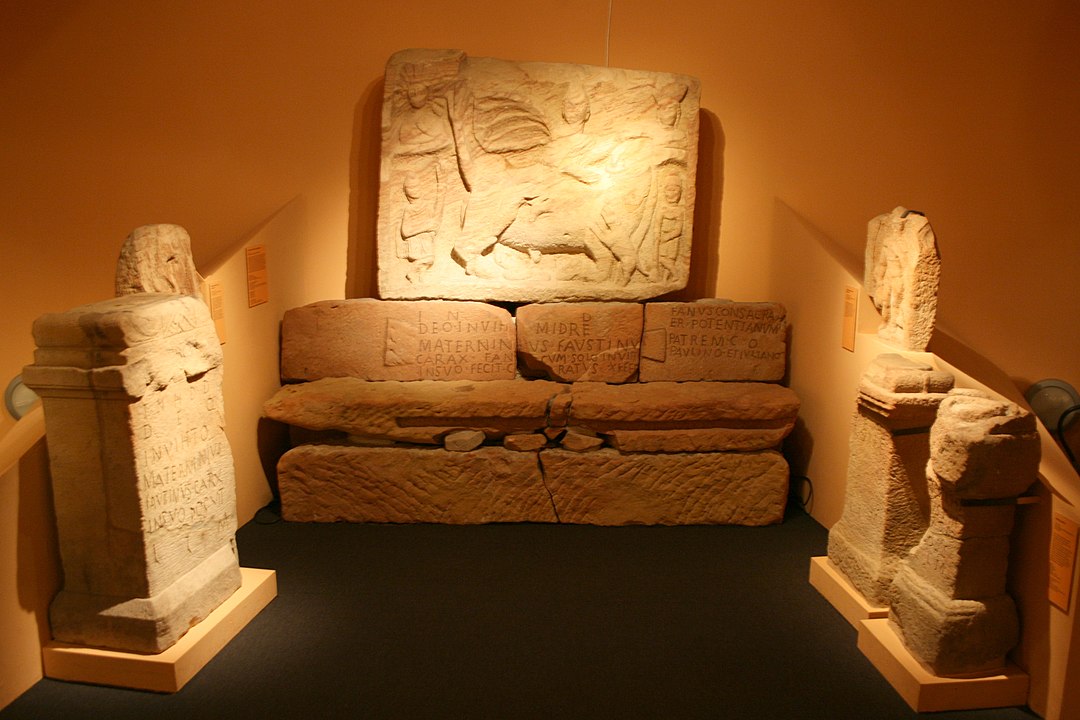
The few remains of the Mithraeum of Gimmeldingen are preserved at the Historical Museum of the Palatinate, in Speyer, Germany.
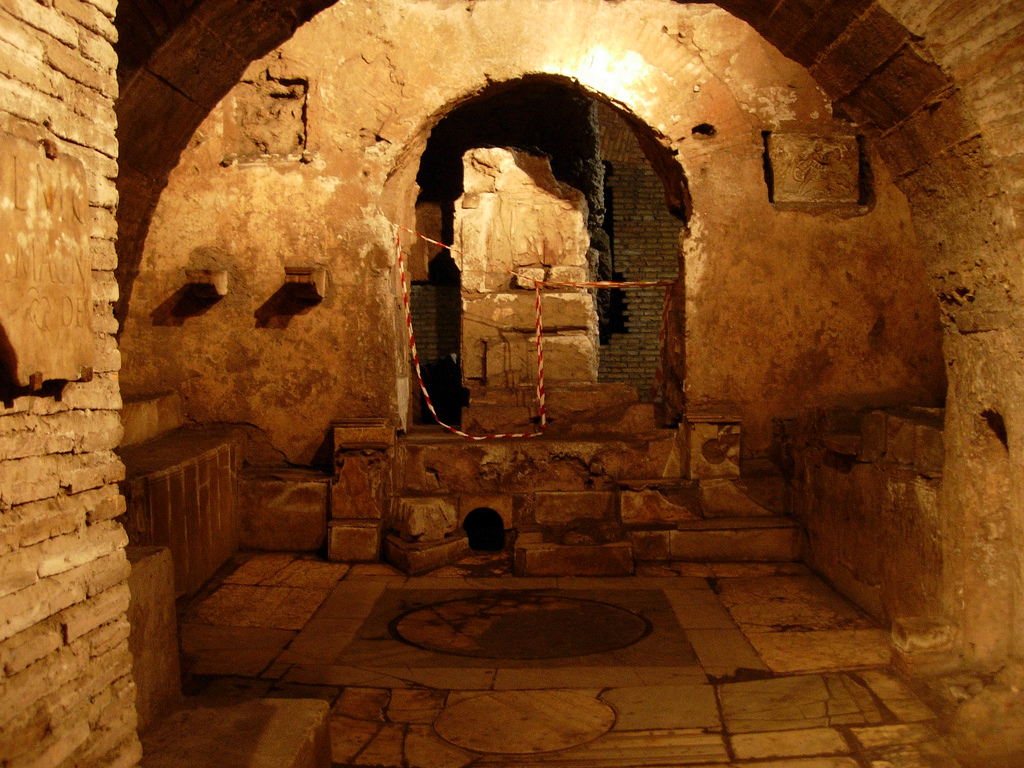
The Mithraeum of the Circus Maximus was discovered in 1931 during work carried out to create a storage area for the scenes and costumes of the Opera House within the Museums of Rome building.
Sandstone relief fragment from the Mithraeum at Gimmeldingen preserving the upper bodies of two standing deities: a bearded male, possibly Vulcanus, and a helmeted Minerva with lance.
Lower portion of a sandstone relief from the Mithraeum at Gimmeldingen, preserving a cross-legged torchbearer in a long cloak, probably Cautes.
Lance point, key, bronze lamp, and pottery and brick fragments from the Mithraeum at Neuenheim
Sandstone altar fragment from the Mithraeum at Neuenheim dedicated by Sentionius Tertinus
Rocky base from the Mithraeum at Neuenheim probably originally supporting a representation of Mithras' rock-birth
Red sandstone base from the Mithraeum at Neuenheim with representations of deities on each of its four sides
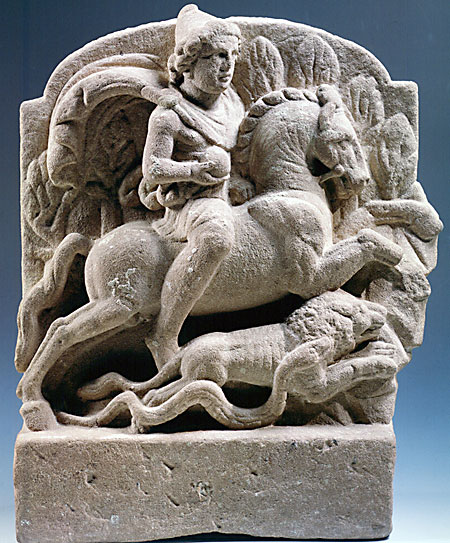
Mithras galloping, in a cypress forest, carrying a globe in one hand and accompanied by a lion and a snake.
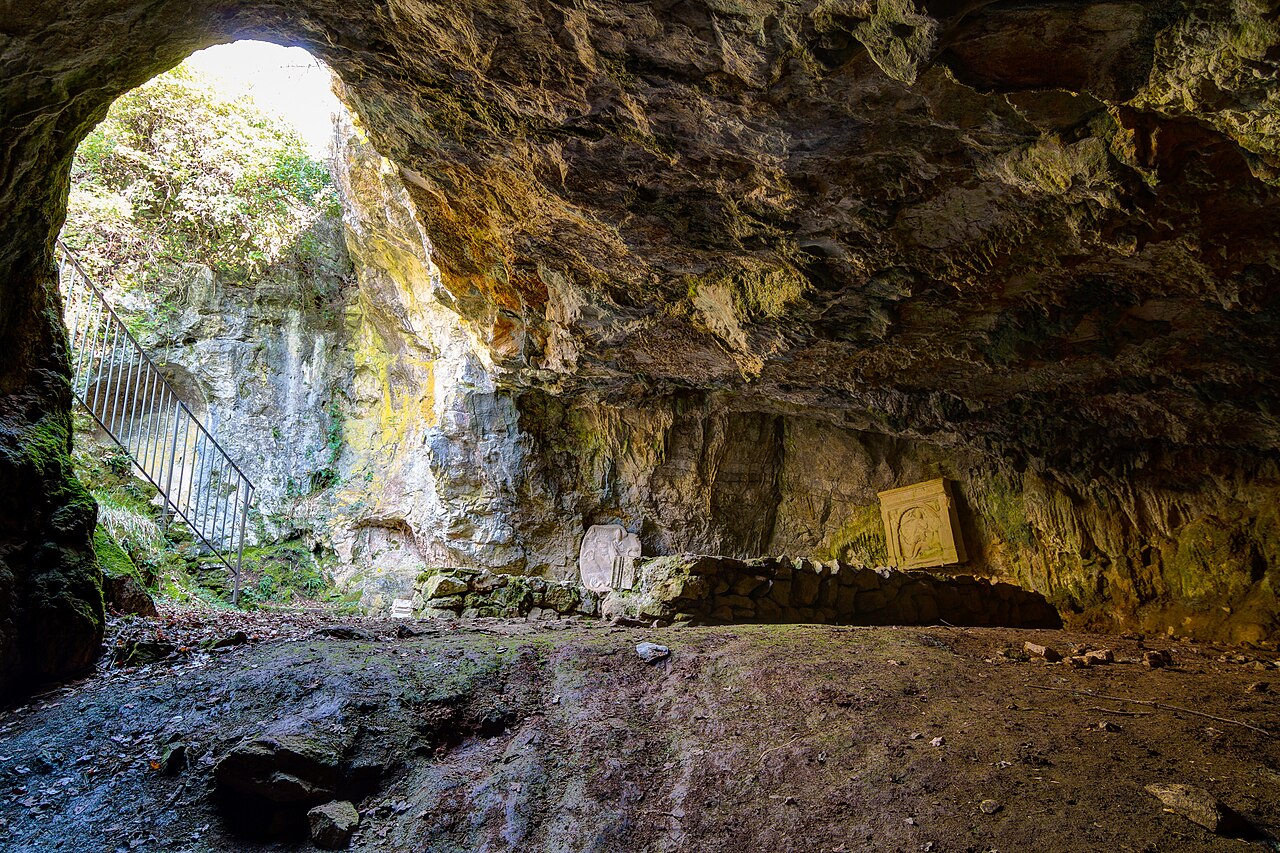
The site was destroyed in the 5th century but some elements, including the benches, can still been seen.

Marble cap mentioned by Visconti, subsequently identified as certainly belonging to the finds of the Mitreo degli Animali rather than the Mitreo del Palazzo Imperiale, Ostia.
Junia Zosime is known from an inscription discovered at Ostia recording the donation of a silver statue of the Virtus of the dendrophori.
A small limestone votive altar from Pola (modern Pula) bearing on its front face a damaged relief head of a youthful Sol with long curly hair, above which is carved the inscription Soli and below the dedicatory text by Atticus (No. 757).

