Your search Boulogne-sur-mer gave 339 results.

Fragments of this limestone statue include the head and torso of Mercury, holding the caduceus in his left hand.

This lost monument bears an inscription to Cautes by a certain Tiberius Claudius Artemidorus.
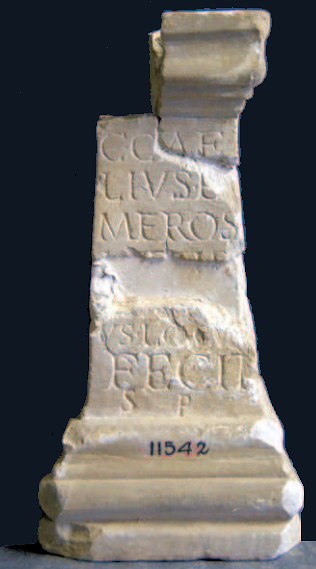
This small monument bears the inscriptions of a certain Caelius Ermeros, antistes at the Mithraeum of the Painted Walls.
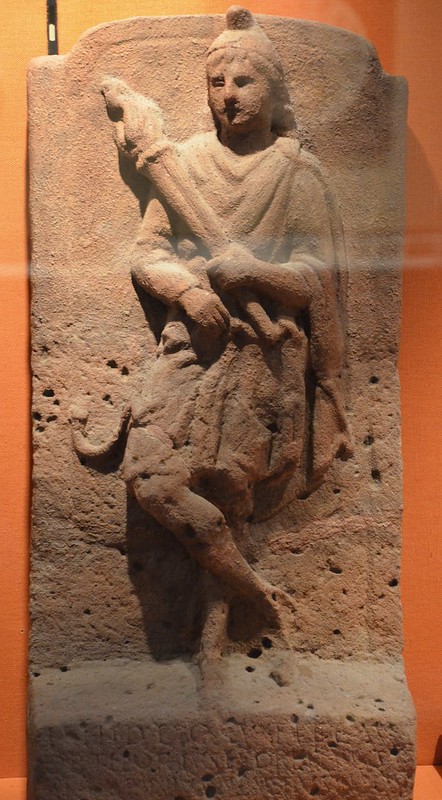
Reliefs of Cautes and Cautopates dedicated by Florius Florentius of Saalburg and Ancarinius Severus.

The name of this domus comes from the fact that some authors once associated one of its mosaics with the cult of Mithras, a connection that has since been dismissed.
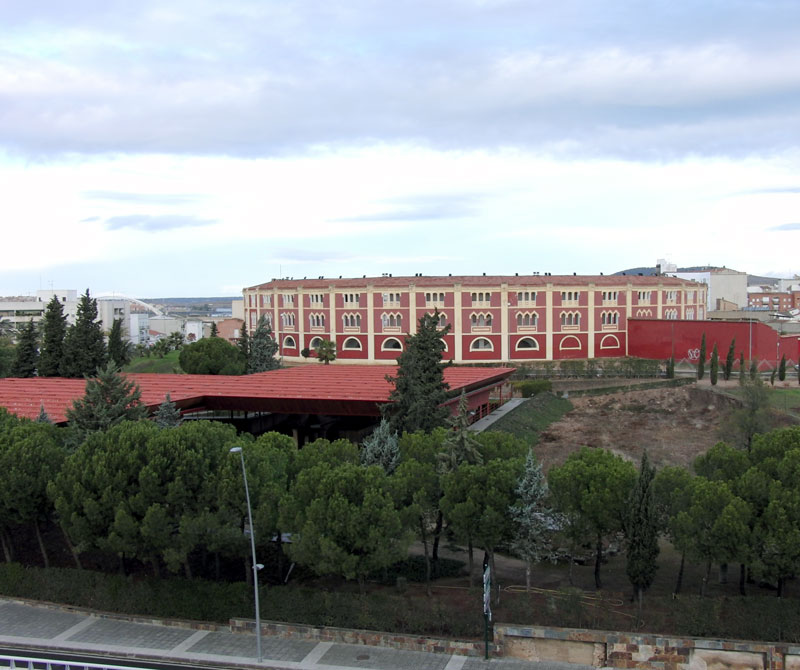
Although the site at Cerro de San Albín is not a Mithraeum, archaeologists have found several monuments related to the cult of Mithras.

Antistes and patron of the Mithraea of the Painted Walls and the Imperial Palace at Ostia.

Honoratus of the dendrophori of Ostia who dedicated a statue of Terra Mater in AD 142.
The Bad Ischl area has been inhabited since the time of the prehistoric Hallstatt culture. Documentary evidence of the settlement dates back to 1262, when it was referred to as Iselen.


Offered the famous Tauroctony of Osterburken to the unconquerable sun god Mithras.

Seminario de Investigación Cultos orientales e Iconografía Máster en Arqueología del Mediterráneo en la Antigüedad Clásica.

The article reveals the context in which the first public appearance of Mitra happened to answer two questions: who were the first people to give prominence to this deity, and for what purpose they did so.
Large marble slab found in 1648 near S. Silvestro in Capite, inscribed with a Latin dedicatory poem forming a cypher-acrostic for TAMESIUS and AUGENTIUS, with records of leontica and chrysos initiations, dated to 362 A.D.

Recipient of a votive dedication invoking the healing protection of Deus Invictus in the Mithraic community of Emerita Augusta.

Member of the Mithraic congregation of Emerita Augusta who commissioned a monumental torchbearer statue under Accius Hedychrus.

Gaius dedicated an altar to the god Invictus in Emerita Augusta in the 2nd century.

Centurio frumentarius probably from Tarraco, who served in the Legio VII Gemina located in Emerita Agusta.
