Your search Cabrera de Mar gave 1568 results.
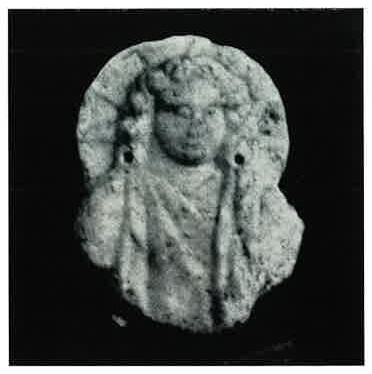
Fragment of a white marble statuette from the Mithraeum at Sarmizegetusa, Dacia, preserving the dressed bust of Sol in a nimbus and seven-rayed crown with traces of red colour; two bolt-holes at the bottom for attachment.

White marble fragment from the Mithraeum at Sarmizegetusa, Dacia, preserving the head of Sol with four attachment holes for rays.
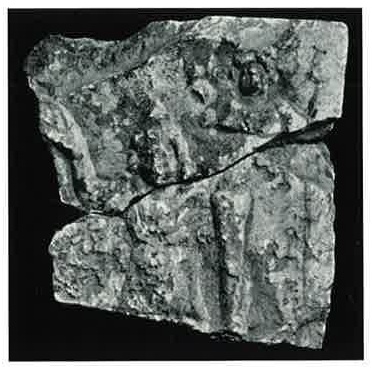
Two bluish marble fragments from the Mithraeum at Sarmizegetusa, Dacia, preserving the upper part of Cautes holding a torch in each hand, with traces of red on his neck, dress, and the torches.
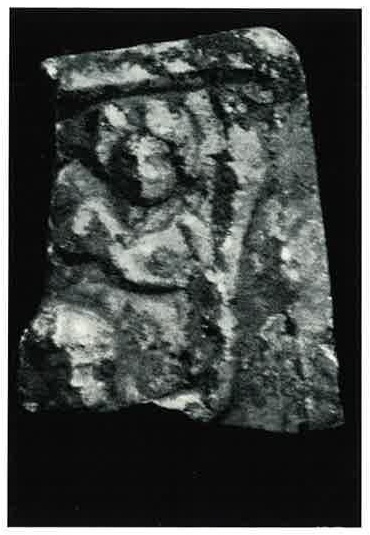
Bluish marble fragment from the Mithraeum at Sarmizegetusa, Dacia, preserving the right upper corner with the head of Cautes and his upraised torch, above which the bust of Luna.
Small marble lion's head from the Mithraeum at Sarmizegetusa, Dacia, seen frontally.
Fragment of a bluish marble tauroctony from the Mithraeum at Sarmizegetusa, Dacia, preserving the left part of the head and a hoof and forefoot of the bull — probably from a Mithras-riding-the-bull scene.
White marble relief fragment from the Mithraeum at Sarmizegetusa, Dacia, preserving part of an arched border below which a head in Phrygian cap, possibly Mithras, above a small building.
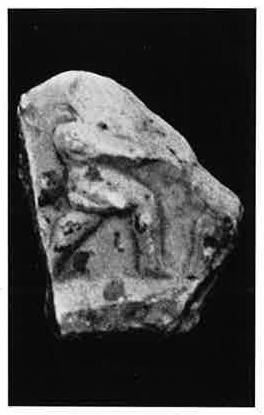
White marble relief fragment from the Mithraeum at Sarmizegetusa, Dacia, probably belonging to the preceding piece, depicting a man walking to the right stretching his hand towards a rock.
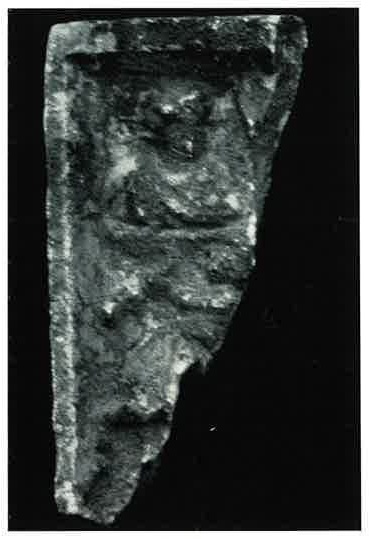
Fragment of a yellowish marble relief from the Mithraeum at Sarmizegetusa, Dacia, preserving the left upper corner with the bust of Sol and below it Mithras riding the bull.
Fragment of a bluish marble tauroctony from the Mithraeum at Sarmizegetusa, Dacia, preserving the left upper corner with the bust of Sol and beside it the upper part of a person in Phrygian cap — probably Mithras as an archer.
Small marble fragment from the Mithraeum at Sarmizegetusa, Dacia, preserving small parts of the bull and Mithras's dagger.
Fragment of a marble relief from the Mithraeum at Sarmizegetusa, Dacia, preserving the bust of a person in a tunic with a right arm and hand holding a torch pointed downward.
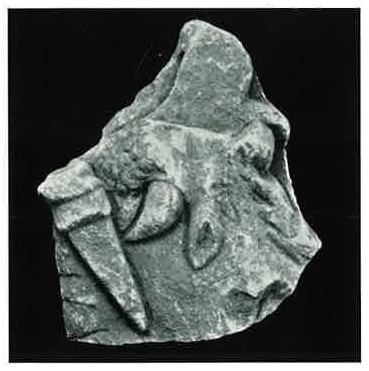
Marble fragment from the Mithraeum at Sarmizegetusa, Dacia, preserving the neck and head of the bull together with Mithras's dagger.
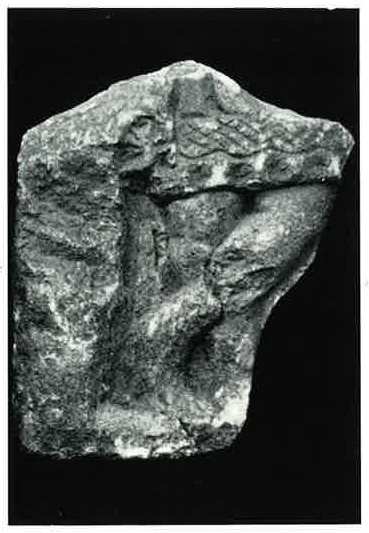
Left lower corner of a marble relief from the Mithraeum at Sarmizegetusa, Dacia, preserving the lower part of a cross-legged torchbearer in a short belted and fringed tunic.
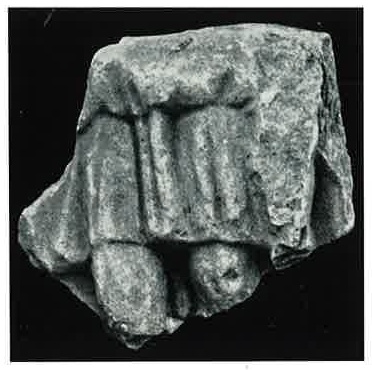
Fragment of a large marble relief from the Mithraeum at Sarmizegetusa, Dacia, preserving a standing cross-legged torchbearer; head, arms, and legs below the knees are lost.

Upper portion of a vaulted marble tauroctony from the Mithraeum at Sarmizegetusa, Dacia, with the bull-slaying and above Cautes a scene of Mithras's rock-birth; Sol and Luna busts appear in the upper corners.
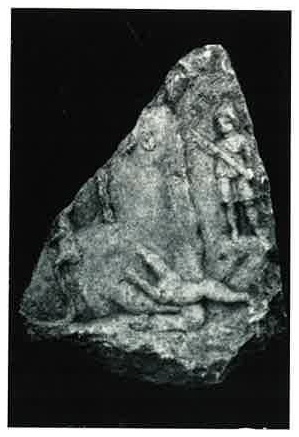
Foremost part of a white marble tauroctony from the Mithraeum at Sarmizegetusa, Dacia, showing the badly weathered bull-slaying with cross-legged Cautes raising the torch with both hands.
Greyish marble fragment from the Mithraeum at Sarmizegetusa, Dacia, preserving the bull's tail and part of Mithras's flying cloak.
Fragment of a white marble tauroctony from the Mithraeum at Sarmizegetusa, Dacia, preserving the hindmost part of the bull to the left and the fragment of a small altar behind it.

Rectangular white marble tauroctony relief from the Mithraeum at Sarmizegetusa, Dacia, depicting Mithras killing the bull with dog, serpent, and scorpion.
