Your search Carl A. P. Ruck gave 86 results.

The settlement of Bingerbrück formed part of the Rhine crossing zone opposite the lower Nahe valley.

Small bronze figure of the torchbearer Cautes fitted with attachment rivets.

This remarkable double-sided relief depicts the myth of Mithras and the Tauroctony on one side, and a scene of Mithras the hunter and the banquet of Mithras and the Sol on the other.

Inscription from Decea Mureșului, ancient Bruckla in Dacia, dedicated to Invicto Mithrae; the dedicant's name is only partially preserved.
Limestone votive altar from Decea Mureșului, ancient Bruckla in Dacia, dedicated to Invicto Mithrae by Surus.
Limestone base from Decea Mureșului, ancient Bruckla in Dacia, dedicated to Invicto Mithrae by Iulius Quintus, centurio.
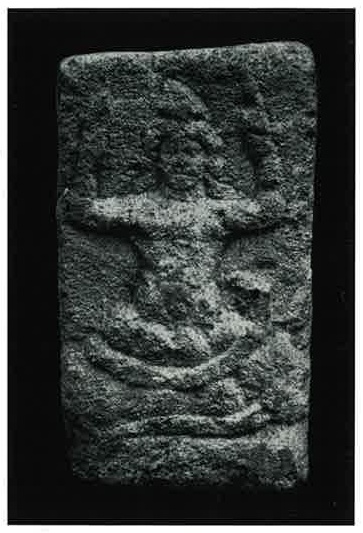
White sandstone altar from Decea Mureșului near Aiud, ancient Bruckla in Dacia, depicting on its front the naked Mithras being born from the rock, holding a torch in his right hand and a dagger in his left, with a coiled serpent below.

A coarse-grained yellowish-white marble tauroctony relief fragment found walled in at San Zeno am Nonsberg in the Trentino in 1911, now in the Museum Ferdinandeum at Innsbruck, showing part of Mithras slaying the bull and Cautes raising a flaming torch.
Waidbruck is a comune in South Tyrol in northern Italy, located about 20 kilometres northeast of Bolzano.
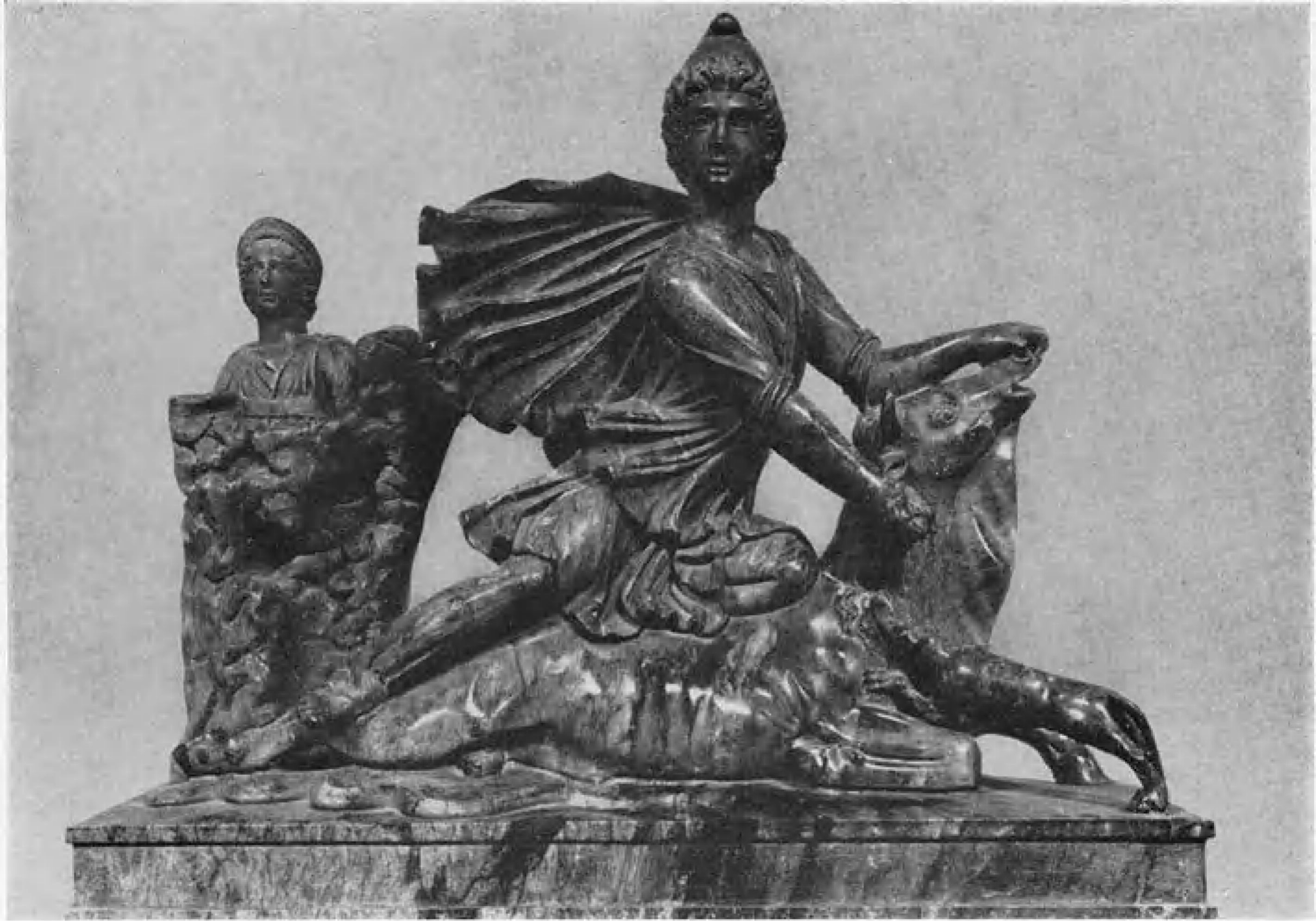
This black marble of Mithras killing the Bull has belonged to the sculptor Carlo Albacini.

Tracing the links between the cult of Mithras and the Proud Boys’ quest for identity, power, and belonging. How ancient rituals and brotherhood ideals resurface in radical modern movements.

Preamble and notes published by G. R. S. Mead in his series Echoes from the Gnosis 1907, London and Benares. Translation of the manuscript by Dieterich Eine Mithrasliturgie 1903, Leipzig.
