Your search Castellammare di Stabia gave 2062 results.
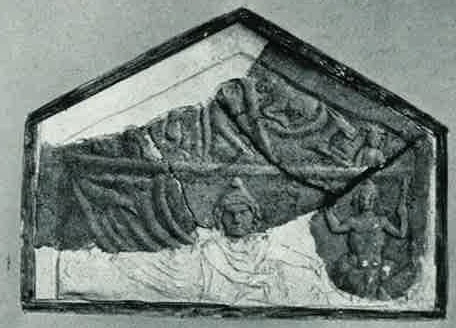
Four fragments of a bluish marble tauroctony relief from the Mithraeum at Sarmizegetusa, Dacia, depicting the central bull-slaying with partially preserved subsidiary scenes.

Inscription from the Mithraeum at Sarmizegetusa, Dacia, dedicated to Soli invicto Mithrae by S. Spedius Valerianus, Augustalis coloniae.
Inscription from Apulum, Dacia, dedicated to Deo bono puero Phosphoro — the Good Boy who Brings Light — a Mithraic epithet attested in several inscriptions from Apulum.
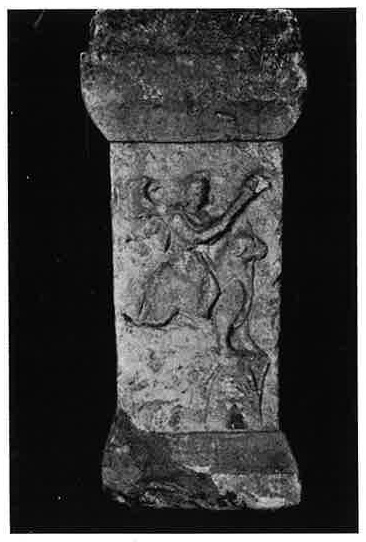
Limestone base from Apulum, Dacia, decorated on the front with Mithras riding the bull to the right while holding an upraised torch — the tauriphoros riding type, distinct from the tauroctony.
Altar from Apulum, Dacia, dedicated to Iovi optimo maximo by Claudius Niger; included in the Mithraic corpus by proximity to other monuments from the same context.
Limestone capital reused as an altar at Apulum, Dacia, its top scraped off, bearing a dedication to Soli Mithrae by Aelius Gordianus.
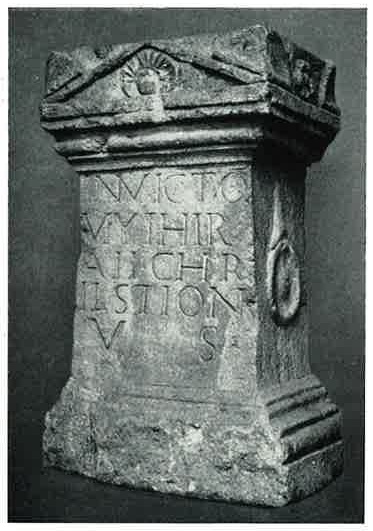
Limestone altar from Partoș or Mureș Port, Dacia, found in 1852, with a triangular pediment containing the head of Sol in a twelve-rayed crown and nimbus, flanked by a patera on the right and a jug on the left.
Oval relief fragment from the outskirts of Split near ancient Salona, Dalmatia, preserving two zodiacal signs — probably from a border decoration of a Mithraic monument.
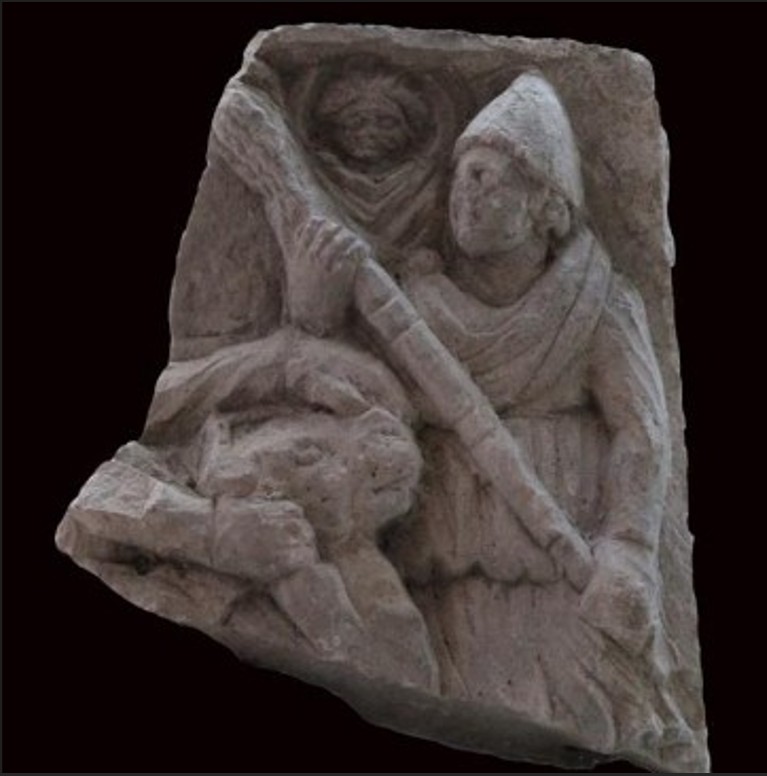
Right upper portion of a limestone relief from Salona or its surroundings, Dalmatia, depicting a standing figure — probably a torchbearer or divine attendant.
Fragmentary inscription from Salona, Dalmatia, preserving only the phrase impendio suo — probably recording a building act.
Base from Aquincum, Pannonia Inferior, recording that Marcus Aurelius Frontinianus and Marcus Aurelius Fronto, soldiers of Legio II Adiutrix and fratres, built a temple to Soli socio; dated to the consulship of Antoninus, either AD 213 or 222.
Altar from Aquincum, Pannonia Inferior, dedicated to Deo Soli by Claudius Patasio; dated to AD 191, one of the earliest dated Mithraic inscriptions from Aquincum.
Altar from Carnuntum, Pannonia Superior, dedicated to the Transitus — the Mithraic transit ritual — by Caius, an association also attested at Brigetio and Poetovio.
Inscription from Carnuntum, Pannonia Superior, preserving only the abbreviated dedication to Invicto deo Mithrae sacrum.
Sandstone plate from Mithraeum III at Carnuntum, Pannonia Superior, dedicated to Deo invicto by Caius Iulius Propinquus, who built a wall ex voto; traces of red on the rim.
Marble altar fragment from Mithraeum III at Ptuj, ancient Poetovio, dedicated to Deo invicto Mithrae by a dedicant whose name is partially preserved as -us Candidus.
Inscription from Mithraeum III at Ptuj, ancient Poetovio, dedicated to Invicto Augusto sacrum by an imperial slave serving as hereditatum tabularius — an officer for death-duties — one of the rarer administrative titles attested in Mithraic epigraphy.
Marble relief fragment from Mithraeum II at Ptuj, ancient Poetovio, depicting a standing woman holding her right hand above an altar and a palm branch in her left; the lower body and base are lost.
Marble plate fragment from Mithraeum II at Ptuj, ancient Poetovio, recording a dedication to Deo invicto Mithrae for the welfare of the Emperors and the restoration or construction of a templum.
Fragmentary marble inscription from Mithraeum II at Ptuj, ancient Poetovio, preserving only the abbreviated dedication to Deo Soli invicto Mithrae.
