Your search Han Potoci gave 881 results.
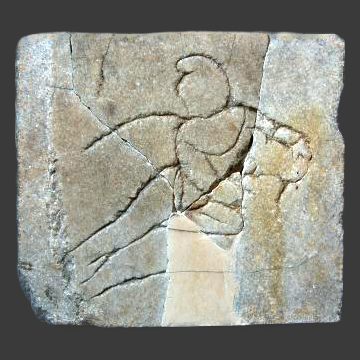
This unfinished Mithras tauroctonos without the usual surrounding animals was found in 1923 in Italica, near Seville, Spain.

A badly damaged tauroctony relief carved in peperino, fixed high into a wall of the old farm known as Le Capanacce on the Via Cassia near Vicus Matrini in Etruria, showing Mithras as a bullkiller in a vaulted cave with serpent, the head and left arm of the god lost…
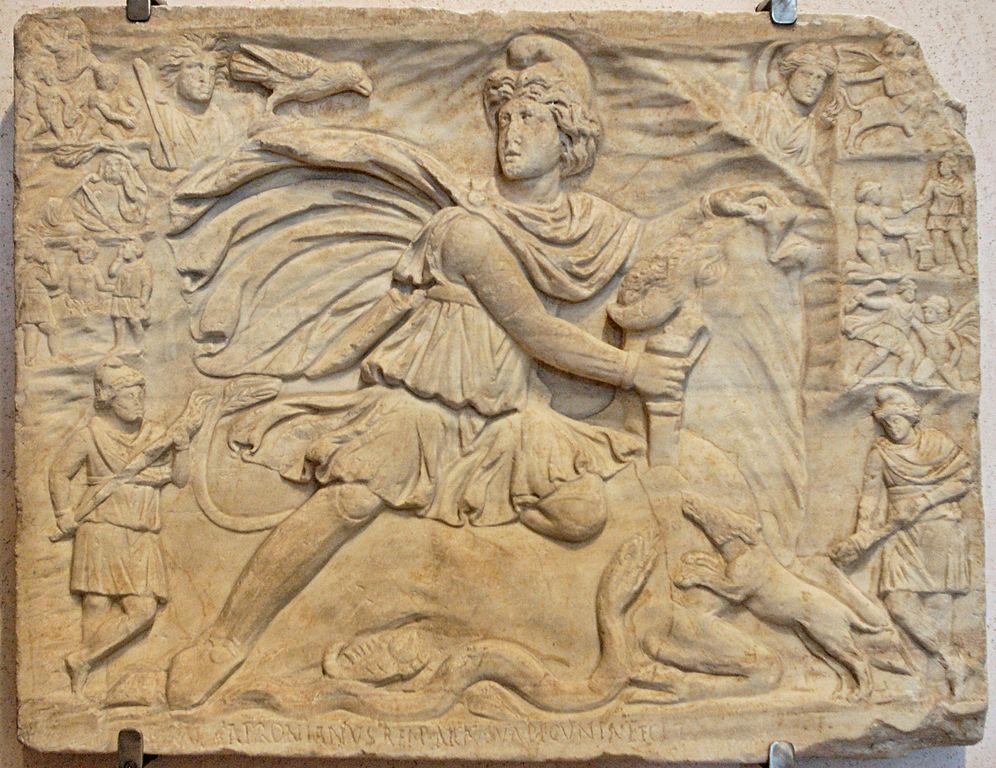
The relief of Mithras slaying the bull of Nersae includes several episodes from the exploits of the solar god.
A marble standing torchbearer statue in Phrygian cap, tunica, cloak and anaxyrides, found at Torrita near Nazzano in Etruria at the beginning of the nineteenth century, formerly in Trasi's house at Torrita and later in Rome; present location unknown.
A subterranean room with a stucco depiction of Mithras slaying the bull, probably from the fourth century, discovered at Agurzano near Ponte Mammolo on the Via Tiburtina outside Rome.

Roman Mithraic relief illustrated in figure 171 of Vermaseren’s catalogue.
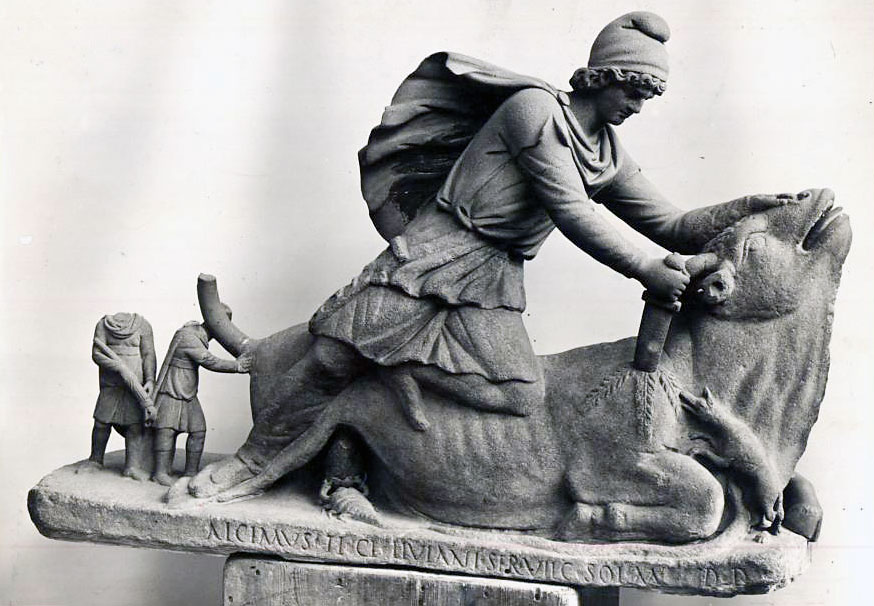
Preliminary readings of the painted Mithraic texts later revised after additional research and restoration.
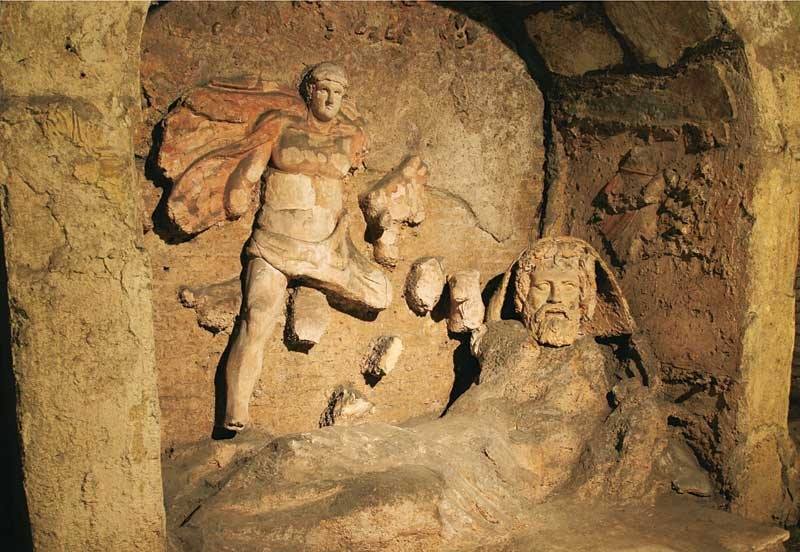
The fragmented tauroctony of the Mitreo di Santa Prisca rests on the naked figure of a bearded man, probably Ocean or Saturn.
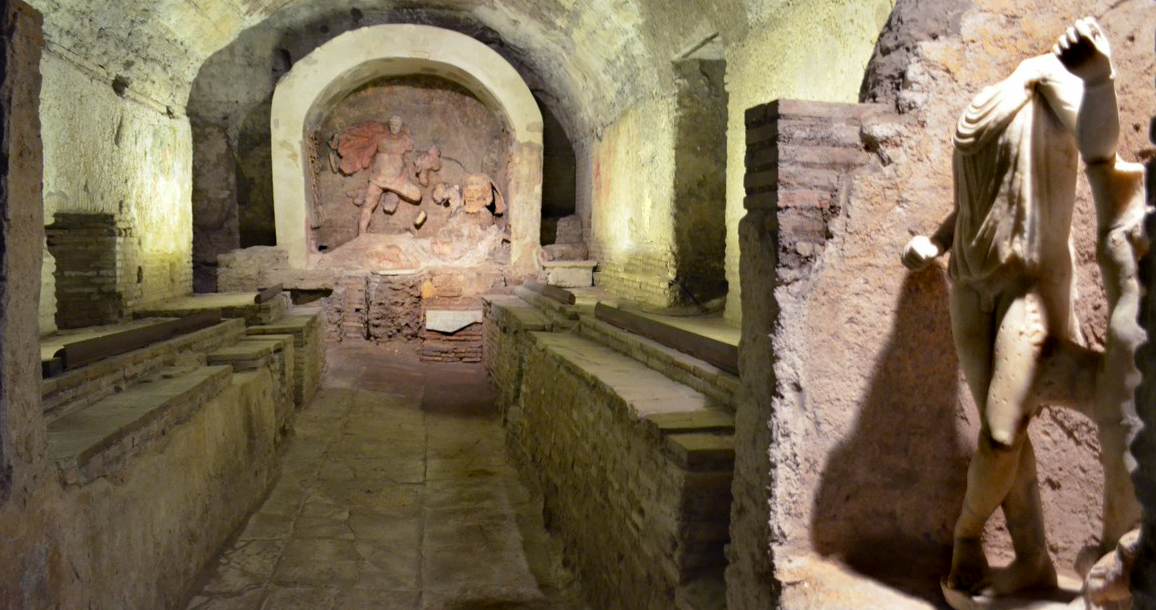
The Mithraeum of Santa Prisca houses remarkable frescoes showing the initiates in procession.
Marble base found in 1764 on the Aventine with a dedication to Sol by C. Rufus Volusianus, vir clarissimus, who held the offices of pater, hierophant, prophet of Isis and pontifex of the Sun, dated to the 4th century A.D.
This small cippus to Zeus, Helios and Serapis includes Mithras as one of the main gods, although some authors argue that it could be the name of the donor.

This remarkable Greek marble relief of Mithras killing the bull was discovered in 1705 and remained in private collections until it was bought by the Louvre.

This white marble relief of Mithras killing the bull was found on the Esquilino near the Church of Saint Lucy in Selci in Rome.
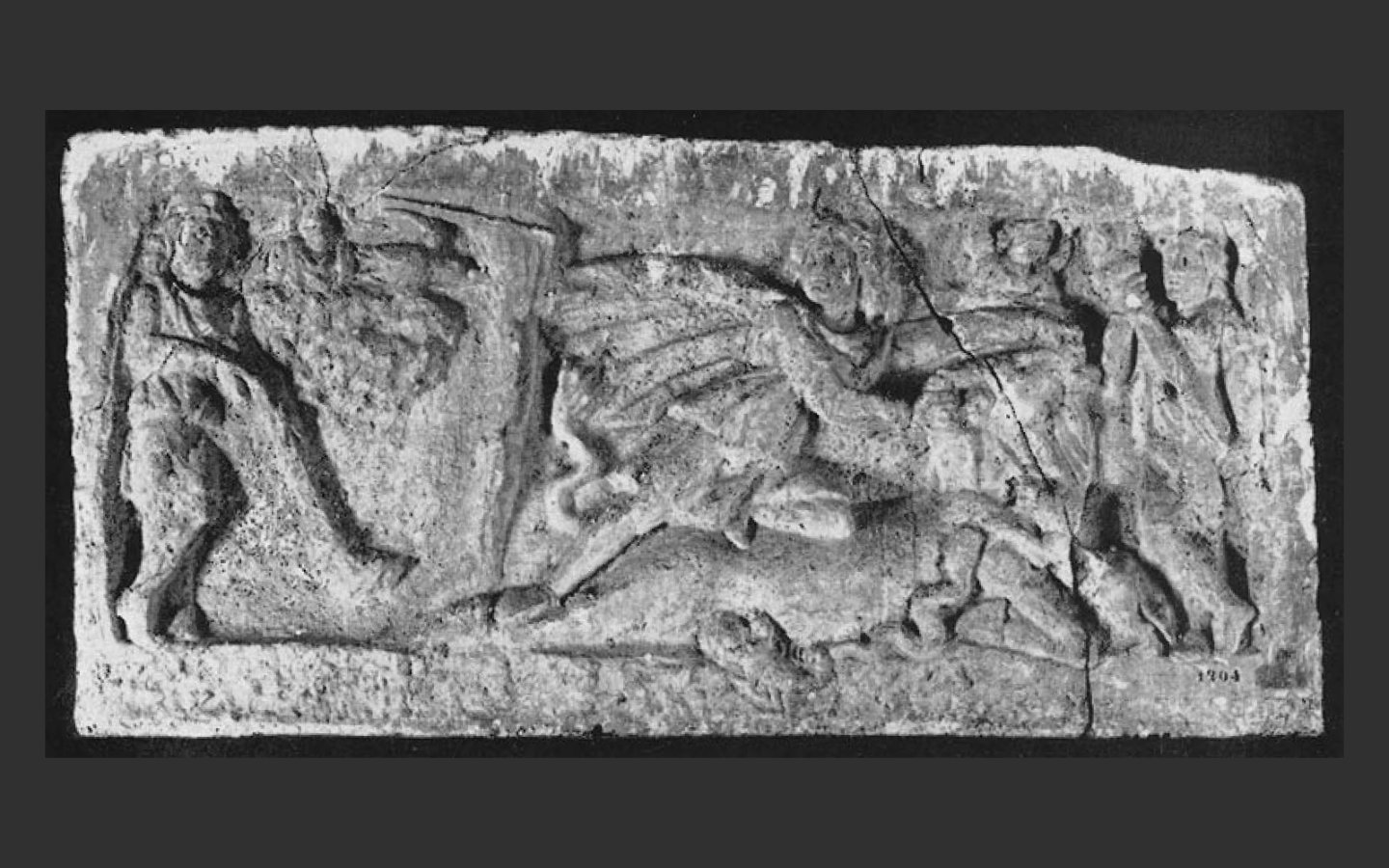
This relief of Mithras Tauroctonos from Rome bears the inscription of three brothers, two of them lions.
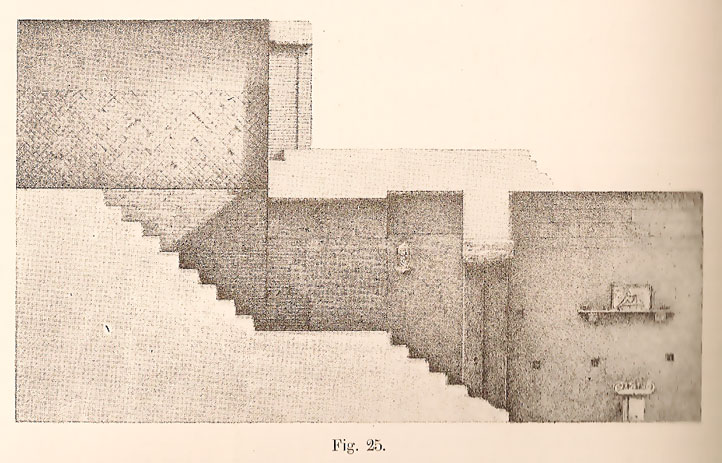
In a house from the time of Constantine, a Lararium was found with a statue of Isis-Fortuna. The Mithraeum was a door next to it, on a lower room.

This unusual mural depicting Mithras killing the bull was found near the Colosseum in 1668.
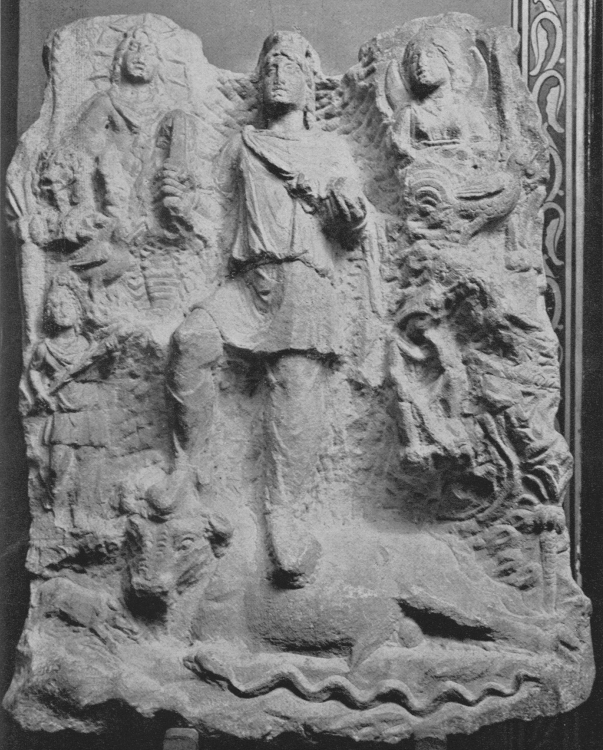
This unusual representation of Mithras standing on a bull was kept in the Casino di Villa Altieri sul Monte Esquilino until the 19th century.
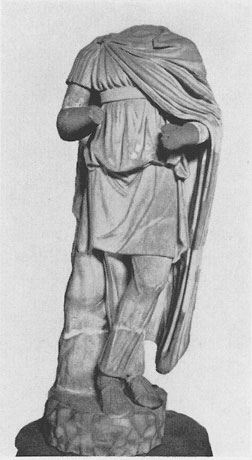
Penthelic marble statue of a standing torchbearer in Eastern attire, cross-legged, with head and torch arm broken off, probably 2nd century A.D., found at Antium (modern Anzio).
Marble plate inscription dedicated to Deo Soli Invicto Mithrae for the wellbeing of Emperor Commodus, dated 180-192 A.D., from Aïn-Tekria.
