Your search Jabal al-Druze gave 2979 results.

Cales was an ancient city of Campania, in today's comune of Calvi Risorta in southern Italy, belonging originally to the Aurunci/Ausoni, on the Via Latina.
Italica was an ancient Roman city in Hispania; its site is close to the town of Santiponce in the province of Seville, Spain.
Skelani (Serbian Cyrillic: Скелани) is a village in the municipality of Srebrenica, in the Republika Srpska entity of Bosnia and Herzegovina.
Within the southern sectors of Roman Dacia, Dacia Malvensis preserves evidence linked to military mobility and provincial urbanisation.
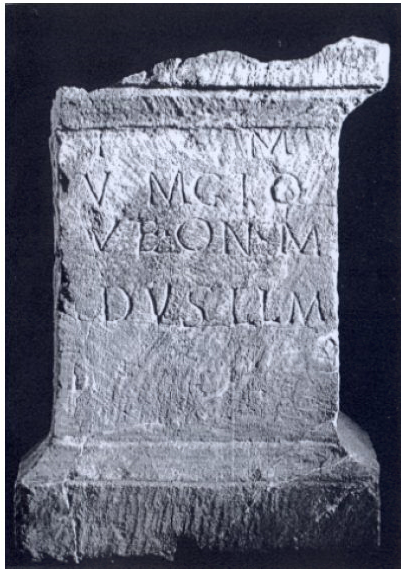
This fragmented monument bears an inscription of a certain veteran named Valerius Magio.
Syria-Palestina occupied a complex religious landscape shaped by imperial administration, pilgrimage and eastern Mediterranean mobility.
Galatia occupied the central Anatolian crossroads through which military movement and eastern provincial networks intersected.
Dalmatia connected the Adriatic world to the Balkan interior through maritime routes, military mobility and provincial urban networks.
The high mountain routes of Alpes Graiae formed part of the Alpine corridors connecting Italy, Gaul and the northwestern provinces.
Alpes Poenninae controlled important Alpine routes through which military movement and religious practices circulated between Gaul and Italy.
Galatia preserves Mithraic evidence shaped by central Anatolian routes and eastern provincial networks.
Dalmatia preserves Mithraic evidence shaped by Adriatic routes, military movement and provincial urban centres.
The Alpine regions preserve scattered Mithraic evidence associated with military circulation and strategic routes across the western empire.
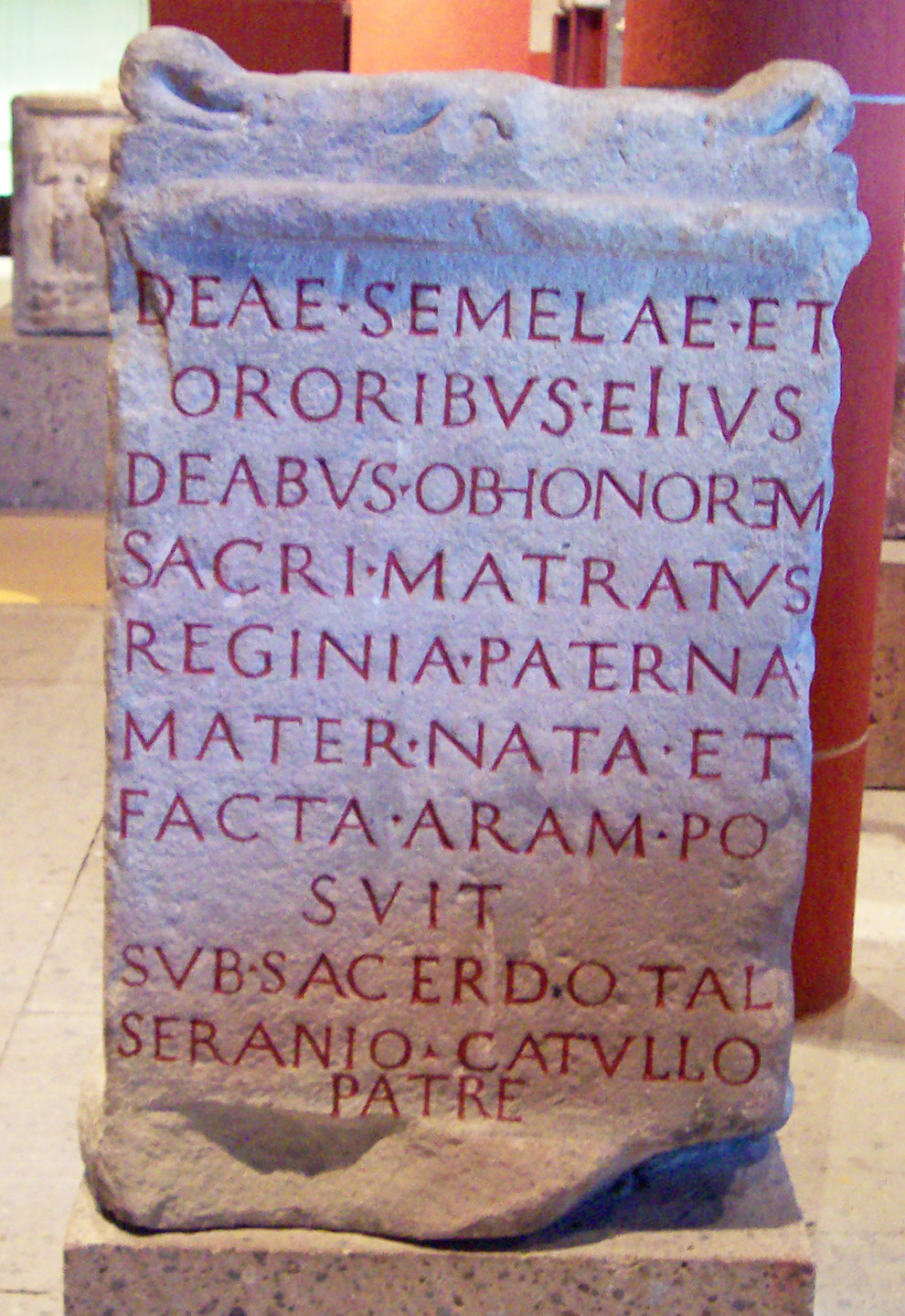
This sandstone altar found in Cologne bears an inscription to the goddess Semele and her sisters.

This altar, found in Tazoult تازولت, Algeria, was dedicated to the god Sol Mithras by a certain Florus.

This altar is dedicated to the god Sol Invictus Mithras by a certain Florus, a veteran of the Legio III Augusta.
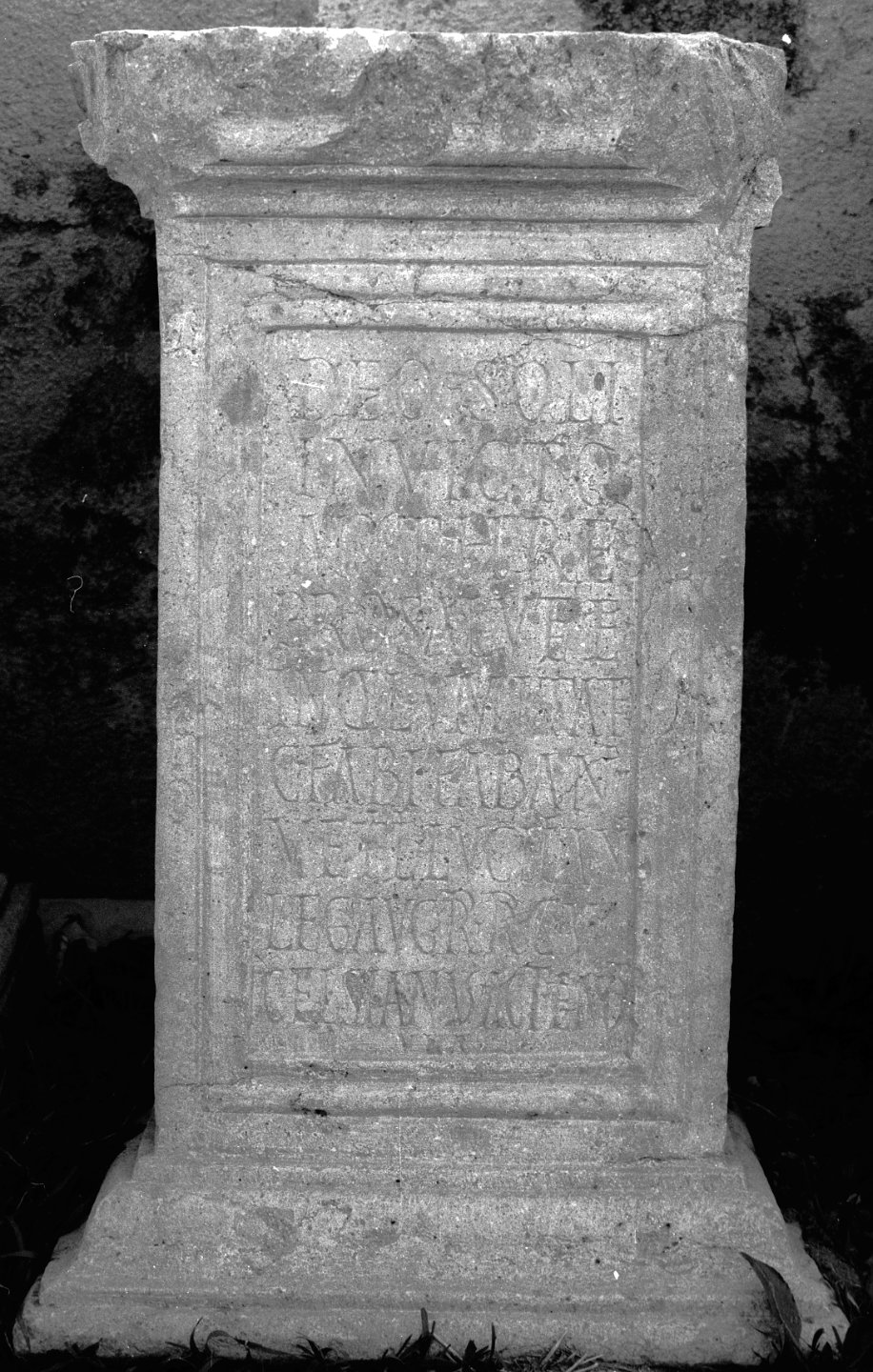
This altar found in Lambèse, now Tazoult, Algeria, bears the inscription of a certain Celsianus for the health of two men to the god Sol Unconquered Mithras.
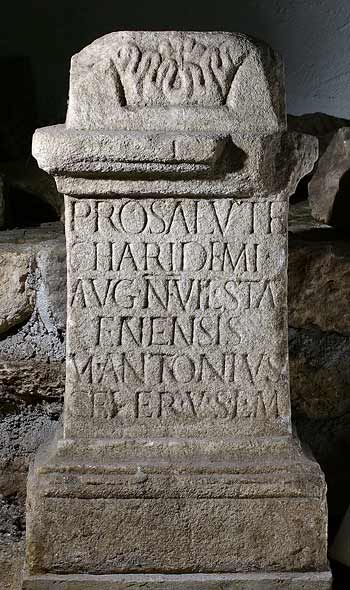
Marble votive altar with inscription to Mithras, featuring coiled, fan-like motifs above the text and associated with the statio Enensis.
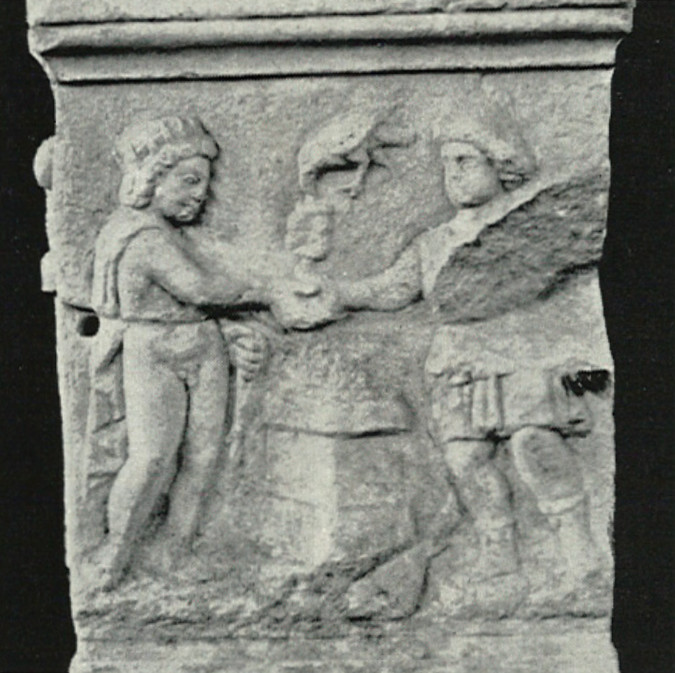
The altar of Ptuj depicts Mithras and Sol on the front and the water miracle on the right side.
Callimorphus dedicated this image of the sun god to the invincible sun ’Mythra’.
