Your search Paris gave 93 results.
The lion-headed figure, Aion, from Mérida, wears oriental knickers fastened at the waist by a cinch strap.
The statue of Mercury in Merida bears a dedication from the Roman Pater of a community in the city in 155.
The sculpture of the solar god is signed by its author, Demetrios.
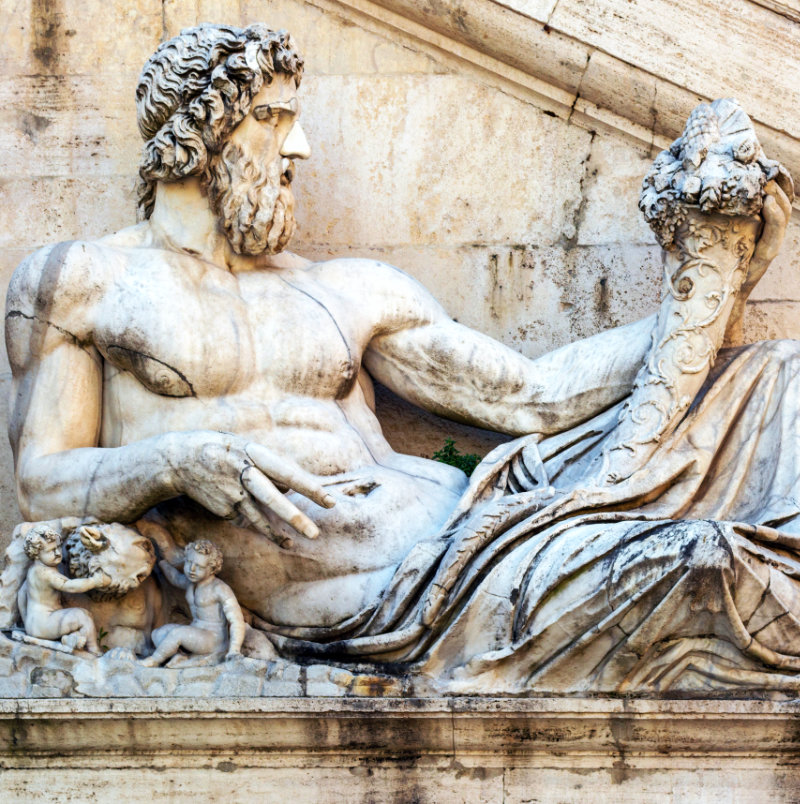
The sculpture of Oceanus in Merida bears an inscription by the Pater Patrorum Gaius Accius Hedychrus.
The lack of attributes and its decontextualisation prevent us from attributing a specific Mithraic attribution to this small Venus pudica from Mérida.
The Aion-Chronos of Mérida was found near the bullring of the current city, once capital of the Roman province Hispania Ulterior.
This standing sculptural figure from Mérida appears to carry the serpent staff, characteristic of the medicine god Aesculapius.
The Venus pudica of Merida stands next to the young Amor riding a dolplhin.
Small stone base (H. 0.17 Br. 0.16 D. 0.18), found in the bed of the river Nohain during operations at the railway (Sarriau).
Small bronze figure (H. 0.11), which served as a handle of a patera (Zoega) or a knife (Lajard).
Relief (proportion unknown) found in 1861 making excavations in the cavalry barracks at SHif.
During excavations at Boghaz-Koi in 1907 clay tablets were found on which a treaty concluded between Chatti and Mitanni in the 14th century B.
This relief of Mithras as a bullkiller found at Vratnitsa, near Lisicici in northern Macedonia, was signed by a certain Menander Aphrodisieus.
